Vocabulary Building Plants and Animals Worksheets for Ages 4-8
5 filtered results
-
From - To
Enhance your child's vocabulary with our engaging "Plants and Animals Worksheets" designed for ages 4-8! These printable resources introduce young learners to essential vocabulary related to the natural world. Through vibrant illustrations and interactive activities, children will explore various plants and animals while improving their language skills. Our worksheets support literacy development, encourage creativity, and foster a love for science. Perfect for homeschooling or classroom activities, these worksheets make learning fun and accessible for early learners. Download them today and watch your child's confidence grow as they discover the wonders of nature!
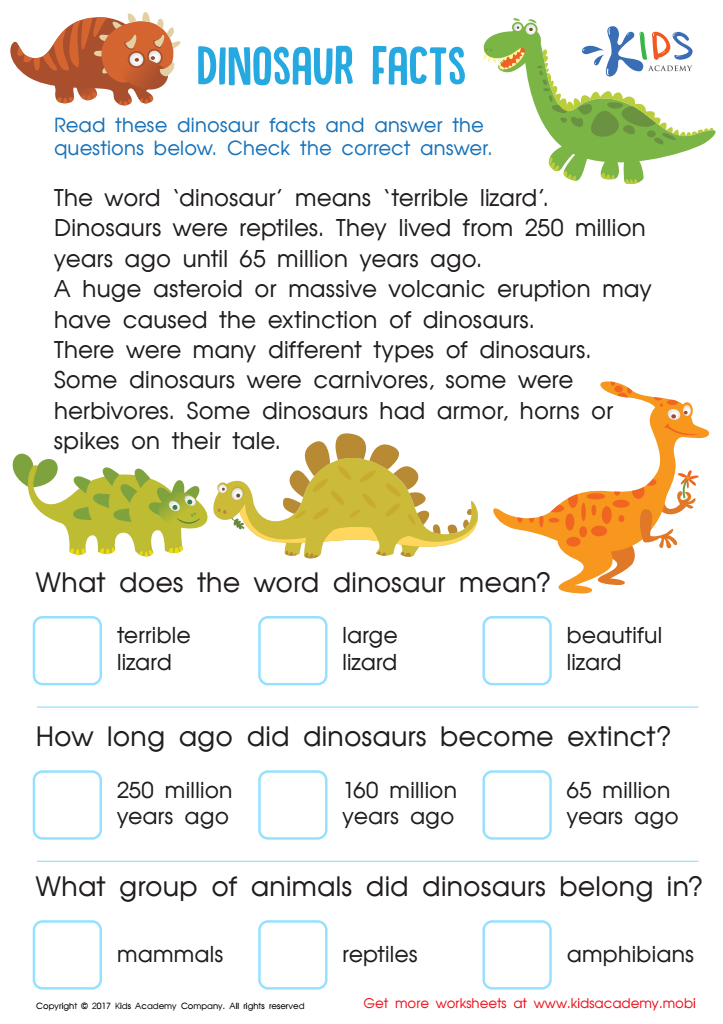
Dinosaur Facts Worksheet
 Assign to My Students











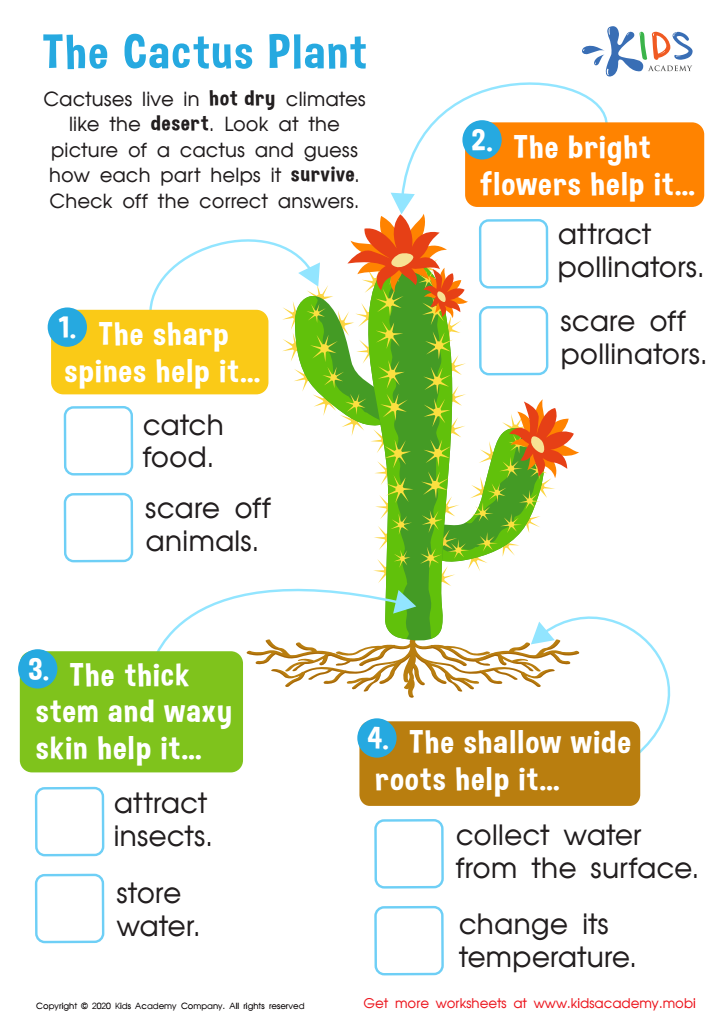
The Cactus Plant Worksheet
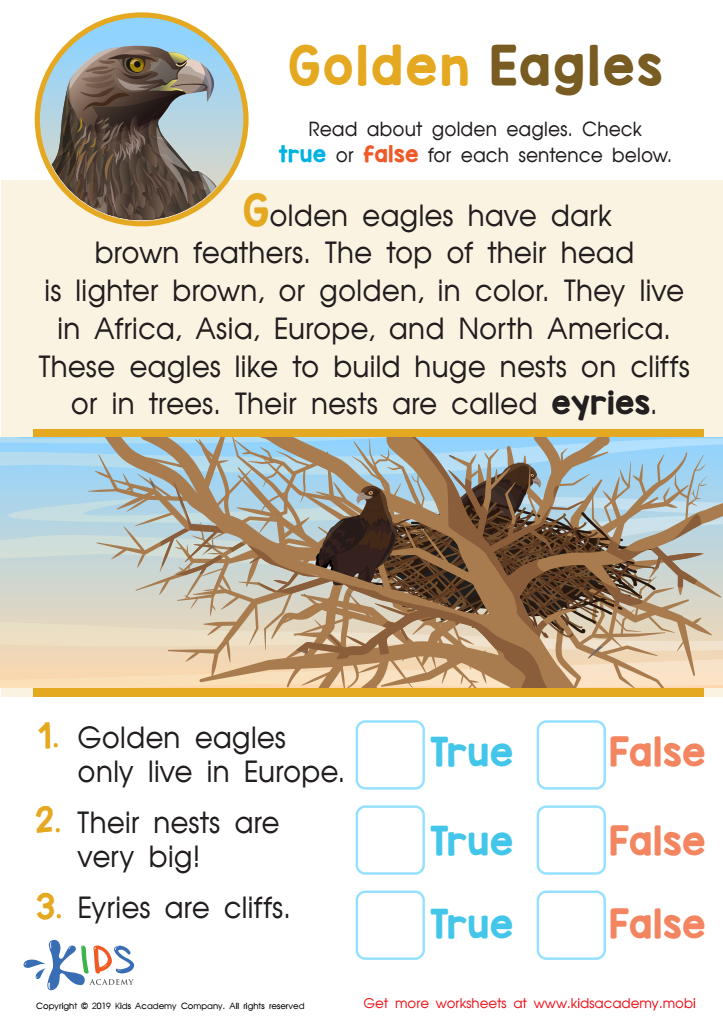
Golden Eagles Worksheet
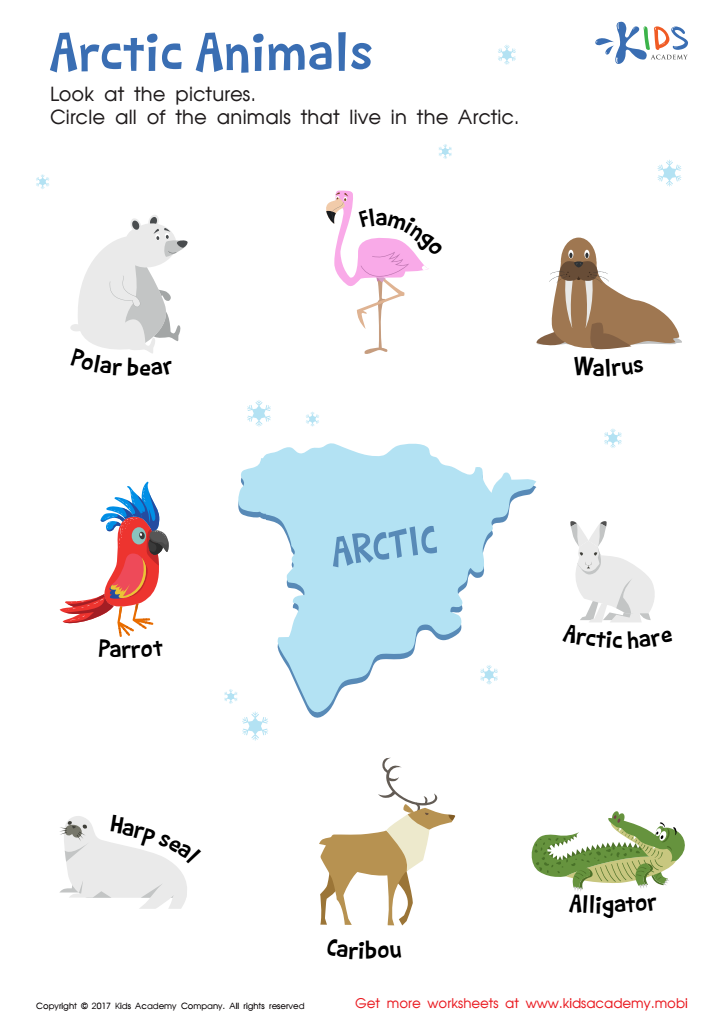
Arctic Animals Worksheet
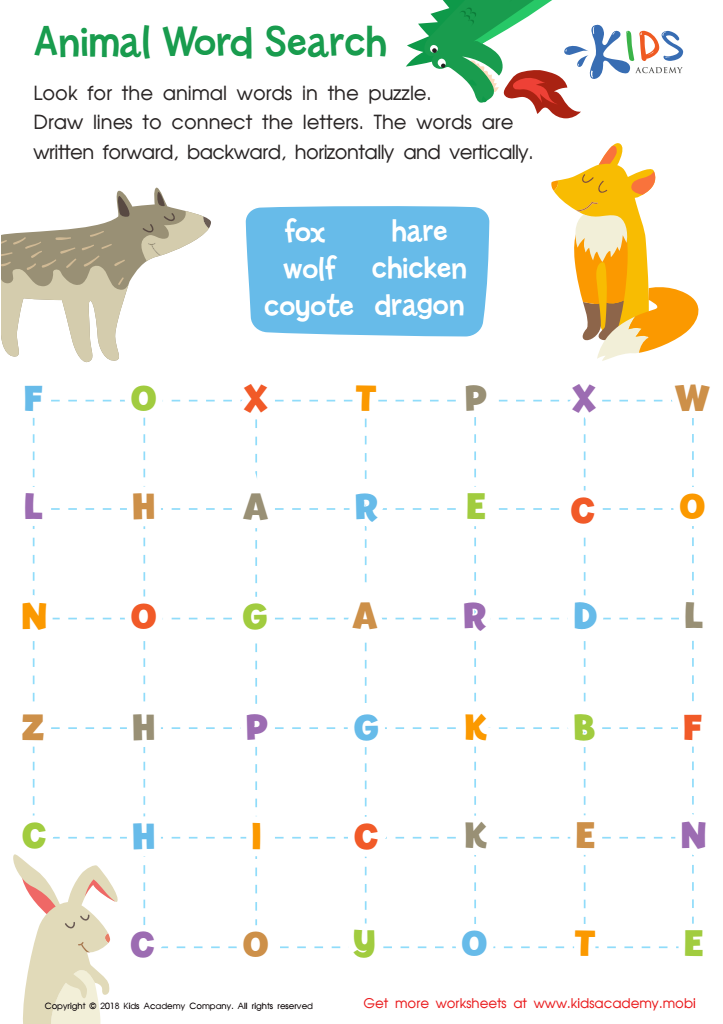
Animal Word Search Worksheet







Vocabulary building is crucial for young children, especially in the context of plants and animals. Ages 4-8 mark a vital developmental period where children learn to express their thoughts, ask questions, and describe the world around them. Fostering a rich vocabulary in this area enhances comprehension and facilitates communication skills essential for their social and academic growth.
Understanding the terms related to plants and animals not only broadens their vocabulary but also deepens their connection to nature. Engaging with these subjects helps children comprehend scientific concepts, such as ecosystems and the roles of various species, laying the groundwork for future learning in biology and environmental science. Furthermore, vocabulary related to plants and animals can ignite curiosity and imagination, instilling a sense of wonder about the natural world.
When parents and teachers introduce age-appropriate texts, discussions, and hands-on activities, they enrich children’s learning experiences. This exposure allows for better cognitive development and social skills, as children will be able to share their understanding and observations with others. Thus, prioritizing vocabulary building in this realm equips children with essential skills, promoting lifelong learning and environmental stewardship.








