
Enhancing critical thinking Social Studies Worksheets for Ages 4-8
5 filtered results
Difficulty Level
Grade
Age
-
From - To
Subject
Activity
Standards
Unlock the power of critical thinking with our engaging Social Studies worksheets designed specifically for children ages 4-8. These thoughtfully crafted activities promote analytical skills, encouraging young learners to explore their surroundings and the world around them. Our worksheets incorporate fun facts, puzzles, and interactive challenges that stimulate curiosity and Group discussion. Designed for home or classroom use, they foster collaboration and communication among peers. Let your students dive into fascinating topics while developing important skills that will last a lifetime. Empower future thinkers to analyze, question, and reflect with our enriching Social Studies resources today!
Favorites
With answer key
Interactive
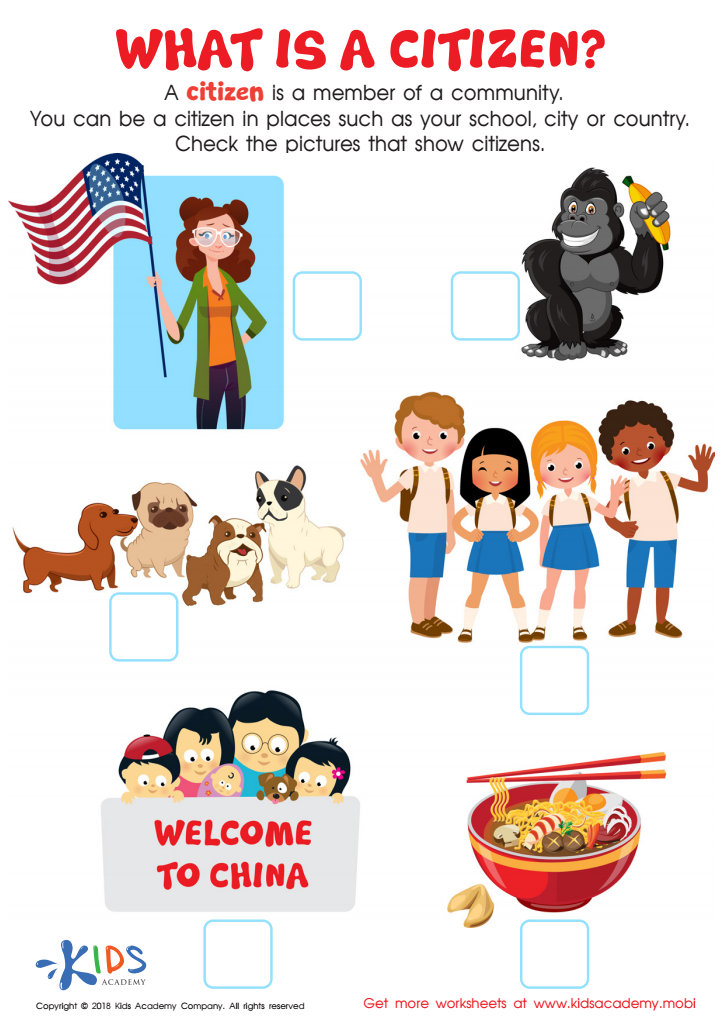
What is a Citizen? Worksheet
Do your students know who a citizen is? Use this worksheet to teach them: a citizen is a member of a community, such as your school, city or country. Look at the pictures in the pdf with your students. Ask them to identify who or what is in the pictures, and help them check which are citizens.
 Assign to My Students
What is a Citizen? Worksheet
Worksheet
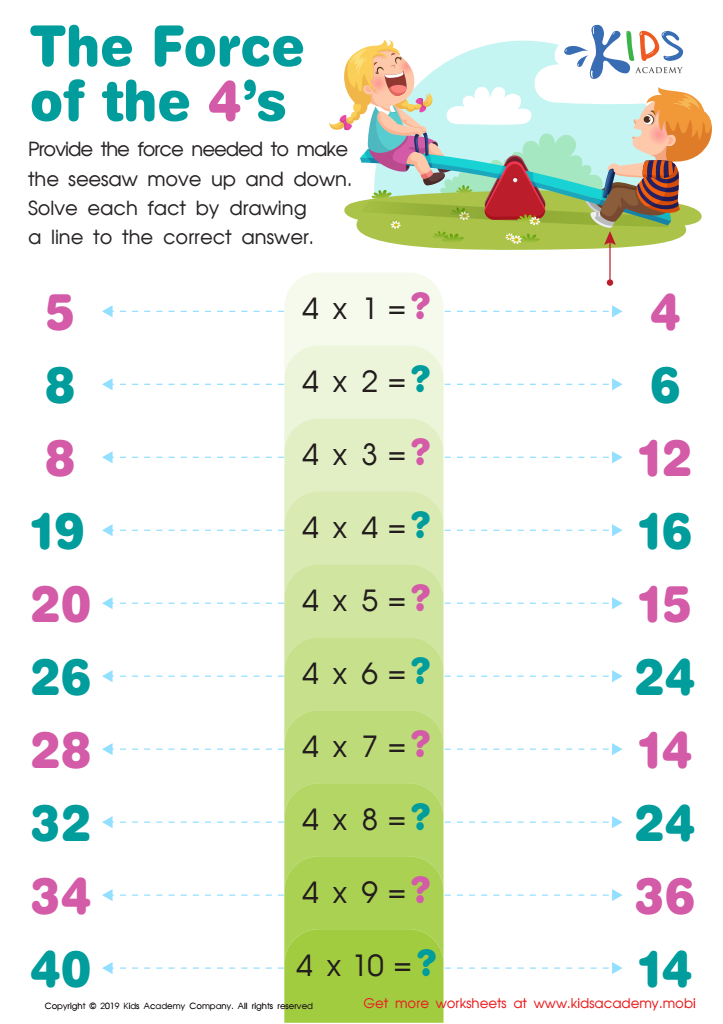
The Force of the 4's Worksheet
Ride a seesaw with your child and explore the physics behind it! Explain how it needs two people and how force makes it go up and down. Use the memories of the pleasurable experience to teach your kid a lesson in force. Show them how to solve the worksheet by drawing a line to the correct answer. This way, they'll learn the force needed for the seesaw to move.
The Force of the 4's Worksheet
Worksheet
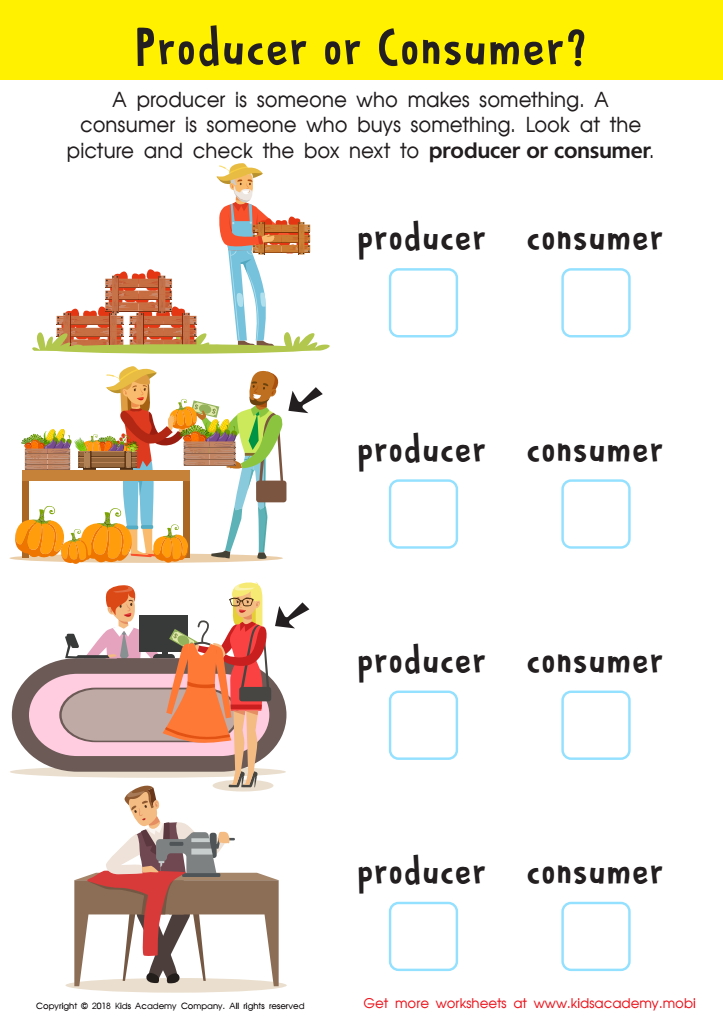
Producer or Consumer? Worksheet
Test your child's knowledge by asking who's a producer and consumer. Explain producer makes things and consumer buys them. Use a snack example. Look at the picture with your kids and help them check the box next to producer or consumer.
Producer or Consumer? Worksheet
Worksheet
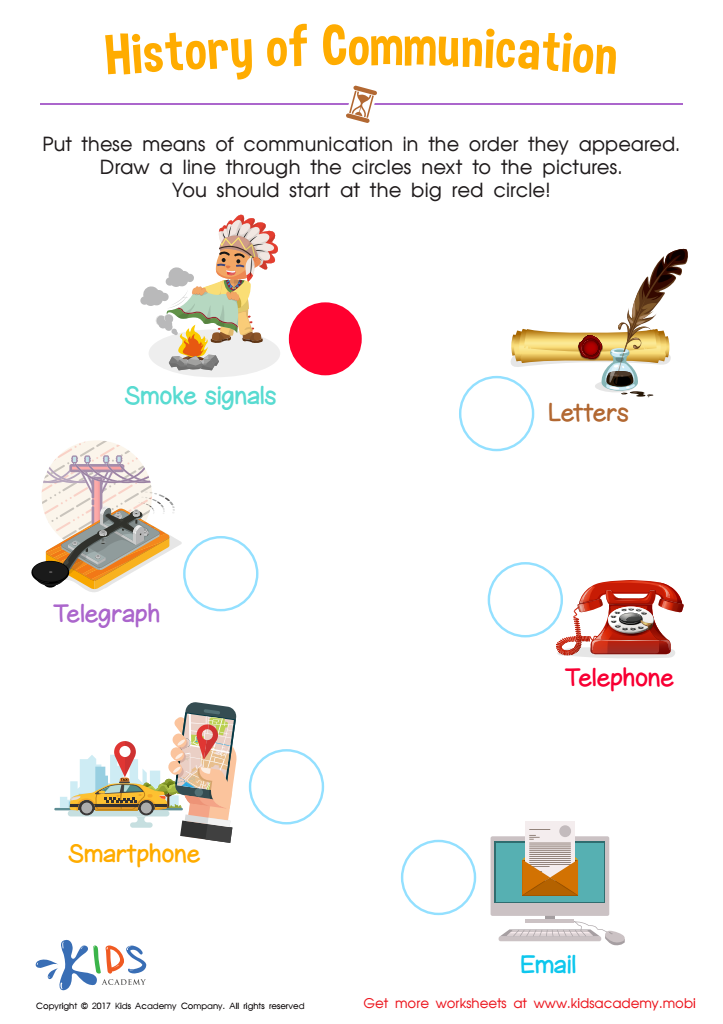
History of Communication Worksheet
Help your child understand history's communication evolution! With this worksheet, your child will learn about the various ways people communicated over time, and how that compares to today. It'll also foster an interest in history and bring the past to life!
History of Communication Worksheet
Worksheet
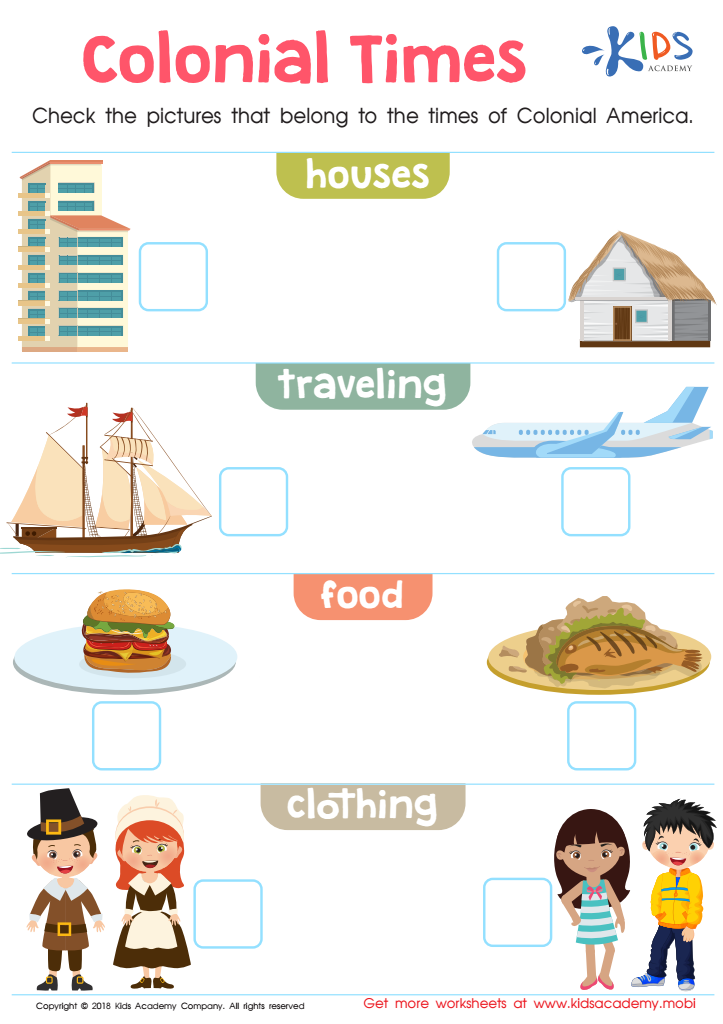
Colonial Times Worksheet
Test your students' knowledge of colonial times with this easy social studies worksheet. Look at the pictures to see how people lived back then. See if your little ones understand what structures they had, what food they ate, and what type of clothing they wore. You might be surprised by how much or how little they know!
Colonial Times Worksheet
Worksheet
Join Kids Academy for Free
Who is primarily going to use this learning content?








Enhancing critical thinking in Social Studies for children aged 4-8 is crucial for several reasons. First, early childhood is a formative period for cognitive development. At this age, children begin to form the foundation for their reasoning and analytical skills. Engaging them in critical thinking activities helps them learn how to ask questions, seek evidence, and understand different perspectives, which are essential skills for informed citizenship.
Second, Social Studies content cultivates a sense of identity and belonging. By exploring diverse cultures, histories, and societal structures, children can better understand their own place in the world. Critical thinking encourages them to not only absorb information but to engage with it, fostering empathy and respect for others’ viewpoints.
Additionally, developing these skills early promotes lifelong learning. Children who think critically are more likely to approach challenges with creativity and resilience. They learn to explore, compare, and draw conclusions, which prepares them for future academic pursuits and real-world problem-solving.
Lastly, in a rapidly changing society, children must be equipped to navigate complex issues. By nurturing critical thinking in Social Studies, parents and teachers can empower young learners to become thoughtful, active participants in their communities, fostering a brighter future.








