Pronoun identification Writing Worksheets for Ages 4-8
3 filtered results
-
From - To
Discover our engaging Pronoun Identification Writing Worksheets designed specifically for children aged 4-8. These interactive resources are perfect for young learners to grasp the concept of pronouns in a fun and educational way. Each worksheet features vibrant illustrations and clear instructions, helping children identify and use pronouns accurately in sentences. With a variety of exercises that reinforce learning, kids can practice their writing skills while enhancing their understanding of personal, possessive, and demonstrative pronouns. Encourage creativity and improve literacy with our thoughtfully crafted worksheets that make pronoun identification enjoyable and effective! Start your teaching journey today!
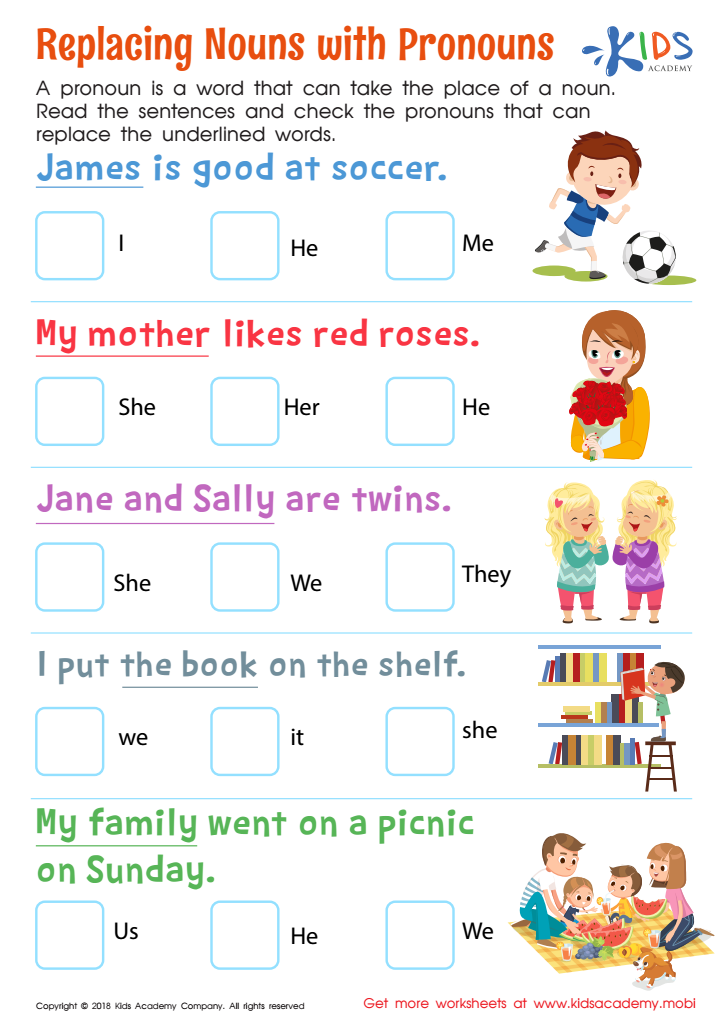
Replacing Nouns with Pronouns Worksheet
 Assign to My Students
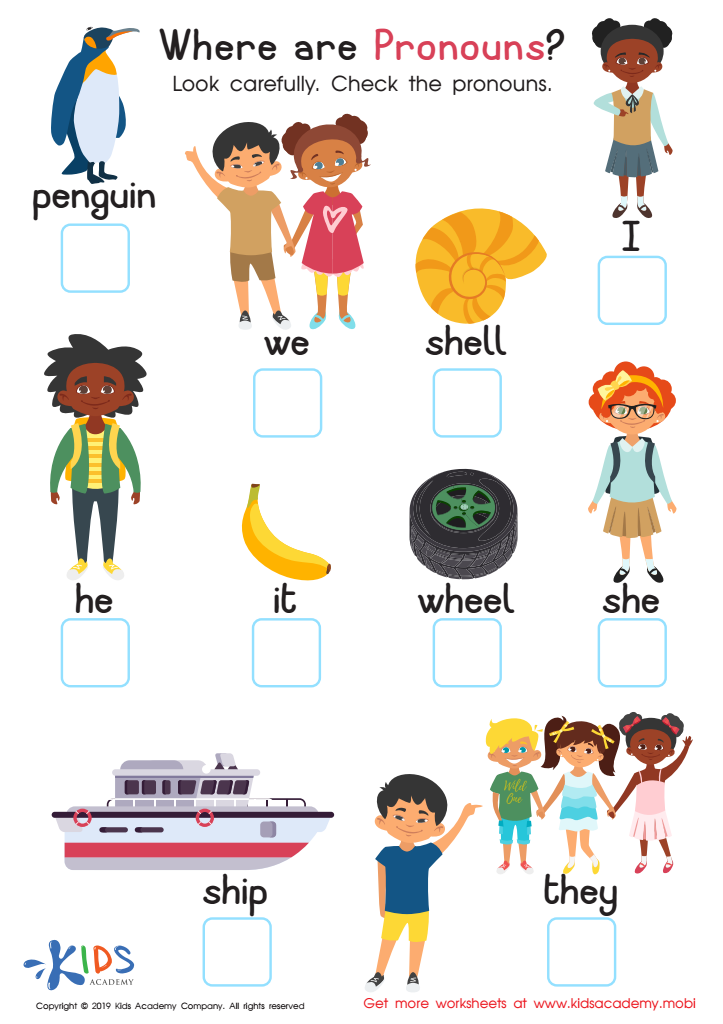
Where Are Pronouns? Worksheet
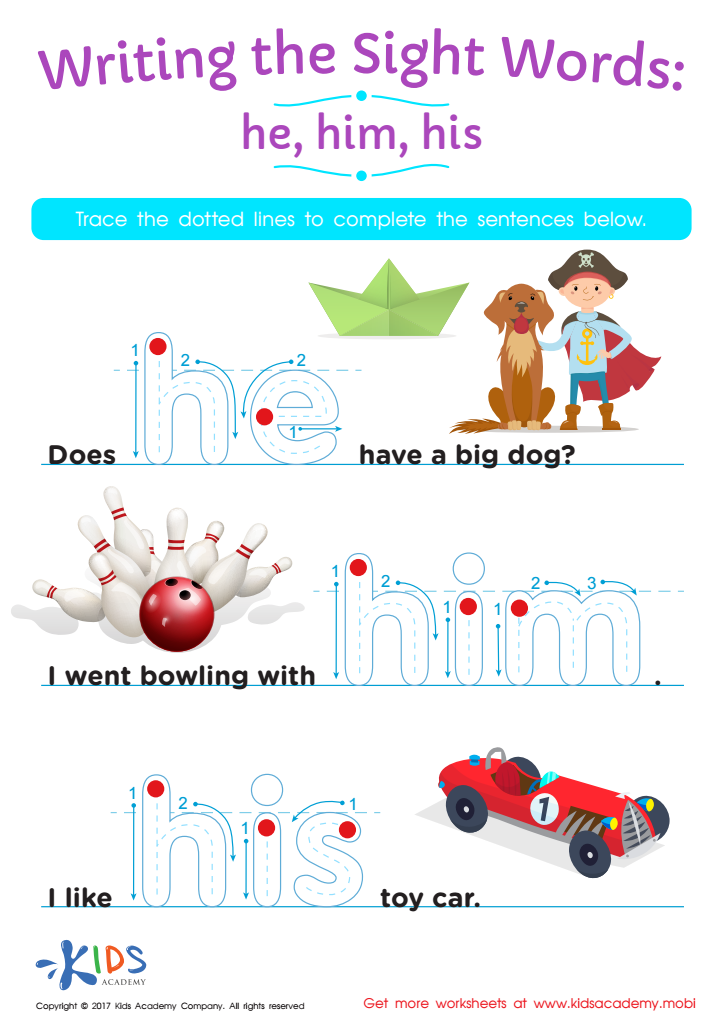
He, Him, His Printable Sight Words Worksheet






Pronoun identification is a fundamental language skill that young children, particularly those aged 4 to 8, must develop to enhance their communication and comprehension abilities. For parents and teachers, understanding and using pronouns correctly is crucial for fostering effective language skills and social interactions.
First, pronouns simplify language, allowing children to express themselves more efficiently. By using pronouns like “he,” “she,” “they,” and “it,” children can avoid repetition in their speech and writing, making their narratives clearer and more engaging. This helps build stronger storytelling skills, an essential foundation for literacy.
Second, teaching pronoun identification supports inclusivity and understanding of gender diversity. As children learn about pronouns, they become more sensitive and accepting of varied identities, promoting respect and empathy for others.
Moreover, engaging with pronneus helps children develop critical thinking as they learn to identify relationships among things, people, and actions in their environments. This identification skill also enhances their writing coherence and creativity.
Finally, strong communication skills cultivated through pronoun usage can aid in social development, allowing children to navigate friendships and group dynamics more effectively. For these reasons, fostering pronoun identification is essential for the holistic development of young learners.