Verb identification Writing Worksheets for Ages 4-8
7 filtered results
-
From - To
Discover engaging "Verb Identification Writing Worksheets for Ages 4-8" that make learning fun and effective! Designed to meet the educational needs of young learners, these worksheets focus on identifying and using verbs in sentences. Our colorful and interactive activities help children enhance their grammar skills while fostering a love for writing. Perfect for classrooms or at-home learning, these resources provide step-by-step guidance and ample practice opportunities. Early grade students will enjoy building their language proficiency as they explore the exciting world of verbs. Equip your young learners with essential tools for their educational journey today!
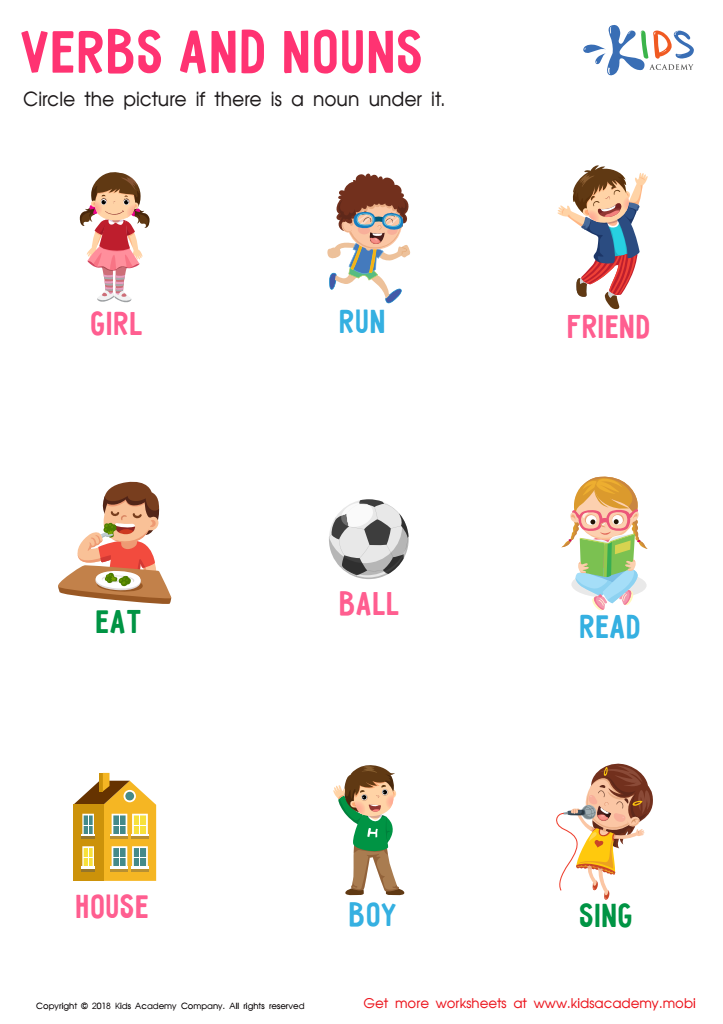
Verbs and Nouns Worksheet
 Assign to My Students
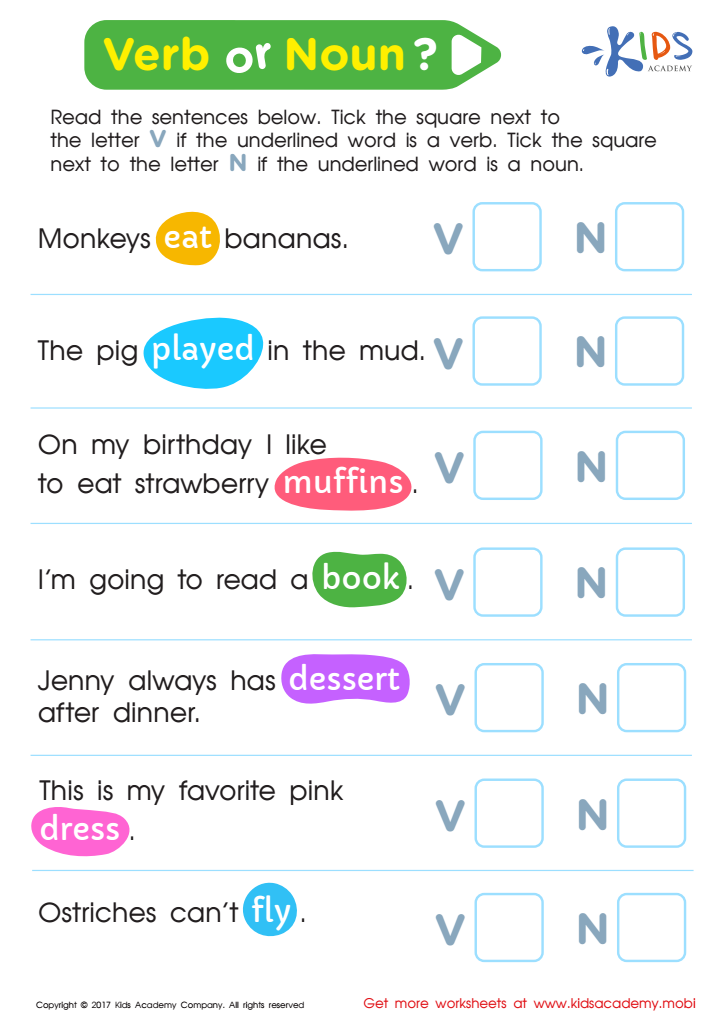
Verb or Noun Worksheet
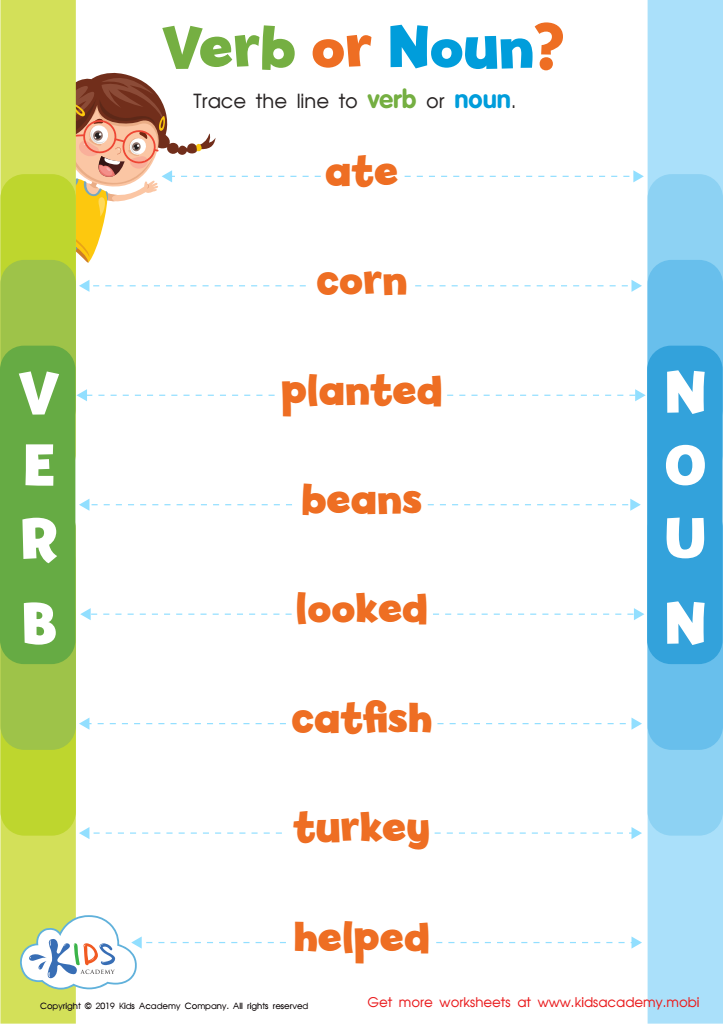
Verb or Noun Worksheet
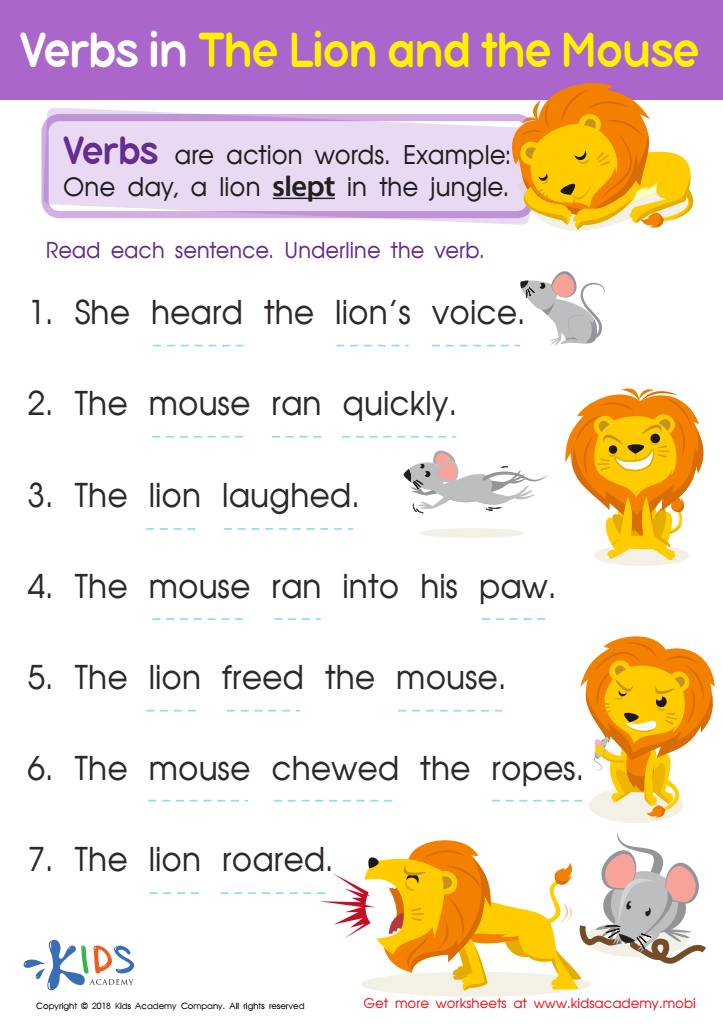
Verbs in The Lion and the Mouse Worksheet
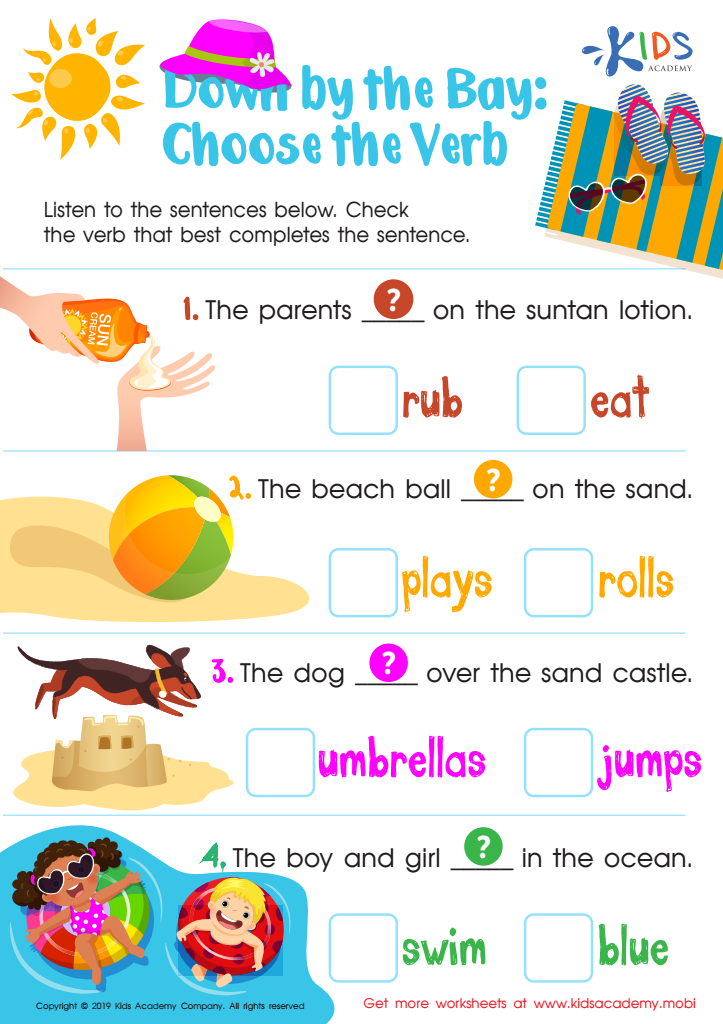
Down by the Bay: Choose the Verb Worksheet
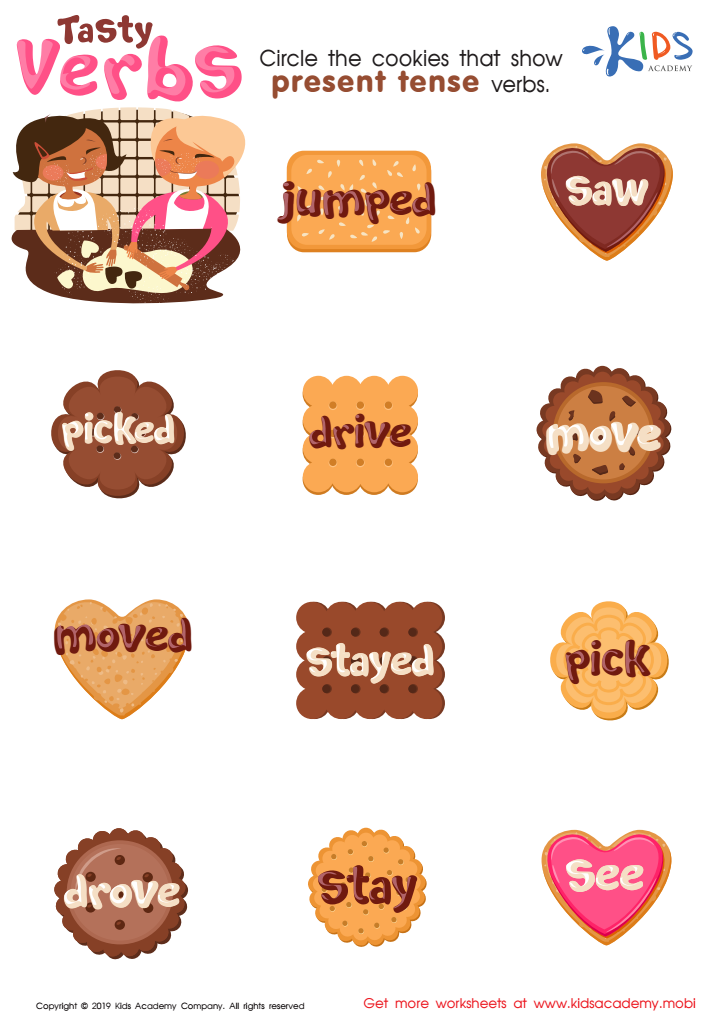
Tasty Verbs Worksheet
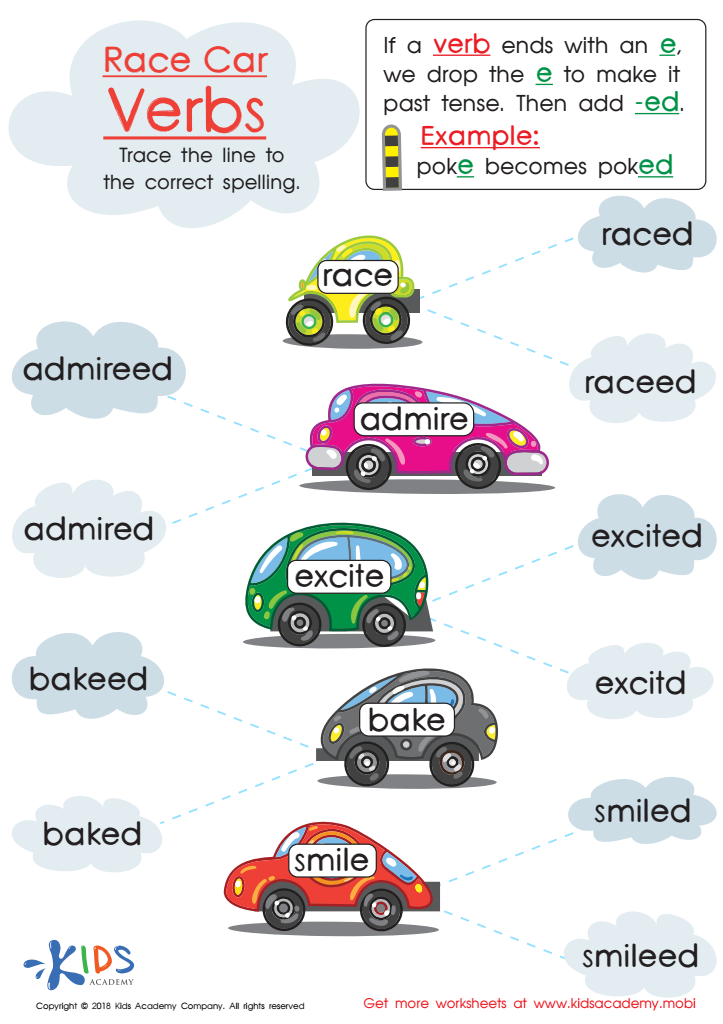
Race Car Verbs Worksheet







.jpg)
Verb identification is a foundational skill that plays a critical role in the linguistic and cognitive development of children ages 4-8. At this developmental stage, kids are rapidly acquiring and refining their language skills, and understanding what verbs are and how they function can significantly facilitate this process.
Recognizing and correctly using verbs enhances children's sentence construction abilities. Verbs serve as the action or state indicators in sentences, forming a core component of meaningful communication. When children can accurately identify and use verbs, they’re better able to express themselves, convey actions, and describe events, which boosts their overall communicative competence.
From an early academic perspective, verb identification is crucial for literacy development. Reading comprehension relies heavily on understanding sentence structure, and identifying verbs helps children make sense of the actions described in texts. For writing, a firm grasp of verbs allows children to create dynamic and coherent sentences, enriching their storytelling and reporting skills.
Parents and teachers who emphasize verb identification are thus equipping children with essential tools for their educational journey. Beyond academics, these skills also foster self-confidence and social interaction. Investing this attention early on ultimately lays a solid groundwork for more complex language and cognitive tasks, benefiting children far into their future learning stages.








