
Reading proficiency Alphabet Worksheets for Ages 4-9
7 filtered results
Difficulty Level
Grade
Age
-
From - To
Subject
Activity
Standards
Enhance your child's reading skills with our engaging Alphabet Worksheets designed for ages 4-9! These printable resources focus on improving reading proficiency through fun and interactive activities. Our worksheets cover essential skills, including letter recognition, phonics, and word formation, fostering a strong foundation for early literacy. Perfect for home or classroom use, they encourage children to explore language creatively while developing critical cognitive abilities. Each worksheet is tailored to accommodate various learning styles, ensuring every child thrives. Unlock your child’s potential and make learning enjoyable with our comprehensive collection of reading proficiency resources today!
Favorites
With answer key
Interactive
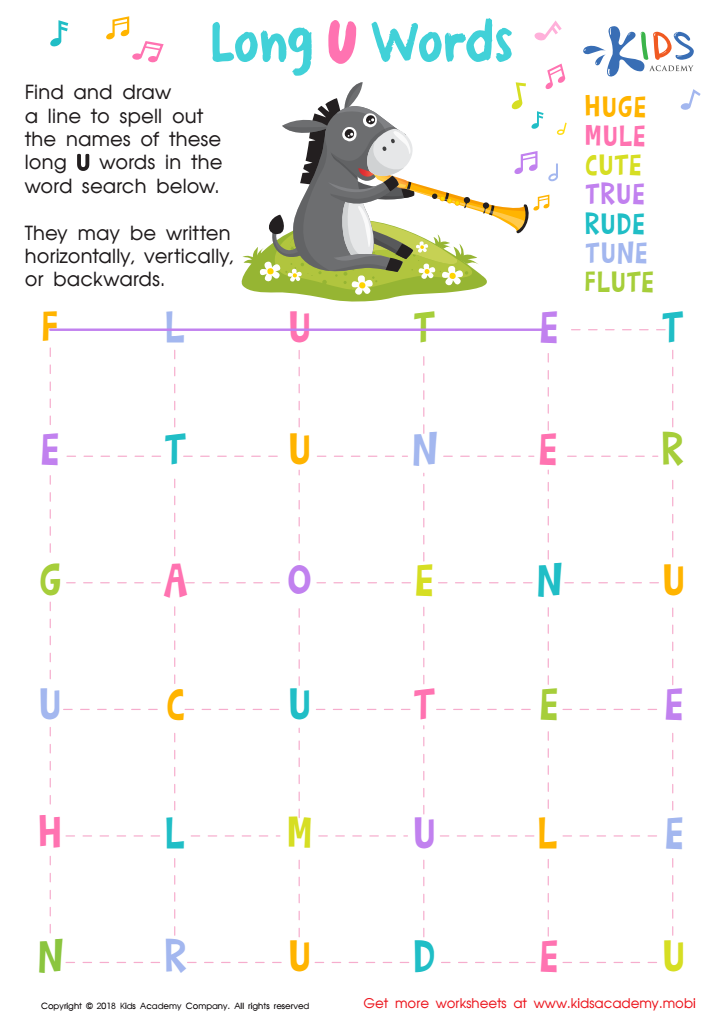
Long /u/ Words Worksheet
Your child needs to learn phonetics to enunciate and differentiate words. This fun worksheet encourages them to find and draw lines connecting the long 'U' words in the word search. Help them read the words on the right side of the picture, then look for them in the word search (horizontally, backwards or vertically).
Long /u/ Words Worksheet
Worksheet
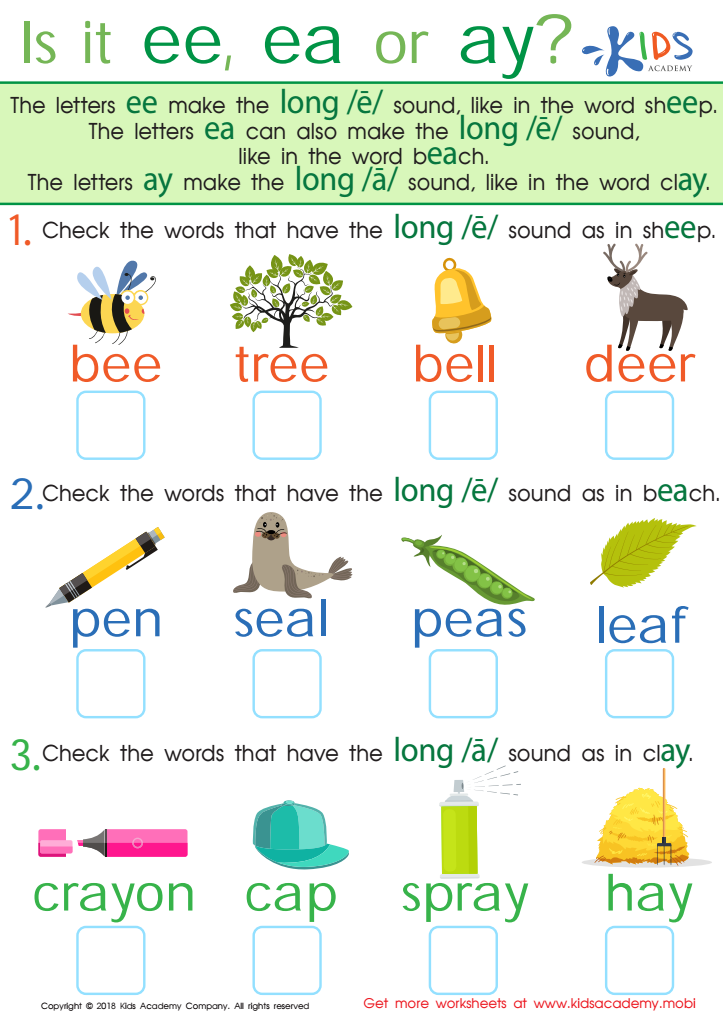
Is It EE, EA, or AY? Worksheet
When 'ee', 'ea' and 'ay' are in words, they usually make the long /e/ and /a/ sounds. Examples of words with 'ee' are "sheep", 'beach' and 'seat' with 'ea', and 'clay' and 'play' with 'ay'. Check this colourful worksheet with your kids; help them find the words that make the long /e/ sound like 'sheep'.
Is It EE, EA, or AY? Worksheet
Worksheet
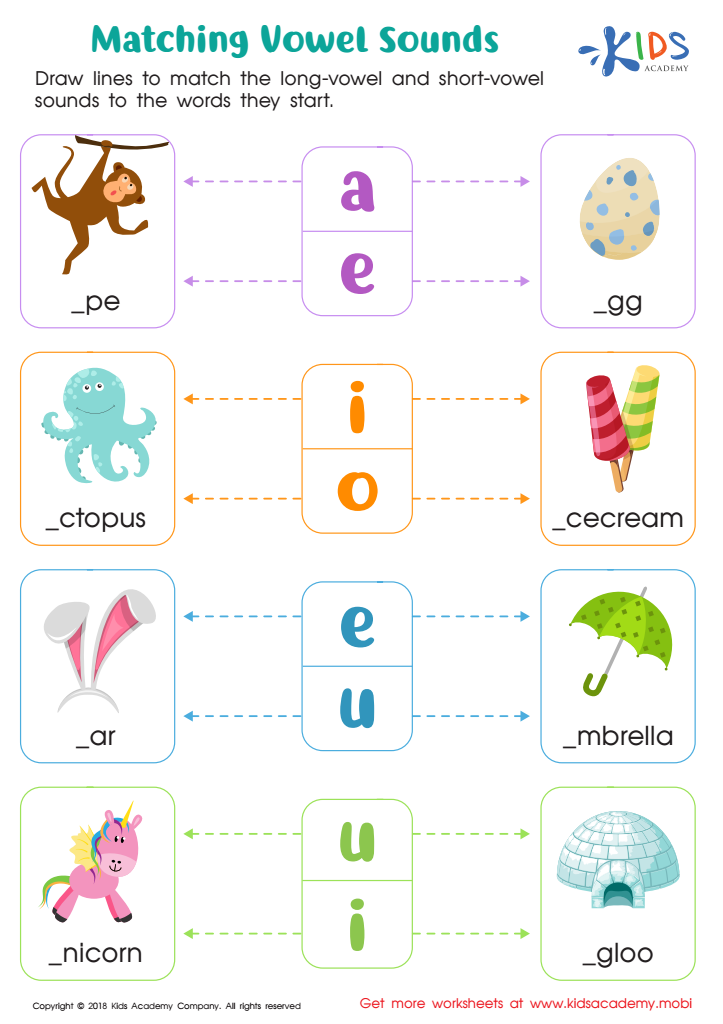
Matching Vowel Sounds Worksheet
Teach your child phonics with a fun worksheet! Ask your child to name a vowel sound and listen if it's long or short. Differentiating between long and short vowel sounds can be tricky, but this matching worksheet makes it easy for kids to understand. Have fun and master phonics - the worksheet will help them understand the difference between long and short vowel sounds!
Matching Vowel Sounds Worksheet
Worksheet
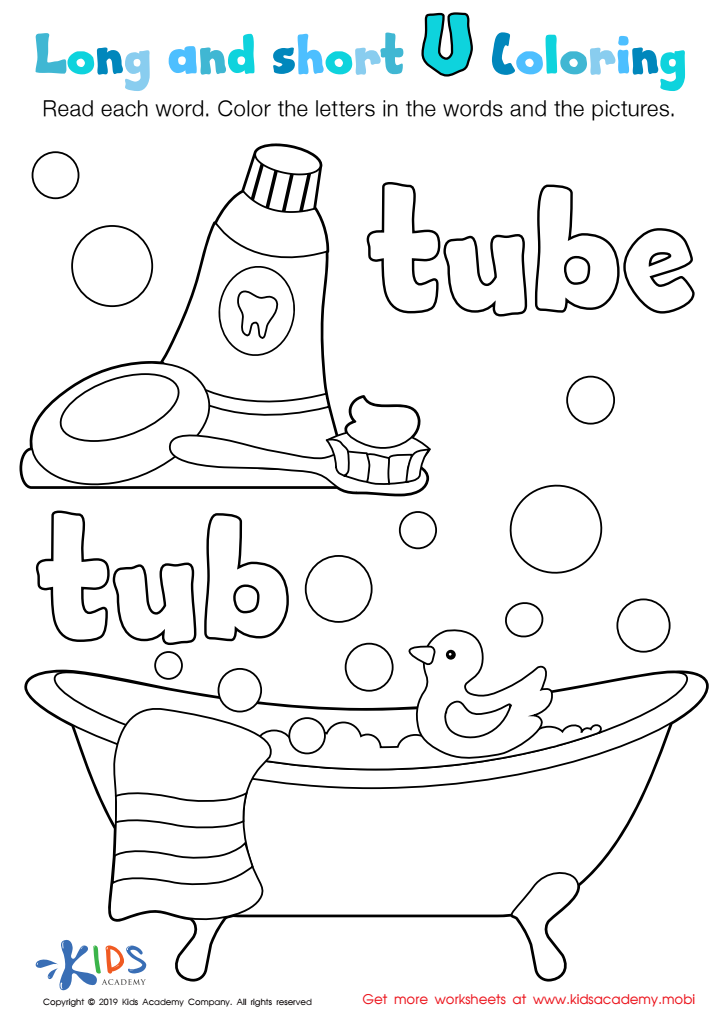
Long and Short U Worksheet
Revised: Spice up your lesson on long and short vowels with this fun printout! Kids read the words "tube" and "tub," then reinforce the sound by coloring in the words and pictures. It's a great way to make phonics class enjoyable!
Download (PDF)
 Assign to My Students
Assign to My Students
Long and Short U Worksheet
Worksheet
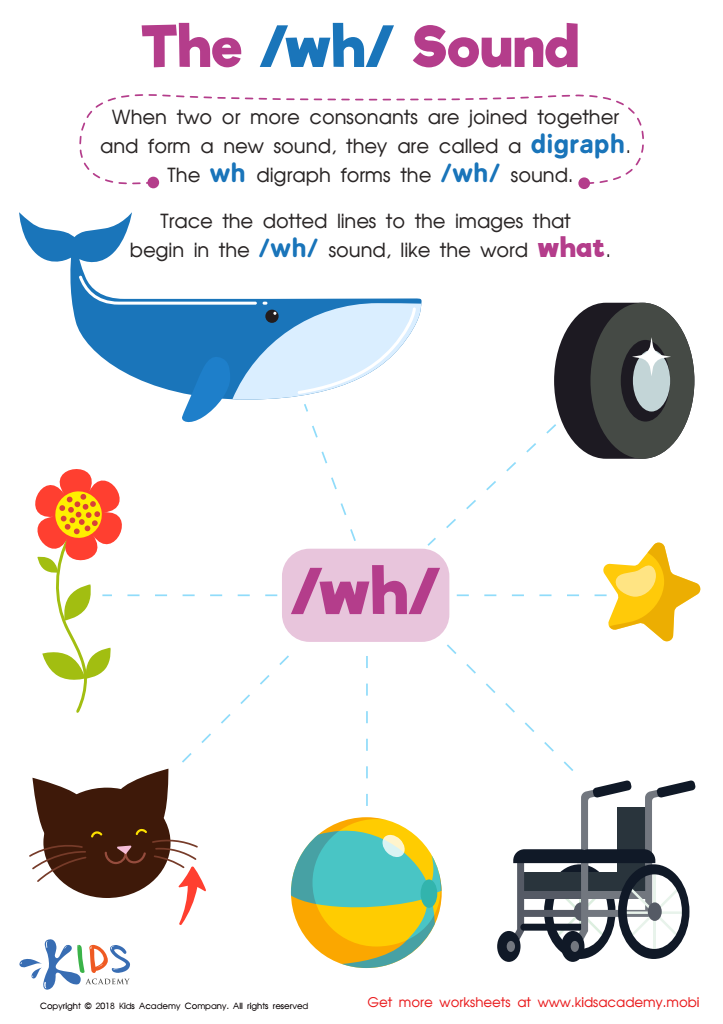
The /wh/ Sound Worksheet
Digraphs join two consonants to make a new sound, like /wh/. Give examples, like "whale", "when" and "why". Ask kids to name pictures in a worksheet and trace dotted lines to images beginning with the /wh/ sound; "what" is one example.
The /wh/ Sound Worksheet
Worksheet
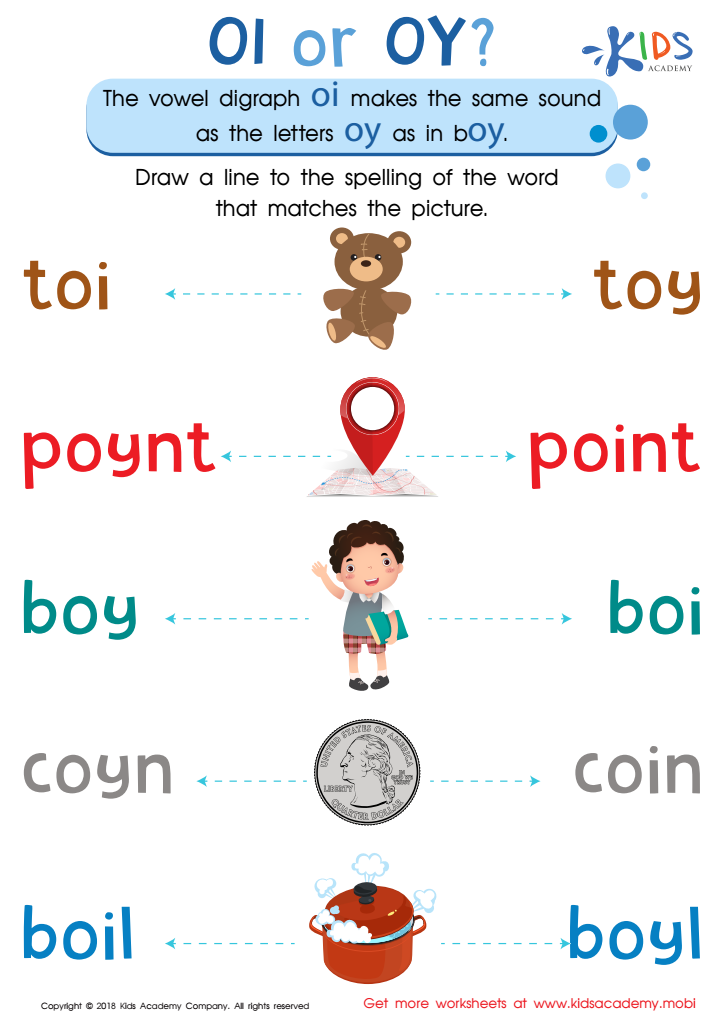
Reading: OI and OY Worksheet
Ask your students if they know the rule for words with /oi/ or /oy/ sound. If not, it's easy to learn! Rule: If /oy/ at end of word, spell with 'oy'; if /oi/ in middle of word, spell with 'oi'. Use this worksheet to help them master these digraphs and improve their ability to decode.
Reading: OI and OY Worksheet
Worksheet
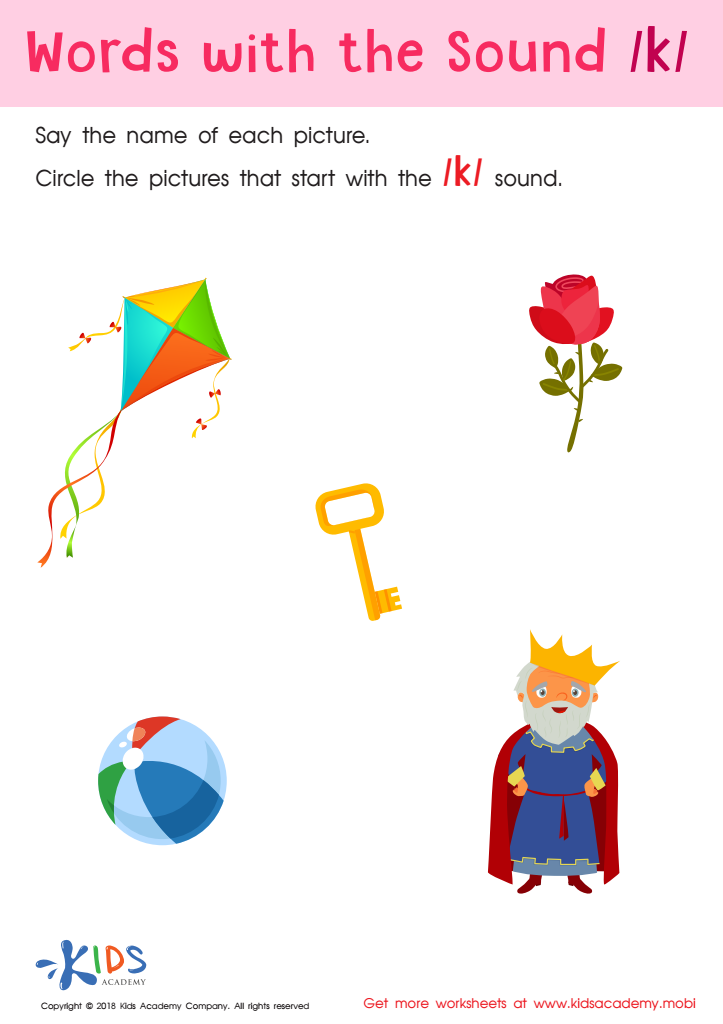
Words with sound k Reading Worksheet
Help your preschooler master the hard "k" sound with this fun worksheet from Kids Academy! Ask your child to say each picture aloud and circle only the pictures that start with "k". This early reading exercise will boost phonics skills and is sure to be loved by your little learner!
Words with sound k Reading Worksheet
Worksheet
Join Kids Academy for Free
Who is primarily going to use this learning content?






Reading proficiency is crucial for children aged 4-9, as it lays the foundation for their future academic success and overall development. During these formative years, children learn to decode letters, recognize sounds, and understand the principles of written language, which are essential skills for effective communication. Parents and teachers are vital partners in fostering this growth.
When children achieve reading proficiency, they gain confidence and are better equipped to engage with their surroundings. This proficiency enhances their cognitive abilities and encourages critical thinking skills, helping them to comprehend and analyze information presented through various media.
Reading also promotes imagination and creativity, allowing children to explore new ideas and cultures. By cultivating a love for reading from an early age, parents and teachers help instill lifelong habits that enrich a child's life academically and socially.
Furthermore, children who struggle with reading proficiency may face challenges in school, leading to frustration and decreased motivation. Early intervention is key to identifying and supporting those difficulties. By prioritizing reading skills during these critical years, we create a more equitable educational landscape and empower children to reach their full potential, ultimately contributing to a more informed and connected society.







