Middle Sounds Worksheets for Ages 4-9
4 filtered results
-
From - To
Unlock your child's reading potential with our Middle Sounds Worksheets for ages 4-9! These engaging, fun-filled activities focus on identifying vowel sounds within words, a crucial step in early literacy development. Designed by education experts, our worksheets use colorful images and intuitive exercises to help children recognize, pronounce, and match middle sounds in various words. Perfect for both classroom and at-home learning, these resources not only build phonemic awareness but also enhance spelling and reading fluency. Encourage your child's curiosity and confidence in reading with our expertly crafted Middle Sounds Worksheets. Explore now and watch as their skills soar!
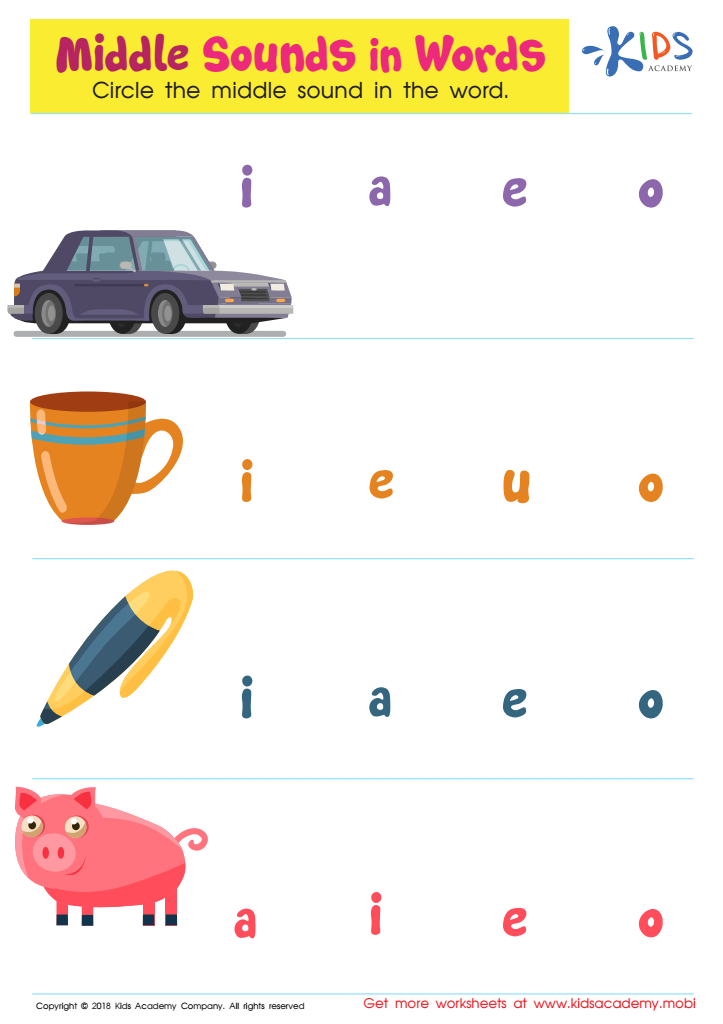
Middle Sounds in Words Worksheet
 Assign to My Students
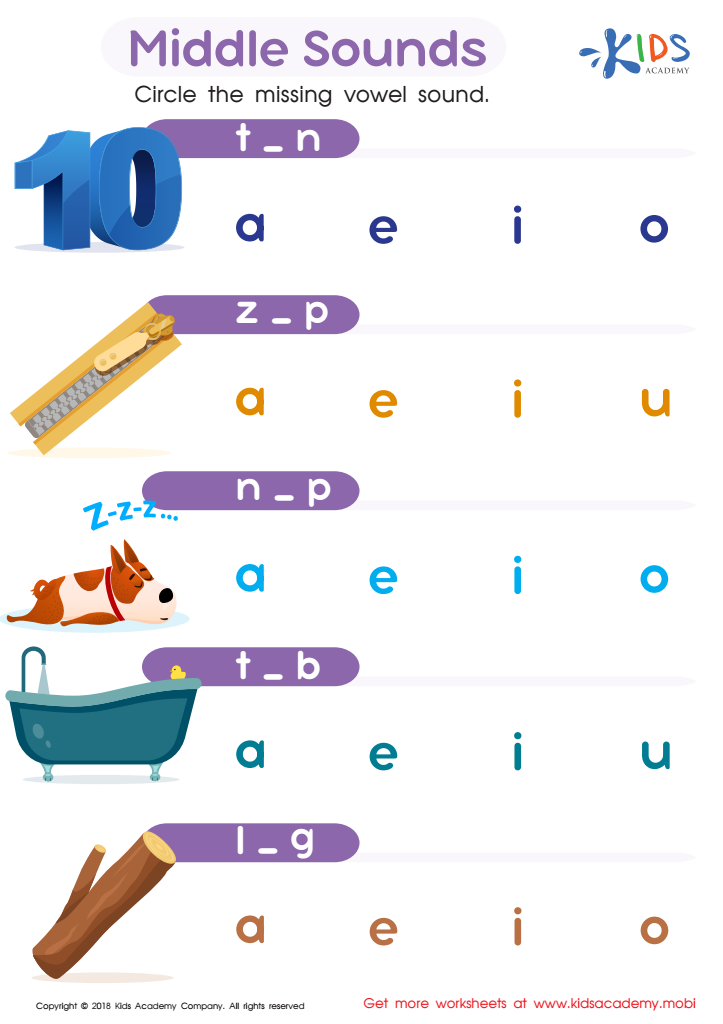
Middle Sounds Worksheet
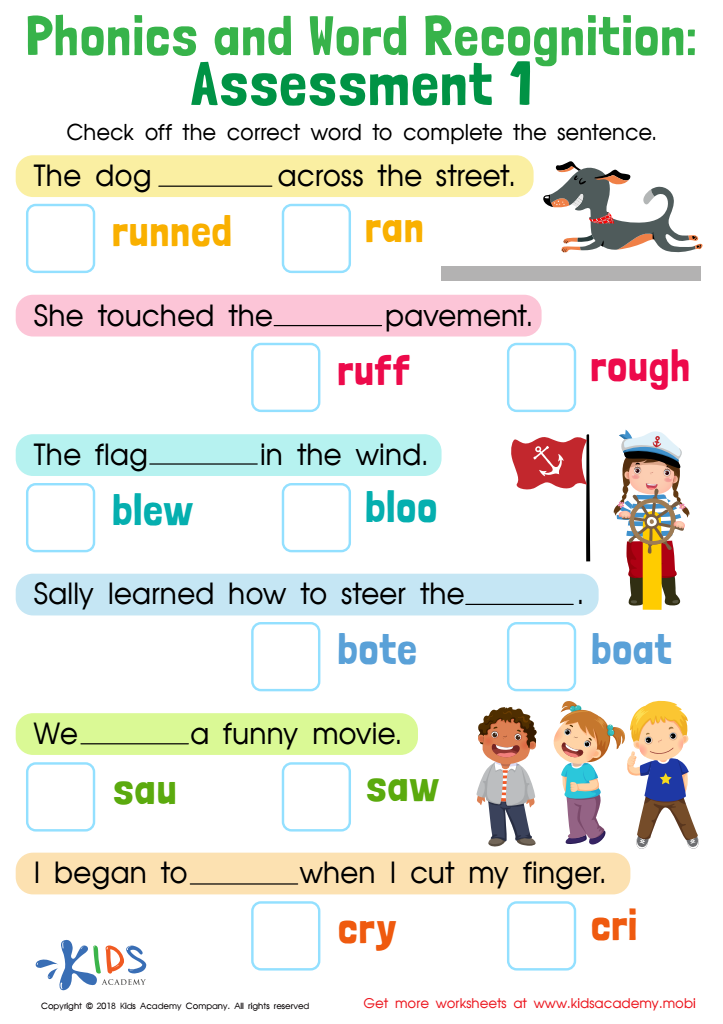
Phonics and Word Recognition: Assessment 1 Worksheet
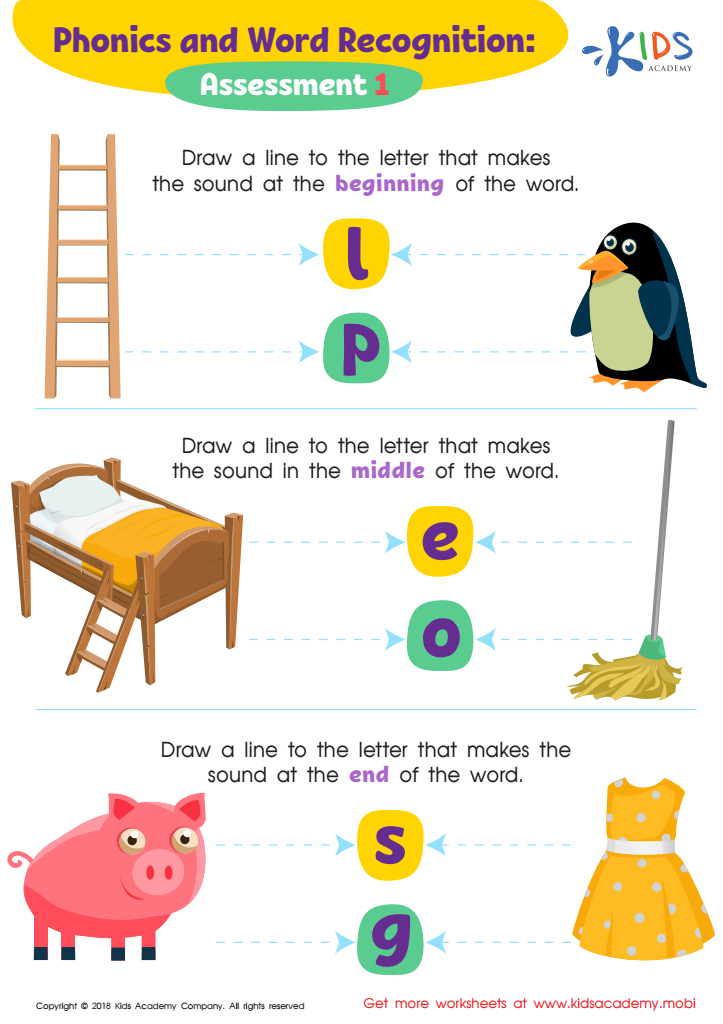
Phonics and Word Recognition: Assessment 1 ELA Worksheet





Understanding middle sounds is vital for children between the ages of 4-9 as it forms the foundation for essential literacy skills. During these formative years, children develop phonemic awareness—the ability to hear, identify, and manipulate individual sounds in words—which is crucial for reading and writing. Middle sounds are particularly important because they often determine the core sound of a word, affecting both pronunciation and meaning.
For parents and teachers, focusing on middle sounds improves a child's ability to decode new words, enhancing their reading fluency and comprehension. When children grasp the concept of middle sounds, they can more easily blend sounds to form words and segment words into individual sounds. This skill also aids in spelling, allowing children to represent words more accurately on paper.
Moreover, mastering middle sounds boosts a child's confidence and motivation to read and write, setting a positive trajectory for their educational journey. By engaging in activities such as reading aloud, playing phonics games, or using visual aids, parents and teachers can create a supportive learning environment. This focused effort can lead to significant improvements in a child's literacy, paving the way for academic success and fostering a lifelong love for reading and learning.








