Basic geometry knowledge Worksheets for Ages 4-9
4 filtered results
-
From - To
Unlock the magic of shapes and space for children aged 4-9 with our Basic Geometry Knowledge Worksheets! These engaging and educational worksheets are designed to make learning fun and effective. They help young learners explore fundamental geometric concepts such as shapes, sizes, patterns, symmetry, and spatial understanding. Our expertly crafted activities stimulate critical thinking, problem-solving, and fine motor skills. Perfect for classroom use or at-home learning, these printables provide a solid foundation in geometry, setting the stage for future success in math. Spark curiosity and confidence in your child today with our comprehensive geometry worksheets!
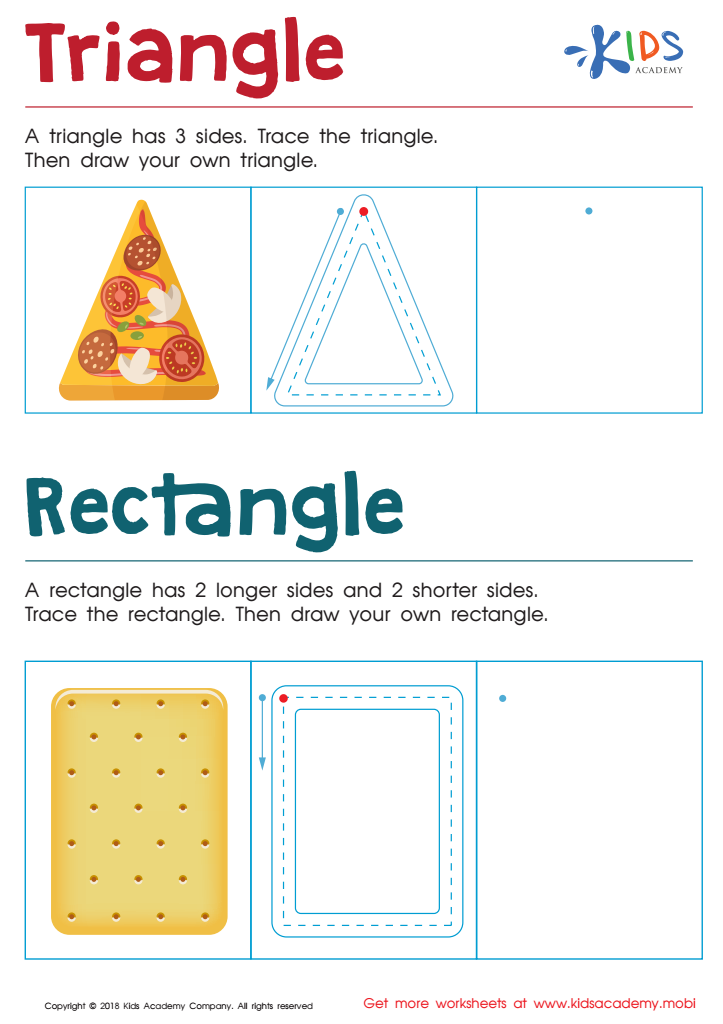
Triangle Rectangle Worksheet
 Assign to My Students
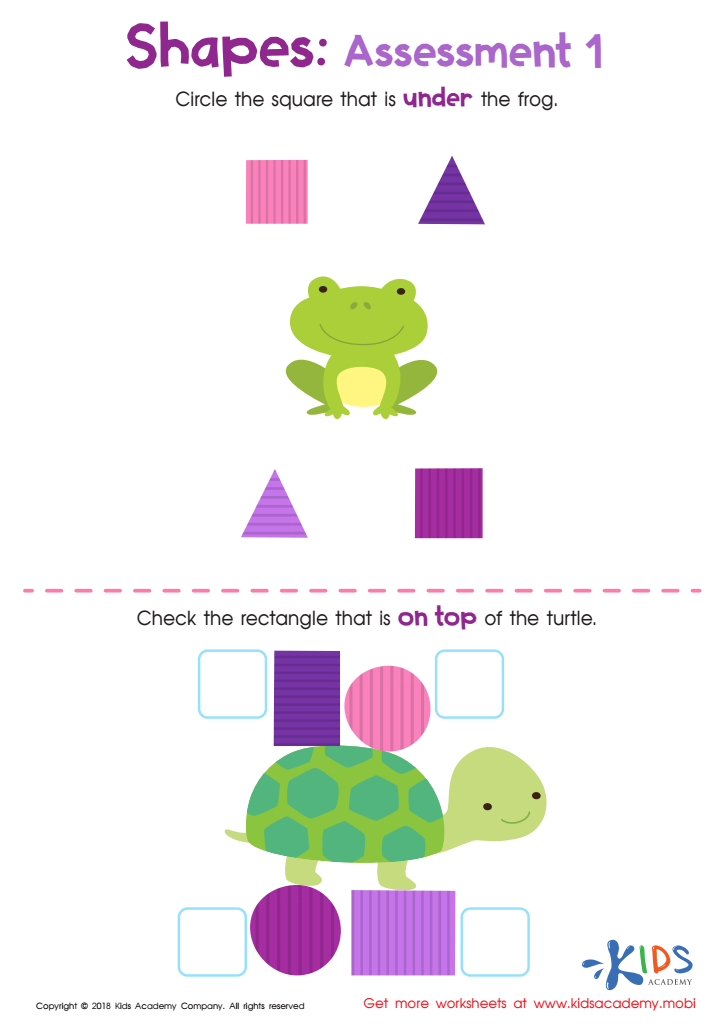
Geometry – Assessment 1 Worksheet
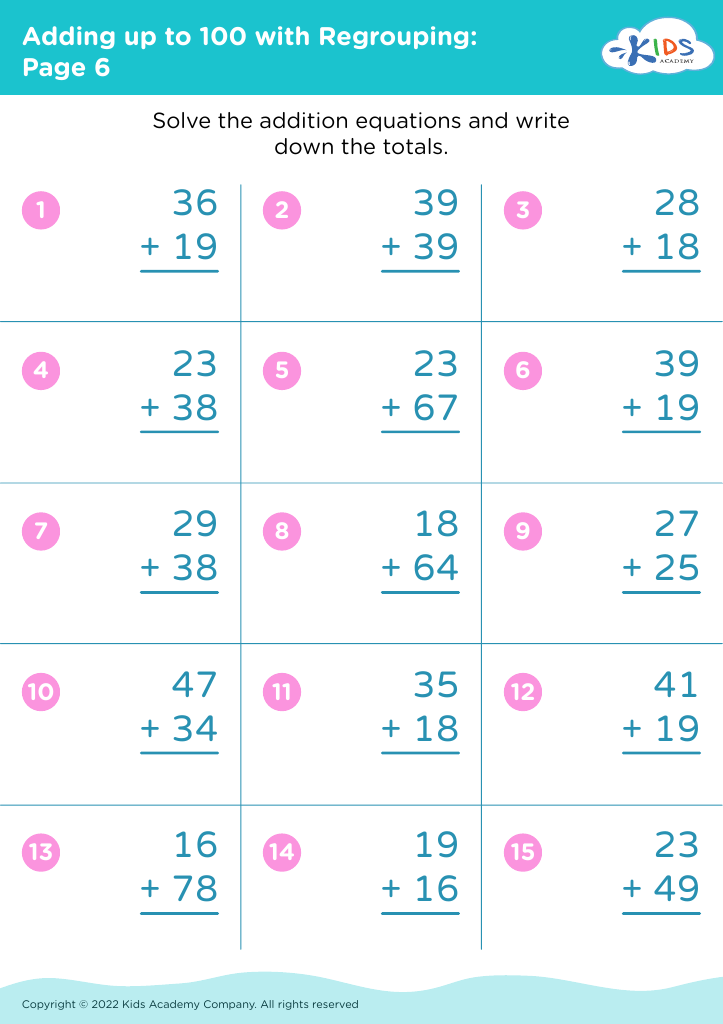
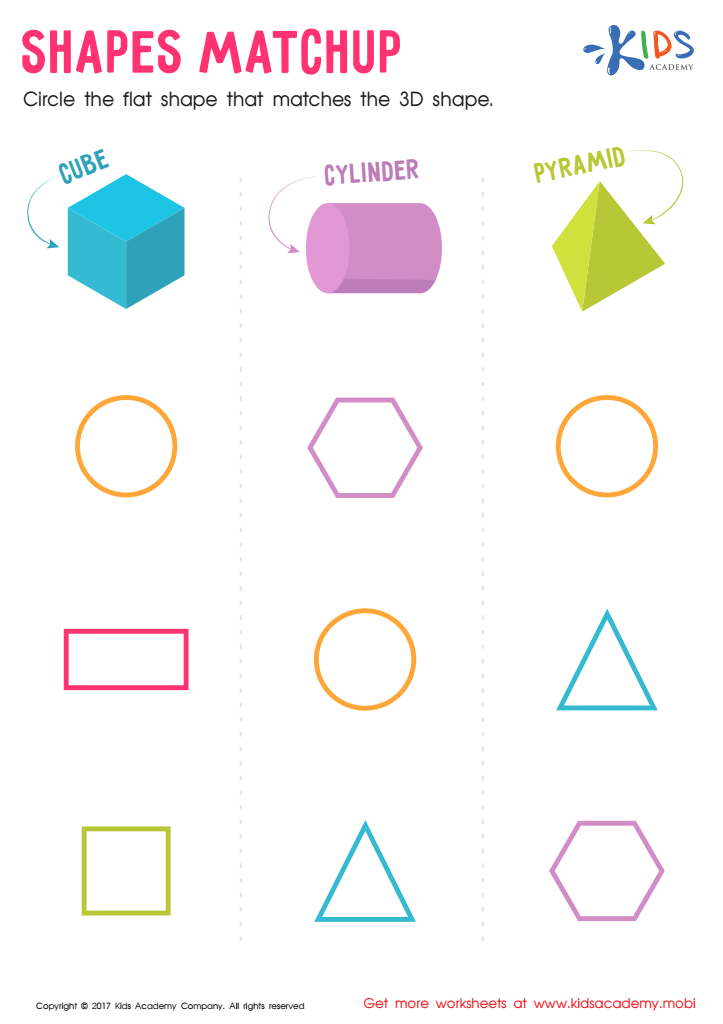
Shapes Matchup Worksheet





Basic geometry knowledge is essential for children aged 4-9 as it lays the groundwork for future mathematical understanding and everyday problem-solving skills. During these formative years, young minds are highly receptive to new concepts, making it the perfect time to introduce basic geometric principles. Understanding shapes, sizes, positions, and patterns not only enhances children's spatial awareness but also boosts their logical and analytical reasoning.
Geometry helps children navigate and describe their physical world. Recognizing shapes and their properties supports early reading skills by helping kids distinguish between different letter shapes and forms. Furthermore, geometry teaches basic concepts of symmetry, measurements, and relationships between objects, which are fundamental in daily life, from organizing their spaces to playing games.
Moreover, learning geometry enriches creativity and imagination. As children explore shapes and their combinations, they engage in art, design, and construction activities that enhance fine motor skills and creativity.
Additionally, a strong foundation in basic geometry supports later success in more complex math and science subjects. Teachers and parents fostering a positive and stimulating environment where children can explore geometric concepts through play, art, and practical activities can significantly contribute to their overall cognitive development and confidence in tackling new challenges.








