Comparing lengths Worksheets for Ages 4-9
18 filtered results
-
From - To
Welcome to our Comparing Lengths Worksheets page, specially designed for children aged 4 to 9! These engaging worksheets help young learners grasp the concept of length through fun activities and visual comparisons. By measuring and comparing various objects, children will develop essential skills in measurement and critical thinking. Our age-appropriate exercises cater to different learning levels, ensuring all students can progress at their own pace. With colorful illustrations and interactive tasks, these worksheets bring an enjoyable twist to math learning. Perfect for home or classroom use, our resources will spark curiosity and boost confidence as children explore the world of lengths!
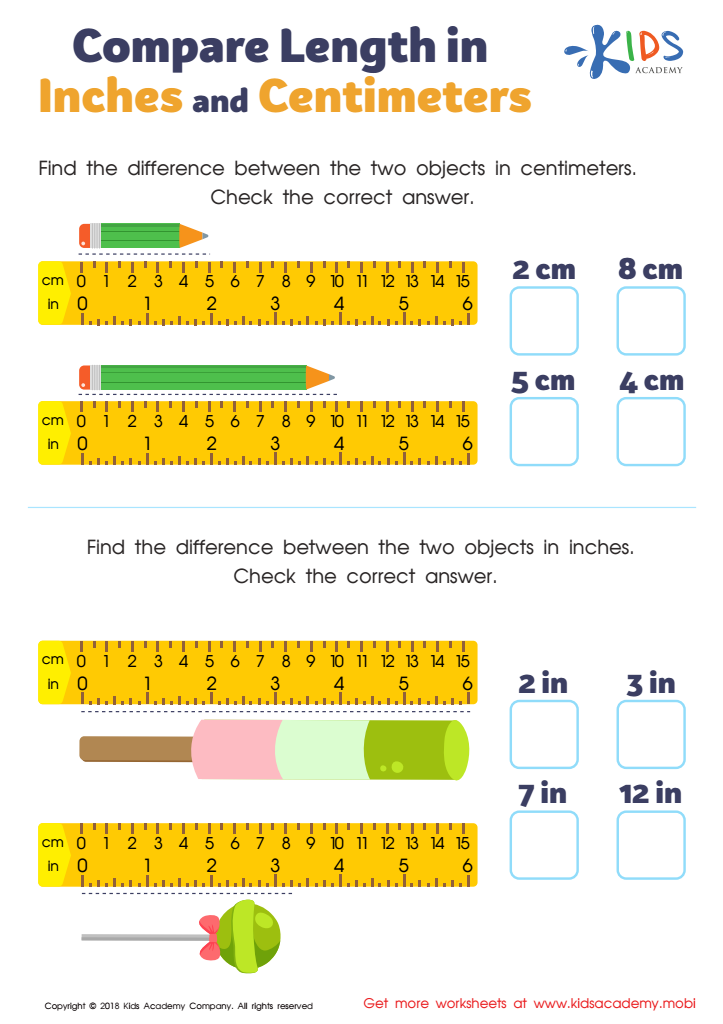
Compare Length in Inches and Centimeters Worksheet
 Assign to My Students
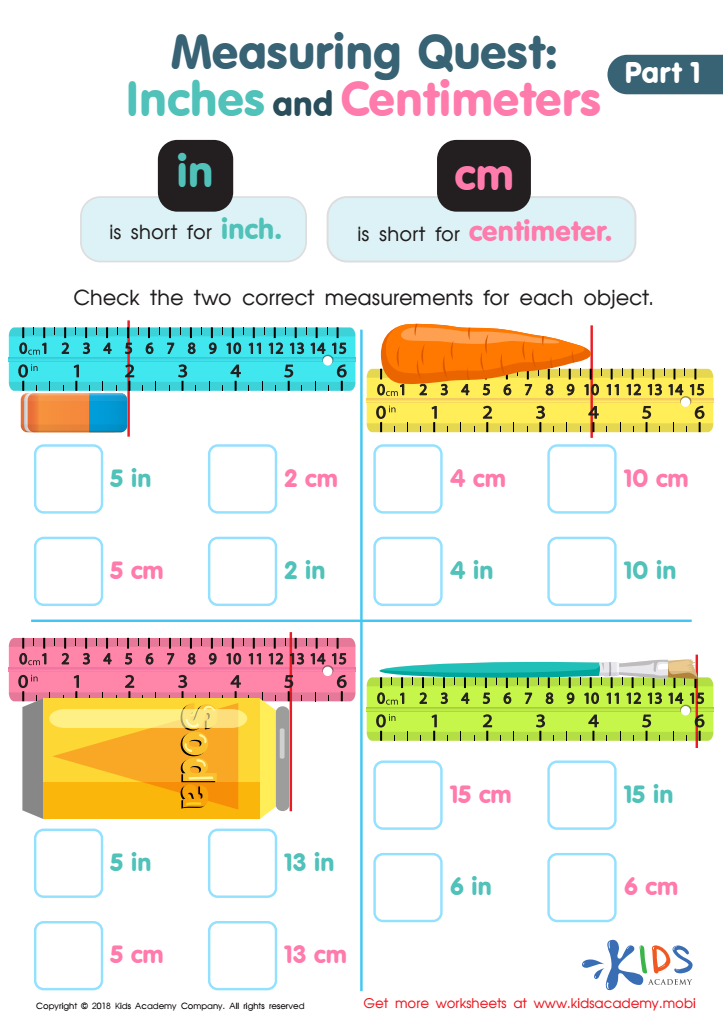
Measuring Quest: Inches and Centimeters Worksheet
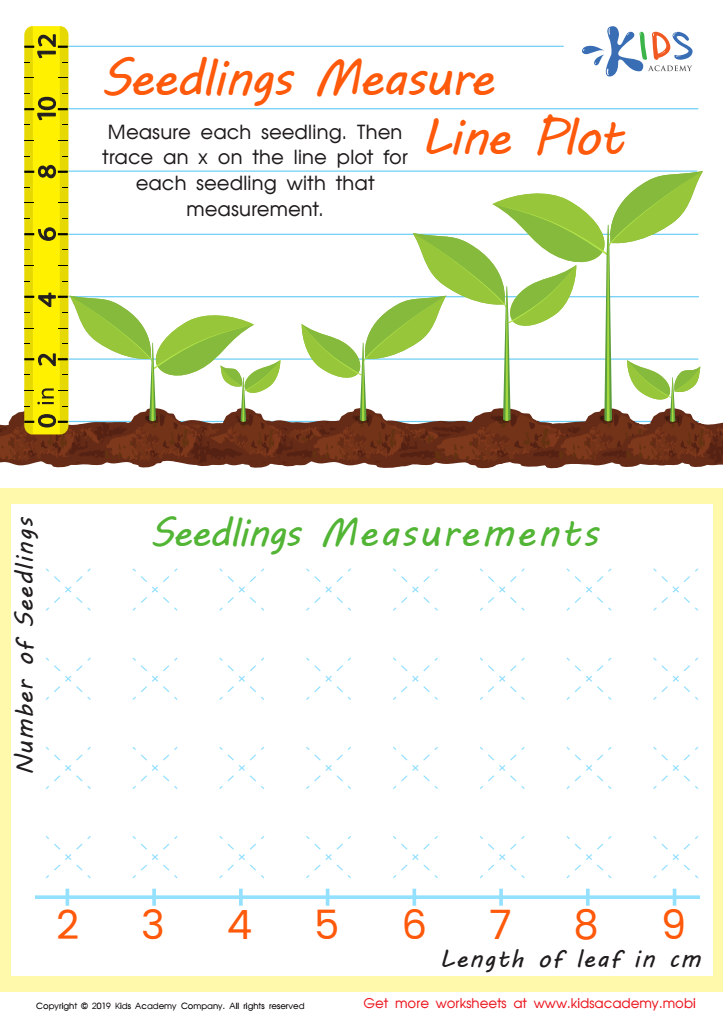
Seedling Measure Line Plot Worksheet
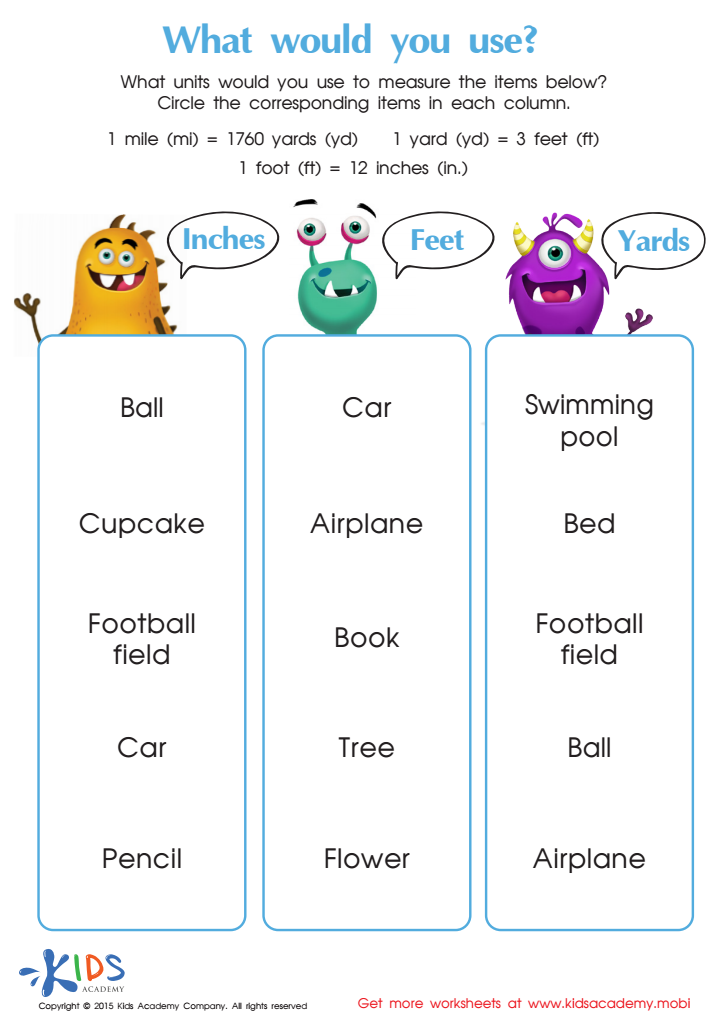
Learning about measuring objects in inches, feet and yards Worksheet
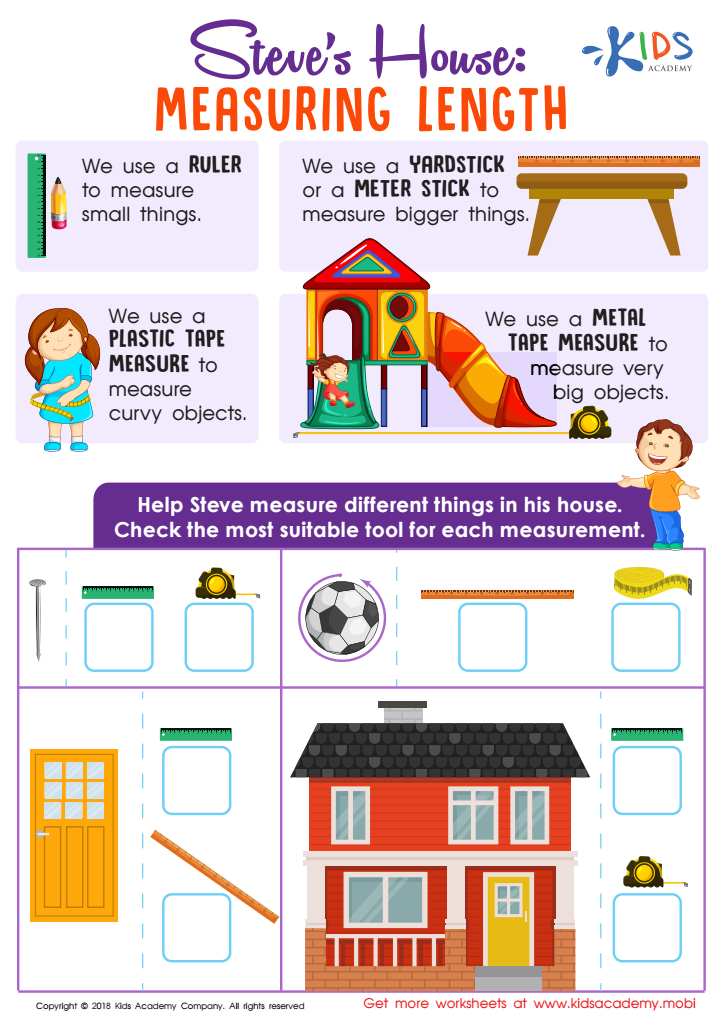
Steve's House: Measuring Length Worksheet
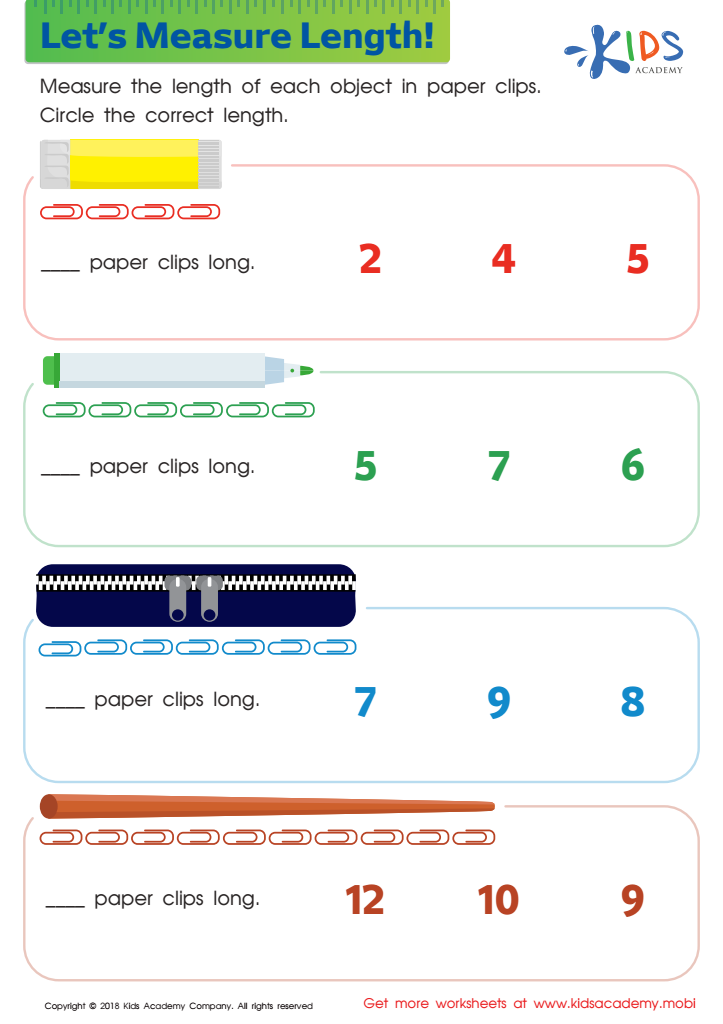
Lets Measure Length Worksheet
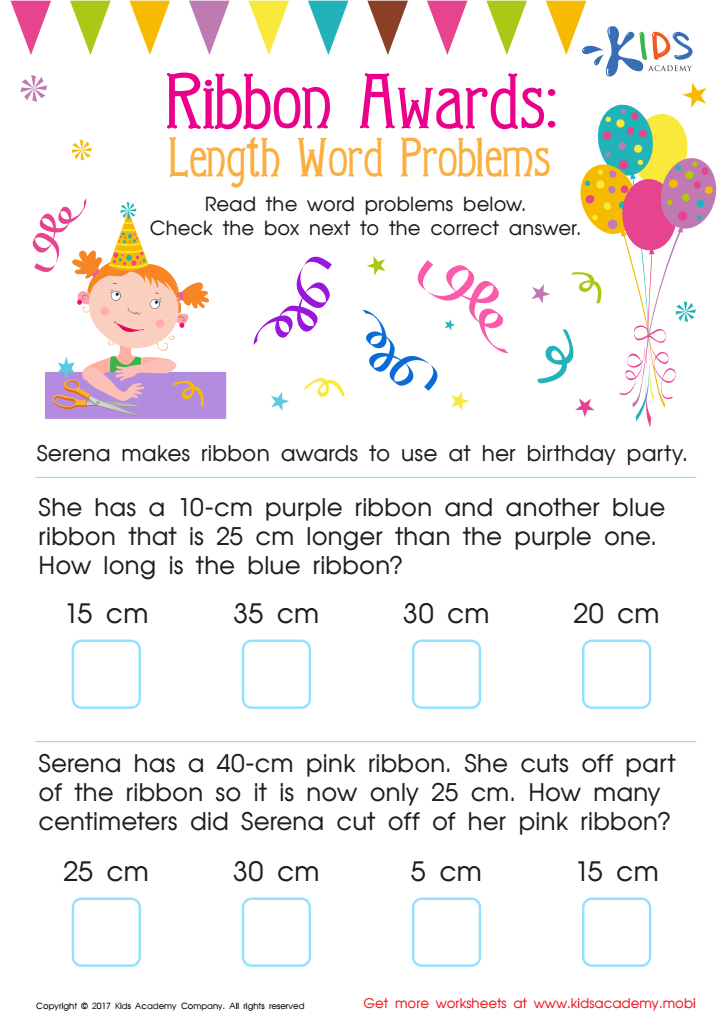
Length Word Problems Worksheet
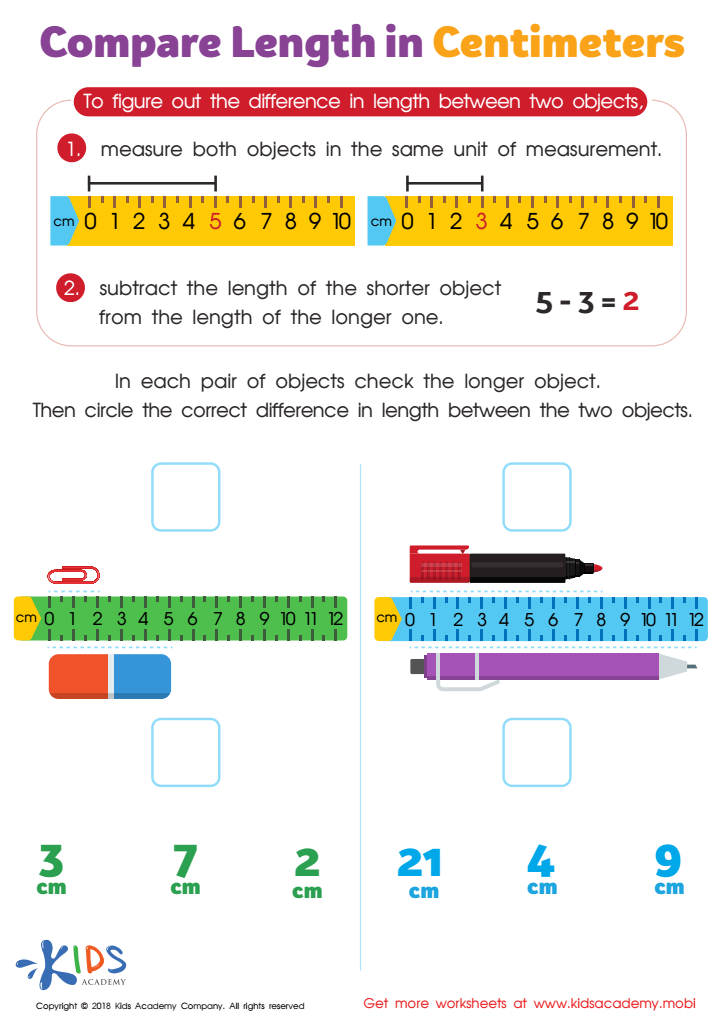
Compare Length in Centimeters Worksheet
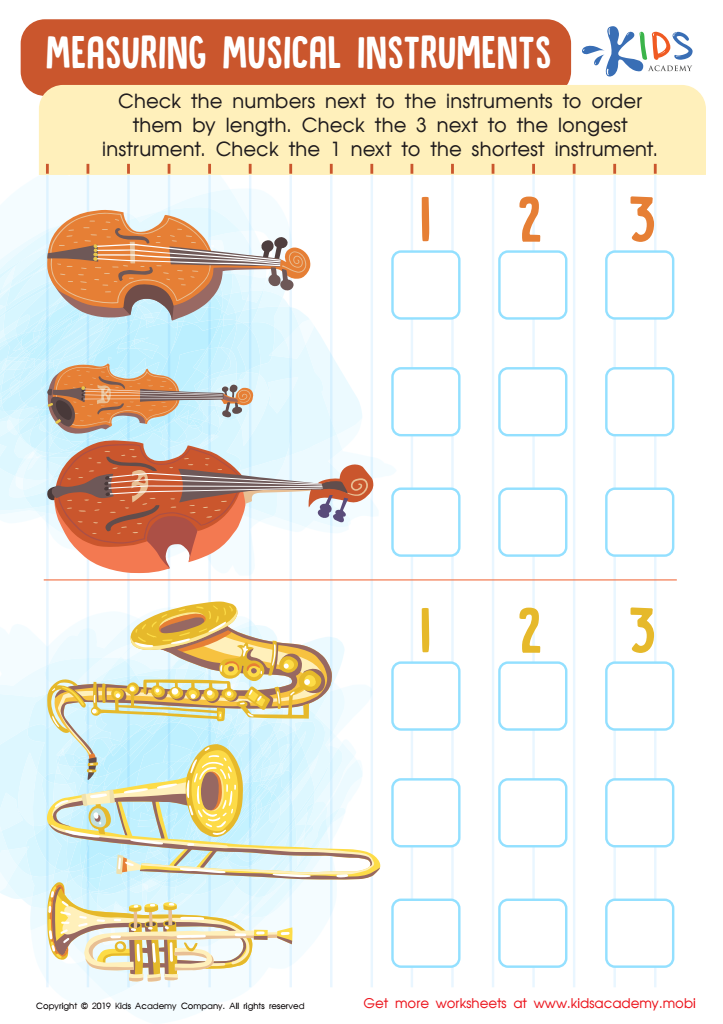
Measuring Musical Instruments Worksheet
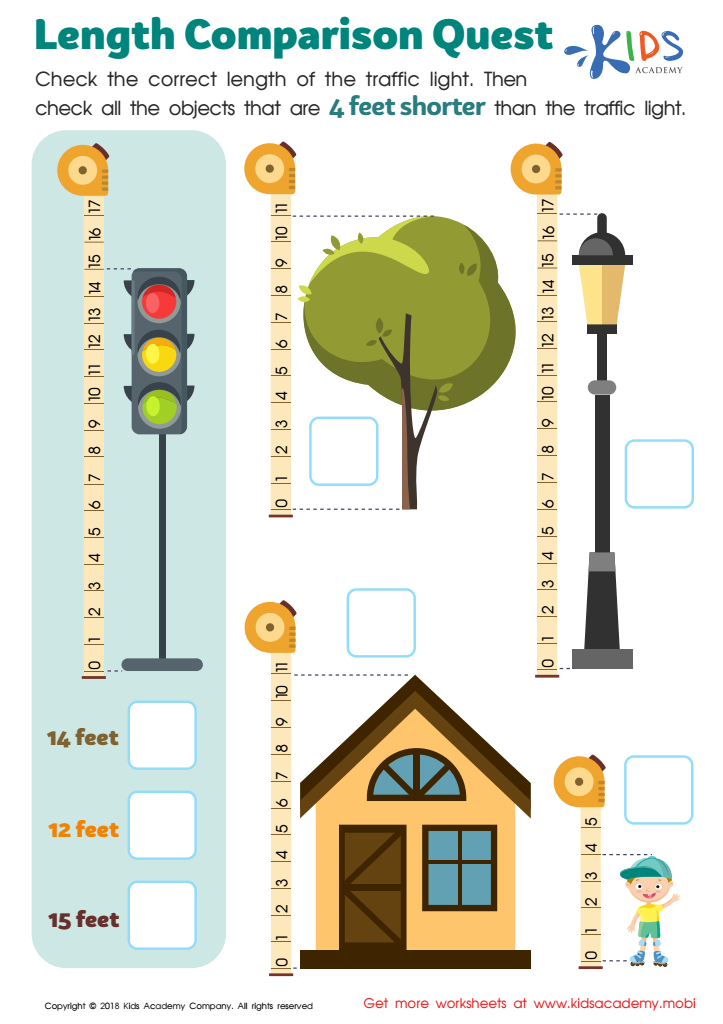
Length Comparison Quest Worksheet
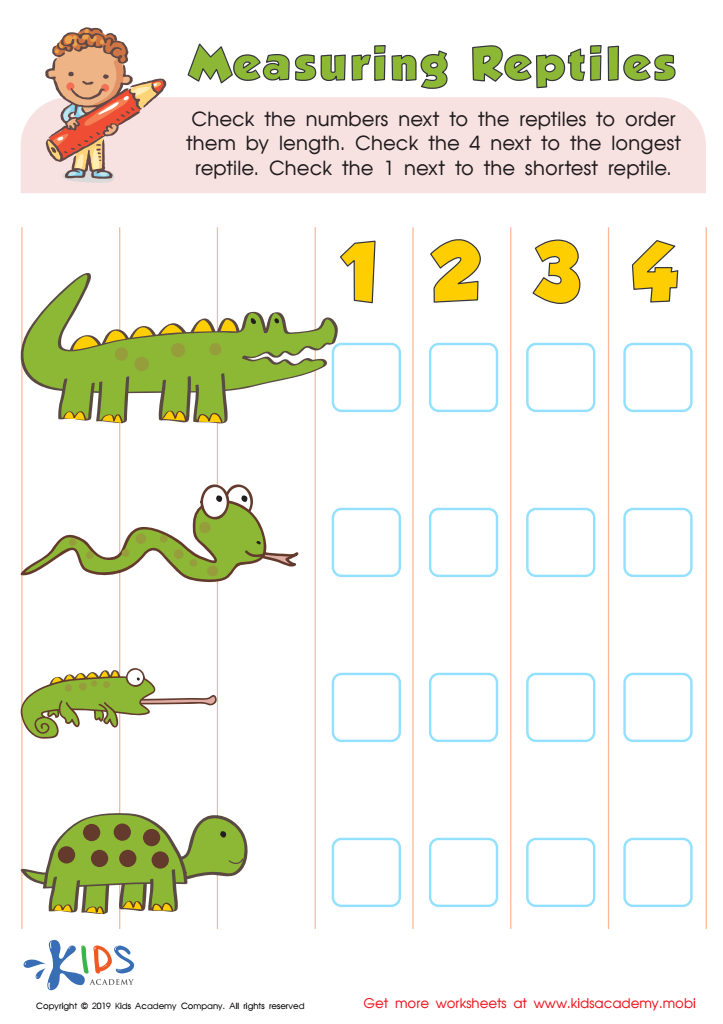
Measuring Reptiles Worksheet
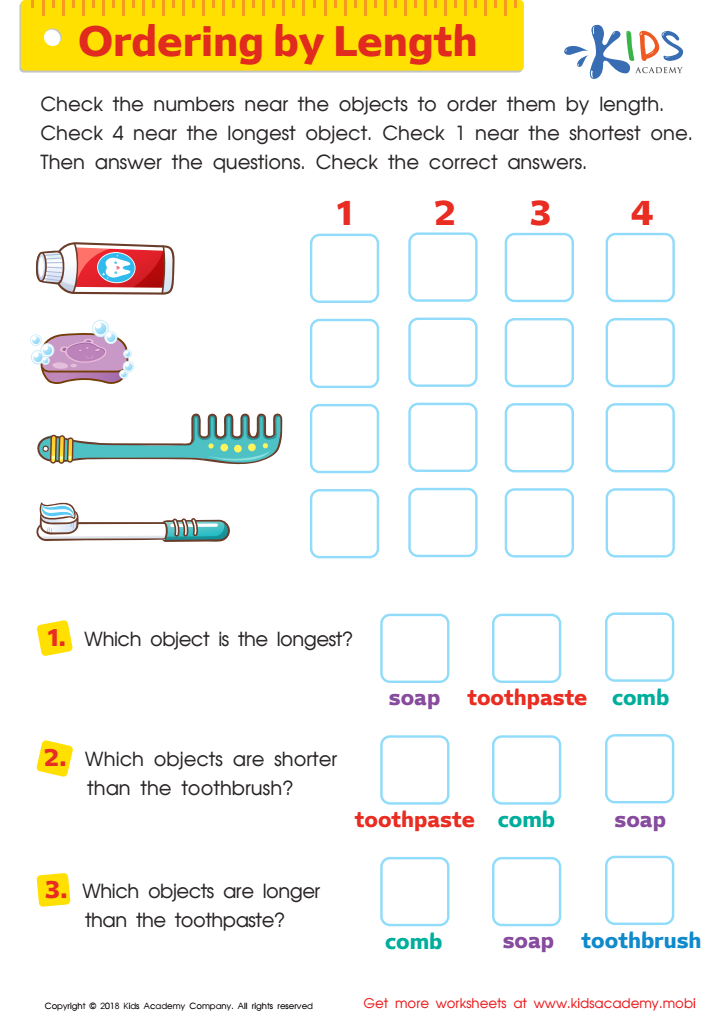
Ordering by Length Worksheet
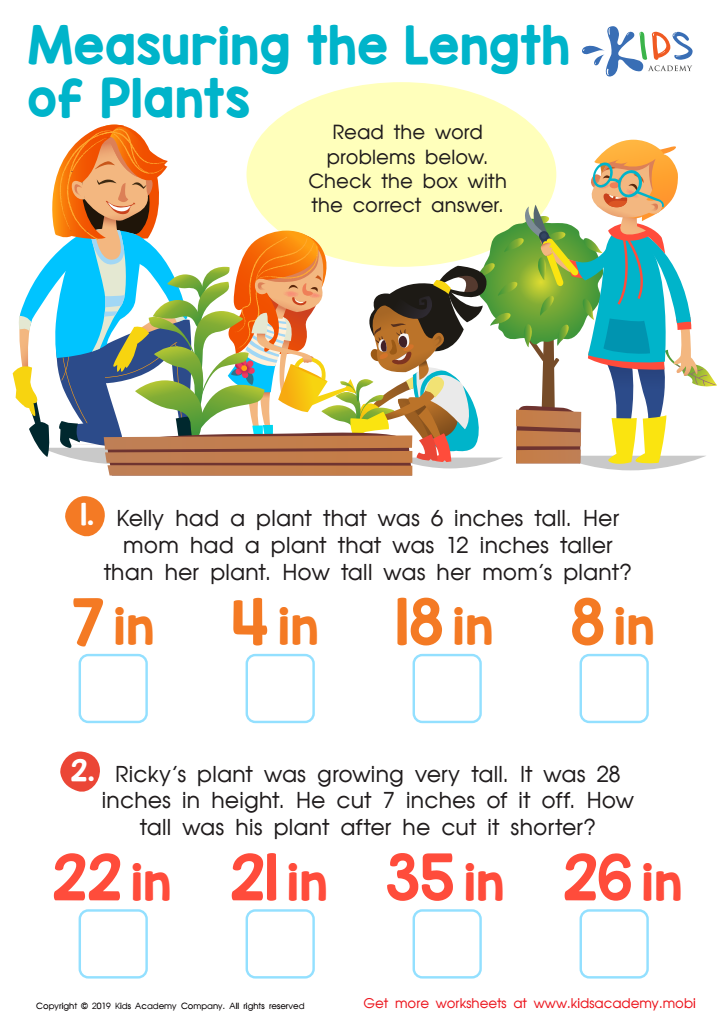
Measuring the Length of Plants Worksheet
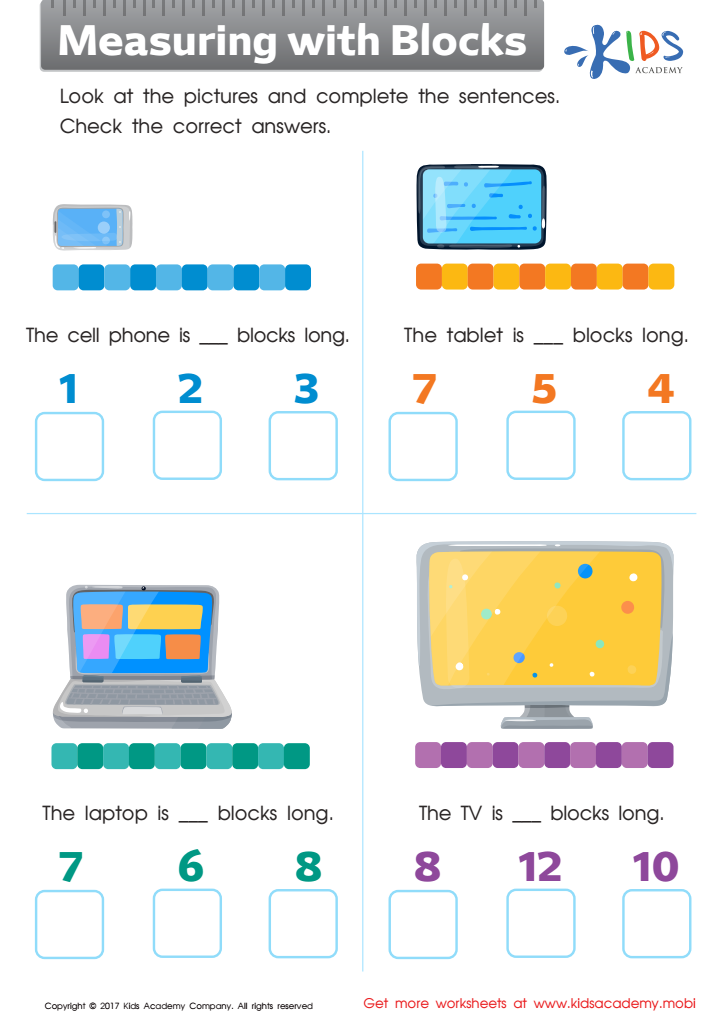
Measuring with Blocks Worksheet
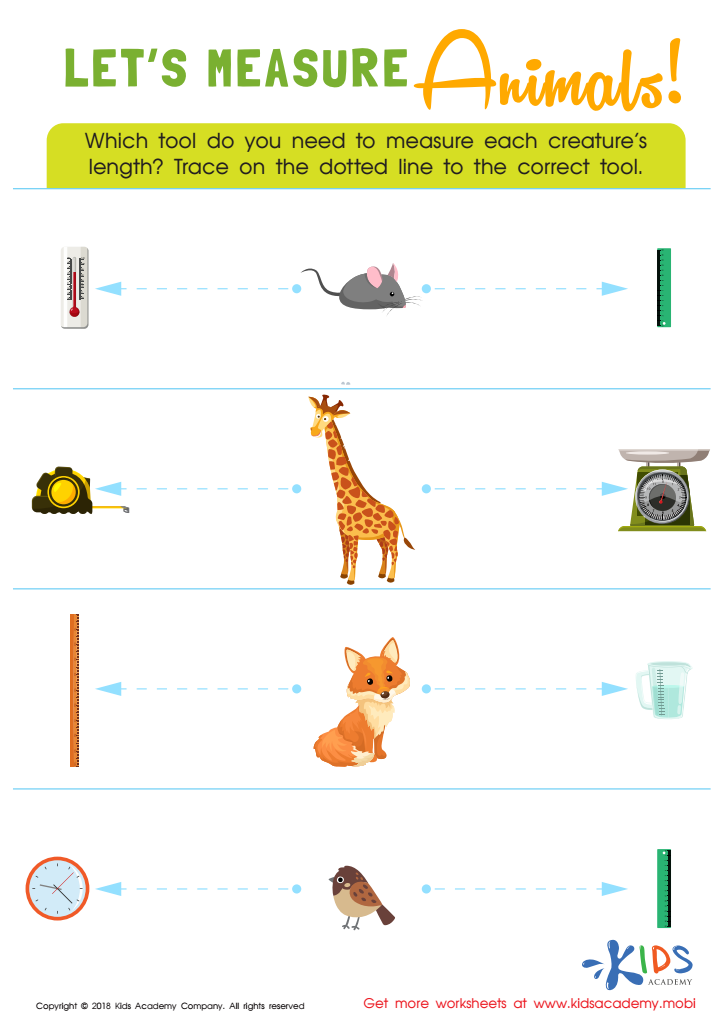
Let's Measure Animals! Worksheet
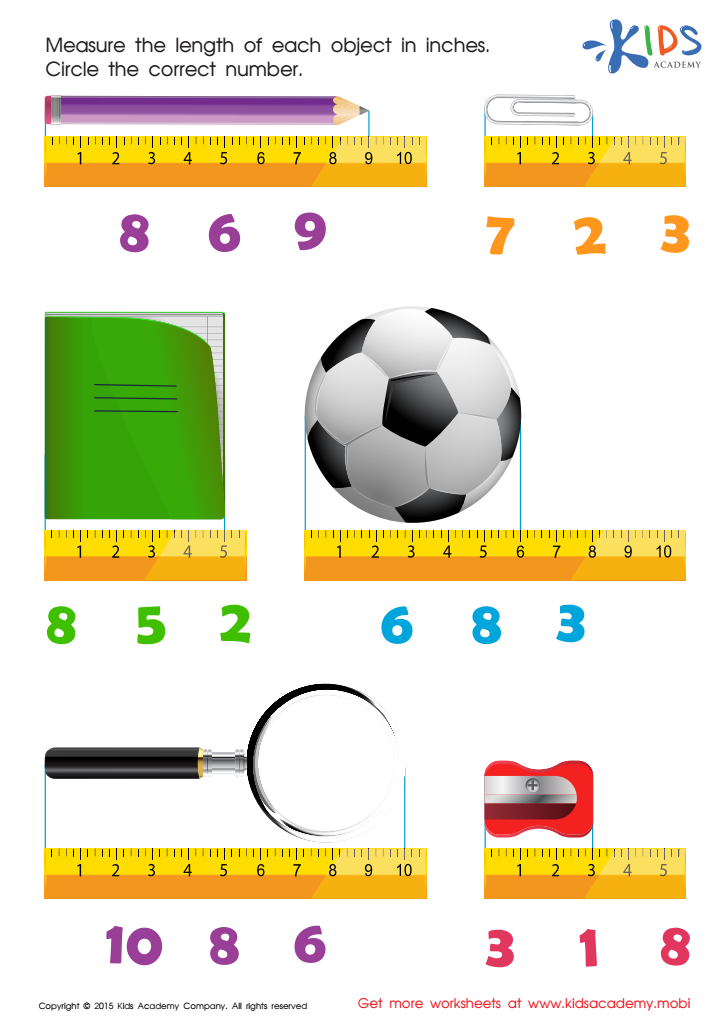
Learning measuring objects in inches Worksheet





Comparing lengths is an essential skill for children aged 4-9, forming a foundational element of early math education. Understanding length concepts fosters critical thinking, spatial awareness, and problem-solving abilities. For parents and teachers, emphasizing length comparison supports not only mathematical skills, but also daily practical applications such as measuring objects in their environment, which enhances children's observational skills.
By engaging in activities such as using rulers, yardsticks, or even everyday items to compare lengths, children develop language skills through descriptive words like "longer," "shorter," and "equal". This vocabulary is vital for effective communication and reasoning in various academic areas.
Moreover, comparing lengths introduces concepts of estimation and precision, promoting a growth mindset as children learn from trial and error. These foundational mathematical experiences help reinforce confidence, making future math concepts more approachable.
Parents and teachers who prioritize length comparison cultivate a thriving learning environment that encourages curiosity and exploration. By nurturing these skills, they're laying the groundwork for more advanced mathematical concepts, ultimately preparing children for future academic challenges while enhancing their everyday interactions with the world around them. Supporting children in this area of learning at an early age contributes to their overall cognitive and emotional development.








