Detail identification Worksheets for Ages 4-9
4 filtered results
-
From - To
Enhance your child's observation and critical thinking skills with our Detail Identification Worksheets for Ages 4-9! These engaging worksheets are designed to help young learners develop attention to detail through a variety of fun and interactive activities. Each worksheet presents colorful images and relatable scenarios, encouraging children to analyze visual data, recognize differences, and make connections. Ideal for both home and classroom settings, our worksheets promote cognitive growth while keeping learning enjoyable. Perfect for early educators and parents alike, our resources facilitate essential skills that lay the foundation for future academic success. Start fostering curiosity and focus in your child today!
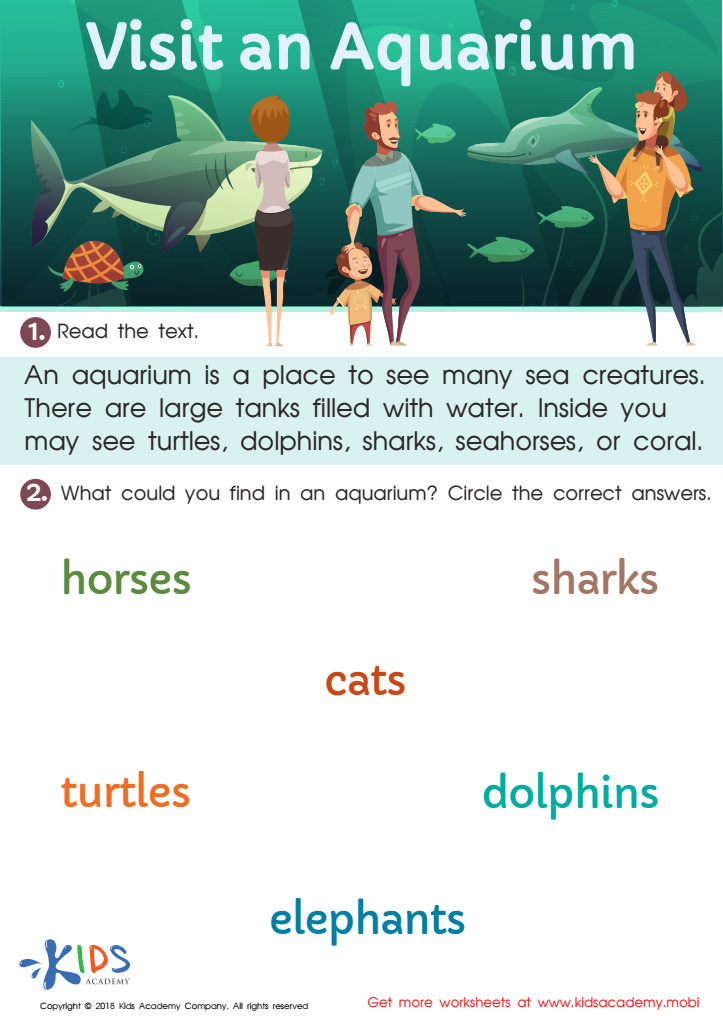
Visit an Aquarium Worksheet
 Assign to My Students
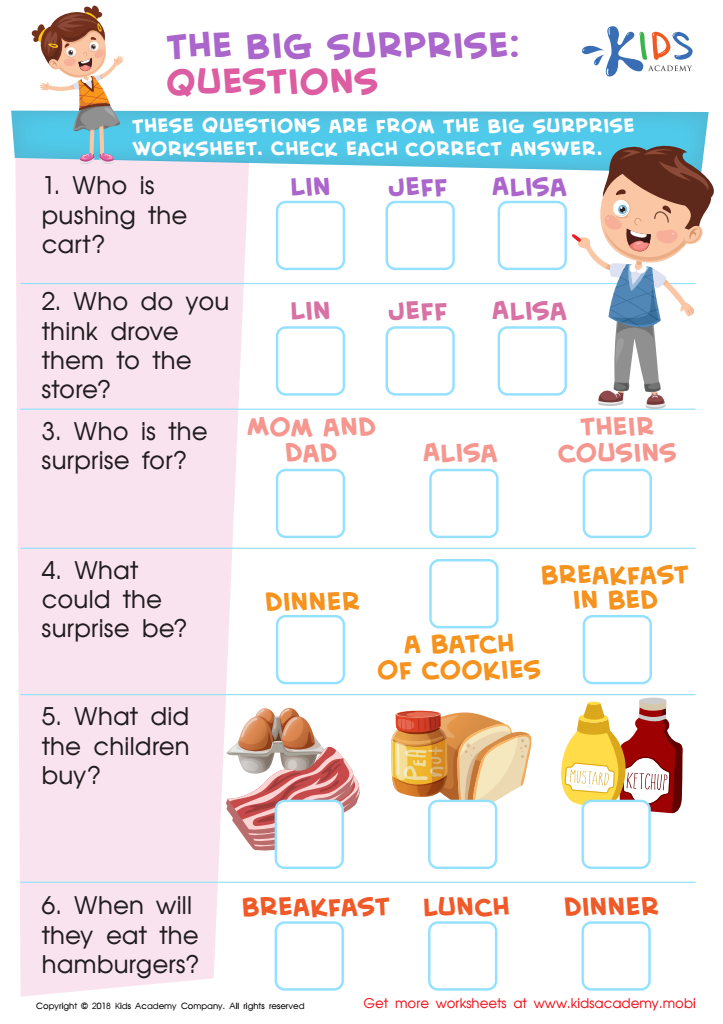
The Big Surprise: Questions Worksheet
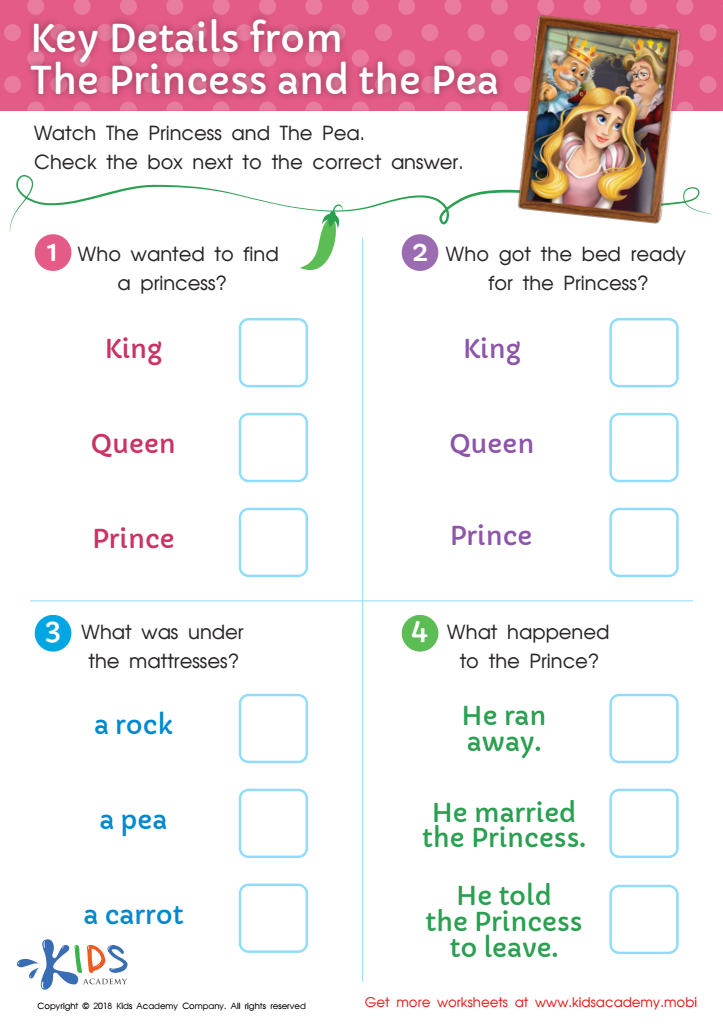
Key Details from the Princess and the Pea Worksheet
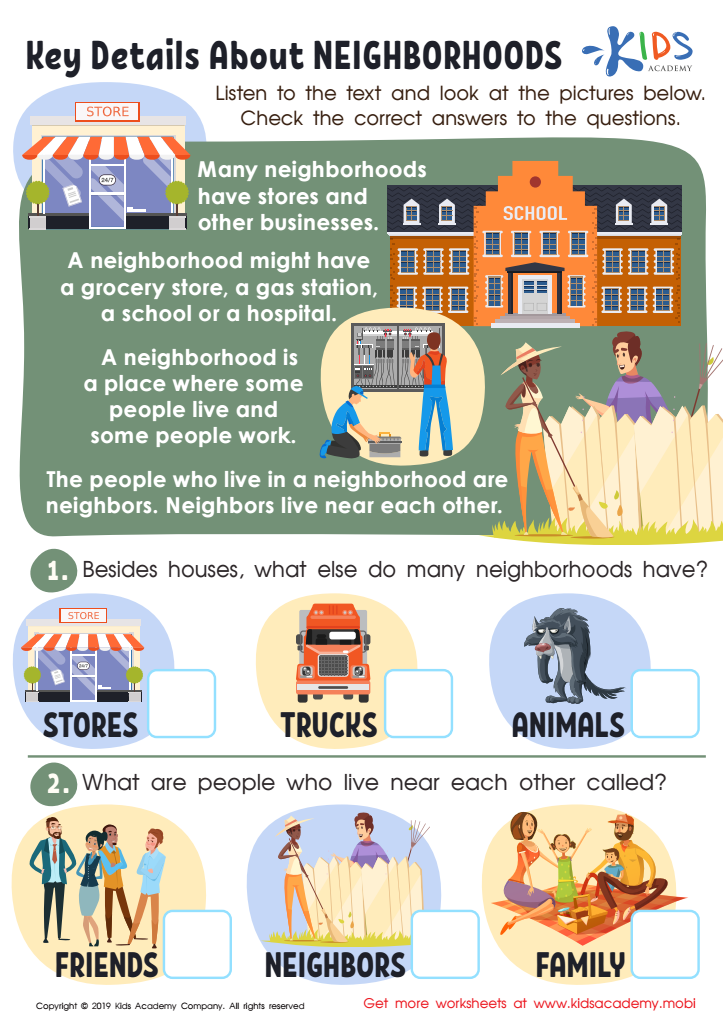
Key Details Neighborhoods Worksheet








Detail identification is a crucial skill for children aged 4-9 as it forms the foundation for reading comprehension, critical thinking, and effective communication. At this stage, children are developing their ability to understand and interact with the world around them. Recognizing details helps them gather specific information from stories, enhance their vocabulary, and make connections between concepts.
For parents and teachers, fostering detail identification equips children with the tools they need to engage more deeply with texts, whether they be storybooks, informational reads, or conversations. This skill encourages attentive listening and observation, making learning more meaningful and relatable.
Additionally, detail identification promotes independent thinking as children learn to discern important elements versus extraneous information, a skill that transcends academic settings and nurtures informed future citizens.
Furthermore, being attentive to details plays a vital role in many subjects beyond language arts, including science and mathematics, where precision is key. Engaging children in activities that hone this skill—such as storytelling, visual arts, or reading comprehension games—can create a rich and interactive learning environment.
Ultimately, by prioritizing detail identification, parents and teachers contribute to fostering engaged, thoughtful, and capable learners.








