
Grammar skills Worksheets for Ages 4-9
7 filtered results
Difficulty Level
Grade
Age
-
From - To
Subject
Activity
Standards
Unlock your child's full potential with our Grammar Skills Worksheets for Ages 4-9! Designed by experts at Kids Academy, these interactive and engaging worksheets make learning grammar fun and effective. From basic sentence structure to more advanced punctuation and grammar rules, our worksheets cater to all learning levels. Perfect for preschoolers and early elementary students, each worksheet offers colorful illustrations and activities that will captivate and motivate young learners. Boost your child's grammar skills and confidence—explore our extensive collection today!
Favorites
With answer key
Interactive
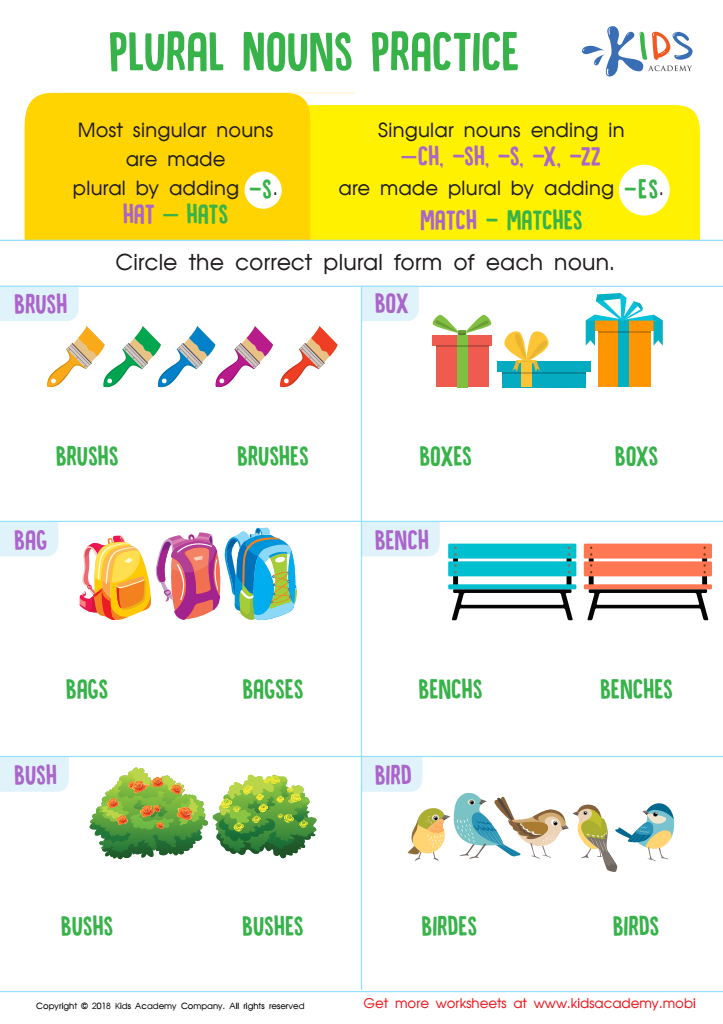
Plural Nouns Practice Worksheet
Explain to your child that most singular nouns become plural by adding "-s". E.g. "cat"->"cats". For words ending in "-ch", "-sh", "-s", "-x", or "-zz", add "-es". E.g. "buzz"->"buzzes". Then, get them to circle the right plural form of each noun on the worksheet.
 Assign to My Students
Plural Nouns Practice Worksheet
Worksheet
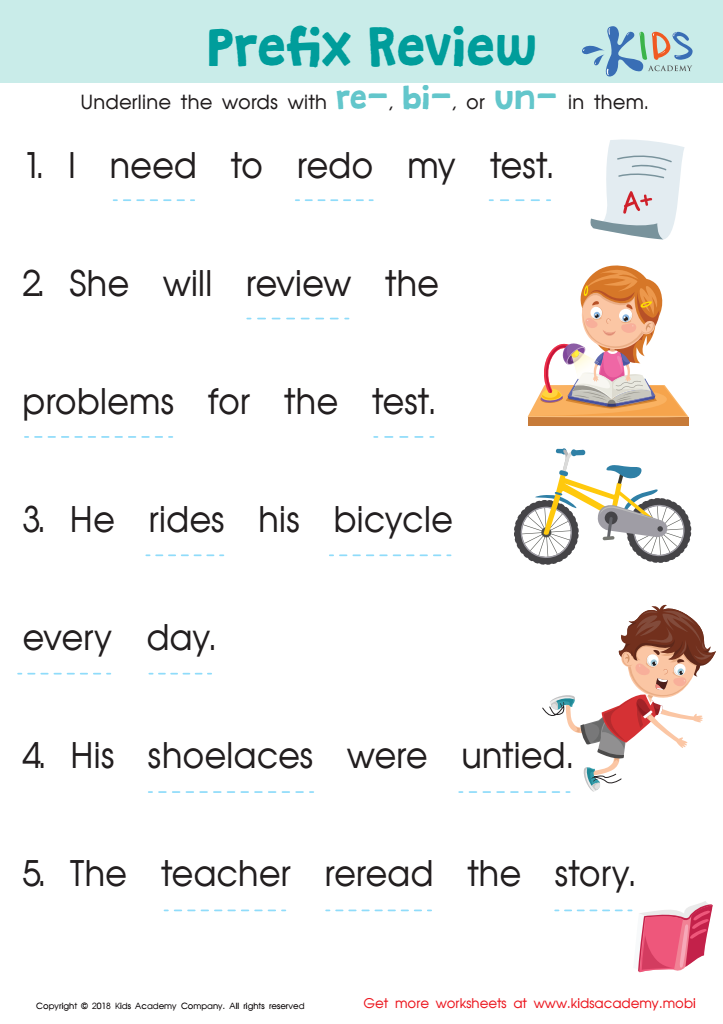
Prefix Review Worksheet
Learning prefixes is key for effective communication. Help your child master re-, bi-, and un- with a Kids Academy worksheet. Ask them to go through each sentence, underlining words with one of the prefixes. This will help them appreciate how prefixes alter the meaning of a root word.
Prefix Review Worksheet
Worksheet
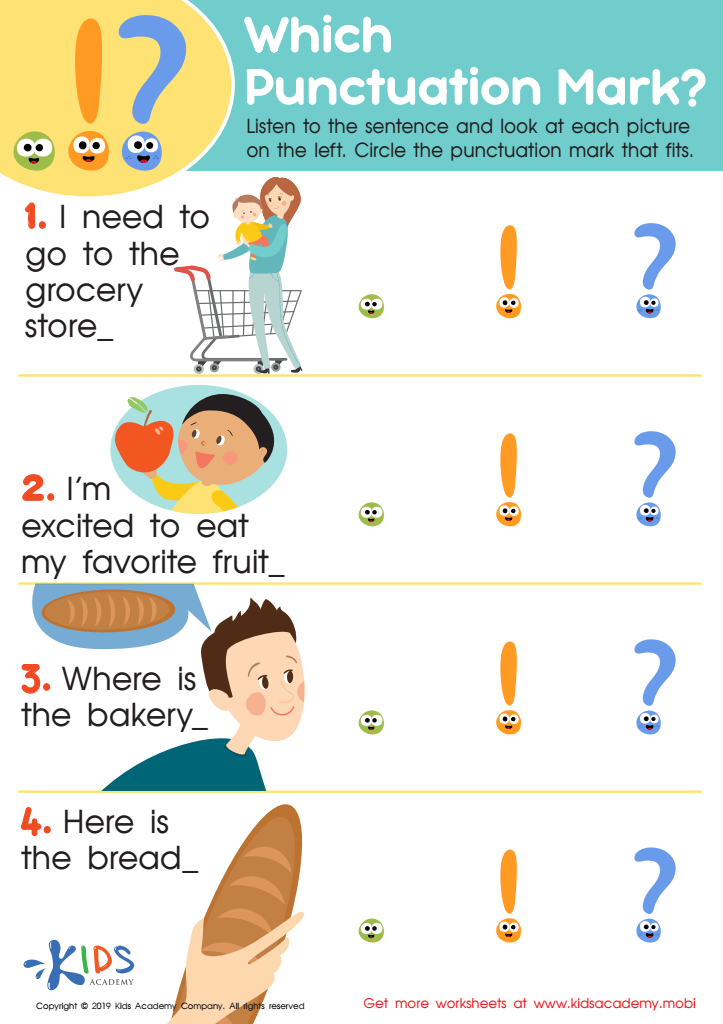
Which Punctuation Mark Worksheet
Punctuation marks are essential for expressing what we say. This worksheet asks your kindergarten student to circle the correct punctuation mark for each sentence. Read each sentence aloud and help them identify the expression needed. A picture accompanies each sentence. Enjoy! (79 words)
Which Punctuation Mark Worksheet
Worksheet
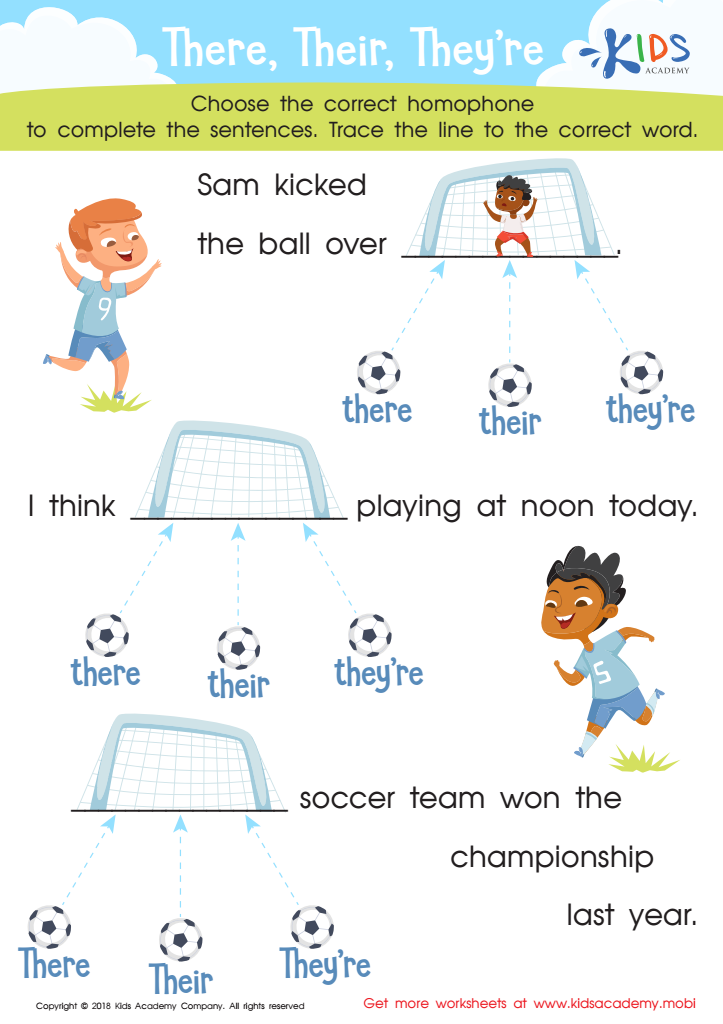
There, Their, They're Worksheet
Explain to your kids the difference between 'there', 'their' and 'they're'. These three words are homophones - spelt similarly but with different meanings. Help them choose the correct homophones when completing sentences, and trace the line to the right word.
There, Their, They're Worksheet
Worksheet
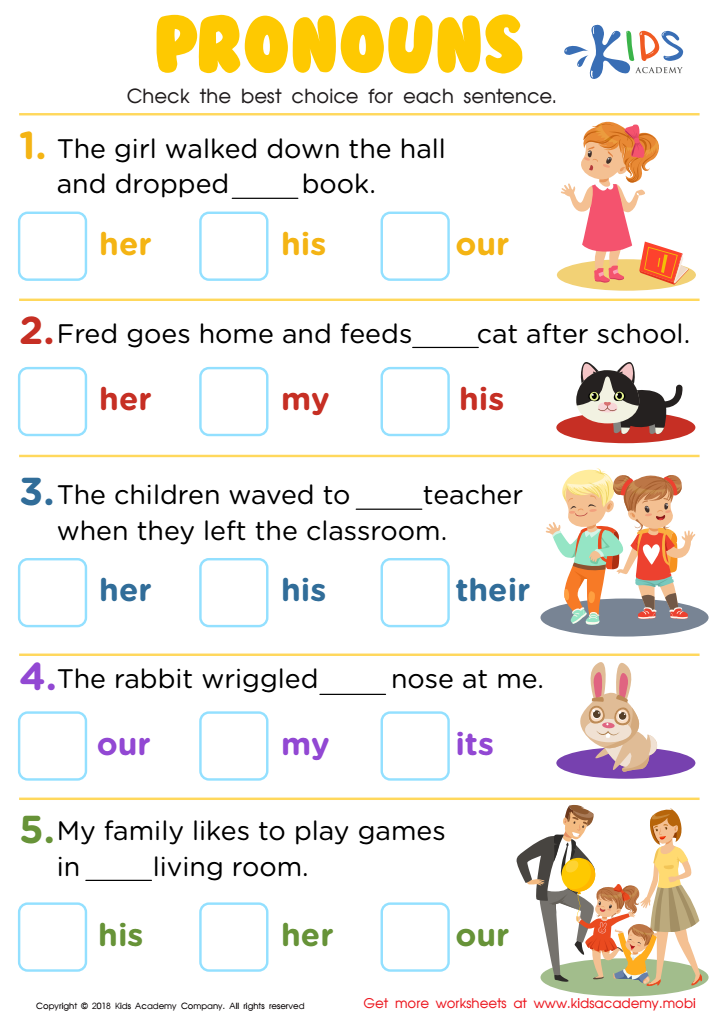
Pronouns Worksheet
Help your child explore pronouns with this worksheet: start by asking them which pronouns they know. Then, read the sentences and their options aloud together, and ask your child to choose the best pronoun for each sentence. This worksheet should be easy for them if they can already read short sentences.
Pronouns Worksheet
Worksheet
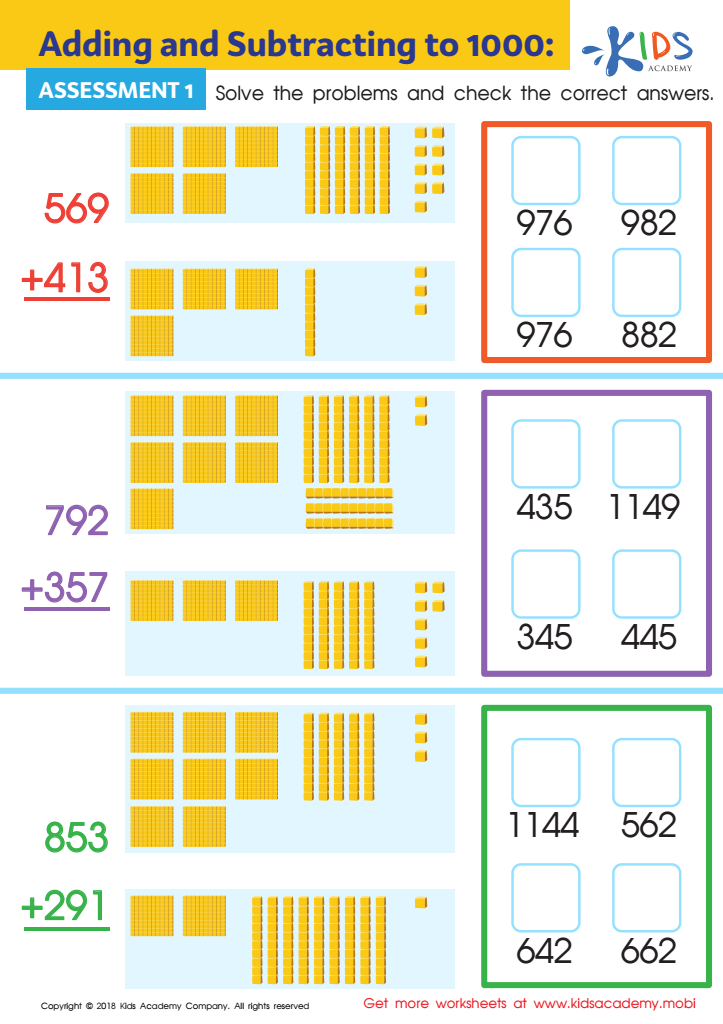
Adding and Subtracting to 1 Worksheet: Assessment 1
This assessment worksheet tests your child's addition skills. It has 3 3-digit problems with base ten blocks for visual aid. Encourage learners to use these visuals for better understanding. When they have solved the problems, they can check the box with the right answer. It's a quick and easy way to gauge numeracy development.
Adding and Subtracting to 1 Worksheet: Assessment 1
Worksheet
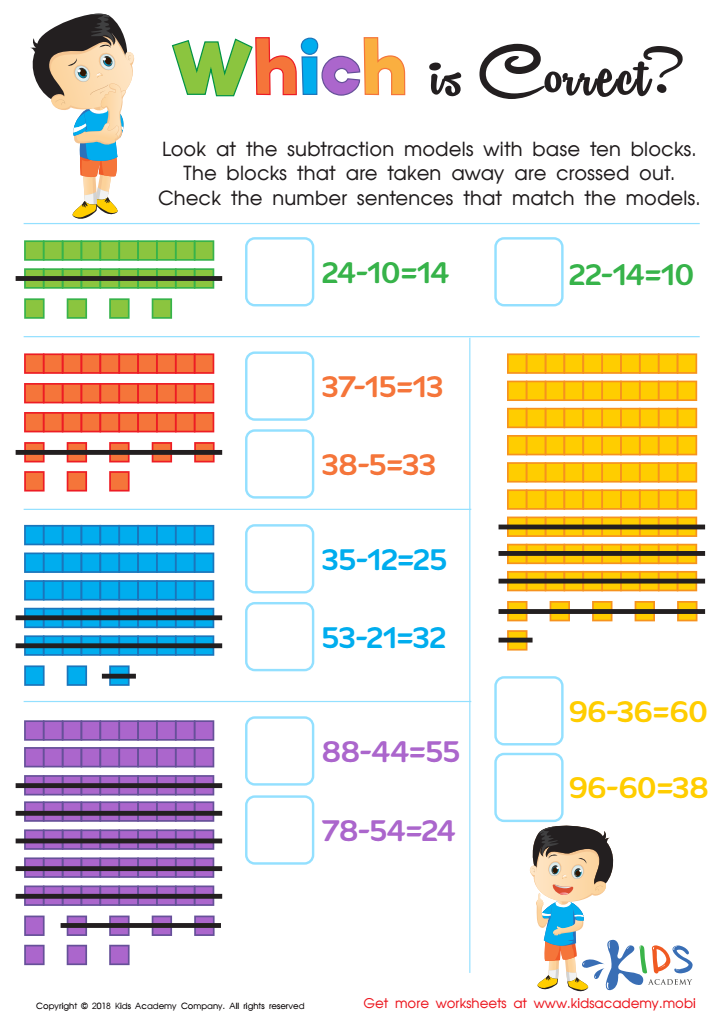
Which Is Correct? Math Worksheet
Young mathematicians will gain confidence solving subtraction problems with this bright, colorful worksheet. They'll use base ten blocks representations, then pick the right number sentence to match. It's great practice for developing number sense, helping them excel in higher-level math.
Which Is Correct? Math Worksheet
Worksheet
Join Kids Academy for Free
Who is primarily going to use this learning content?







Grammar skills are essential for young children, aged 4-9, as they form the foundation for effective communication and academic success. During these early years, children's brains are exceptionally receptive to absorbing language rules, making it a crucial period for grammar learning.
Grammar enables children to understand the structure of language, helping them form clear and concise sentences. This foundational skill influences all areas of communication, including speaking, reading, and writing. As children grasp basic grammar concepts—like sentence structure, verb tenses, and proper punctuation—they can express their thoughts more accurately and understand others better.
Strong grammar skills also support improved reading comprehension. When children recognize grammatical constructs, they find it easier to decode complex texts, boosting their confidence and fostering a love for reading. Furthermore, good grammar is vital for writing. As children progress through school, clear and correct writing becomes increasingly important across all subjects.
For parents and teachers, nurturing grammar skills means setting children up for lifelong success. Children who master grammar early are often better communicators, readers, and writers, enhancing their academic performance and social interactions. By investing time and effort into teaching grammar during these formative years, adults equip children with crucial tools for effective communication and future learning endeavors.








