Unlock your child's potential with our expertly crafted worksheets designed to improve spelling skills for ages 4-9! Our collection features engaging, age-appropriate activities that make learning fun and effective. Children will enhance their vocabulary, practice phonics, and develop word recognition through a variety of exercises. Each worksheet incorporates colorful illustrations and interactive elements to capture young learners' attention, fostering a love for language and learning. Whether at home or in the classroom, these resources support early literacy development and build a strong foundation for future academic success. Explore our worksheets today and watch your child's spelling confidence soar!

Check out this FREE "Improving spelling skills" Trial Lesson for age 4-9!

Determine the Meaning of Words with Common Prefixes

Favorites
With answer key
Interactive
  • 4-9
  • Improving spelling skills
Word structure worksheet: Compound Words

Compound Words Word Structure Worksheet

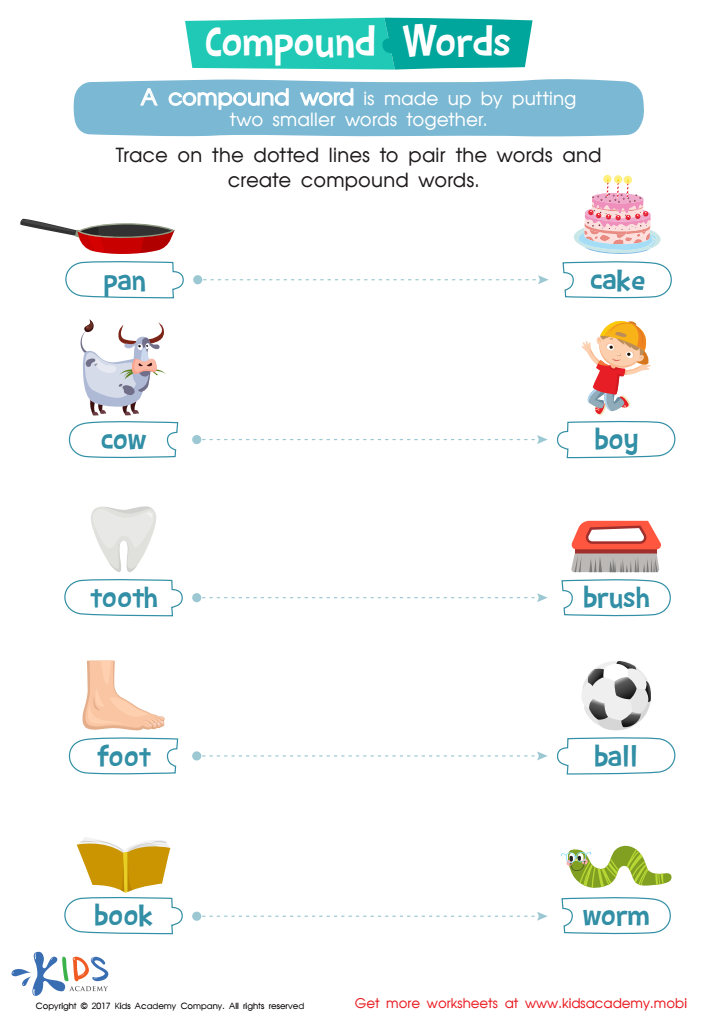
Studying compound words is a great way to improve reading and writing skills! Try this fun worksheet: Compound Words – trace the lines to make new words! It's an easy and enjoyable way to get better at English.
Compound Words Word Structure Worksheet
Worksheet
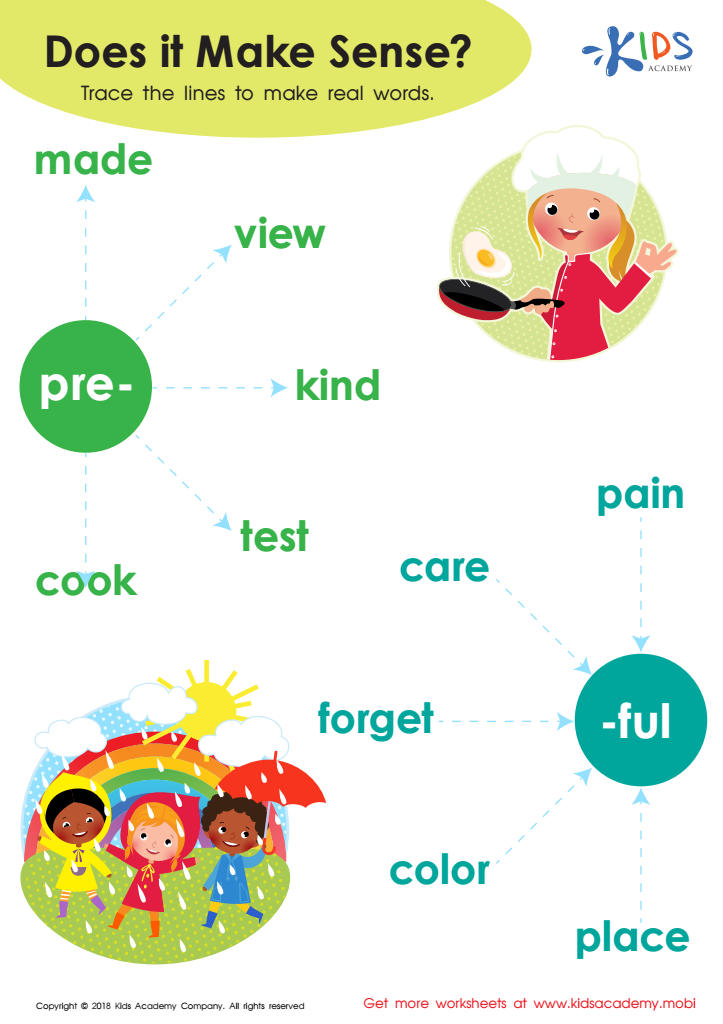
Prefix pre and suffix ful worksheet

Prefix pre– and Suffix ful– Worksheet
Can't preforget something! This worksheet helps kids learn how to attach prefixes and suffixes to root words, forming new words that make sense. With this activity, they'll evaluate how the root words change when adding the prefix or suffix.
Prefix pre– and Suffix ful– Worksheet
Worksheet
Suffix-ed Worksheet
Suffix-ed Worksheet

Suffix-ed Worksheet

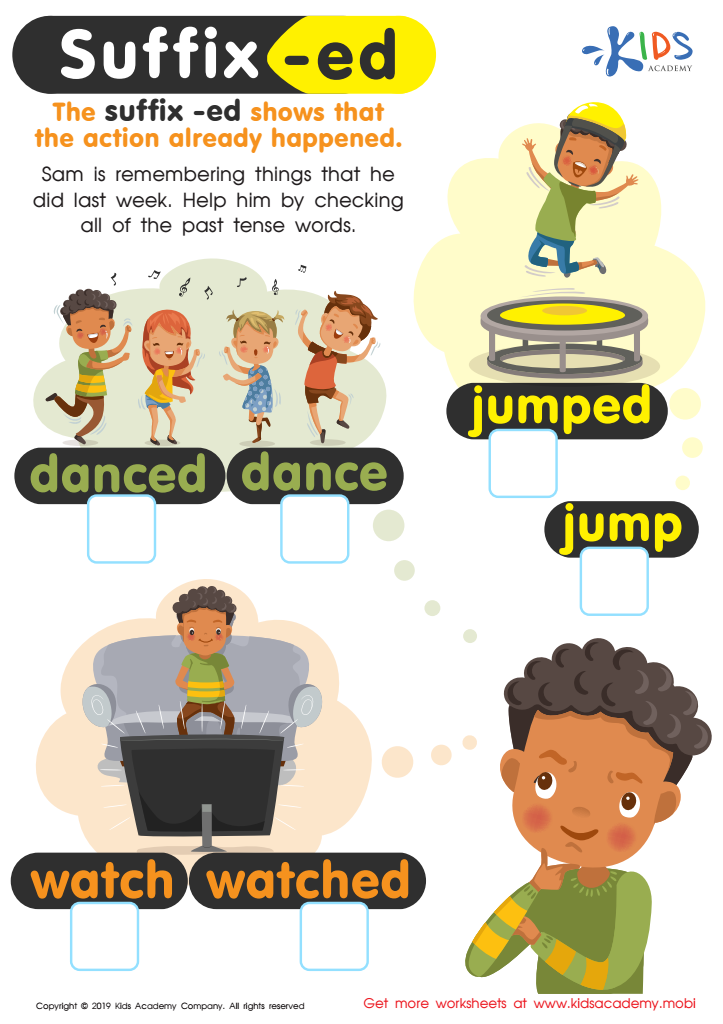
Ask your kids if they know what suffixes are, and explain they are words added to the end of another word which changes the meaning. This worksheet focuses on the suffix -ed which shows something already happened. Help the kid in the picture find the past tense words.
Suffix-ed Worksheet
Worksheet
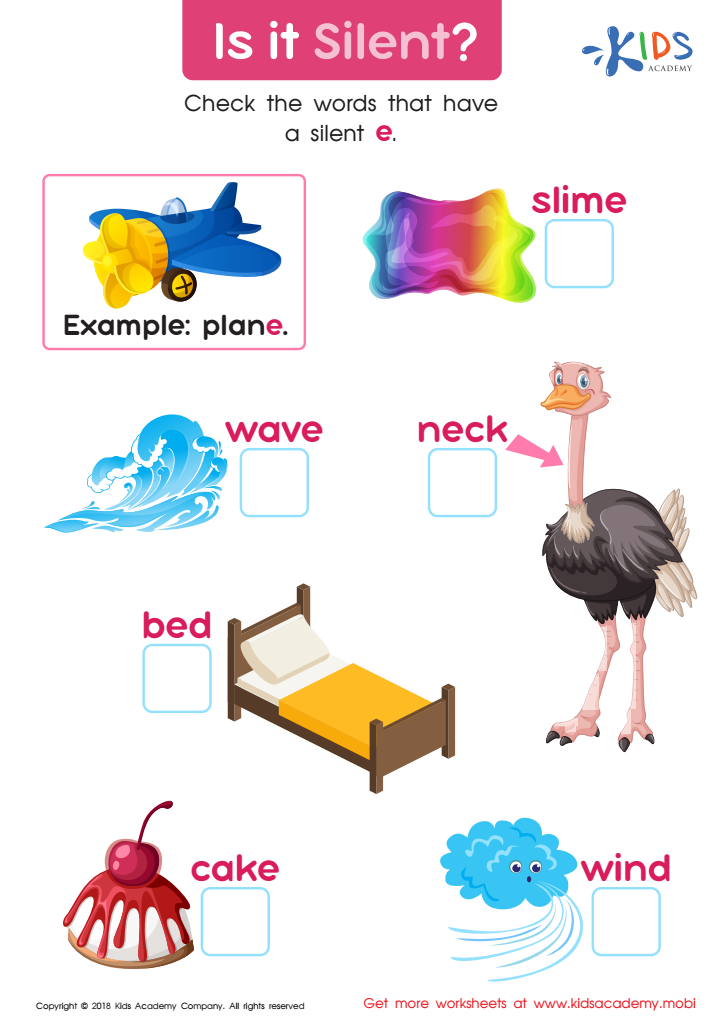
Is It Silent? Worksheet

Is It Silent? Worksheet

Phonetics can be tricky, like the sound of /e/ in 'egg' vs. the silent /e/ at the end of 'slime'. Ask your students to give more examples. Read out the words in this worksheet with your kids and ask them to identify the silent /e/ ones.
Is It Silent? Worksheet
Worksheet
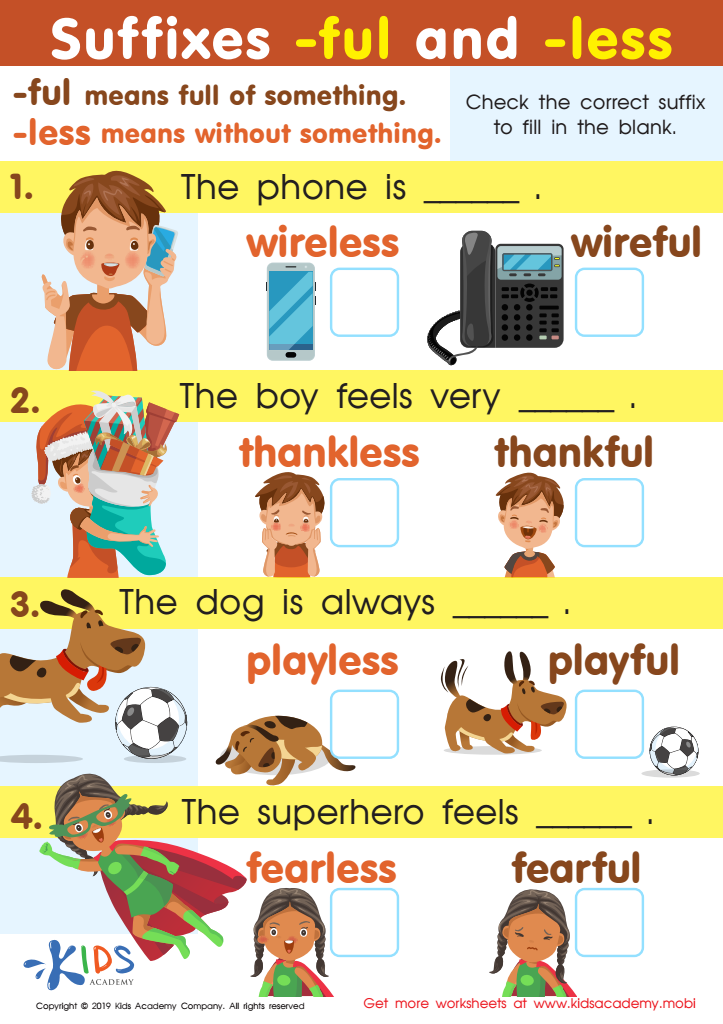
Suffixes –ful and –less Worksheet

Suffixes –ful and –less Worksheet

Before you start this worksheet, make sure your kids know about suffixes. Explain that they're added to the end of words to change their meaning. In the worksheet, kids will learn about the suffixes –ful and –less. Look at the sentences in the picture with them, and help them to choose the right one for each blank.
Suffixes –ful and –less Worksheet
Worksheet
The Suffix -Ly Worksheet

The Suffix -Ly Worksheet

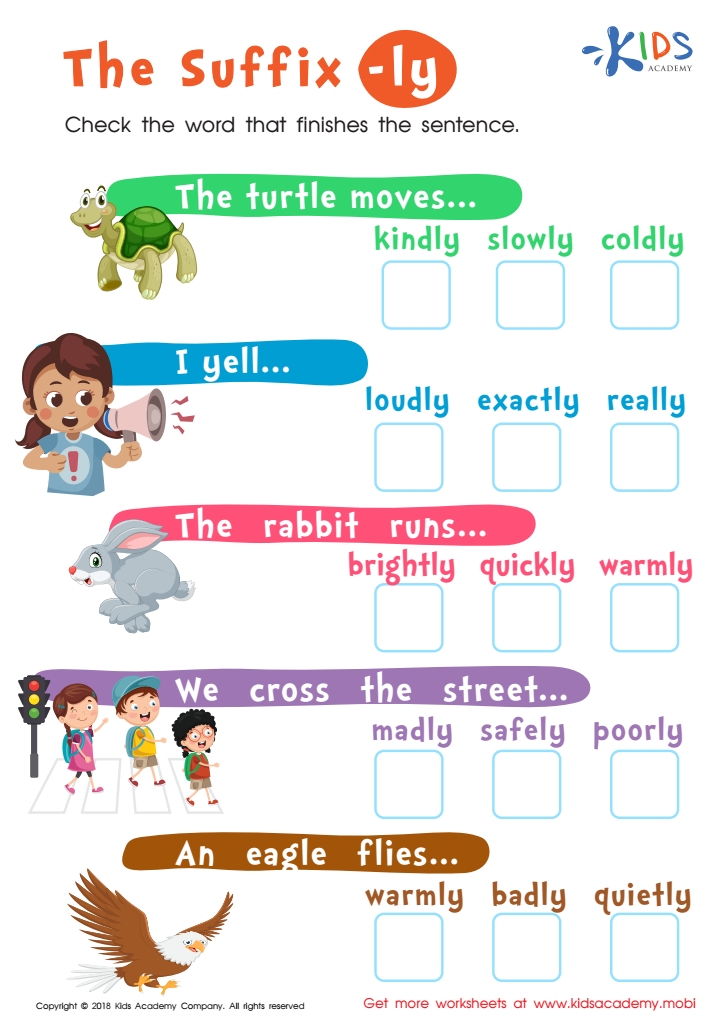
Suffixes change the meaning of words: the -ly suffix usually describes how an action is done (e.g. slowly, quickly, loudly). Help your child understand this and then check out the fun worksheet. Ask them to identify the animals and people in the pictures, then read the sentences out loud and have them check the ones that finish the sentence.
The Suffix -Ly Worksheet
Worksheet
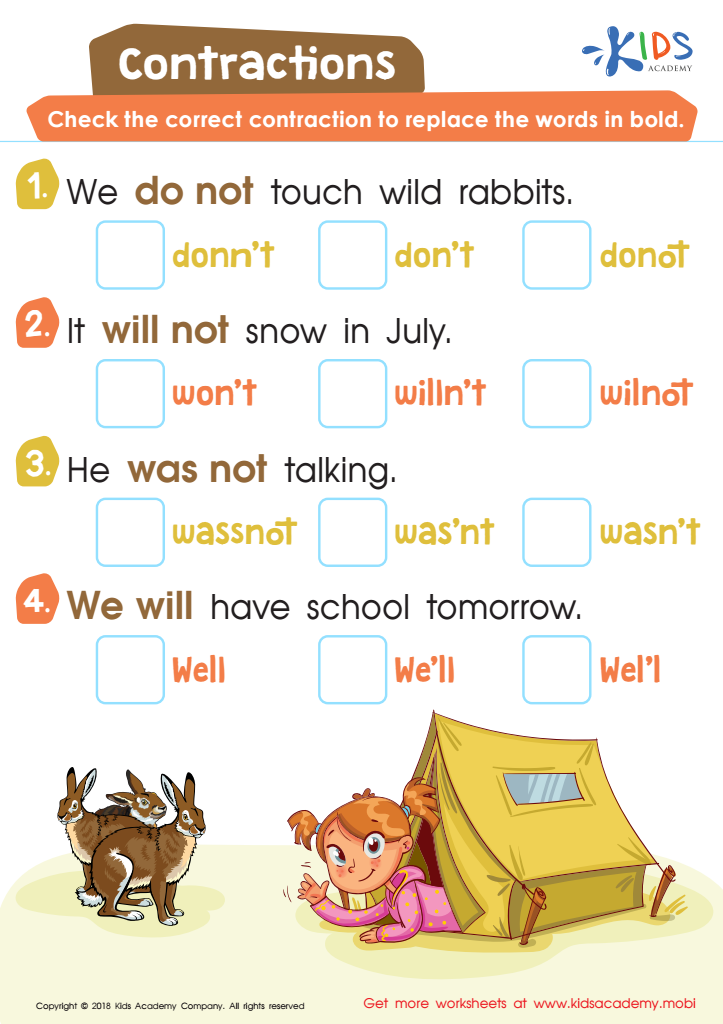
Contractions Worksheet

Contractions Worksheet

Contractions are popular in English and make writing/reading easier. For example: I'm, they're, she's. Ask your students to give more examples. Then, read the sentences in this worksheet and help them check the correct contraction to replace the words in bold.
Contractions Worksheet
Worksheet


Improving spelling skills in children aged 4-9 is crucial for several reasons. First, mastery of spelling enhances overall literacy and language development. At this age, children are developing foundational reading and writing skills, and a solid grasp of spelling is key to effective communication.

Second, proficient spelling contributes to confidence in school and social settings. When children can spell words accurately, they feel more secure in sharing their thoughts, participating in class discussions, and submitting written assignments. This confidence fosters a love for learning and encourages more active engagement in educational activities.

Moreover, good spelling skills can positively impact academic performance across subjects. Children who can spell well often find it easier to learn new vocabulary, understand complex text, and perform better in assessments.

Furthermore, as technology increasingly permeates education, knowing how to spell remains relevant. Despite spell-check features in digital applications, the ability to recognize and correct errors is vital for effective writing.

Finally, early focus on spelling lays the groundwork for lifelong learning. A strong understanding of spelling rules helps children become better readers and writers, ultimately supporting their academic and professional futures. Thus, both parents and teachers play a crucial role in nurturing effective spelling skills during these formative years.