Explore our engaging "Understanding Syllables Worksheets" designed for children ages 4-9! These worksheets are perfect for early learners to grasp the concept of syllables through fun, interactive activities. They feature colorful illustrations and diverse exercises that promote phonemic awareness, helping children segment words into syllables effortlessly. Ideal for support at home or in the classroom, our worksheets build foundational literacy skills while keeping kids entertained. With various difficulty levels, they cater to different learning paces and styles. Download now and empower your child’s reading journey with essential syllable skills they will carry for a lifetime!

Check out this FREE "Understanding syllables" Trial Lesson for age 4-9!

Find Spelling Patterns

Favorites
With answer key
Interactive
  • 4-9
  • Understanding syllables
Closed Syllable Worksheets for 3rd Grade

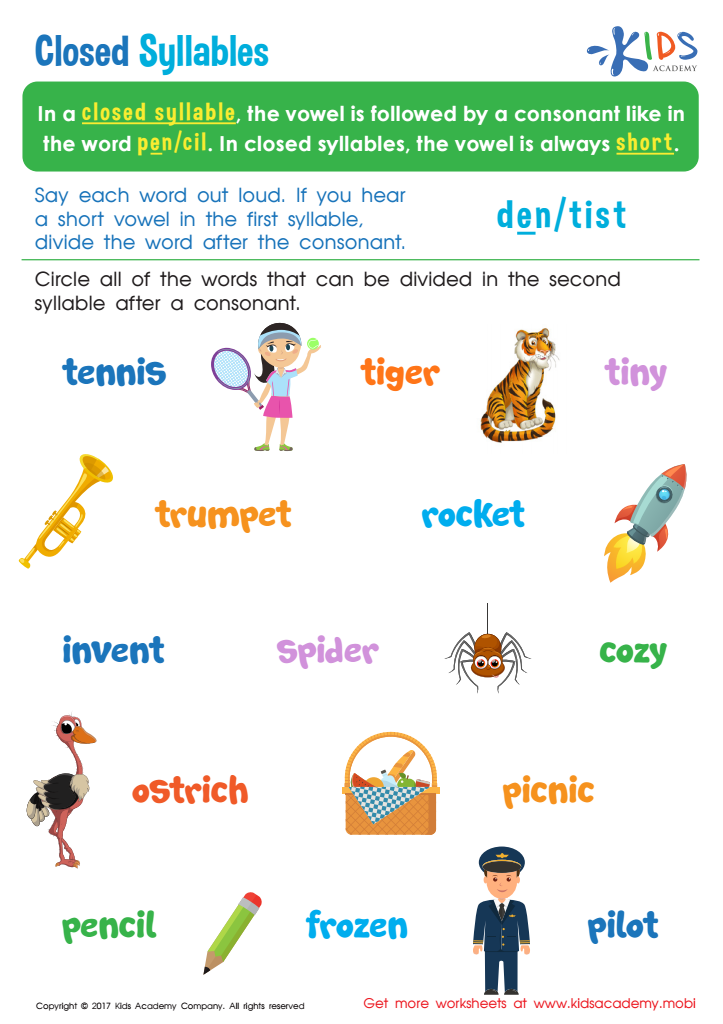
Closed Syllable Spelling Worksheet

Learning syllables can be tough, but we can make it easier! Look for long and short vowel sounds to identify closed syllables. This worksheet can help 3rd graders do just that, with its fun and colorful design.
Closed Syllable Spelling Worksheet
Worksheet
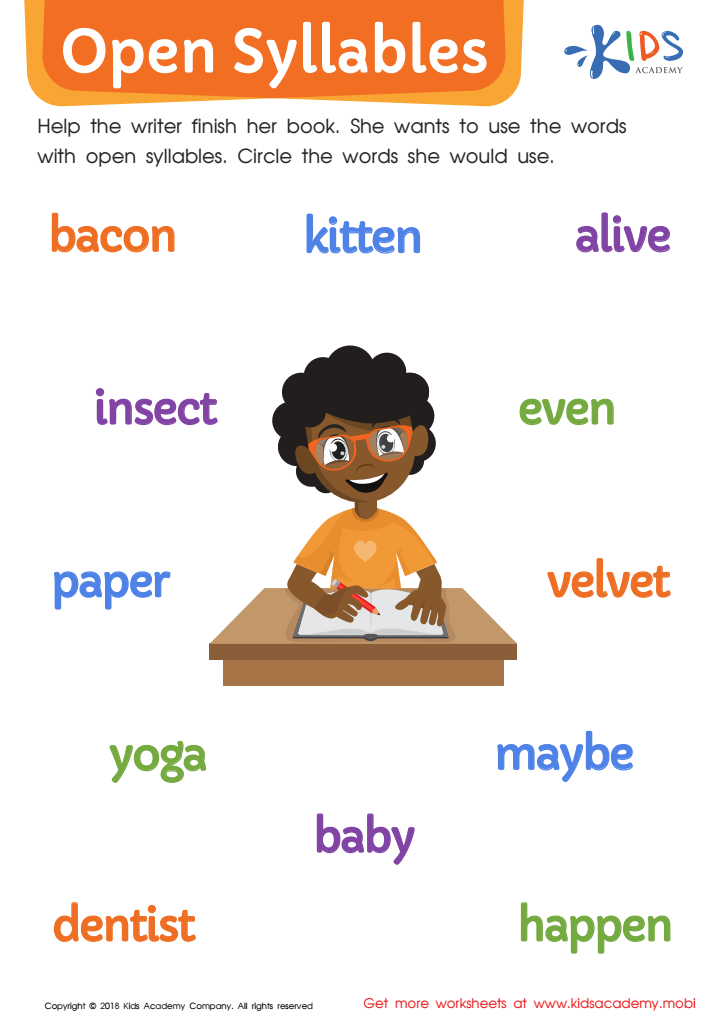
Open Syllables Worksheet

Open Syllables Worksheet

Before beginning this worksheet, make sure your child knows what open syllables are. If not, take time to teach them with examples. Then, help the writer finish her book by circling words with open syllables. She needs your child's help!
Open Syllables Worksheet
Worksheet
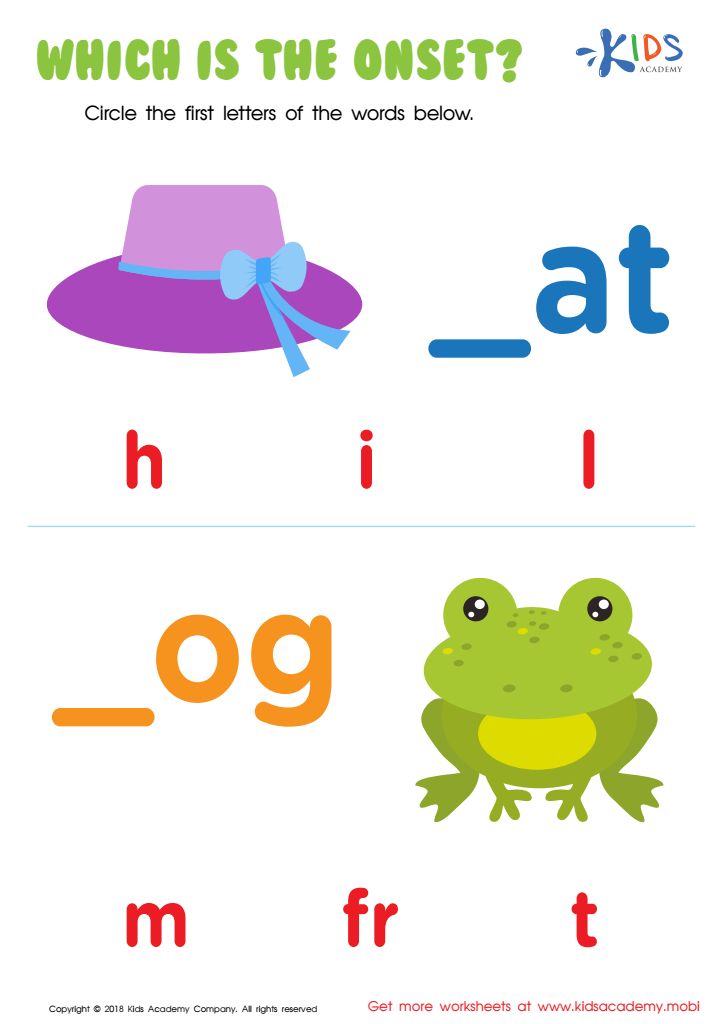
Which Is the Onset? Worksheet

Which Is the Onset? Worksheet

Help your children learn to spell with this bright, fun worksheet. Struggling with spelling small words can make reading and writing sentences difficult. Encourage them to look at the pictures, say the names aloud and circle the correct first letter from the options. They will soon overcome any reluctance to spell.
Which Is the Onset? Worksheet
Worksheet
Word structure worksheet: syllables

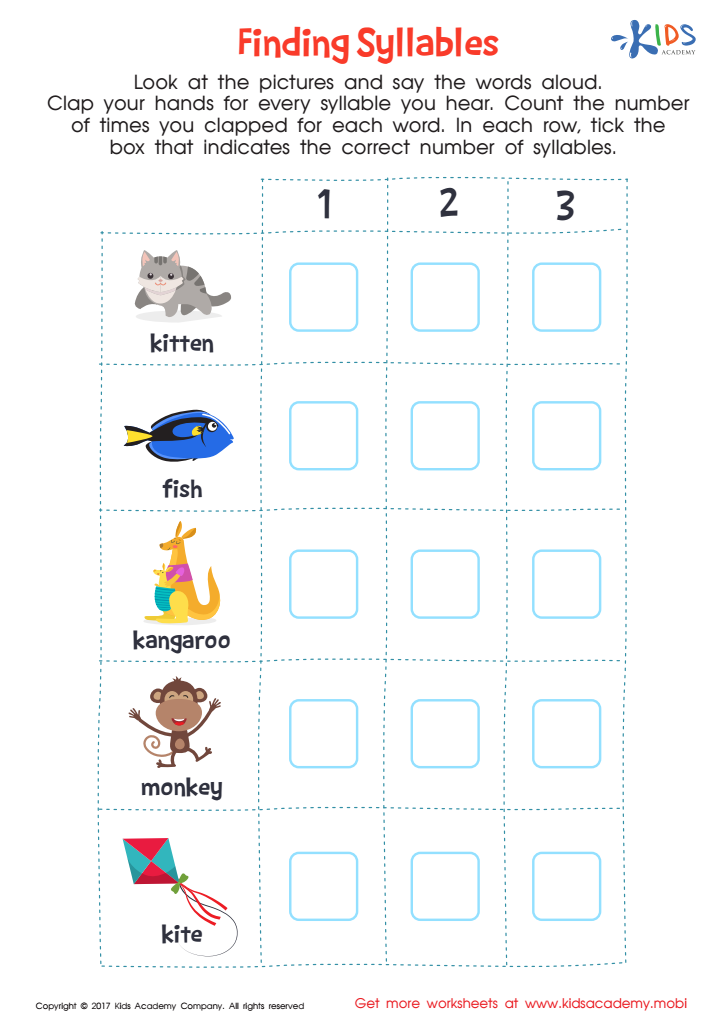
Finding Syllables Word Structure Worksheet
Have your kid clap and count syllables in words to improve their reading and spelling! Use this word structure worksheet for a fun activity - syllables!
Finding Syllables Word Structure Worksheet
Worksheet
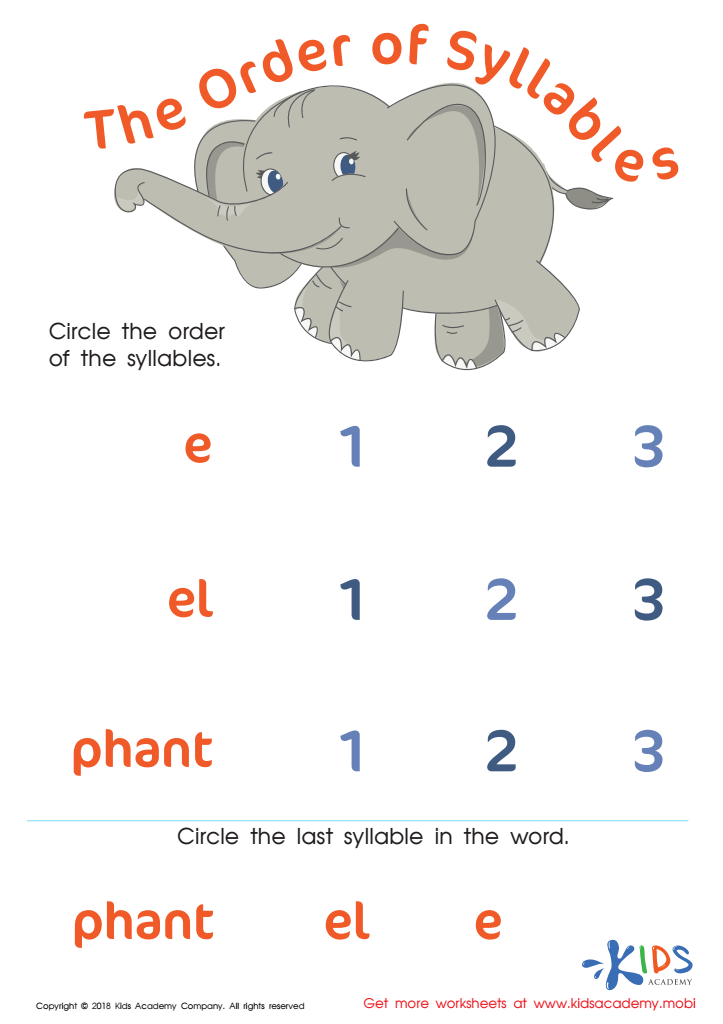
The Order of Syllables Worksheet

The Order of Syllables Worksheet

Syllabication is vital for prereading and decoding words. Download this fun, free worksheet to help your reader practice breaking words into syllables and arranging them for reading. It also strengthens fine motor skills as they trace the numbers for each syllable, guided by a cheerful elephant!
The Order of Syllables Worksheet
Worksheet
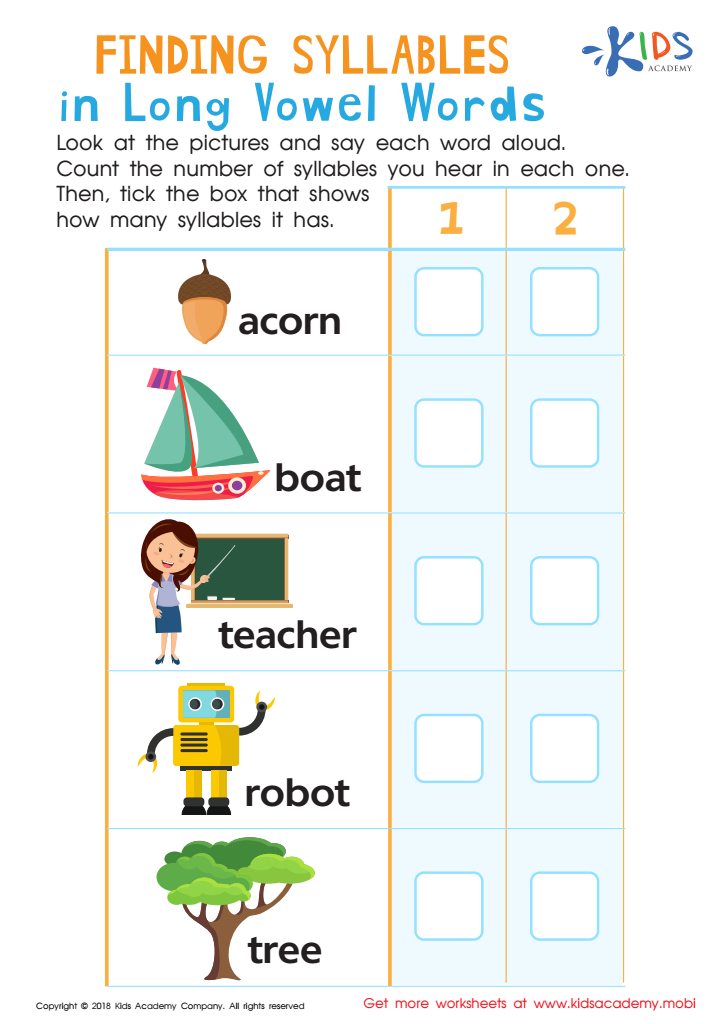
Finding Syllables in Long Vowel Words Worksheet

Finding Syllables in Long Vowel Words Worksheet

Help your kids identify objects and better count syllables in words. Look at the printout images with them and have them say each word out loud. Ask them to count syllables and tick the box with the correct number. With this worksheet, your kids will become more skilled.
Finding Syllables in Long Vowel Words Worksheet
Worksheet
Worksheet: Spelling Words Ending with -le, -el and -al

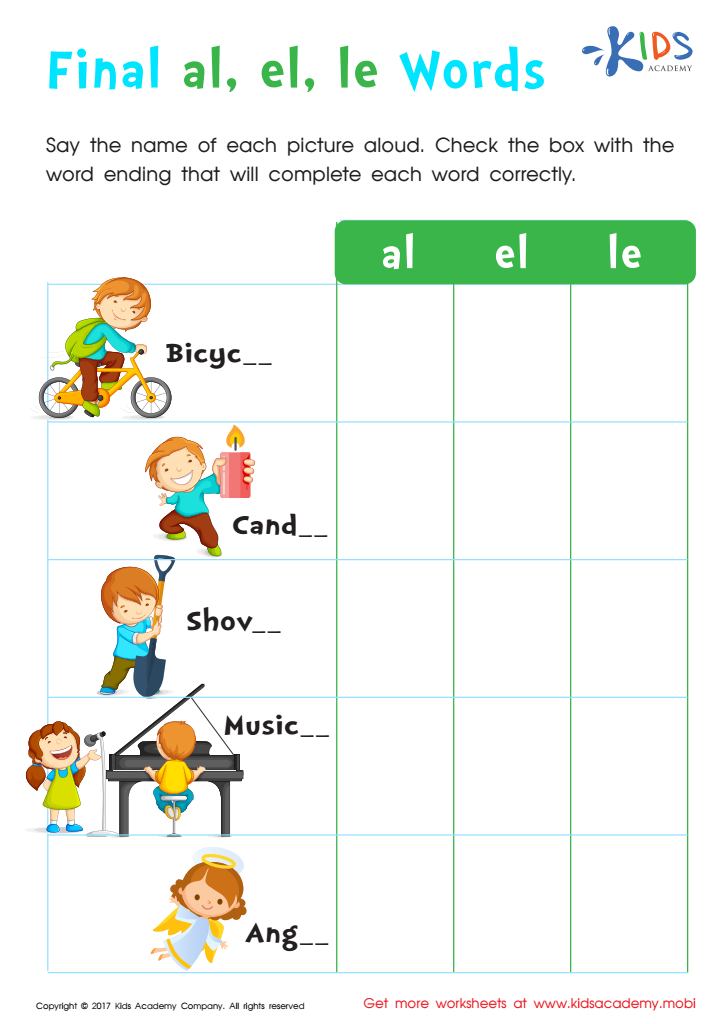
Spelling Words Ending with –le, –el and –al Worksheet
Spelling tricky words with the same ending sounds can be fun with this worksheet! Kids learn to spell -le, -el, and -al words while enjoying colorful pictures. It's a great way to refine their usage of tricky word endings.
Spelling Words Ending with –le, –el and –al Worksheet

Worksheet
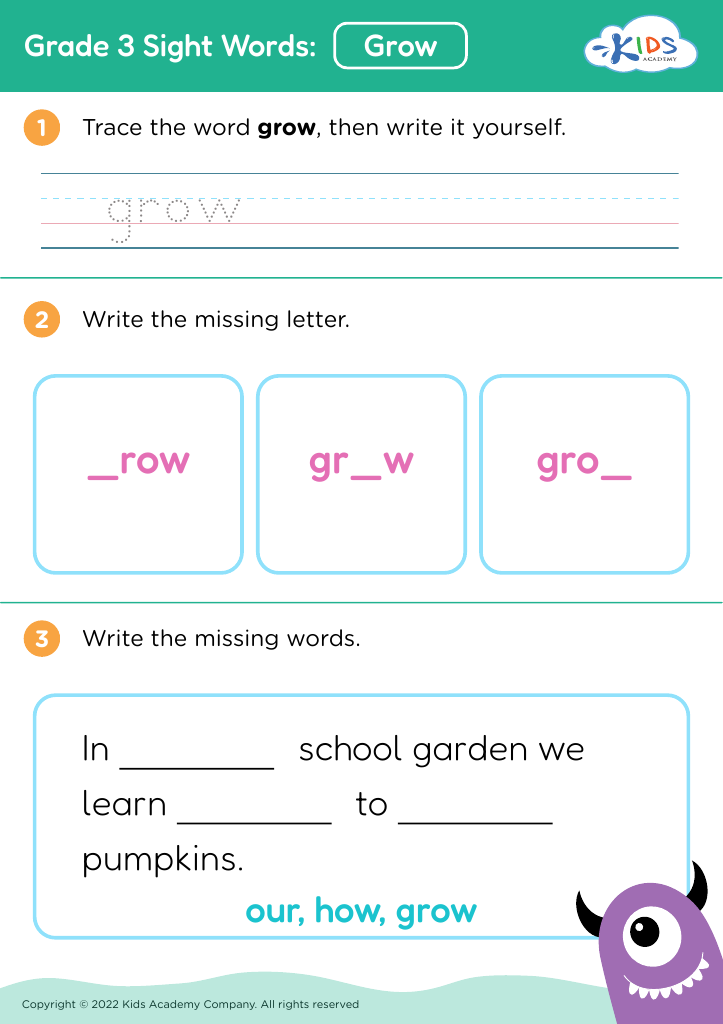
Grade 3 Sight Words: Grow

Grade 3 Sight Words: Grow

Grade 3 Sight Words: Grow
Worksheet


Understanding syllables is crucial for children aged 4-9, as it lays the foundation for reading and writing skills. Syllables, being the building blocks of words, help young learners to break down language into manageable parts, making it easier to pronounce and comprehend words. For parents and teachers, fostering this skill can significantly enhance literacy development.

By recognizing syllables, children improve their ability to spell, as they learn to segment words into smaller units. This phonemic awareness boosts their reading fluency, allowing them to become more confident readers. Moreover, understanding syllables nurtures vocabulary development; when kids grasp how words are formed, they can create new words and express themselves more effectively.

Furthermore, engaging activities involving syllables—such as clapping out the rhythm of words or using visual aids—can make learning fun and interactive. Encouraging this understanding at an early age can also promote linguistic skills in multiple languages, beneficial in an increasingly diverse world.

In summary, parents and teachers should prioritize teaching syllables, as it not only supports essential literacy skills but also empowers children to communicate with clarity and creativity.