Comparing shapes 2D Shapes Worksheets for Ages 4-9
4 filtered results
-
From - To
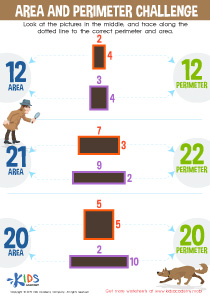
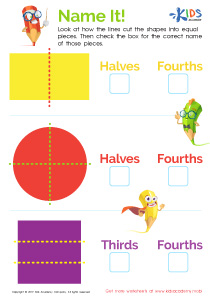
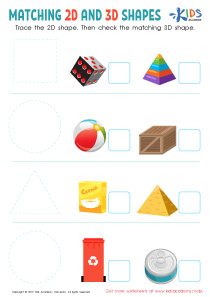
Explore our engaging "Comparing 2D Shapes Worksheets" designed for children ages 4 to 9. These interactive lessons help young learners identify, compare, and differentiate between various two-dimensional shapes, enhancing their understanding of geometry concepts. Each worksheet encourages critical thinking and visual recognition skills through fun activities, including matching, sorting, and analyzing shape characteristics. Perfect for homeschooling or classroom use, our resources foster a love for mathematics while building essential skills in shape comparison. Ignite your child's curiosity and boost their confidence in math with our vibrant, user-friendly worksheets that encourage hands-on learning! Unlock their potential today!
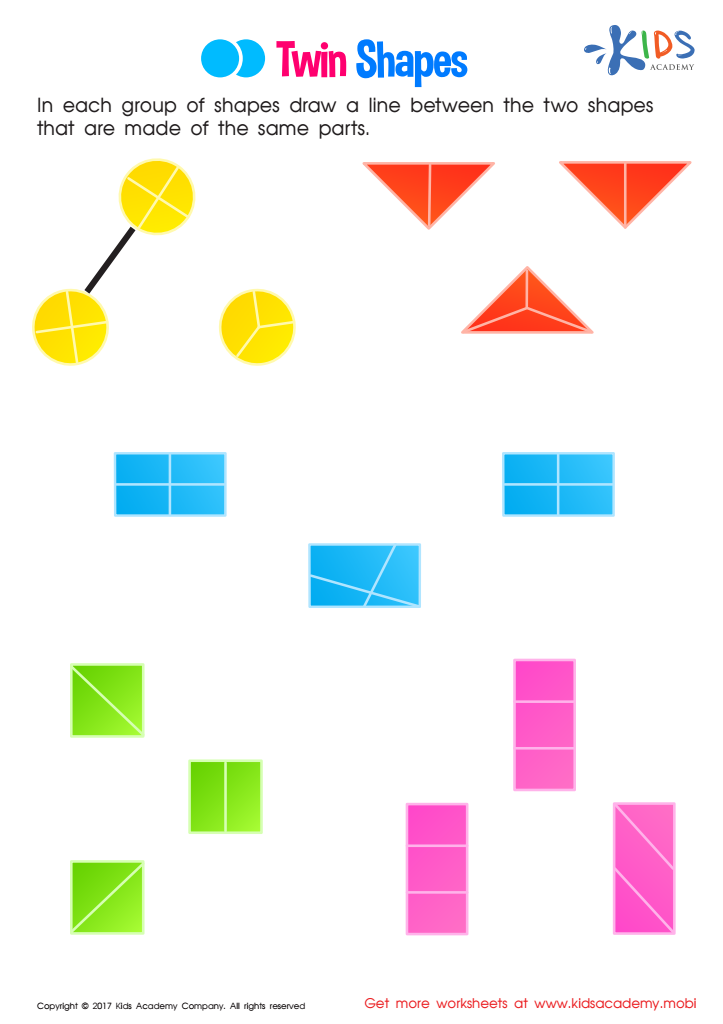
Twin Shapes Worksheet
 Assign to My Students


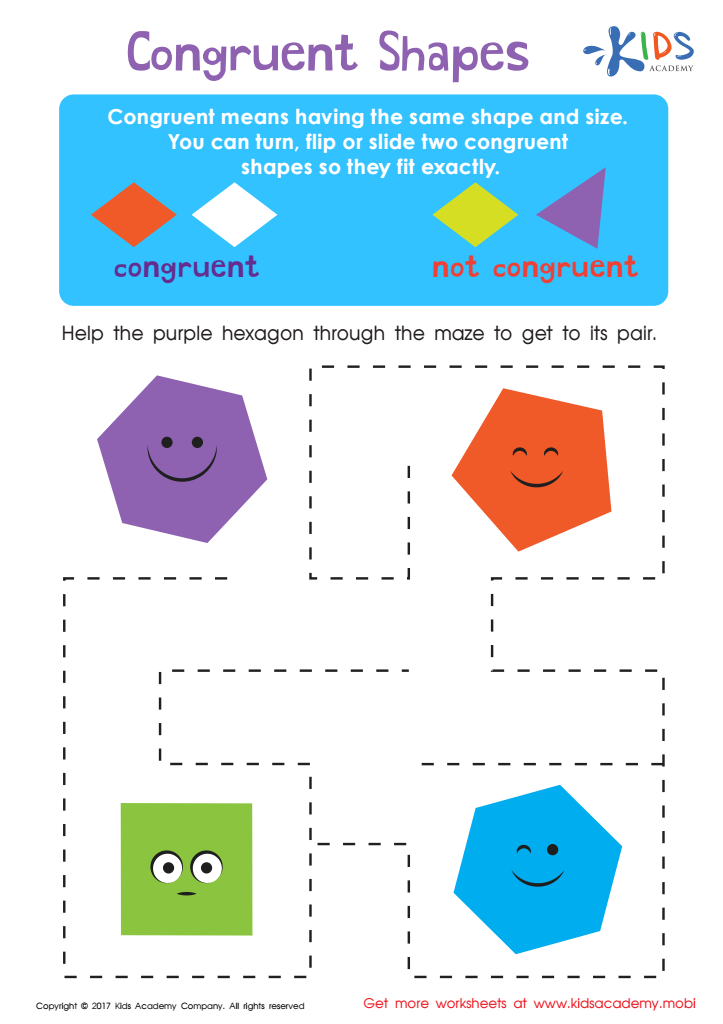
Congruent Shapes Worksheet
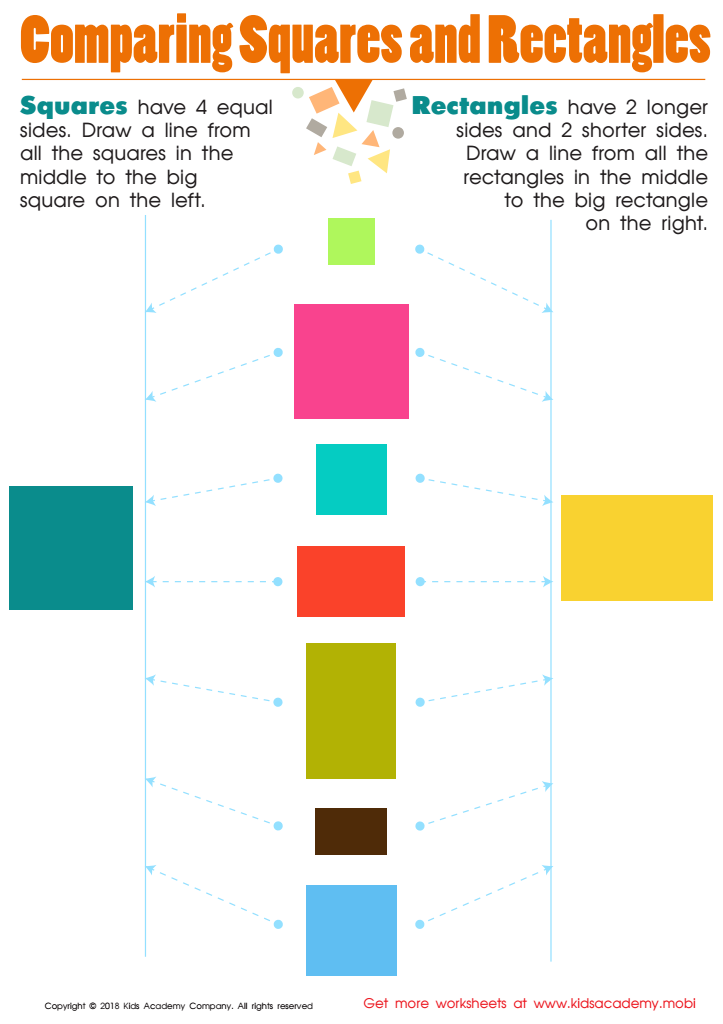
Comparing Squares Rectangles Worksheet
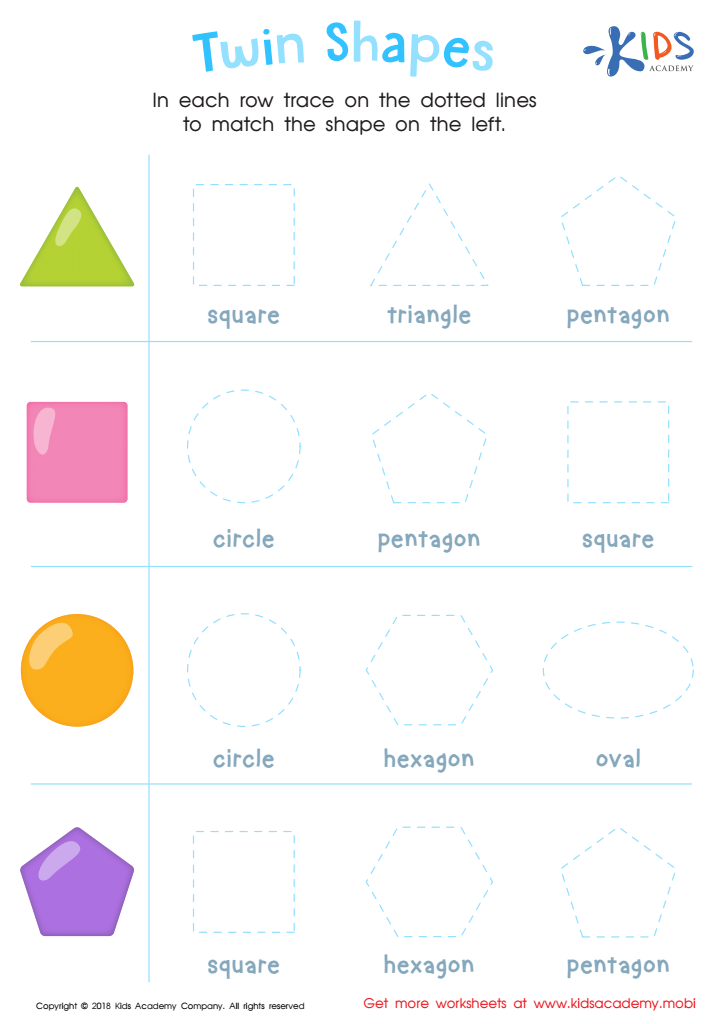
Twin Shapes Dot-to-Dot Worksheet








Understanding and comparing 2D shapes is crucial for children's cognitive development, particularly for ages 4 to 9. During this formative period, children develop foundational math skills that prepare them for more complex concepts later on. Learning about shapes helps enhance spatial awareness, which is essential in fields like science, technology, engineering, and mathematics (STEM).
By encouraging shape comparisons, parents and teachers help children recognize characteristics like edges, corners, and symmetry. This not only fosters critical thinking and problem-solving skills but also strengthens observational capabilities. Additionally, learning to classify and compare shapes promotes language development; children learn to express themselves using geometric terminology, enhancing their vocabulary and communication skills.
Moreover, engaging with shapes builds a strong foundation for later topics in math, such as geometry, measurement, and fractions. As children compare shapes, they learn to differentiate and categorize, which are skills that complement literacy and other interdisciplinary areas.
Ultimately, fostering an early interest in shapes creates a positive attitude toward learning math, setting the stage for lifelong educational success. By participating in shape-related activities, adults show support for children’s development, ensuring they acquire essential skills dynamically and enjoyably.