
Handwriting practice Addition & Subtraction Worksheets for Ages 4-9
5 filtered results
Difficulty Level
Grade
Age
-
From - To
Subject
Activity
Standards
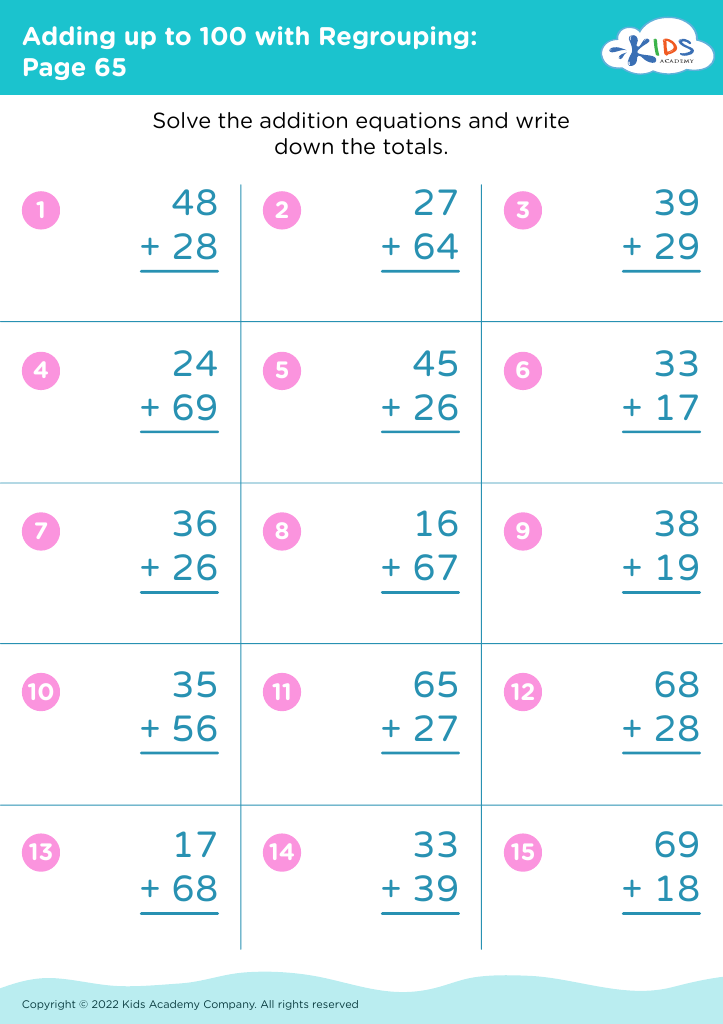
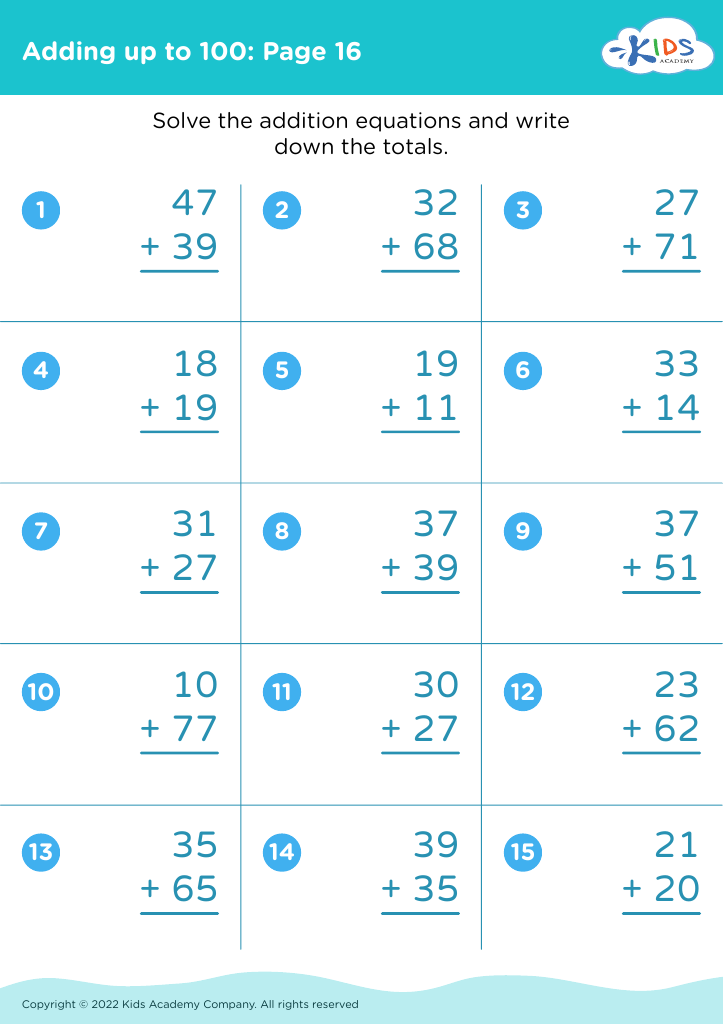
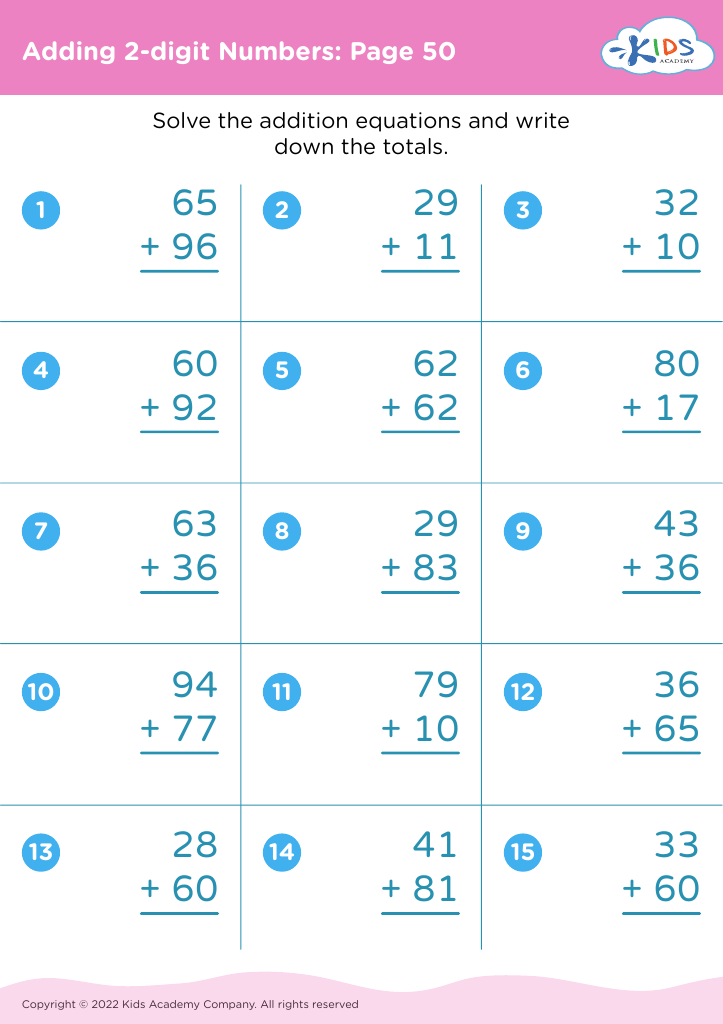
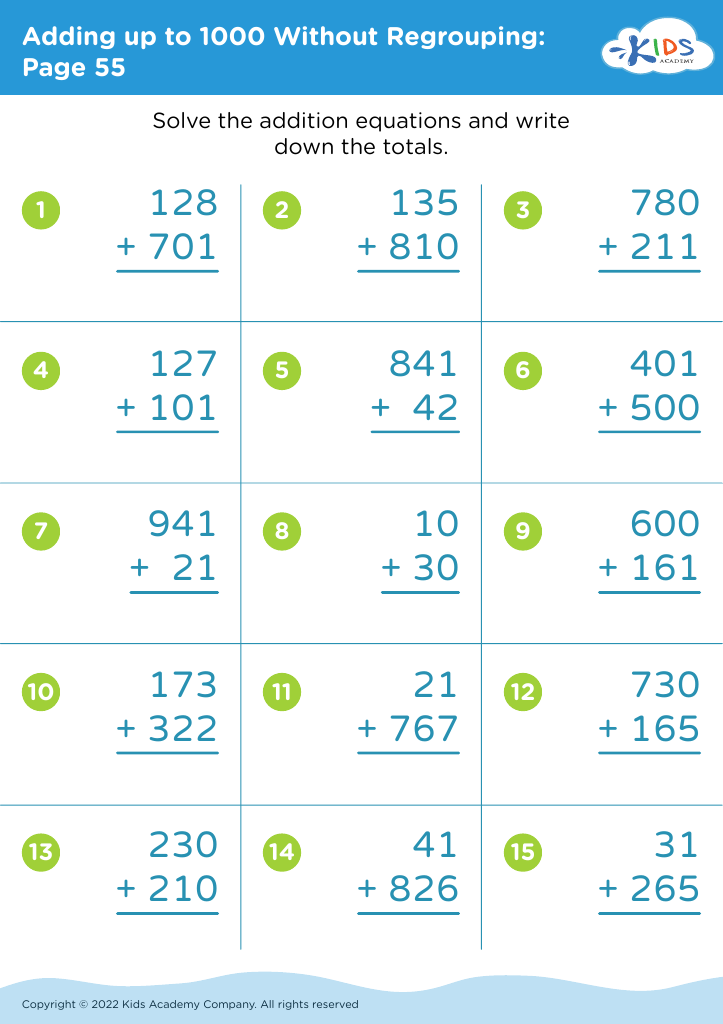
Boost your child's math and writing skills with our Handwriting Practice Addition & Subtraction Worksheets, designed specifically for ages 4-9. These engaging and interactive worksheets provide young learners with the opportunity to practice their handwriting while mastering essential mathematical concepts. Each worksheet combines fun visuals with age-appropriate problems, helping to capture your child's interest as they enhance their fine motor skills. Whether at home or in the classroom, these printable resources promote a holistic learning experience, enabling kids to confidently tackle addition and subtraction. Encourage academic growth and improve handwriting simultaneously with our thoughtfully created math worksheets! Ideal for kids at home or school.
Favorites
With answer key
Interactive
Join Kids Academy for Free
Who is primarily going to use this learning content?








Handwriting practice in addition and subtraction for children aged 4-9 is crucial for several reasons. First, it develops fine motor skills, which are essential for young learners. Weaving together the physical act of writing with mathematical concepts engages multiple areas of the brain, facilitating better retention of information. As children form numbers and symbols, they enhance their hand-eye coordination and dexterity.
Second, handwriting practice helps reinforce a child's understanding of mathematical operations. Writing down addition and subtraction problems allows them to visualize and comprehend those concepts more fully. It encourages them to think through their calculations, fostering critical problem-solving skills.
Additionally, instilling good handwriting habits early on instills confidence and promotes a sense of accomplishment. Children learn the importance of neatness and precision, which can translate into their overall academic performance and attitudes toward learning.
Finally, regular handwriting practice provides a tangible method for assessment; teachers and parents can track a child's progress in both handwriting and math skills. By emphasizing the connection between handwriting and arithmetic, parents and teachers can support children's cognitive development while nurturing a foundation for lifelong learning and positive educational experiences.








