
Practice division Addition & Subtraction Worksheets for Ages 4-9
3 filtered results
Difficulty Level
Grade
Age
-
From - To
Subject
Activity
Standards
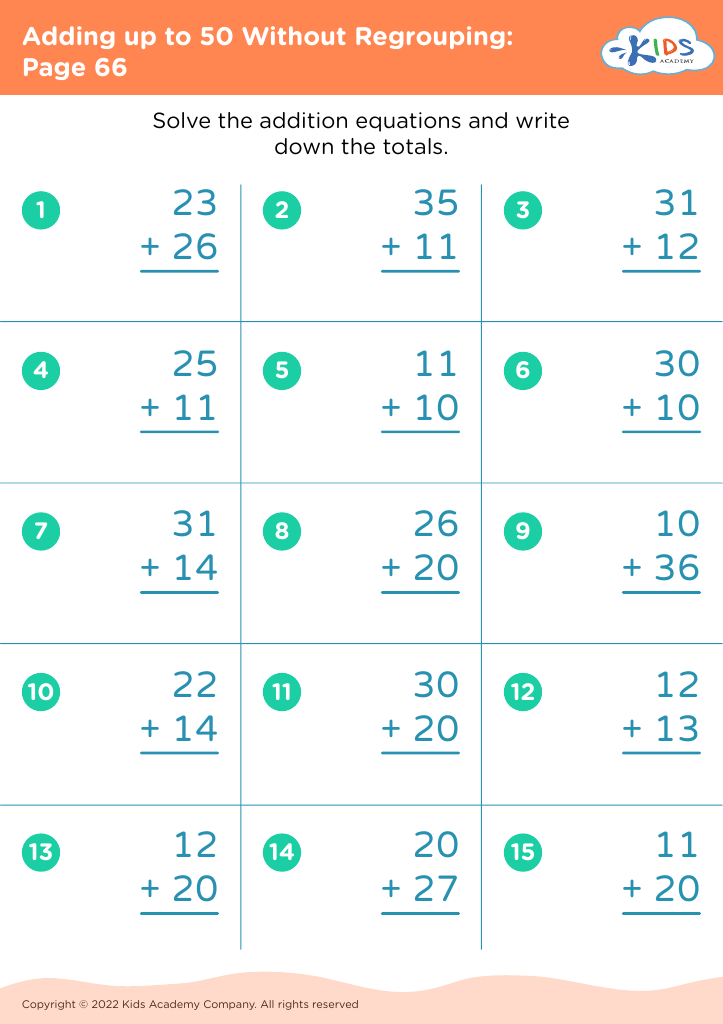
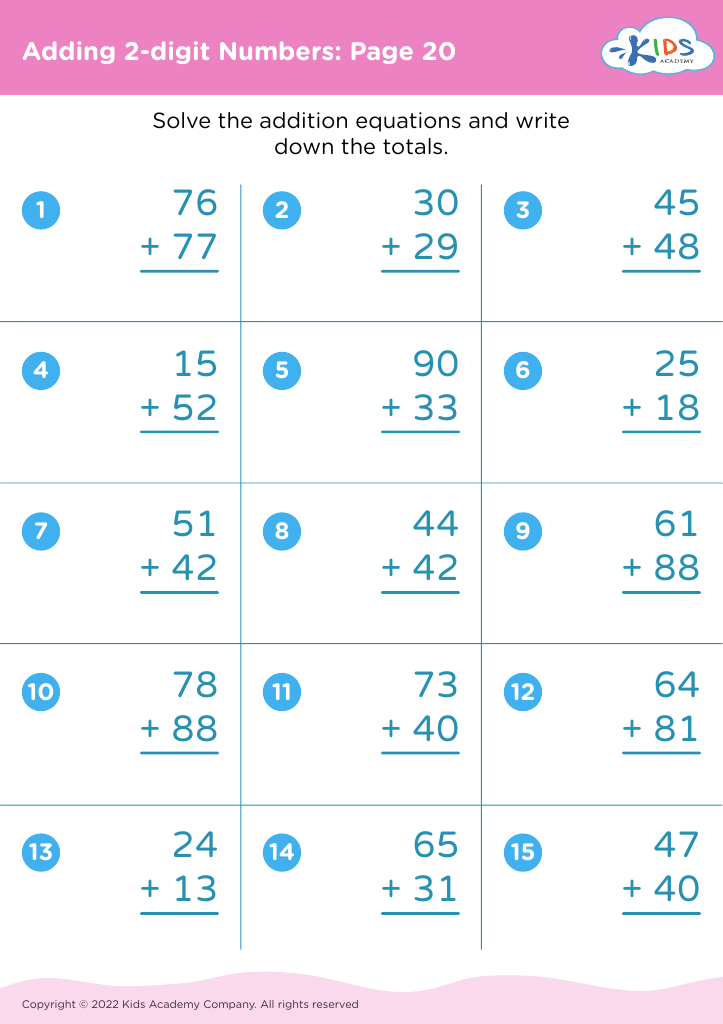
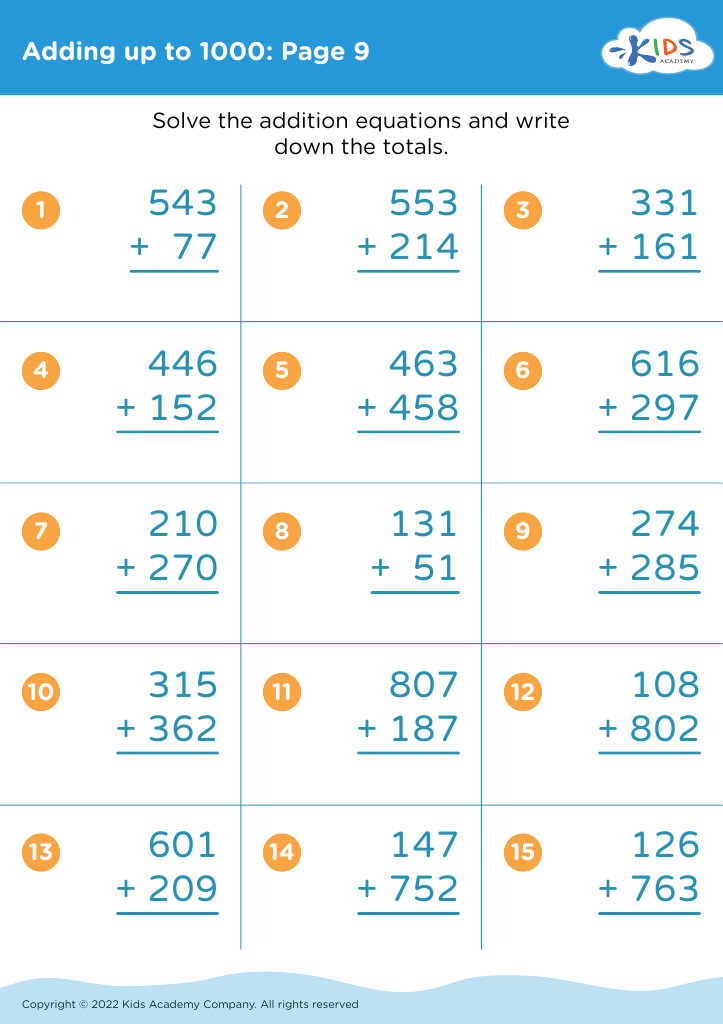
Unlock your child's mathematical potential with our engaging practice worksheets designed for ages 4-9! Our collection focuses on addition, subtraction, and division, promoting essential pre-algebra skills. These worksheets offer a fun and interactive way for young learners to grasp fundamental concepts and improve their confidence in math. Each printable resource is tailored to accommodate varying skill levels, ensuring that every child can thrive. With visually appealing designs and age-appropriate content, students will love practicing their math skills. Dive into a world of learning that makes math enjoyable—browse our selection today and watch your little ones excel in their mathematical journey!
Favorites
With answer key
Interactive
Join Kids Academy for Free
Who is primarily going to use this learning content?








Parents and teachers should prioritize practicing division, addition, and subtraction for children ages 4-9 because these foundational math skills are crucial for their overall cognitive development and academic success.
At this age, children are beginning to develop their critical thinking and problem-solving skills. Mastering basic mathematical concepts enables them to understand more complex ideas as they progress in their education. Addition and subtraction introduce the concept of number relationships, while division helps them comprehend sharing and grouping, essential concepts in their everyday lives.
Engaging in these practices builds confidence and fosters a positive attitude towards math, reducing the anxiety many face as they move to higher levels of learning. Furthermore, early mathematical fluency is linked to improved performance in STEM subjects, making it vital not just for math classes but for overall academic achievement.
Additionally, math practice can facilitate essential developmental skills such as attention to detail, patience, and perseverance. Collaborative practices with parents and teachers reinforce these skills, ensuring children have a solid base for future learning.
In summary, focusing on division, addition, and subtraction at an early age lays the groundwork for lifelong math skills, enhances cognitive development, and instills confidence in young learners.








