Filters

1258 filtered results

Clear all filters
Favorites
With answer key
Interactive

1258 filtered results

Difficulty Level

Grade


Subject

    Check out this FREE Trial Lesson on Addition for age 4-9!

    Match Objects that Fit Together

    Favorites
    With answer key
    Interactive
    • 4-9
    • Addition
    Adding up to 1000 Without Regrouping: Page 35
    Adding up to 1000 Without Regrouping: Page 35
    Adding up to 1000 Without Regrouping: Page 35
    Worksheet
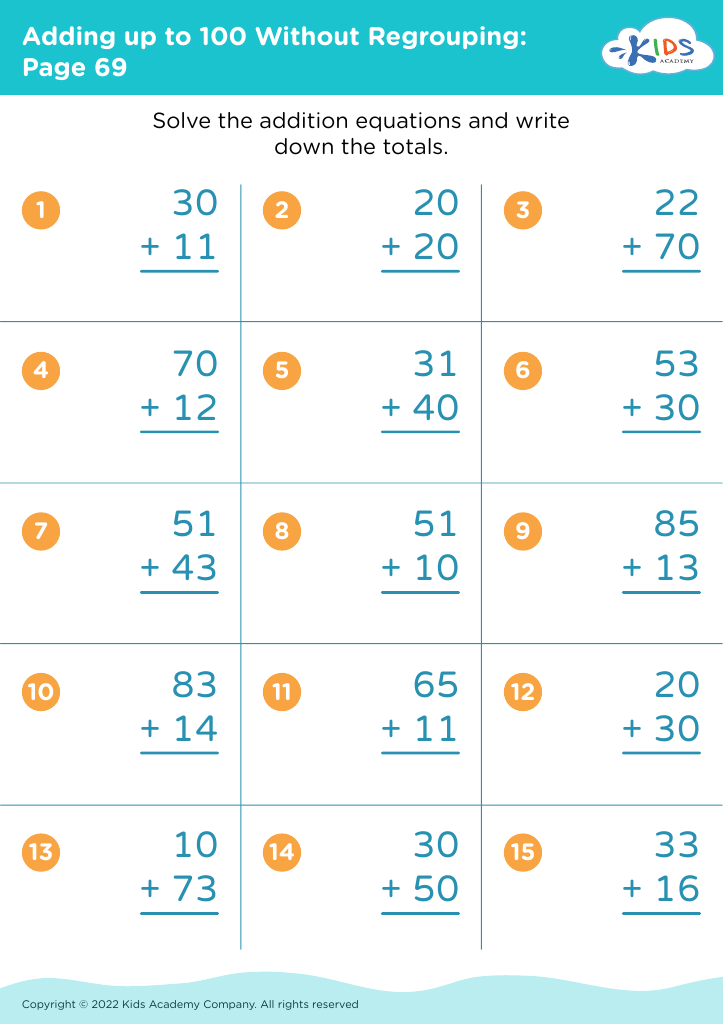
    Adding up to 100 Without Regrouping: Page 69
    Adding up to 100 Without Regrouping: Page 69
    Adding up to 100 Without Regrouping: Page 69
    Worksheet
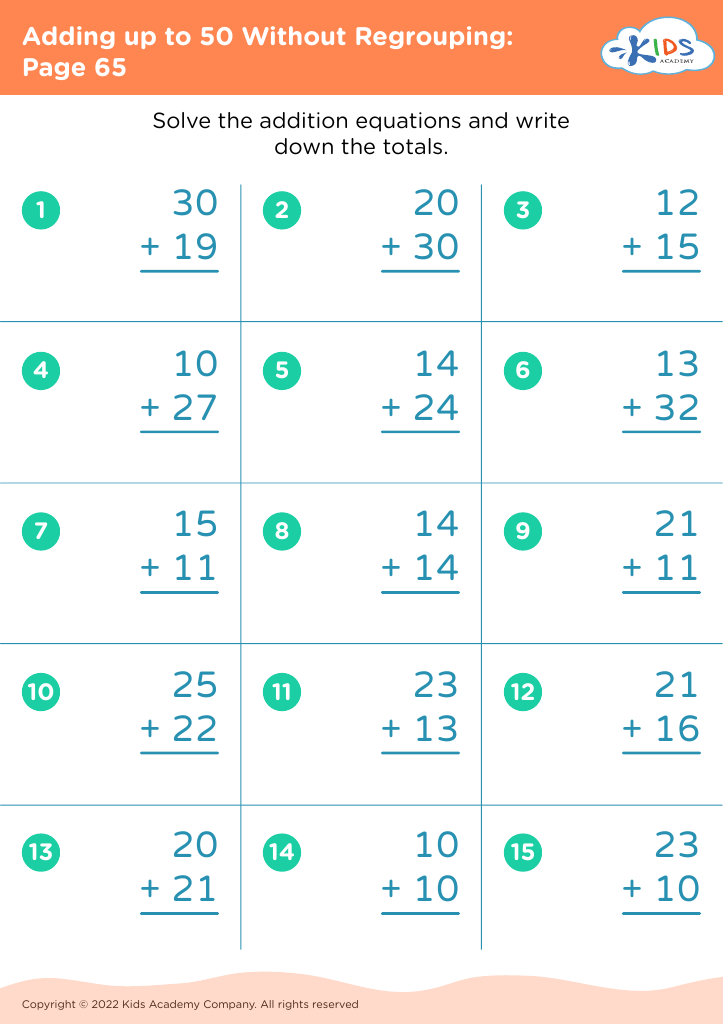
    Adding up to 50 Without Regrouping: Page 65
    Adding up to 50 Without Regrouping: Page 65
    Adding up to 50 Without Regrouping: Page 65
    Worksheet
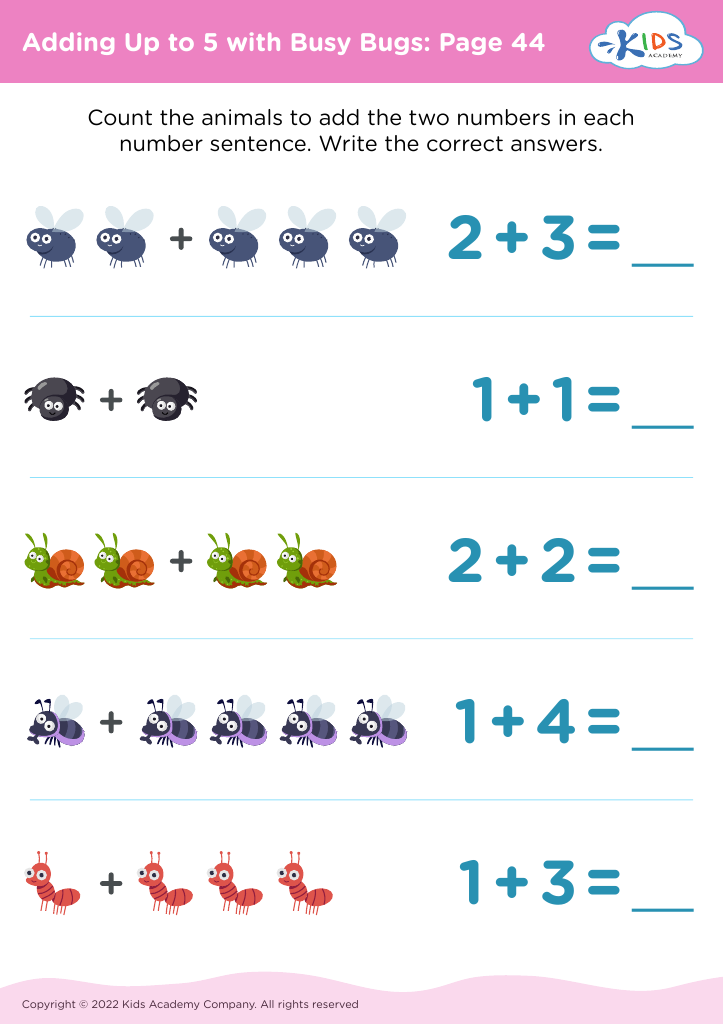
    Adding Up to 5 with Busy Bugs: Page 44
    Adding Up to 5 with Busy Bugs: Page 44
    Adding Up to 5 with Busy Bugs: Page 44
    Worksheet
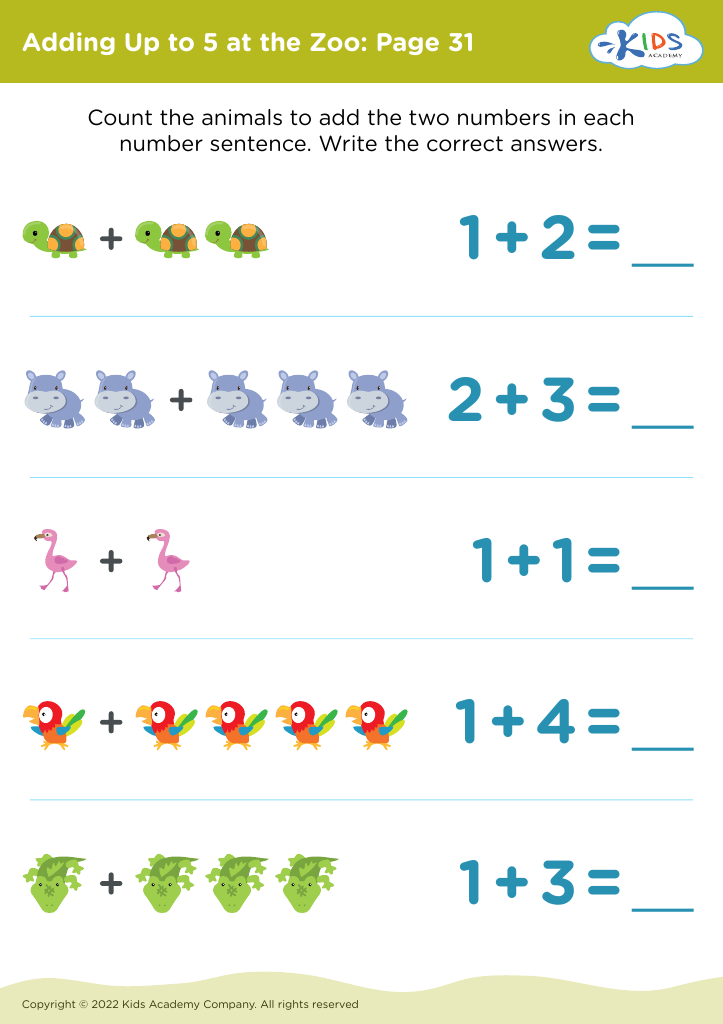
    Adding Up to 5 at the Zoo: Page 31
    Adding Up to 5 at the Zoo: Page 31
    Adding Up to 5 at the Zoo: Page 31
    Worksheet
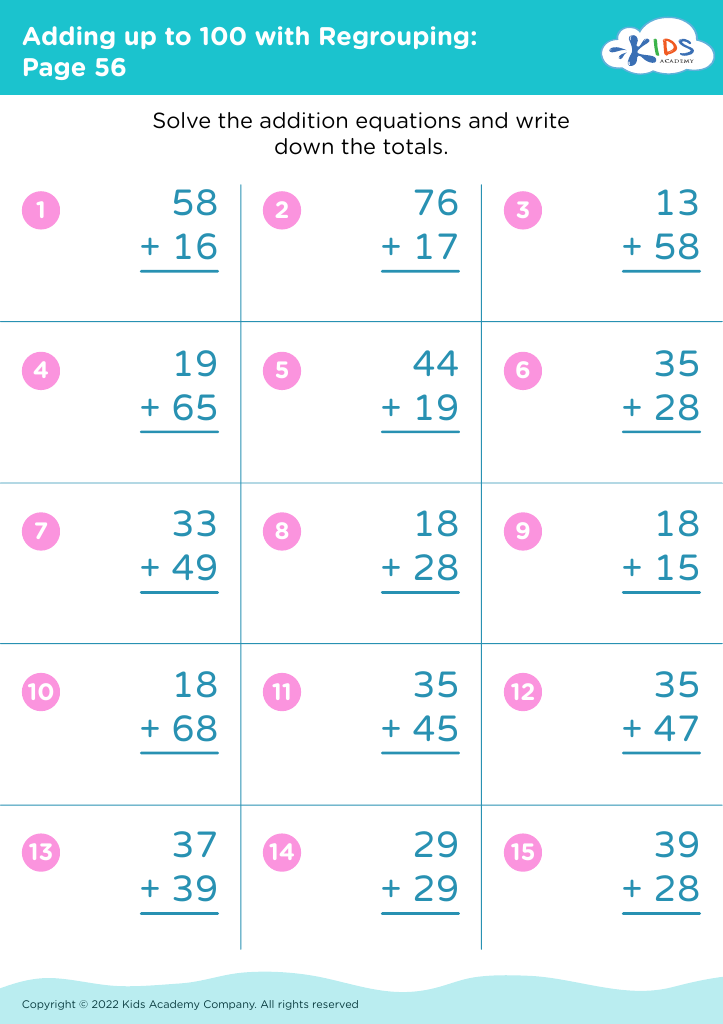
    Adding up to 100 with Regrouping: Page 56
    Adding up to 100 with Regrouping: Page 56
    Adding up to 100 with Regrouping: Page 56
    Worksheet
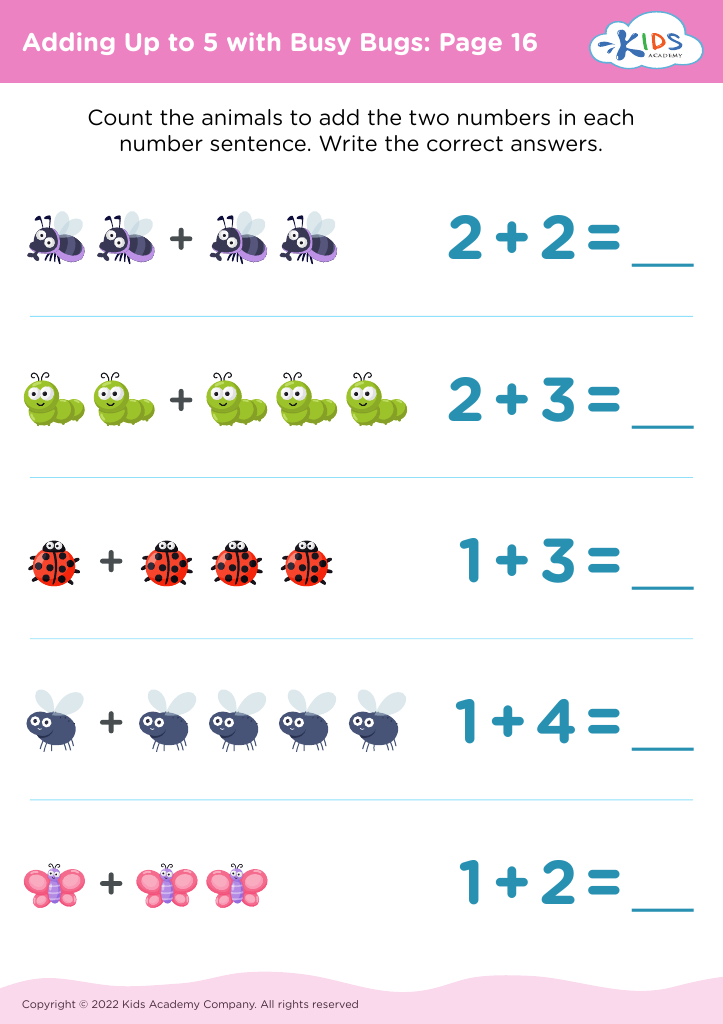
    Adding Up to 5 with Busy Bugs: Page 16
    Adding Up to 5 with Busy Bugs: Page 16
    Adding Up to 5 with Busy Bugs: Page 16
    Worksheet
    Recycling - More or Less Worksheet
    Recycling - More or Less Worksheet

    Recycling - More or Less Worksheet

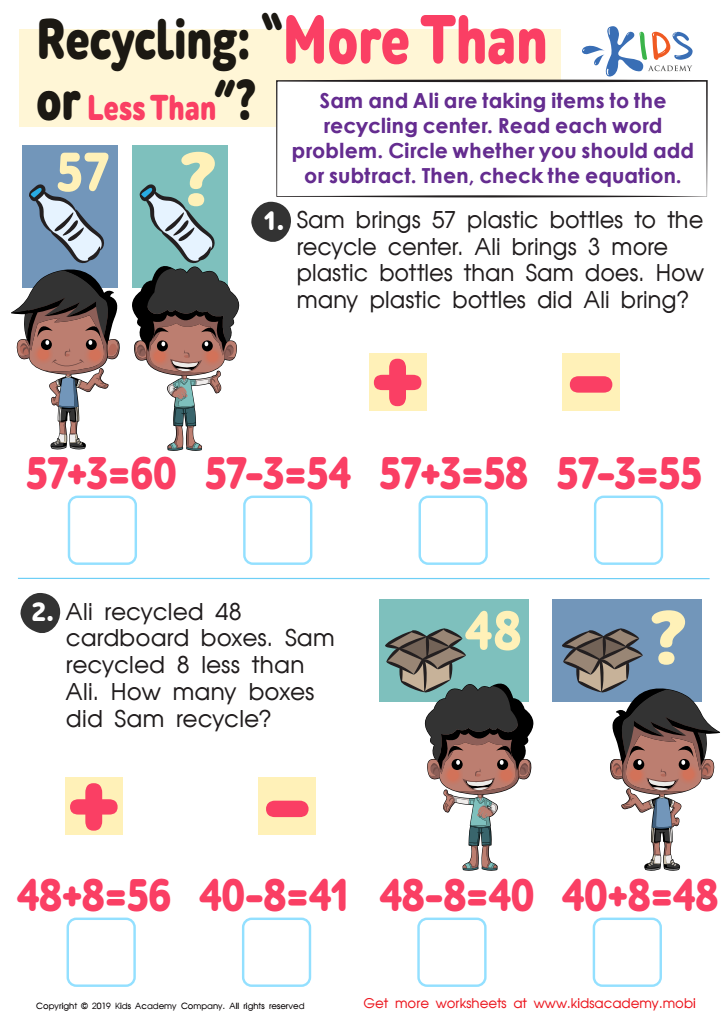
    Your child can compare numbers and solve word problems with this free worksheet. Help them understand what's being asked as Sam and Ali take items to the recycling center. They can choose the correct equation to match the word problem and apply their skills in reading and pulling out the appropriate information.
    Recycling - More or Less Worksheet
    Worksheet
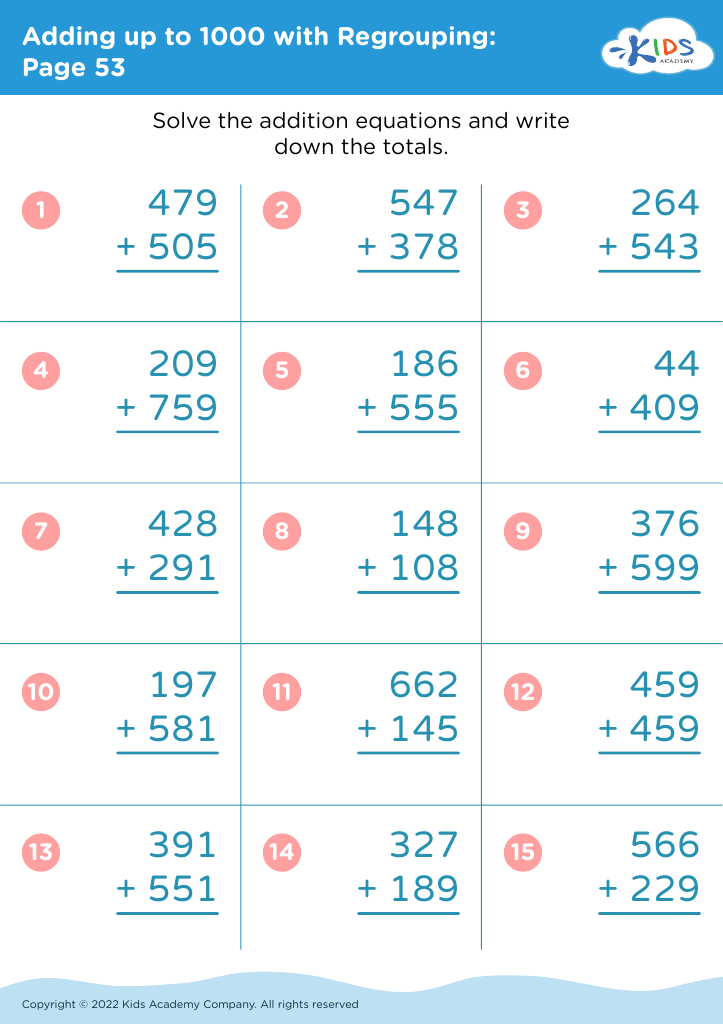
    Adding up to 1000 with Regrouping: Page 53
    Adding up to 1000 with Regrouping: Page 53
    Adding up to 1000 with Regrouping: Page 53
    Worksheet
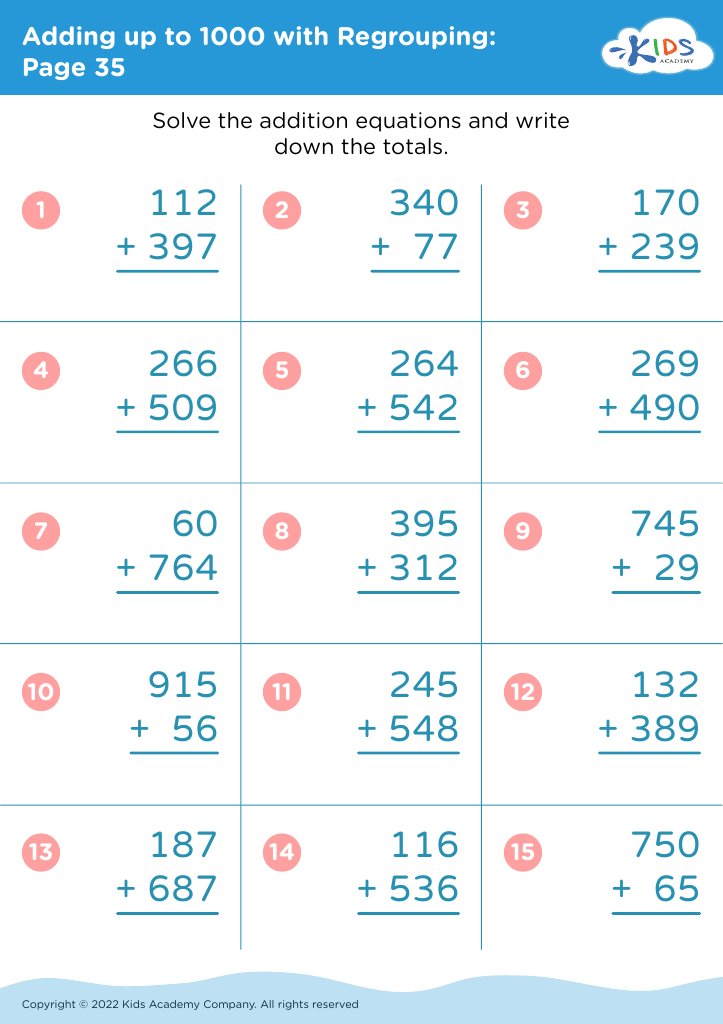
    Adding up to 1000 with Regrouping: Page 35
    Adding up to 1000 with Regrouping: Page 35
    Adding up to 1000 with Regrouping: Page 35
    Worksheet
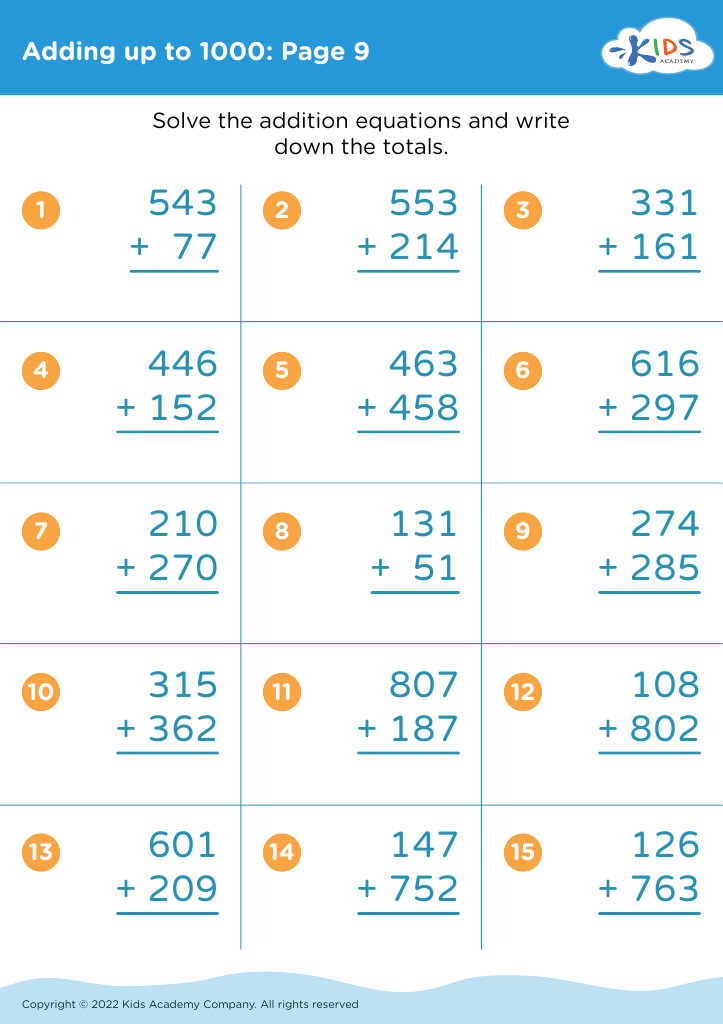
    Adding up to 1000: Page 9
    Adding up to 1000: Page 9

    Adding up to 1000: Page 9

    Adding up to 1000: Page 9
    Worksheet
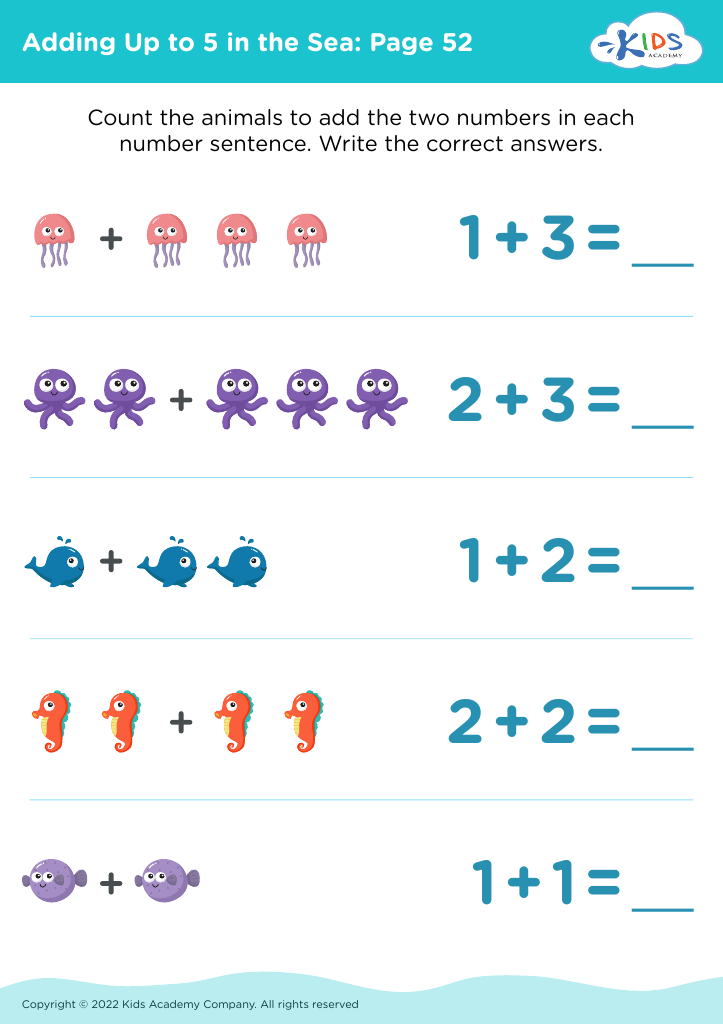
    Adding Up to 5 in the Sea: Page 52
    Adding Up to 5 in the Sea: Page 52
    Adding Up to 5 in the Sea: Page 52
    Worksheet
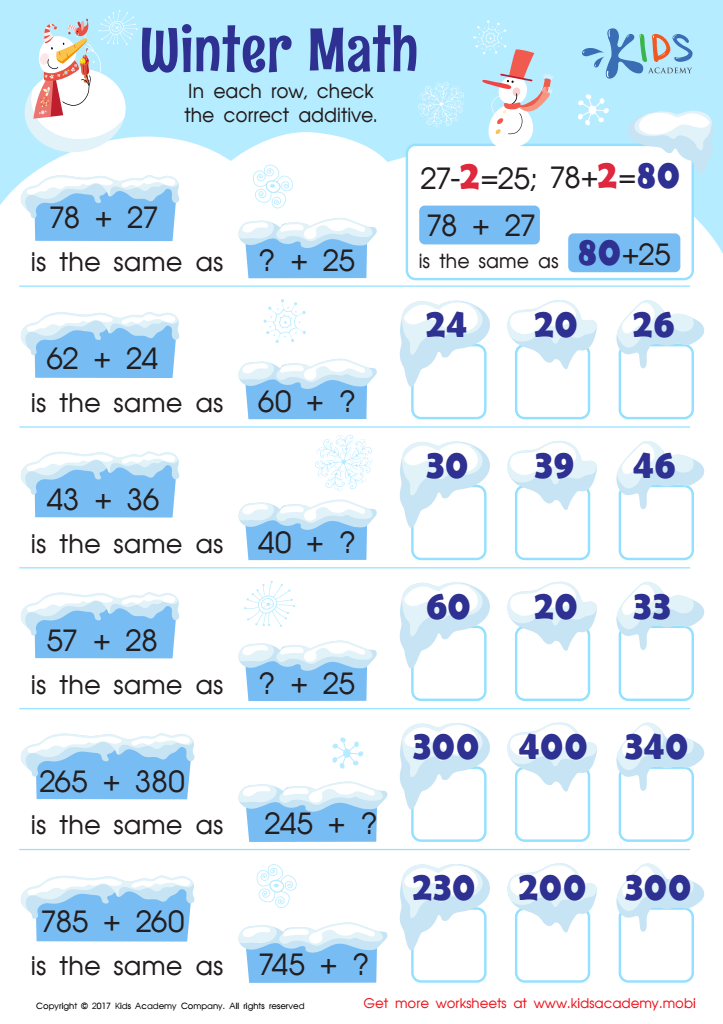
    Free addition PDF worksheet for 3rd grade
    Free addition PDF worksheet for 3rd grade

    Free Addition Worksheet

    Perfect for a wintry day, challenge your 3rd grader to compare addition equations and fill in the missing numbers in the PDF. This winter-themed worksheet is sure to bring a smile while your 3rd grader practices their addition skills. Perfect for a blustery day, challenge your child to compare addition equations and complete the missing numbers in the PDF.
    Free Addition Worksheet
    Worksheet
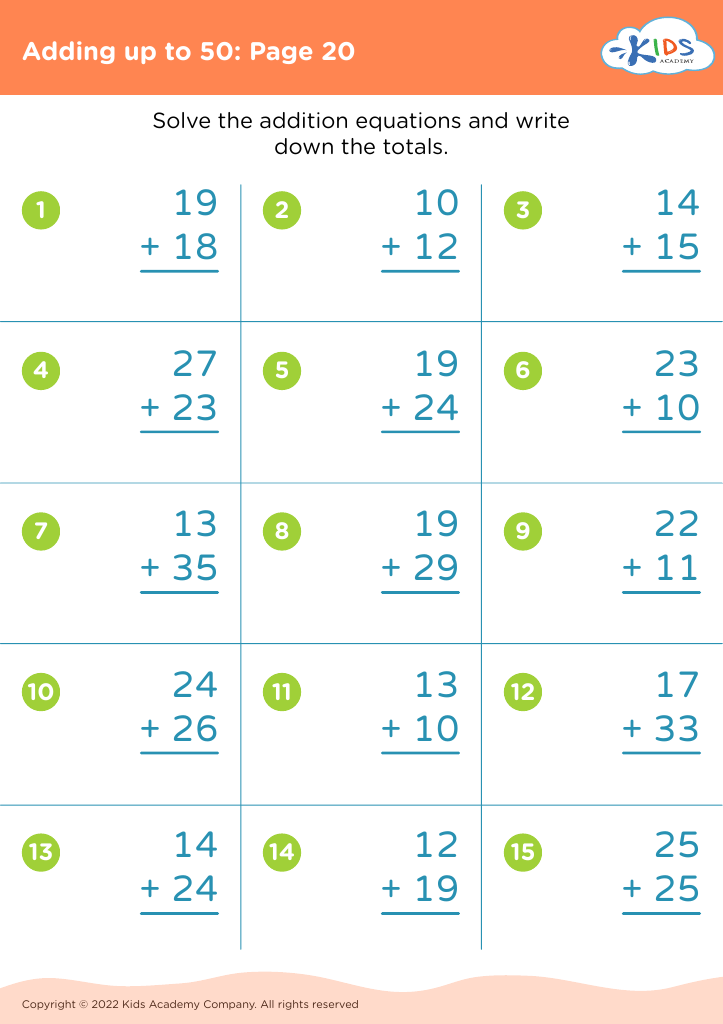
    Adding up to 50: Page 20
    Adding up to 50: Page 20

    Adding up to 50: Page 20

    Adding up to 50: Page 20
    Worksheet
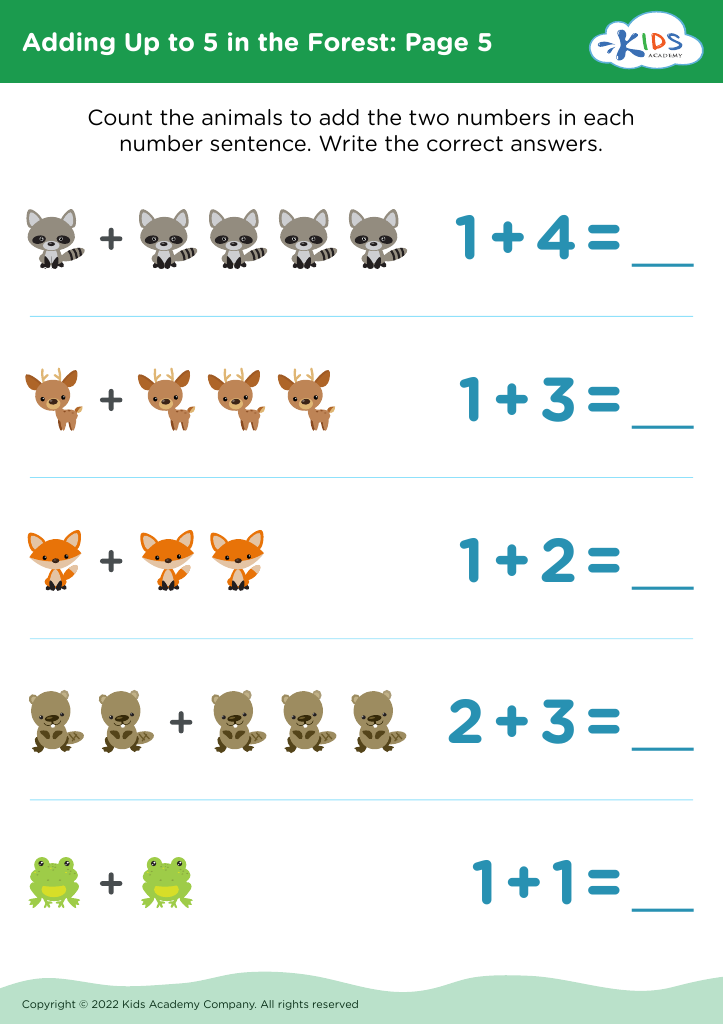
    Adding Up to 5 in the Forest: Page 5
    Adding Up to 5 in the Forest: Page 5
    Adding Up to 5 in the Forest: Page 5
    Worksheet
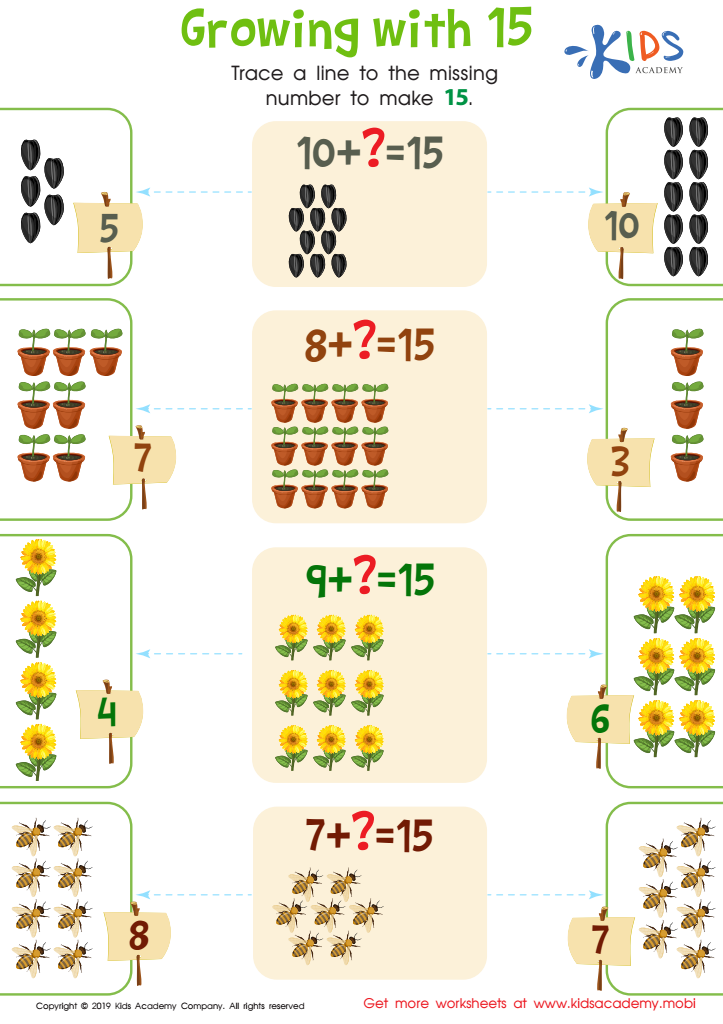
    Growing with 15 Worksheet
    Growing with 15 Worksheet
    Growing with 15 Worksheet
    Remind your kids that adding different sets of numbers can give the same total (e.g. 2+3=5, 4+1=5). Test their understanding by asking them for more examples. Move onto the worksheet: count objects, then trace the line to the number making a total of 15.
    Growing with 15 Worksheet
    Worksheet
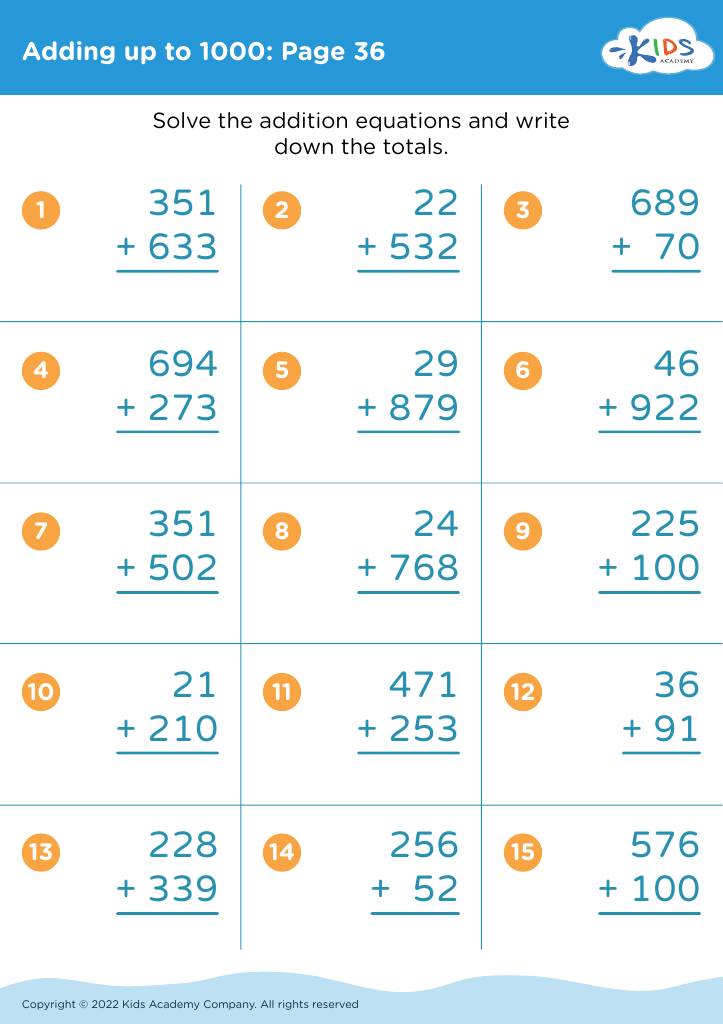
    Adding up to 1000: Page 36
    Adding up to 1000: Page 36

    Adding up to 1000: Page 36

    Adding up to 1000: Page 36
    Worksheet
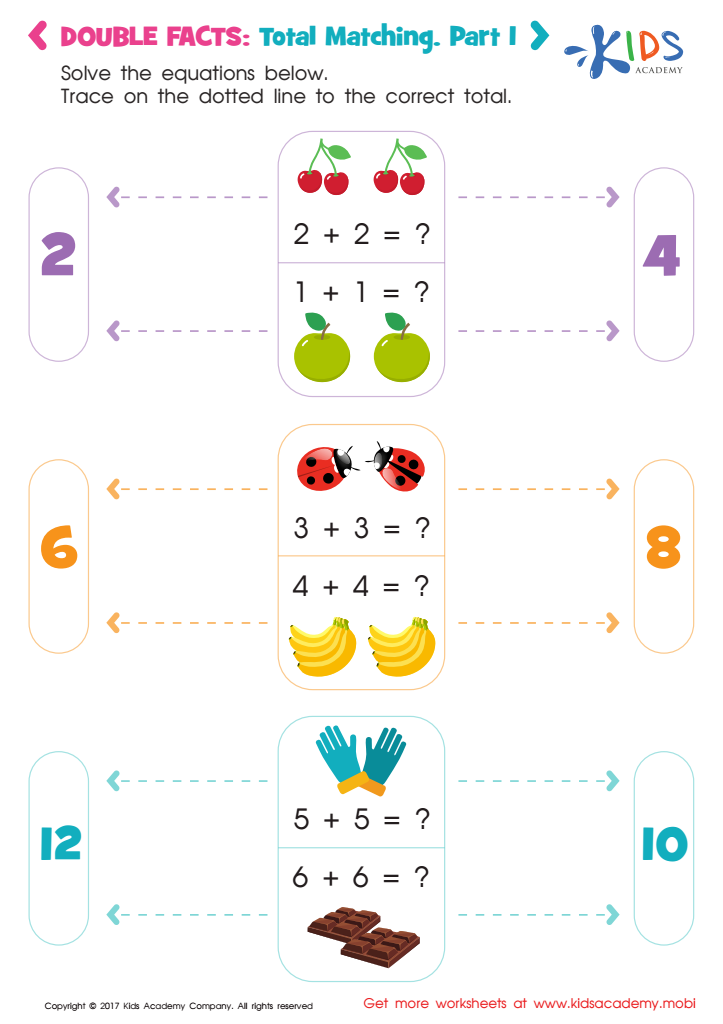
    Double Facts: Total Matching Worksheet: Part 1
    Double Facts: Total Matching Worksheet: Part 1
    Double Facts: Total Matching Worksheet: Part 1
    Help your students take their numbers knowledge further with this fun math worksheet! Solving equations has never been more fun; simply trace the dotted lines with a pencil to the correct answer. As your child gets the hang of it, watch them be amazed as math problems become playtime.
    Double Facts: Total Matching Worksheet: Part 1
    Worksheet
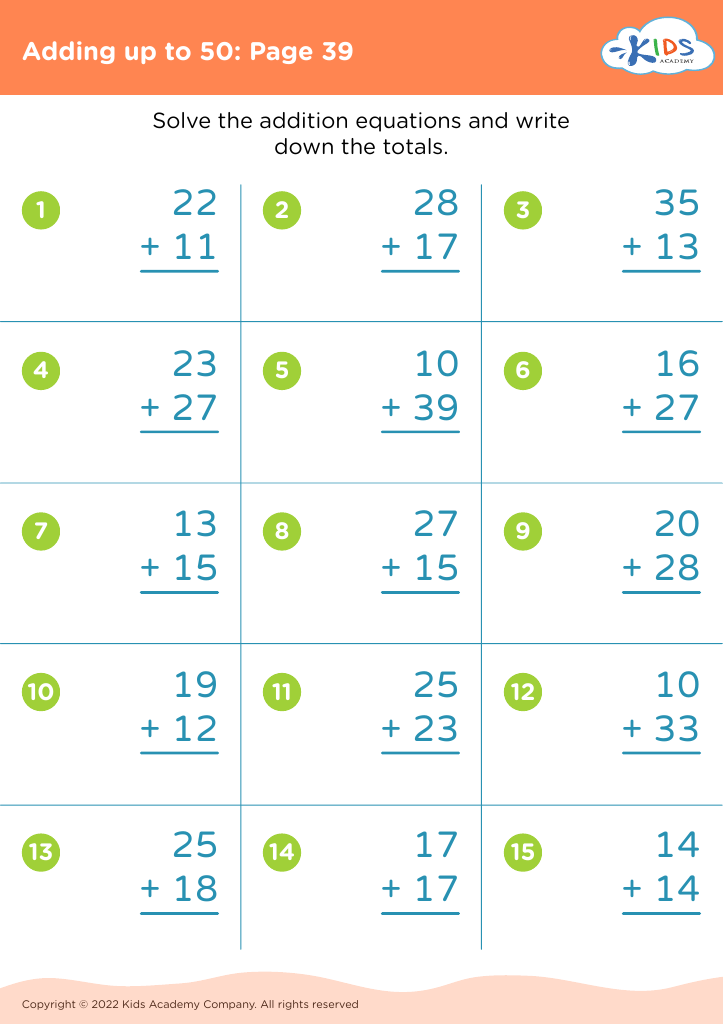
    Adding up to 50: Page 39
    Adding up to 50: Page 39

    Adding up to 50: Page 39

    Adding up to 50: Page 39
    Worksheet
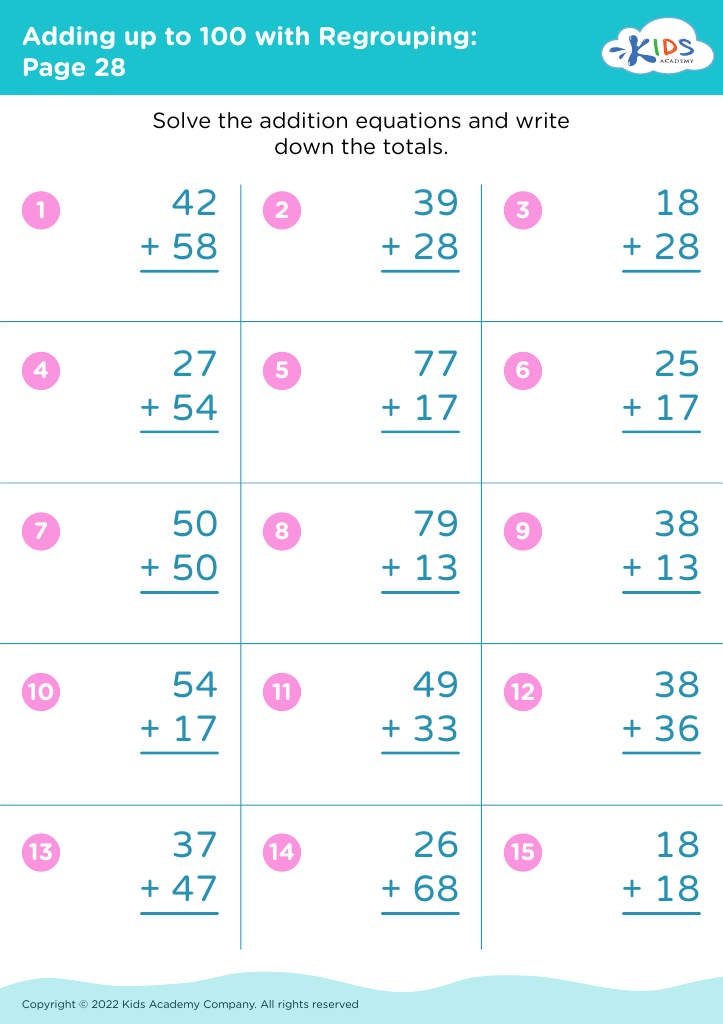
    Adding up to 100 with Regrouping: Page 28
    Adding up to 100 with Regrouping: Page 28
    Adding up to 100 with Regrouping: Page 28
    Worksheet
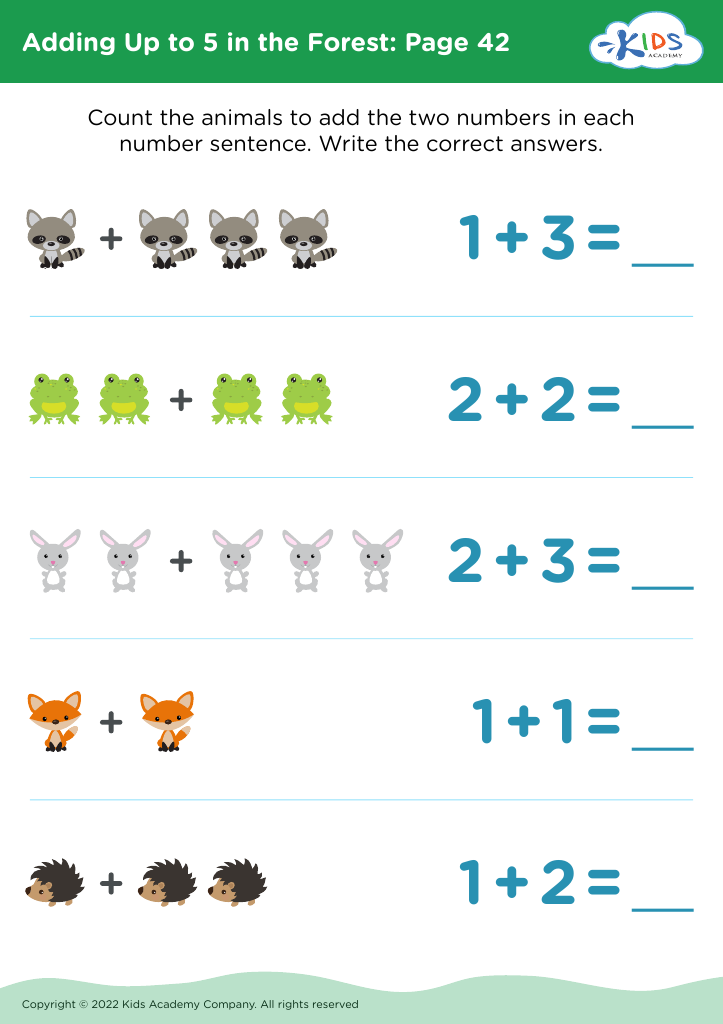
    Adding Up to 5 in the Forest: Page 42
    Adding Up to 5 in the Forest: Page 42
    Adding Up to 5 in the Forest: Page 42
    Worksheet
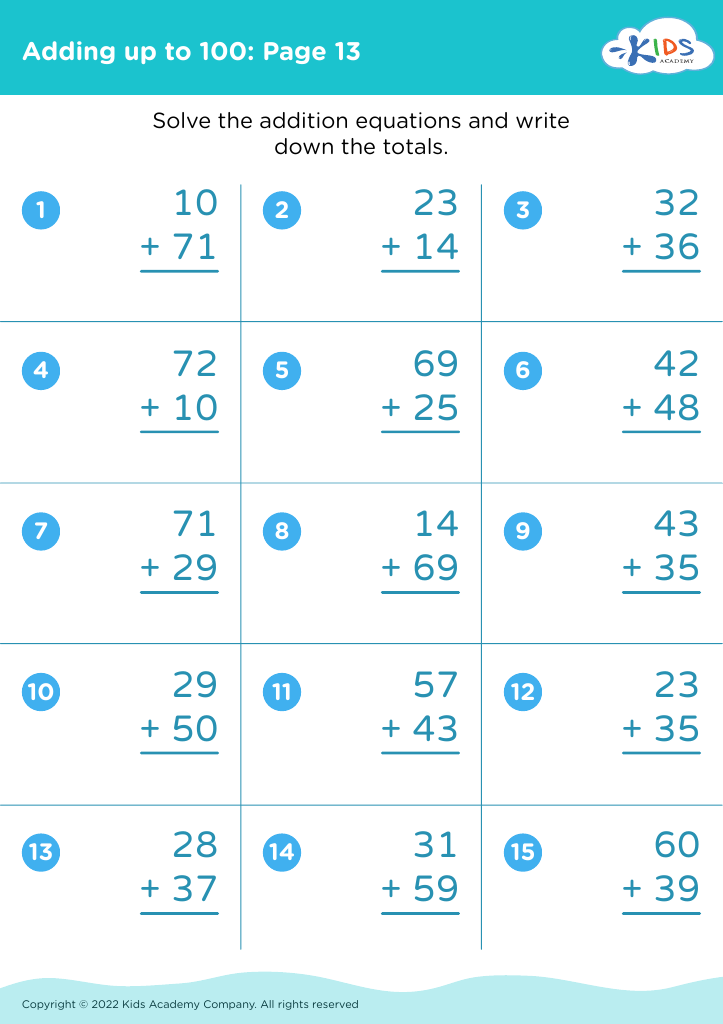
    Adding up to 100: Page 13
    Adding up to 100: Page 13

    Adding up to 100: Page 13

    Adding up to 100: Page 13
    Worksheet
    Adding up to 1000 with Regrouping: Page 70
    Adding up to 1000 with Regrouping: Page 70
    Adding up to 1000 with Regrouping: Page 70
    Worksheet
    Adding Up to 5 at the Zoo: Page 38
    Adding Up to 5 at the Zoo: Page 38
    Adding Up to 5 at the Zoo: Page 38
    Worksheet


    Parents and teachers should care about teaching addition to children aged 4-9 because it lays a crucial foundation for their overall mathematical understanding and cognitive development. During this stage, children are naturally curious and eager to learn, making it an ideal time to introduce basic concepts of addition in an engaging way. Mastering addition not only enhances their numeracy skills but also helps in developing critical thinking, problem-solving abilities, and mathematical reasoning.

    Moreover, a solid grasp of addition supports future learning in more complex math topics such as subtraction, multiplication, and division. It fosters confidence and helps to build a positive attitude towards math, making children more willing to tackle challenges in learning as they grow. As addition is involved in everyday activities—like cooking, shopping, and playing games—it's relatable and relevant, reinforcing its importance in daily life.

    Additionally, engaging with addition promotes social skills as kids often work in groups or pairs in school settings, encouraging collaboration and communication. By prioritizing a strong foundation in addition, parents and teachers enable children to develop a lifelong appreciation for mathematics and pave the way for academic success in higher grades.