Filters

149 filtered results

Clear all filters
Favorites
With answer key
Interactive

149 filtered results

Difficulty Level

Grade


Subject

    Check out this FREE Trial Lesson on Addition for age 4-9!

    Build Stairs with Cubes by Adding 1

    Favorites
    With answer key
    Interactive
    • 4-9
    • Problem-Solving Skills
    • Addition
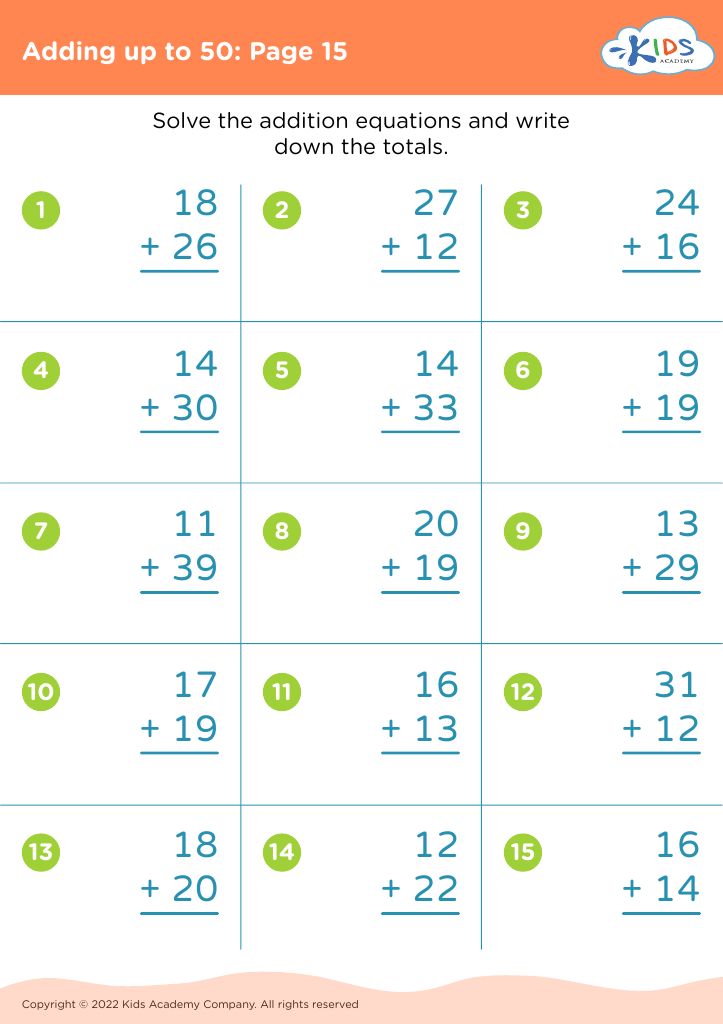
    Adding up to 50: Page 15
    Adding up to 50: Page 15

    Adding up to 50: Page 15

    Adding up to 50: Page 15
    Worksheet
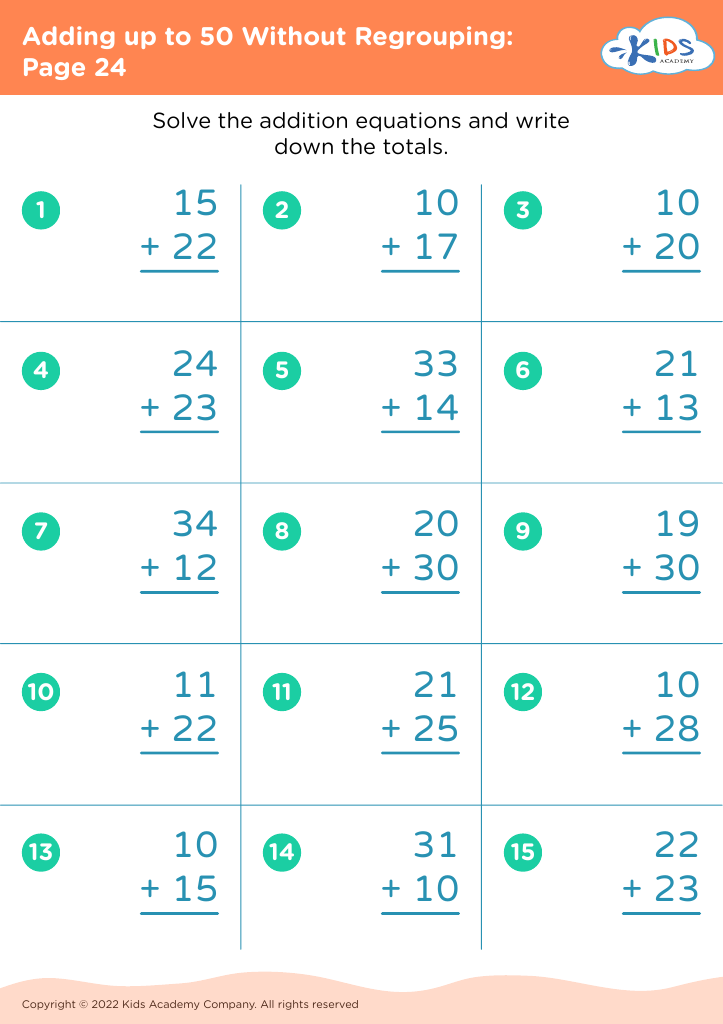
    Adding up to 50 Without Regrouping: Page 24
    Adding up to 50 Without Regrouping: Page 24
    Adding up to 50 Without Regrouping: Page 24
    Worksheet
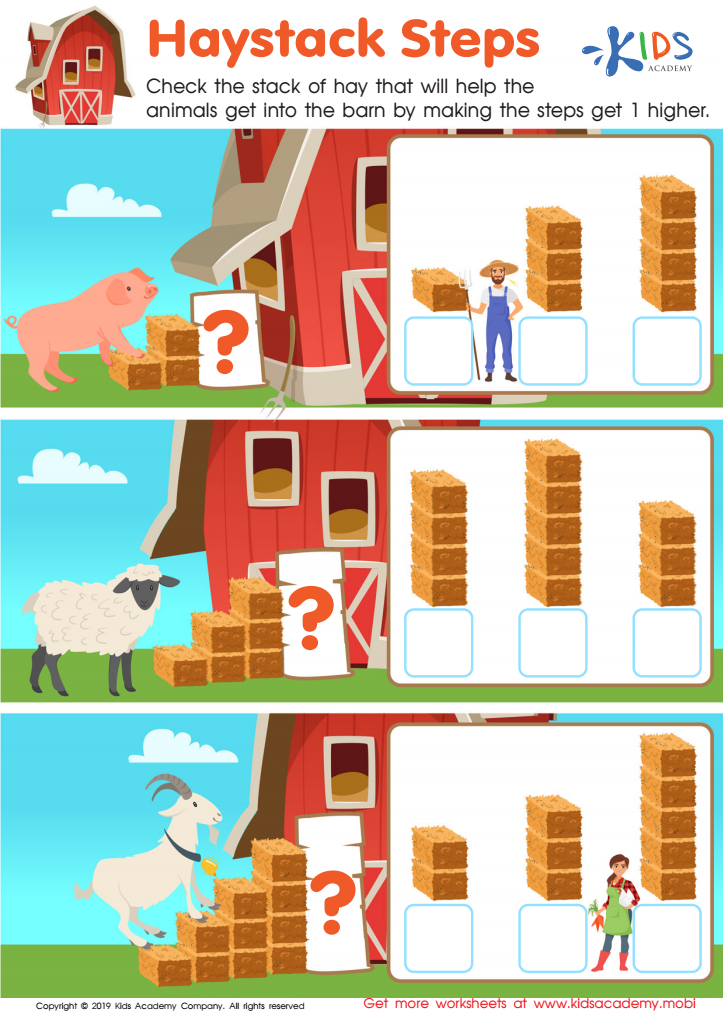
    Haystack Steps Worksheet
    Haystack Steps Worksheet

    Haystack Steps Worksheet

    Have your kids ever visited a farm? What activities and sights did they enjoy? Farmers are essential to our lives, growing food and providing us with dairy and eggs. In this worksheet, a farmer has made a haystack for his animals to climb into the barn. Ask your kids to add an extra layer to the stack to make the climb easier.
    Haystack Steps Worksheet
    Worksheet
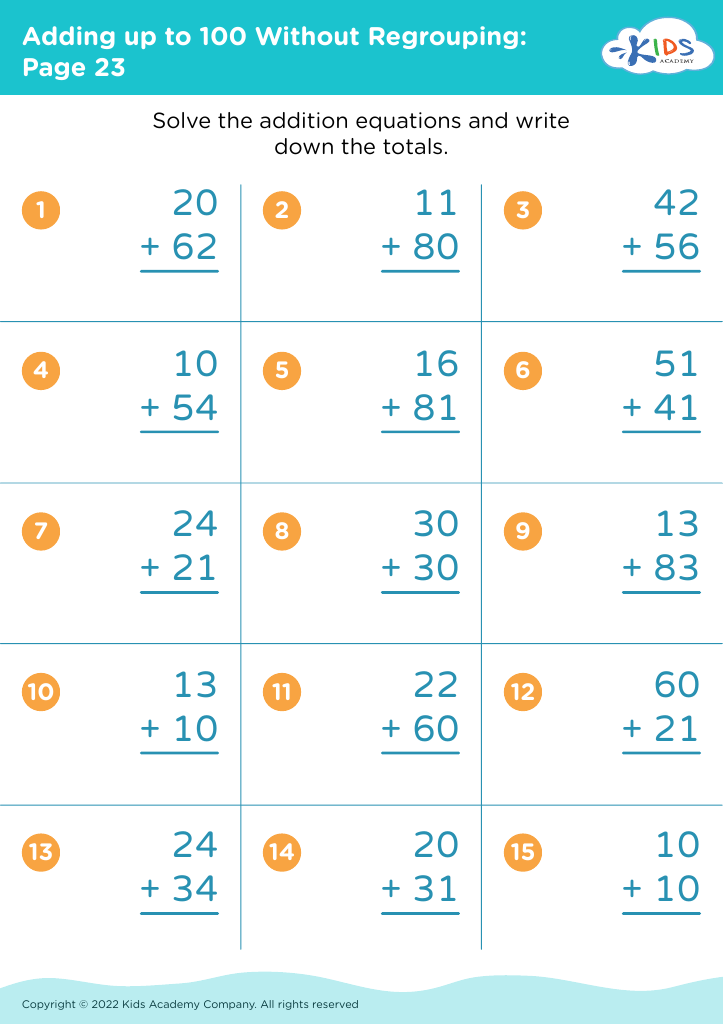
    Adding up to 100 Without Regrouping: Page 23
    Adding up to 100 Without Regrouping: Page 23
    Adding up to 100 Without Regrouping: Page 23
    Worksheet
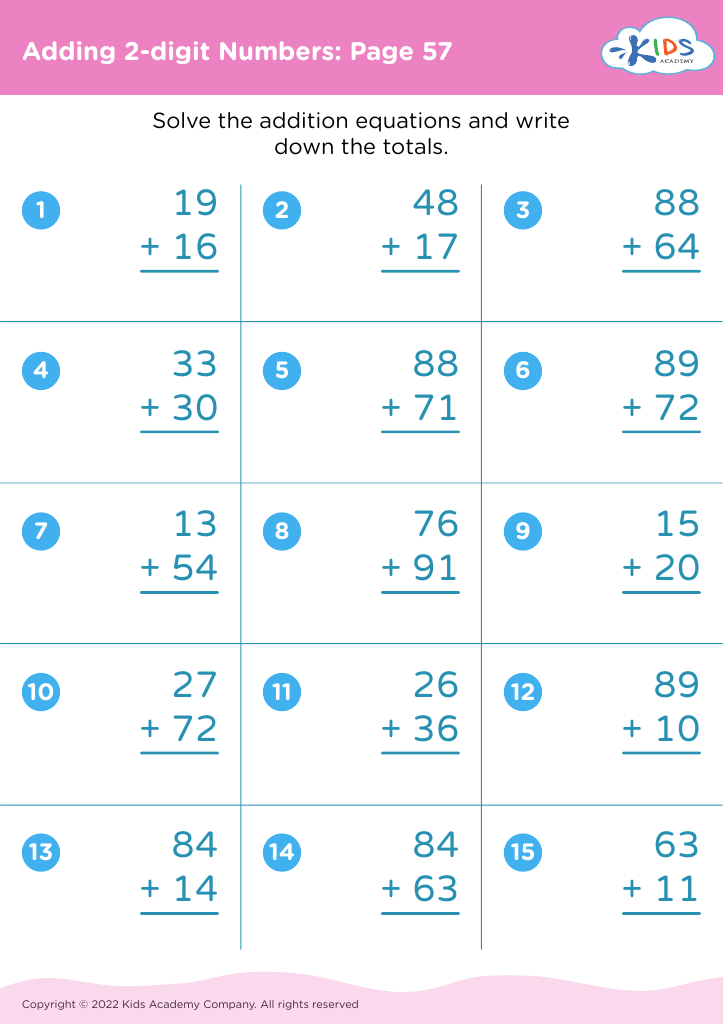
    Adding 2-digit Numbers: Page 57
    Adding 2-digit Numbers: Page 57

    Adding 2-digit Numbers: Page 57

    Adding 2-digit Numbers: Page 57
    Worksheet
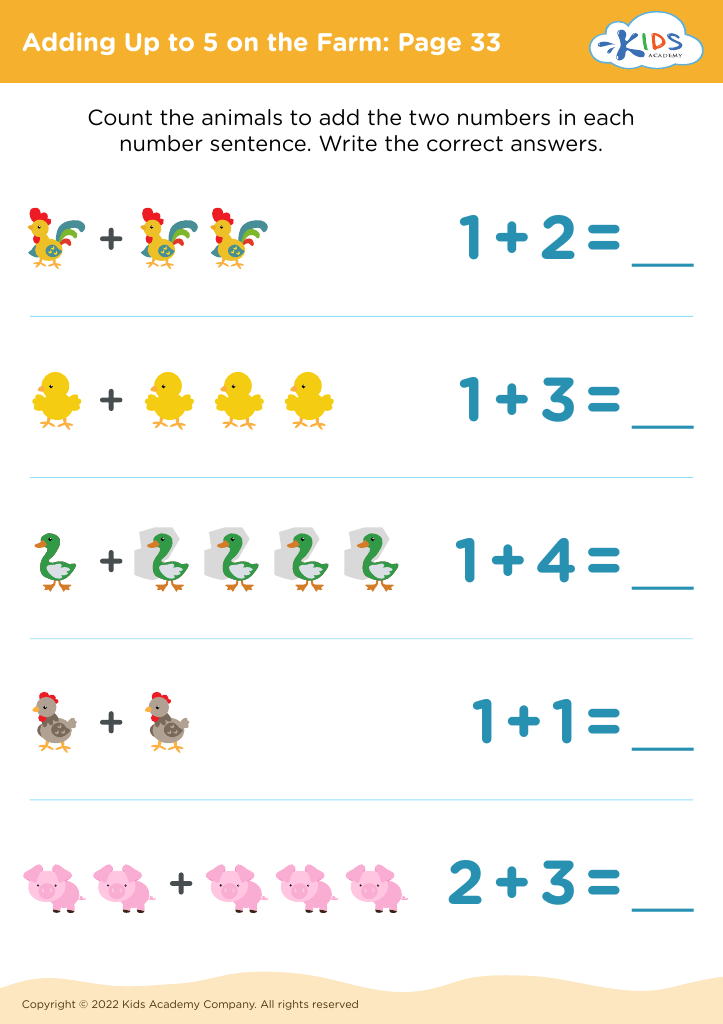
    Adding Up to 5 on the Farm: Page 33
    Adding Up to 5 on the Farm: Page 33
    Adding Up to 5 on the Farm: Page 33
    Worksheet
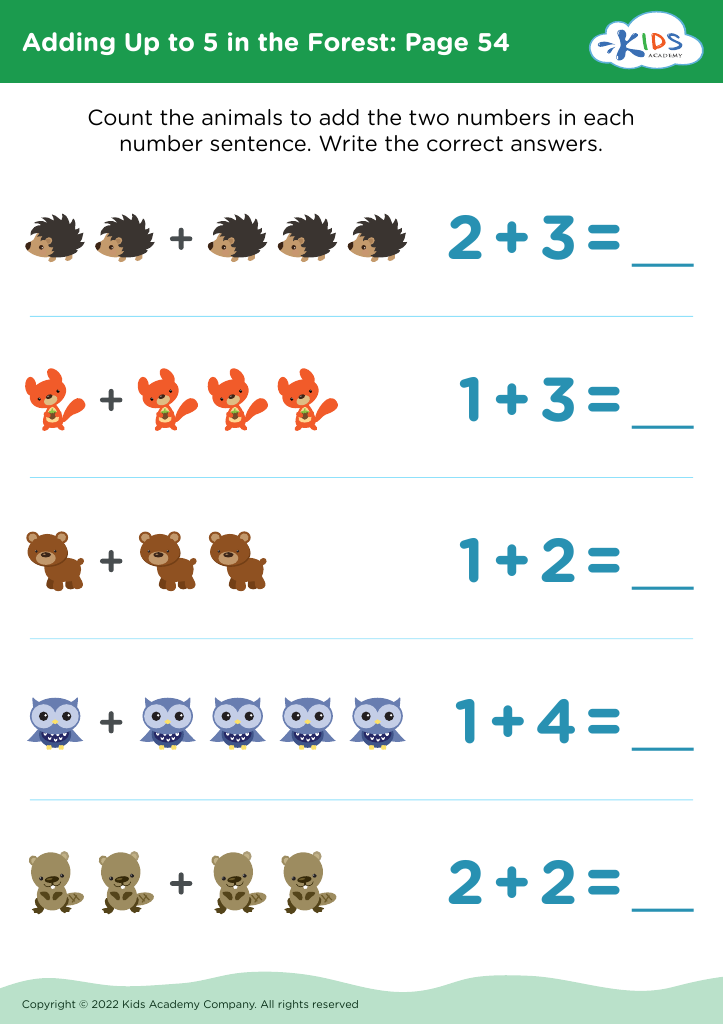
    Adding Up to 5 in the Forest: Page 54
    Adding Up to 5 in the Forest: Page 54
    Adding Up to 5 in the Forest: Page 54
    Worksheet
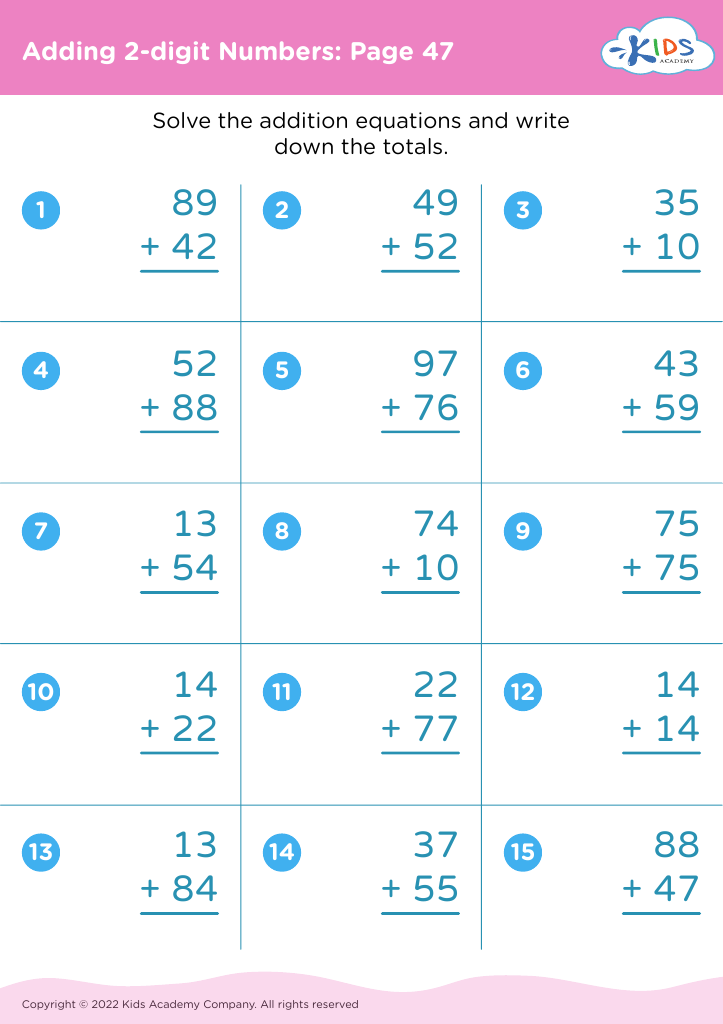
    Adding 2-digit Numbers: Page 47
    Adding 2-digit Numbers: Page 47

    Adding 2-digit Numbers: Page 47

    Adding 2-digit Numbers: Page 47
    Worksheet
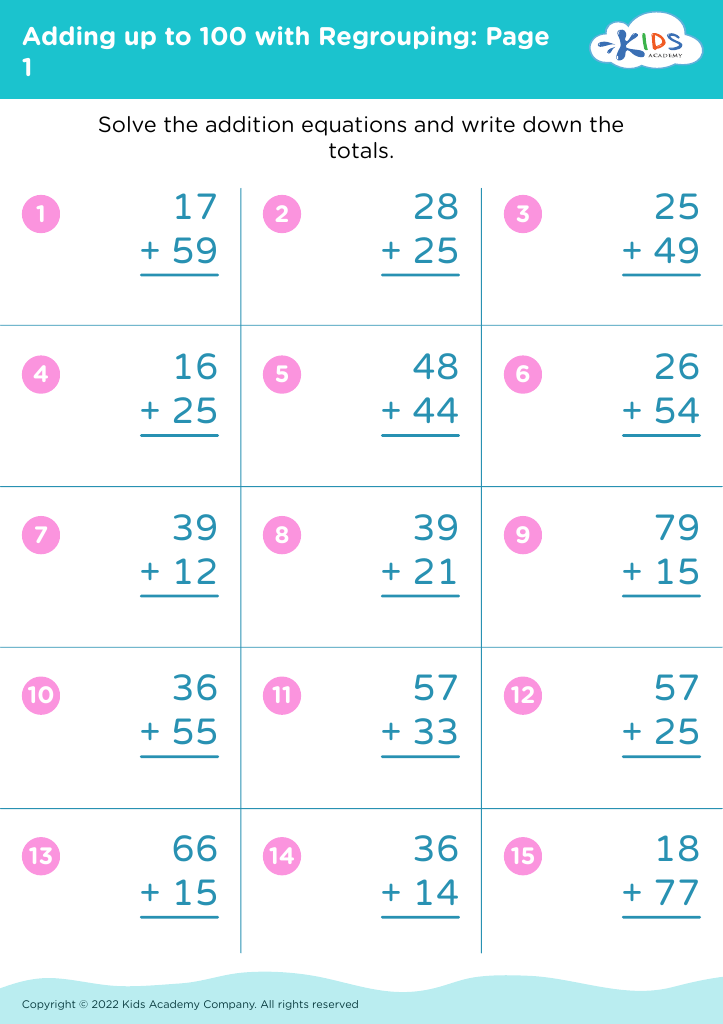
    Adding up to 100 with Regrouping: Page 1
    Adding up to 100 with Regrouping: Page 1
    Adding up to 100 with Regrouping: Page 1
    Worksheet
    Add up the Dollars Worksheet
    Add up the Dollars Worksheet
    Add up the Dollars Worksheet
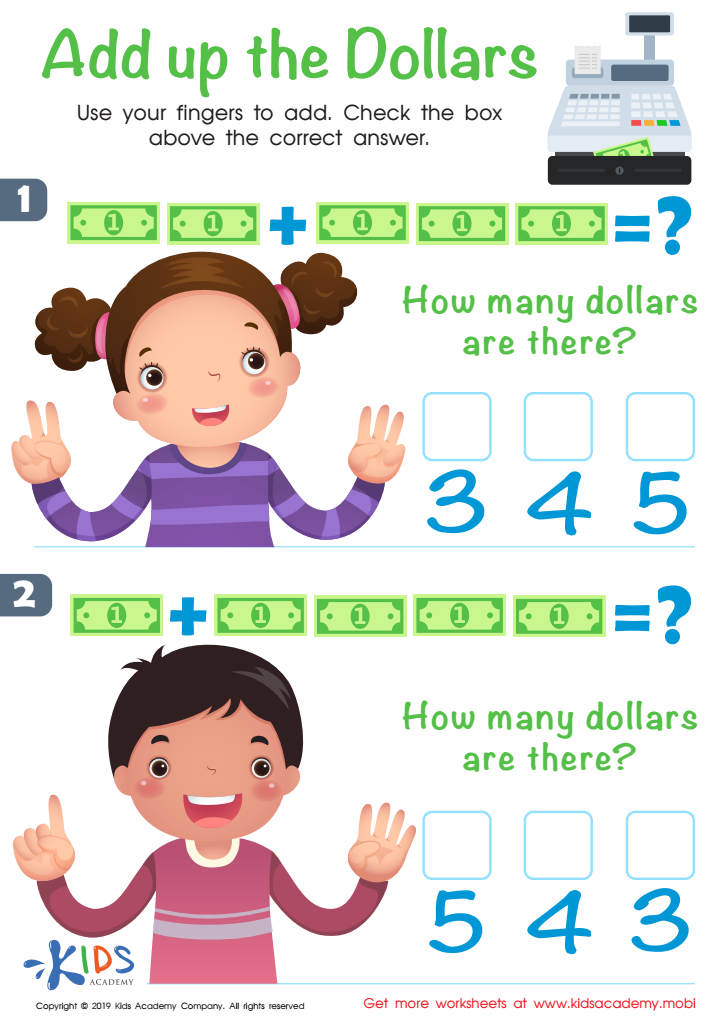
    Money is key in life. It buys what we love and need. Get students to learn with exercises full of colour and familiar items like this worksheet. It shows two kids and some money. Ask pupils to use their fingers to add the money and check the box with the right answer.
    Add up the Dollars Worksheet
    Worksheet
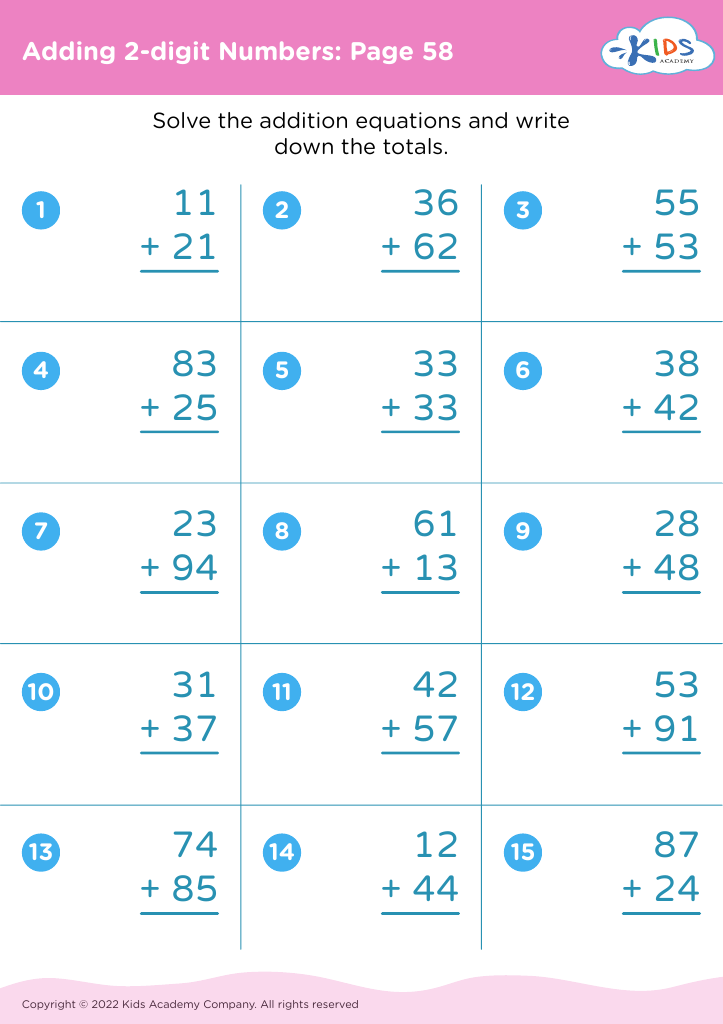
    Adding 2-digit Numbers: Page 58
    Adding 2-digit Numbers: Page 58

    Adding 2-digit Numbers: Page 58

    Adding 2-digit Numbers: Page 58
    Worksheet
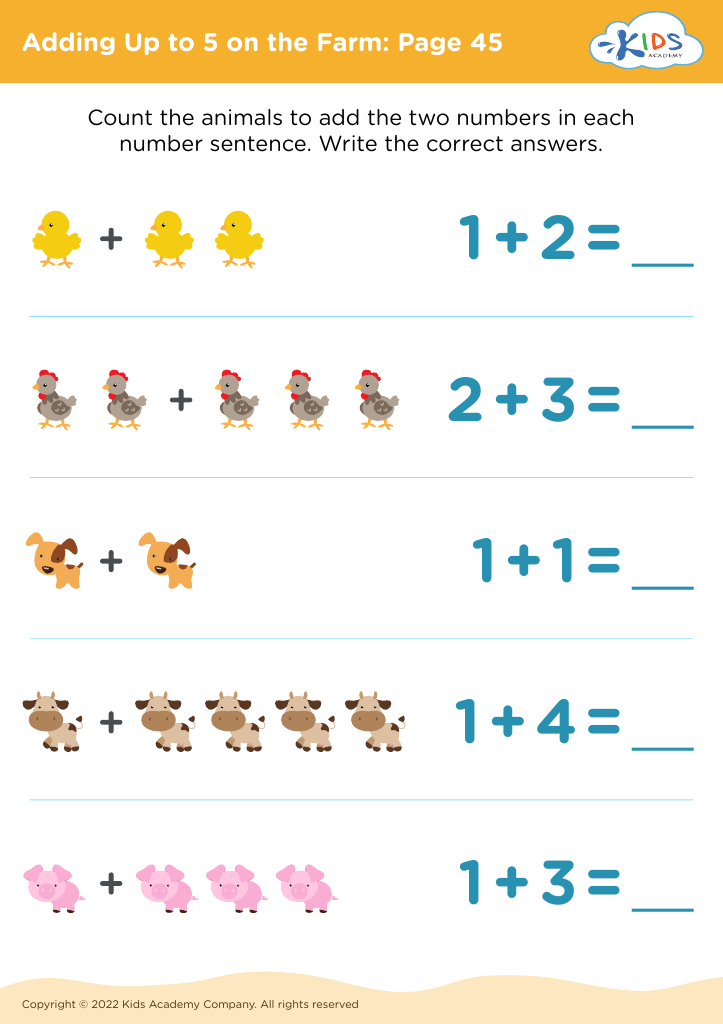
    Adding Up to 5 on the Farm: Page 45
    Adding Up to 5 on the Farm: Page 45
    Adding Up to 5 on the Farm: Page 45
    Worksheet
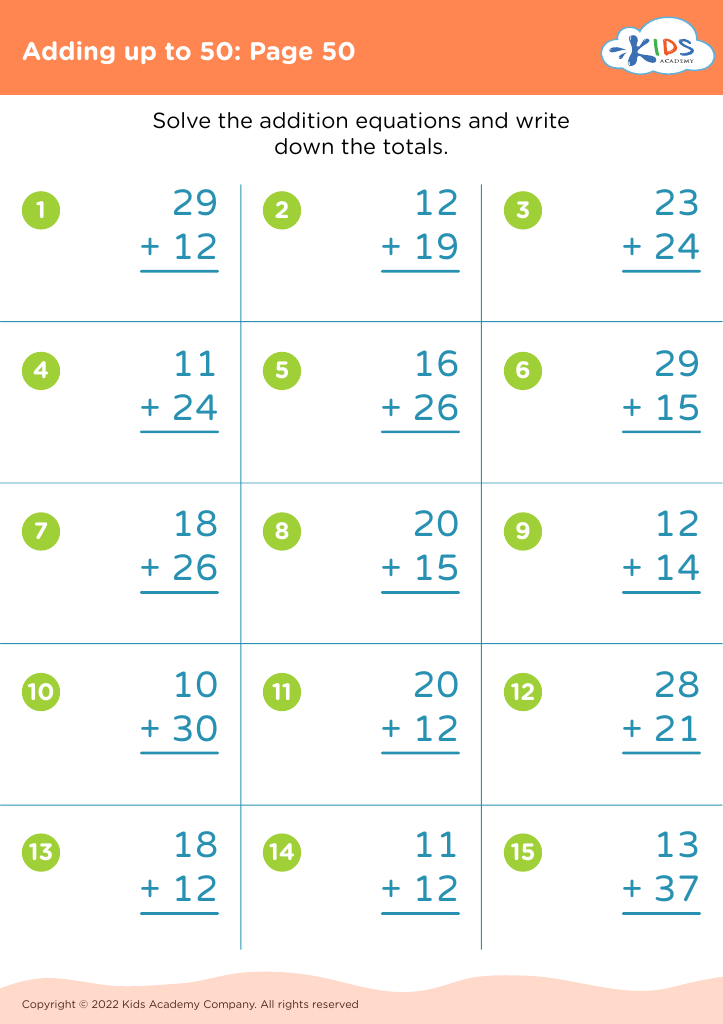
    Adding up to 50: Page 50
    Adding up to 50: Page 50

    Adding up to 50: Page 50

    Adding up to 50: Page 50
    Worksheet
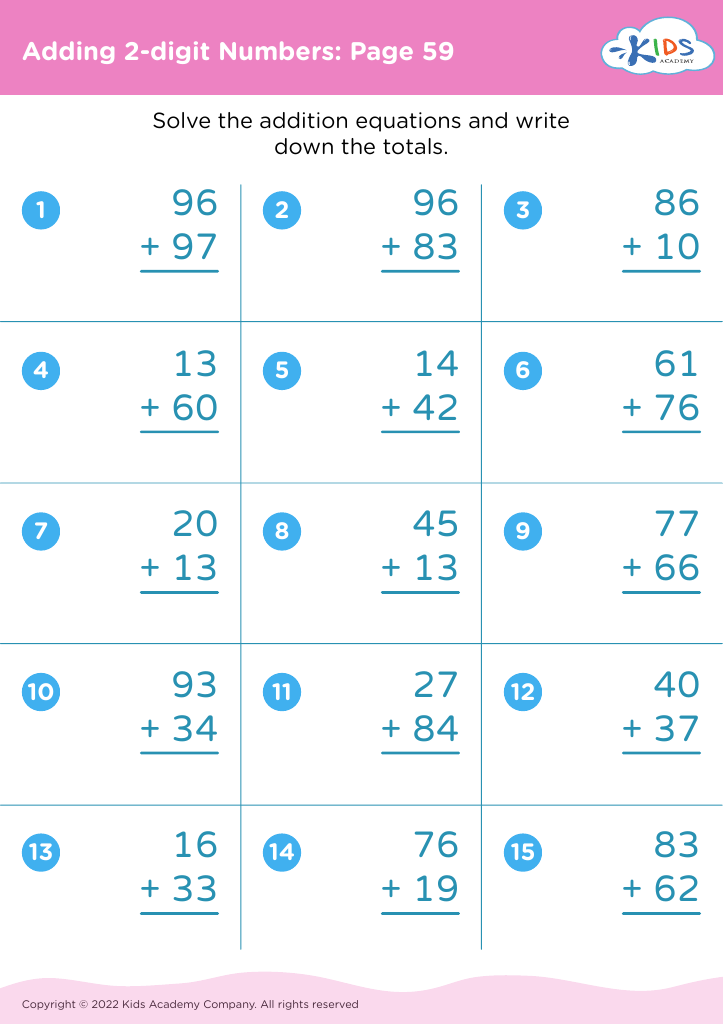
    Adding 2-digit Numbers: Page 59
    Adding 2-digit Numbers: Page 59

    Adding 2-digit Numbers: Page 59

    Adding 2-digit Numbers: Page 59
    Worksheet
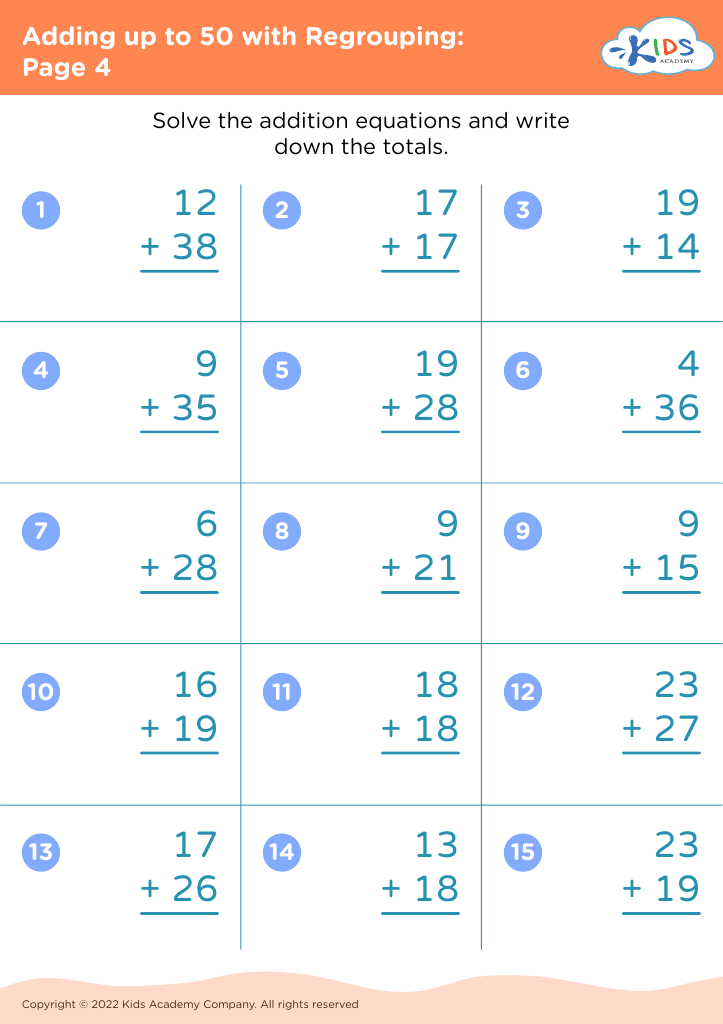
    Adding up to 50 with Regrouping: Page 4
    Adding up to 50 with Regrouping: Page 4
    Adding up to 50 with Regrouping: Page 4
    Worksheet
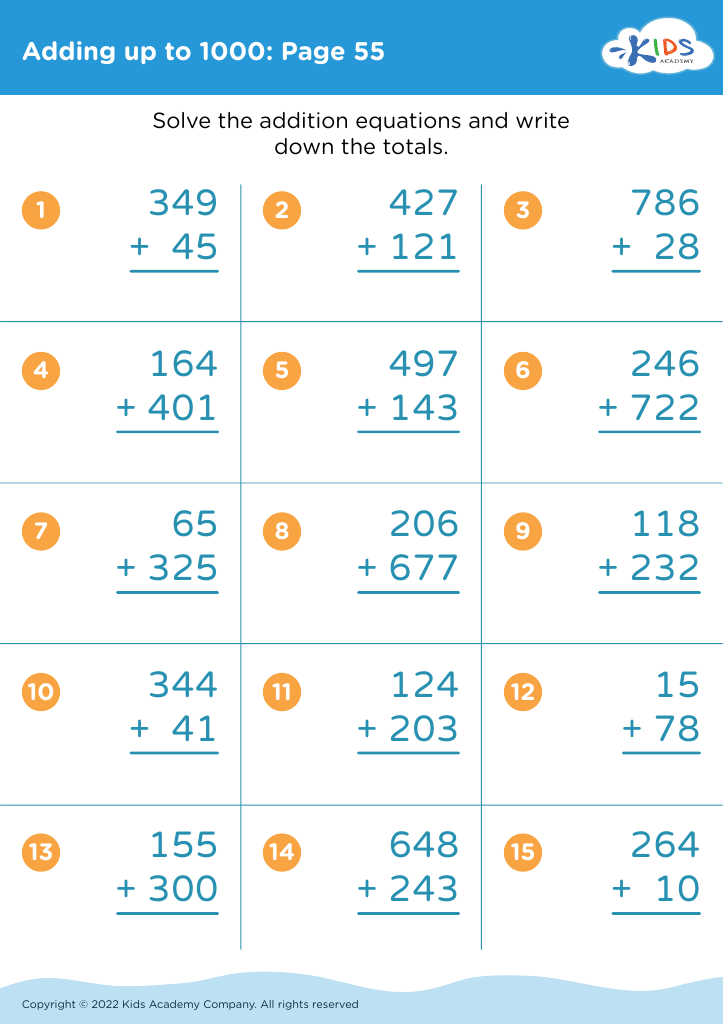
    Adding up to 1000: Page 55
    Adding up to 1000: Page 55

    Adding up to 1000: Page 55

    Adding up to 1000: Page 55
    Worksheet
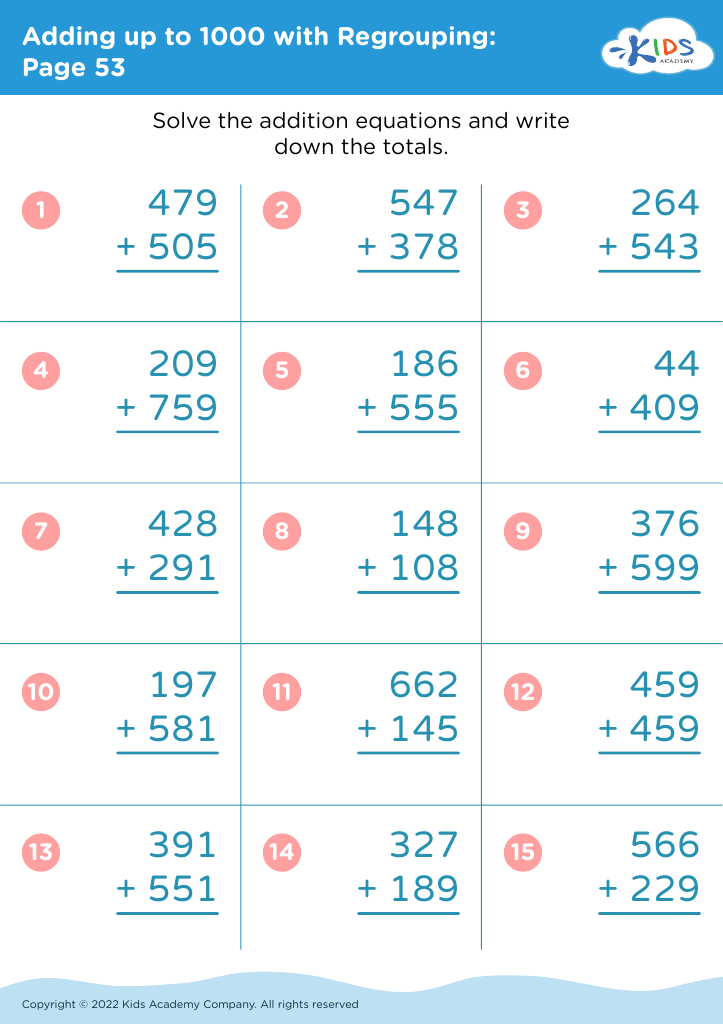
    Adding up to 1000 with Regrouping: Page 53
    Adding up to 1000 with Regrouping: Page 53
    Adding up to 1000 with Regrouping: Page 53
    Worksheet
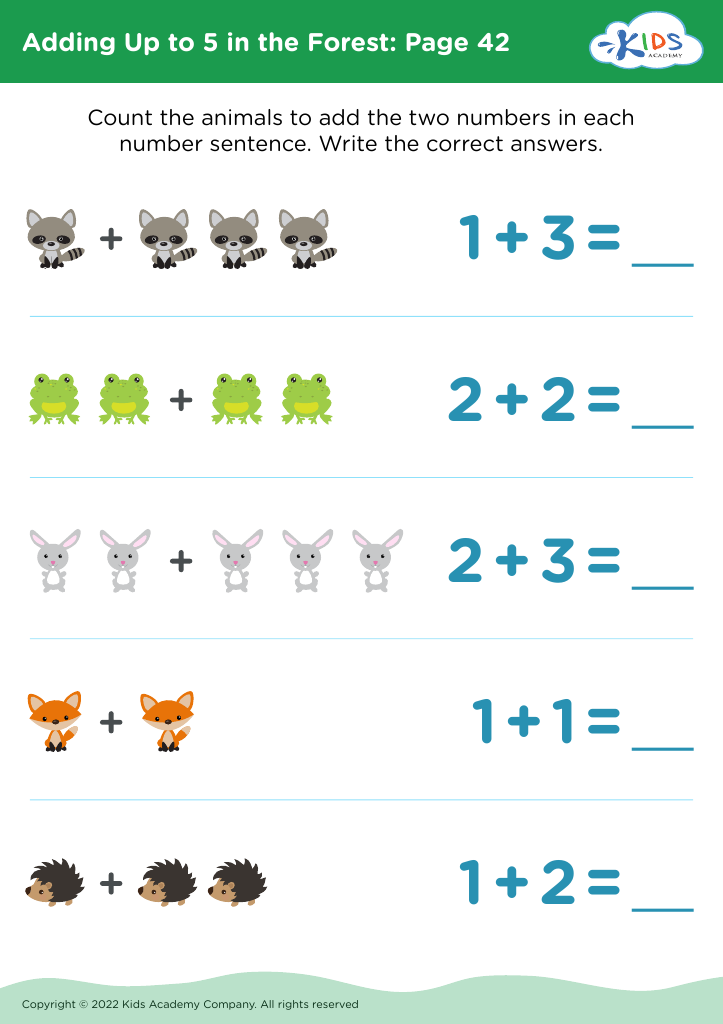
    Adding Up to 5 in the Forest: Page 42
    Adding Up to 5 in the Forest: Page 42
    Adding Up to 5 in the Forest: Page 42
    Worksheet
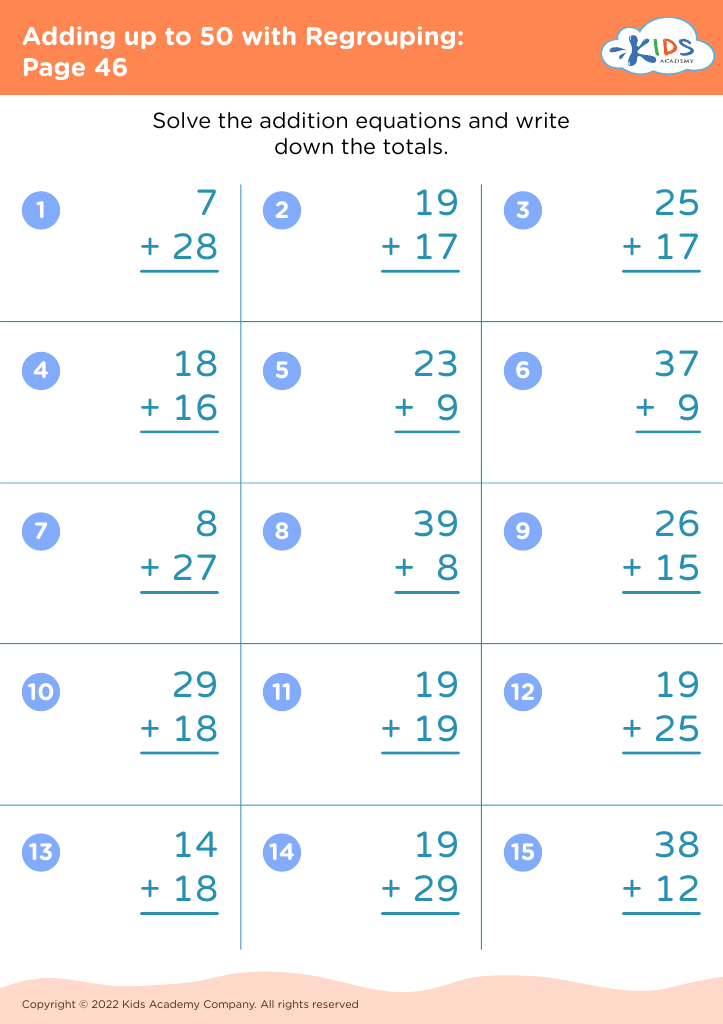
    Adding up to 50 with Regrouping: Page 46
    Adding up to 50 with Regrouping: Page 46
    Adding up to 50 with Regrouping: Page 46
    Worksheet
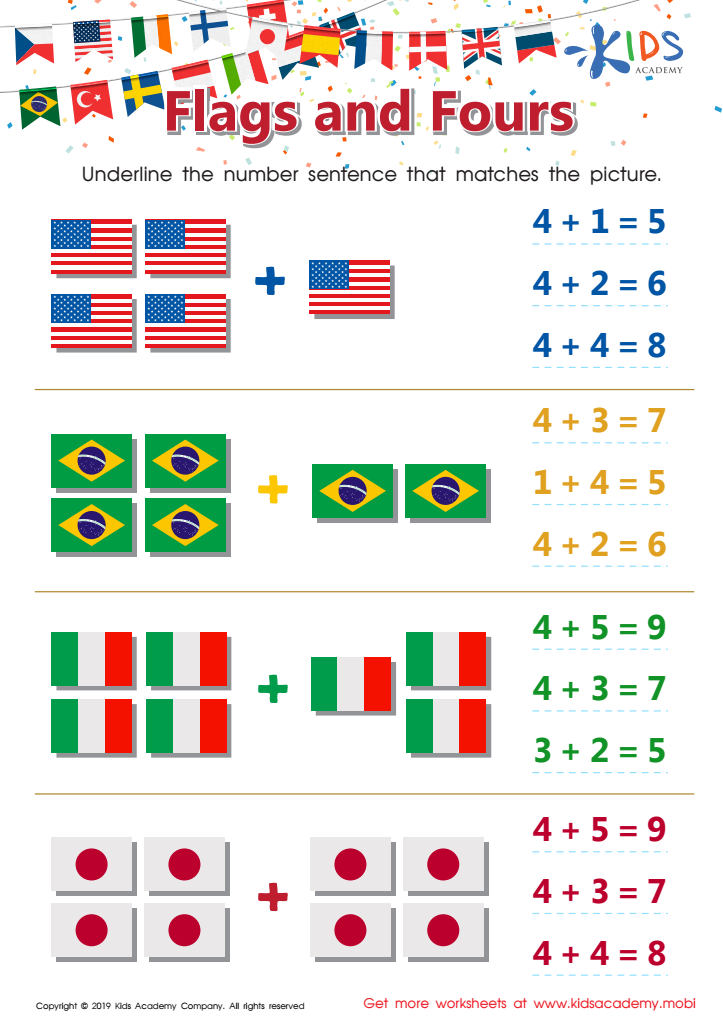
    Flags and Fours Worksheet
    Flags and Fours Worksheet
    Flags and Fours Worksheet
    Have your kids identify country flags from this colorful printout. Then, ask them to underline the number sentence that goes with each flag. Combining math with national flag recognition strengthens kids' knowledge of both, promoting an understanding of identity and numbers.
    Flags and Fours Worksheet
    Worksheet
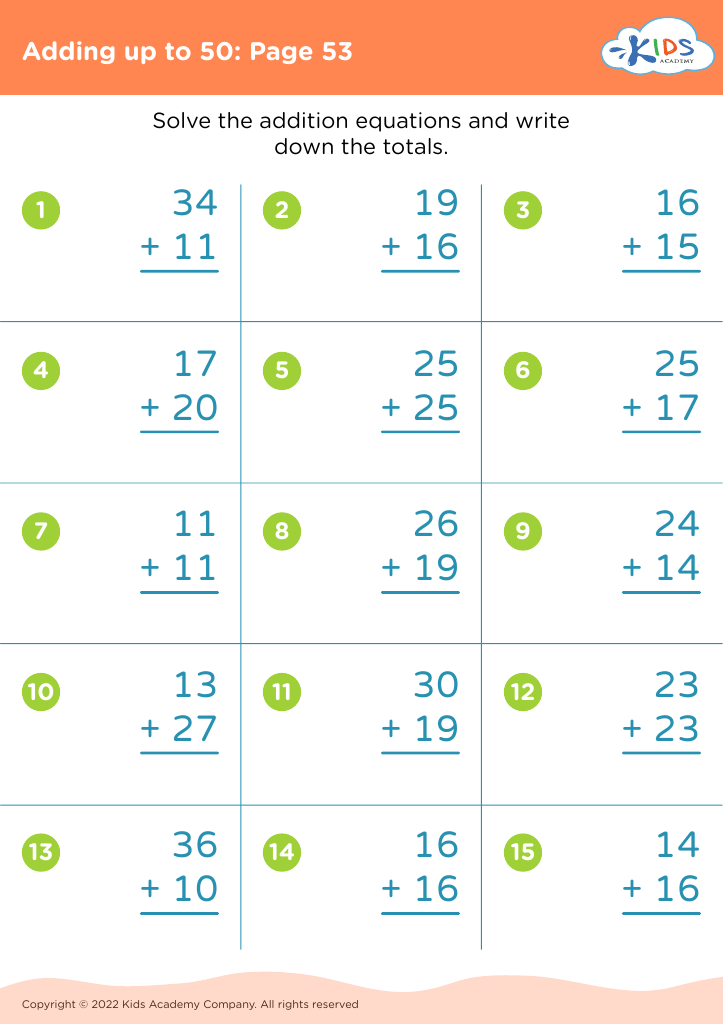
    Adding up to 50: Page 53
    Adding up to 50: Page 53

    Adding up to 50: Page 53

    Adding up to 50: Page 53
    Worksheet
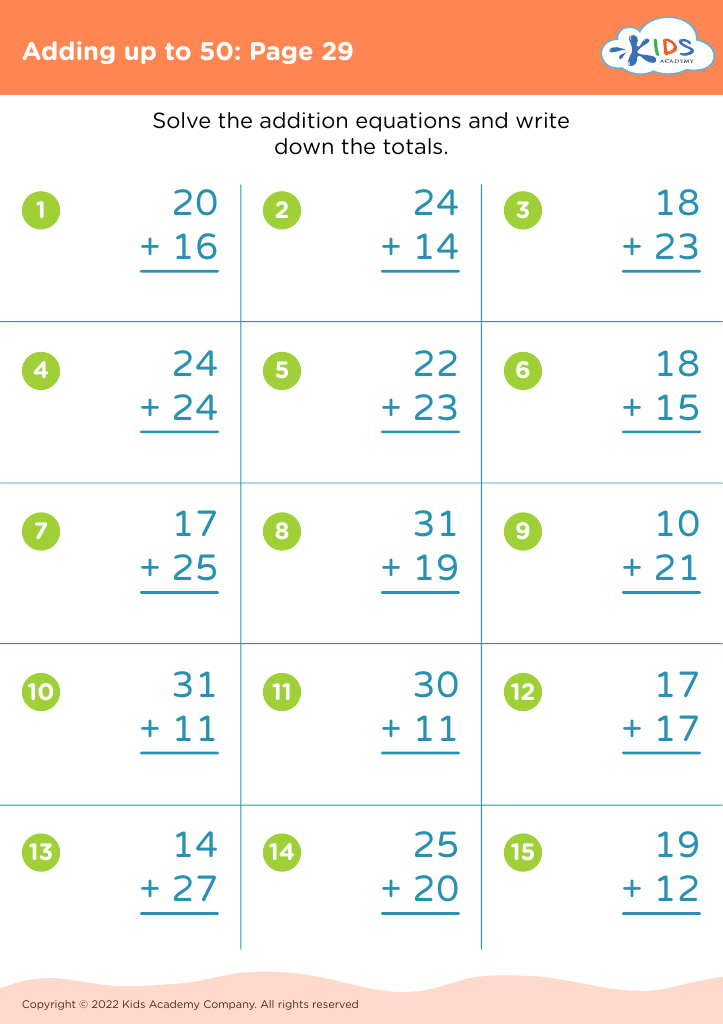
    Adding up to 50: Page 29
    Adding up to 50: Page 29

    Adding up to 50: Page 29

    Adding up to 50: Page 29
    Worksheet
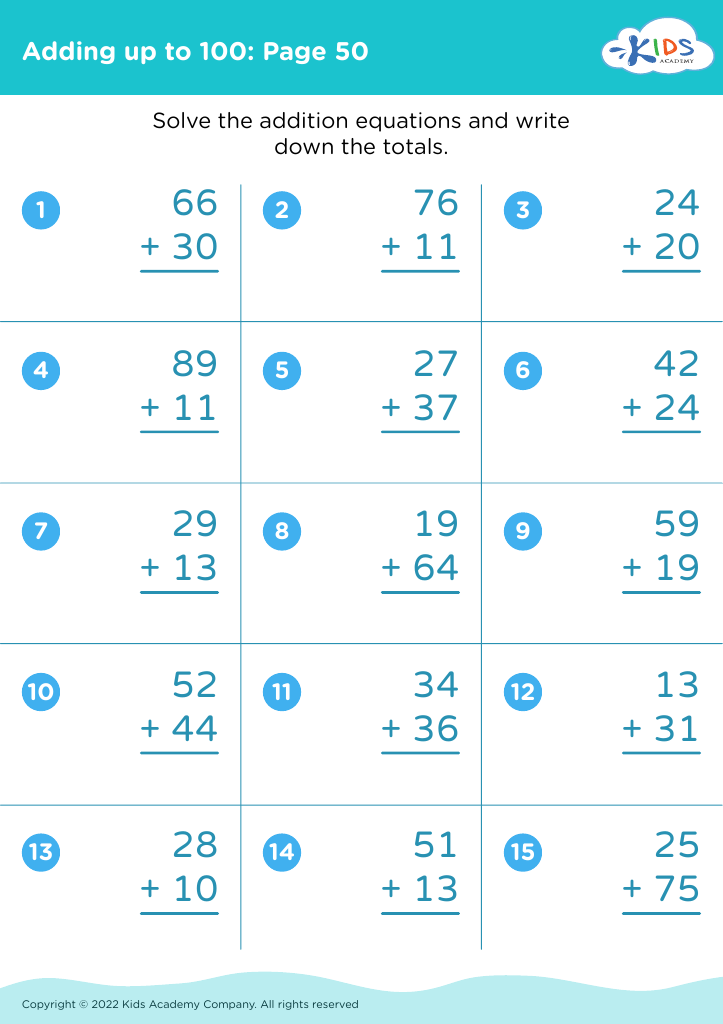
    Adding up to 100: Page 50
    Adding up to 100: Page 50

    Adding up to 100: Page 50

    Adding up to 100: Page 50
    Worksheet
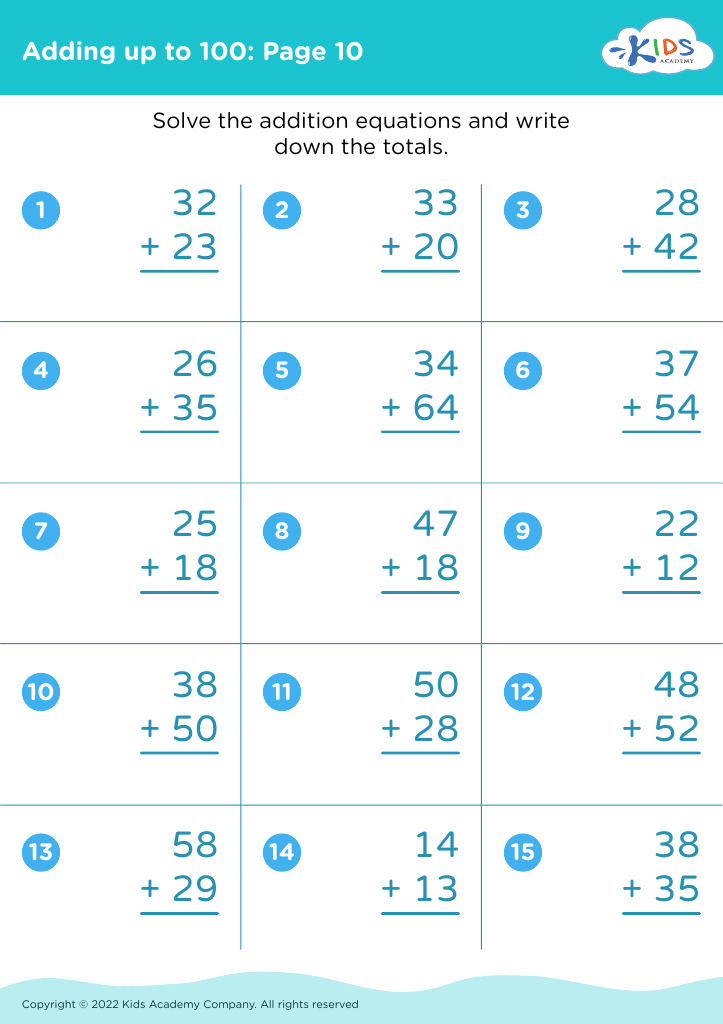
    Adding up to 100: Page 10
    Adding up to 100: Page 10

    Adding up to 100: Page 10

    Adding up to 100: Page 10
    Worksheet


    Developing problem-solving skills in children aged 4-9 is crucial for their cognitive, social, and emotional development. First, fostering these skills strengthens a child's ability to think critically and independently. As kids navigate basic addition problems, they learn to analyze, strategize, and derive solutions, laying a strong foundation for mathematical and logical thinking essential in later academic years.

    Second, mastering problem-solving in the context of addition enhances self-confidence and persistence. When children successfully tackle a problem, they experience a sense of accomplishment, which encourages them to approach future challenges with optimistic determination. This positive attitude toward problem-solving transcends math, affecting other learning areas.

    Lastly, problem-solving activities offer opportunities for collaborative learning and social interaction. Whether working in pairs or small groups, children learn to communicate, share ideas, and listen to others. This collaborative spirit not only makes learning enjoyable but also instills important social skills such as cooperation, patience, and empathy.

    Therefore, parents and teachers should prioritize early problem-solving in addition. It not only builds crucial cognitive abilities but also fosters emotional resilience and social competence, preparing children to be well-rounded, resourceful individuals ready to face the complexities of the real world.