Explore our engaging "Simplifying Fractions Addition Worksheets" designed for kids aged 4-9! These worksheets offer a fun and interactive way for young learners to grasp the concept of adding fractions. With colorful illustrations and motivating activities, children will develop essential math skills while boosting their confidence. Our resources support foundational understanding through hands-on practice, making it easier for kids to simplify and add fractions successfully. Ideal for classroom or home use, these worksheets cater to various learning styles, ensuring every child can master the intricacies of fractions. Start the journey to math mastery today with our exciting worksheets!
Check out this FREE Trial Lesson on Addition for age 4-9!

Exactly the Same, or Not

Favorites
With answer key
Interactive
  • 4-9
  • Simplifying Fractions
  • Addition
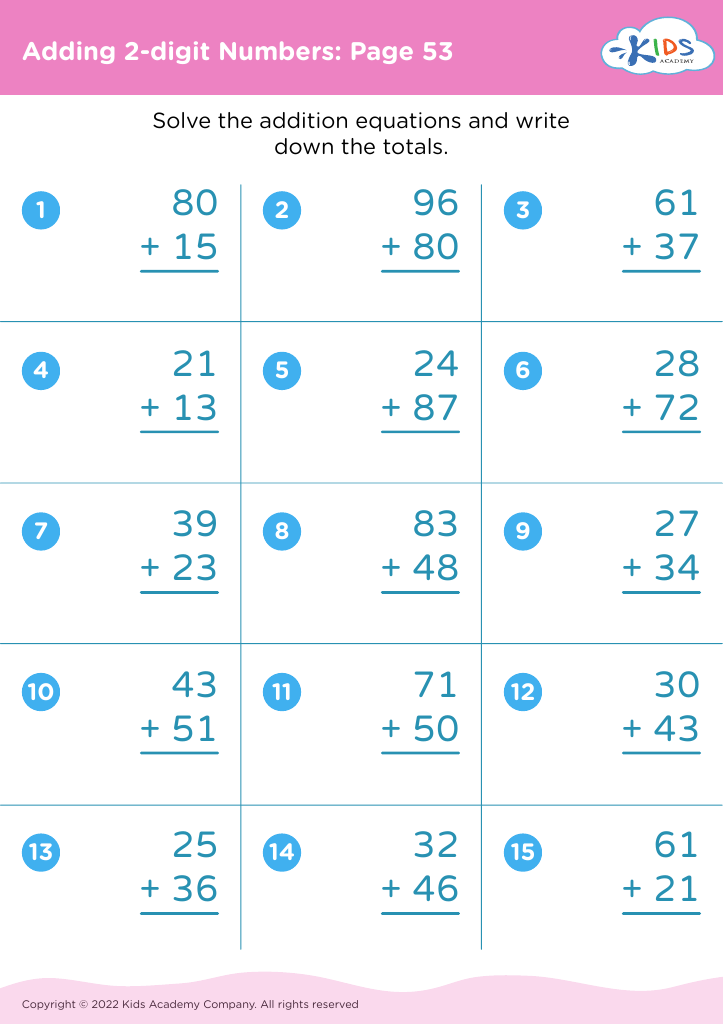
Adding 2-digit Numbers: Page 53

Adding 2-digit Numbers: Page 53

Adding 2-digit Numbers: Page 53
Worksheet
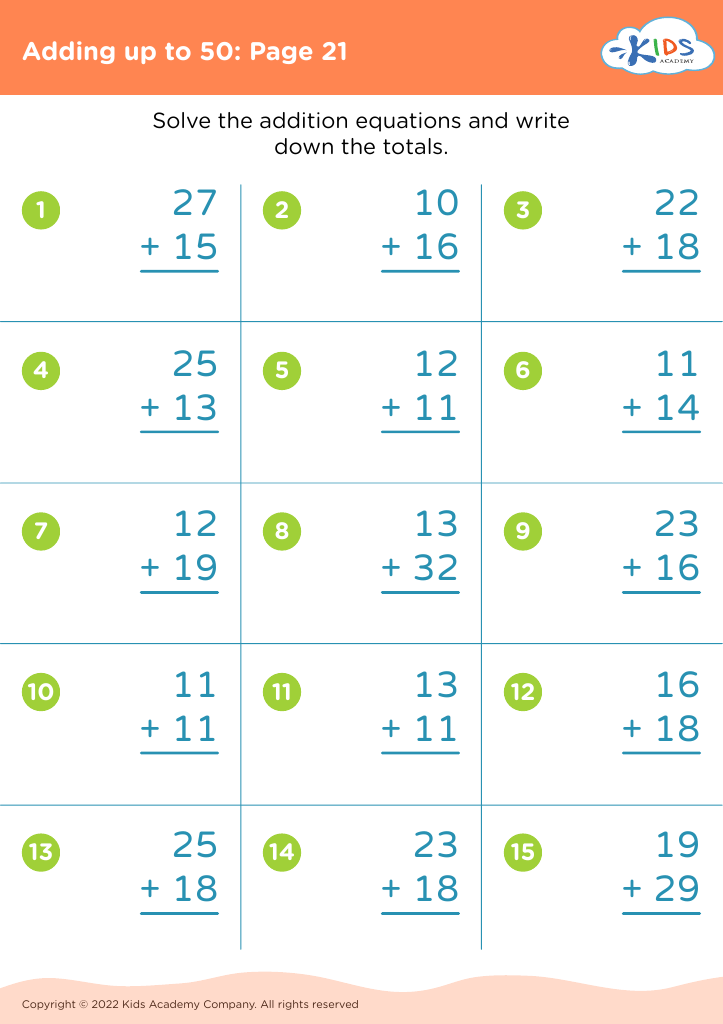
Adding up to 50: Page 21

Adding up to 50: Page 21

Adding up to 50: Page 21
Worksheet
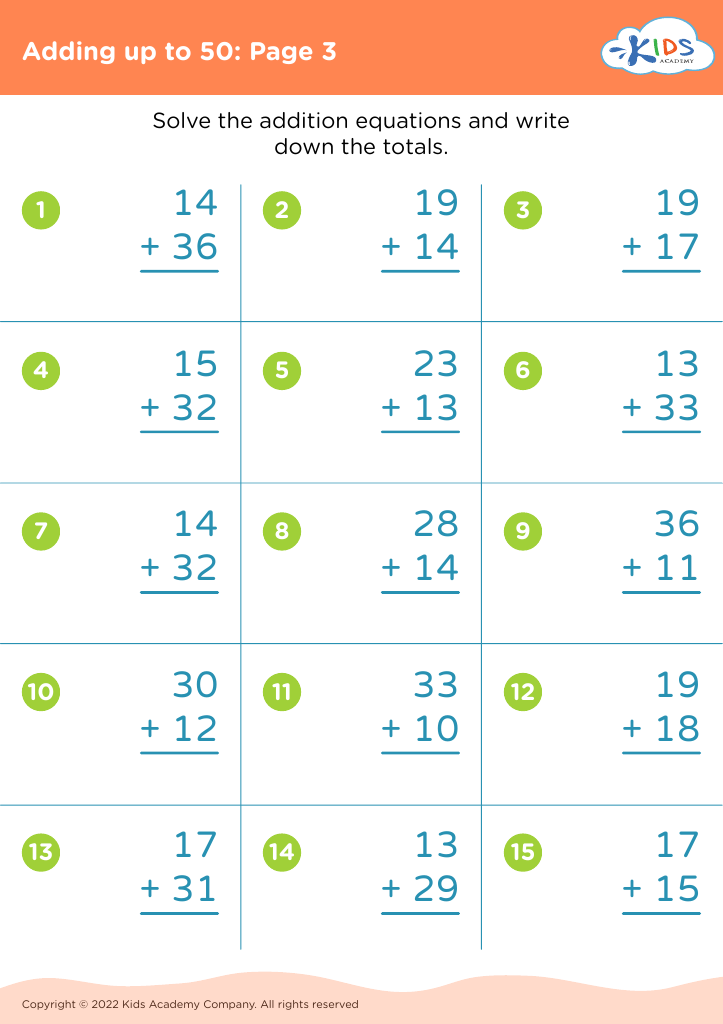
Adding up to 50: Page 3

Adding up to 50: Page 3

Adding up to 50: Page 3
Worksheet
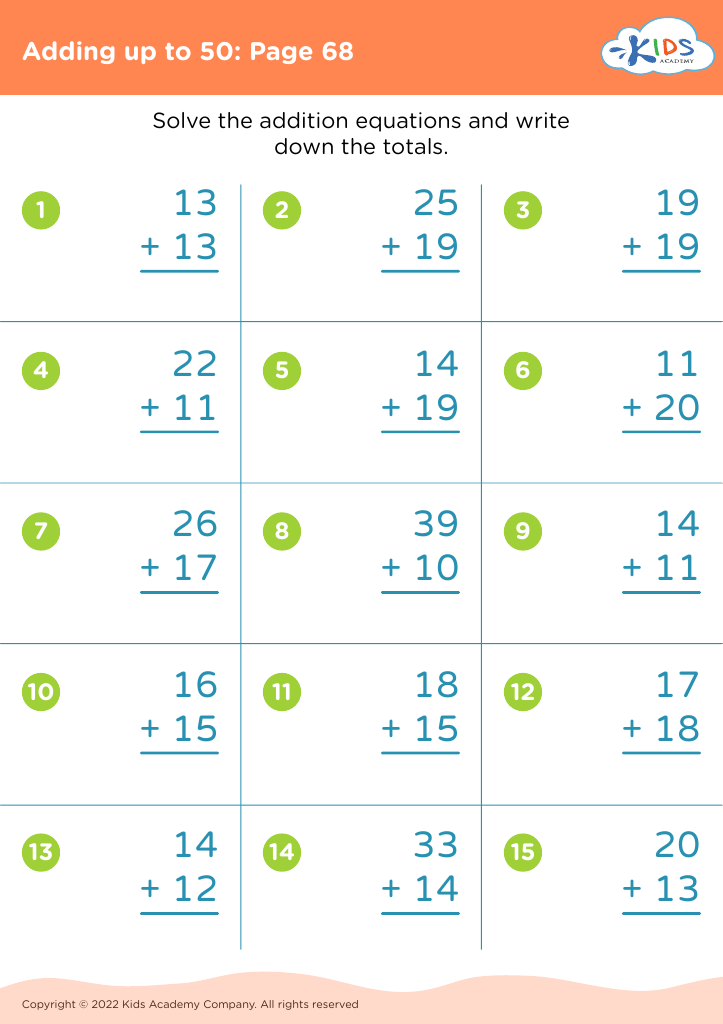
Adding up to 50: Page 68

Adding up to 50: Page 68

Adding up to 50: Page 68
Worksheet
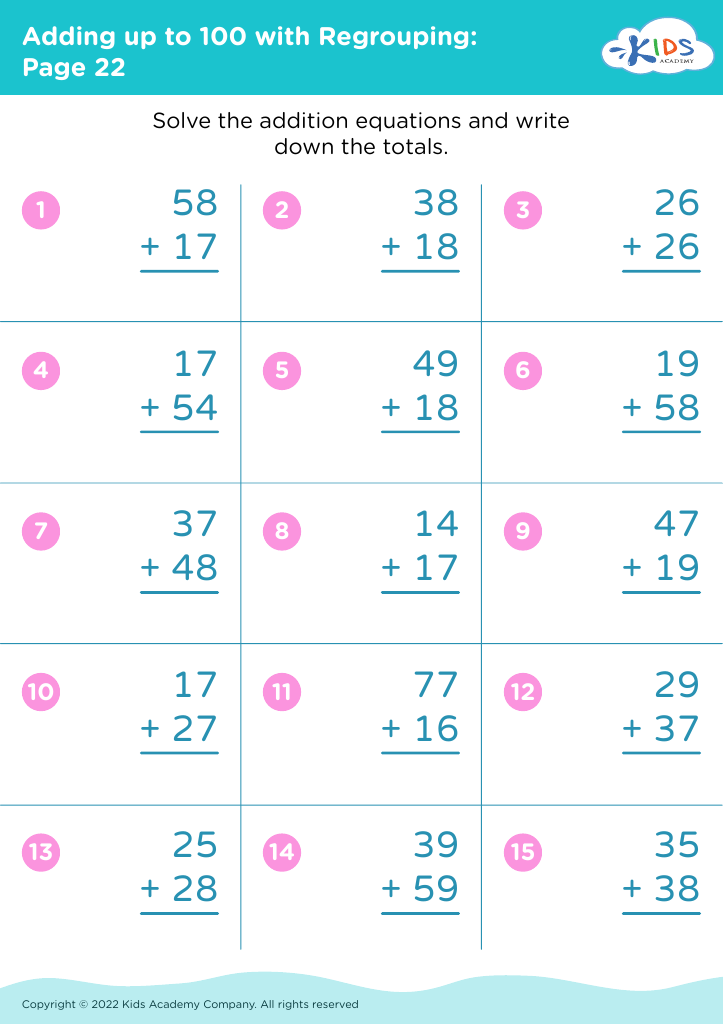
Adding up to 100 with Regrouping: Page 22
Worksheet
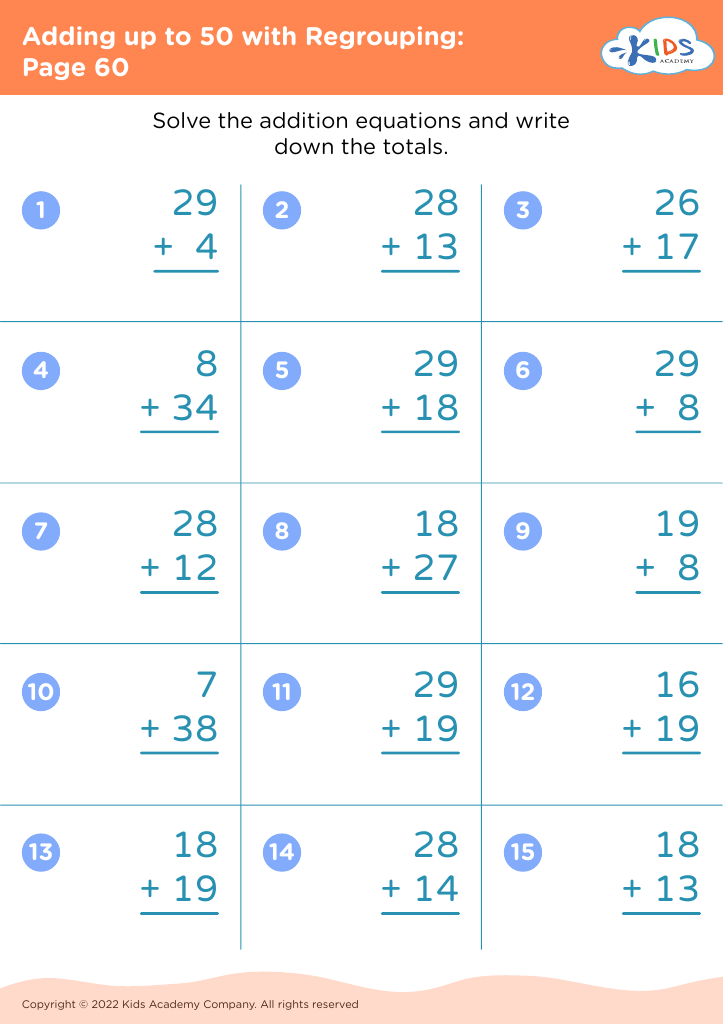
Adding up to 50 with Regrouping: Page 60
Worksheet
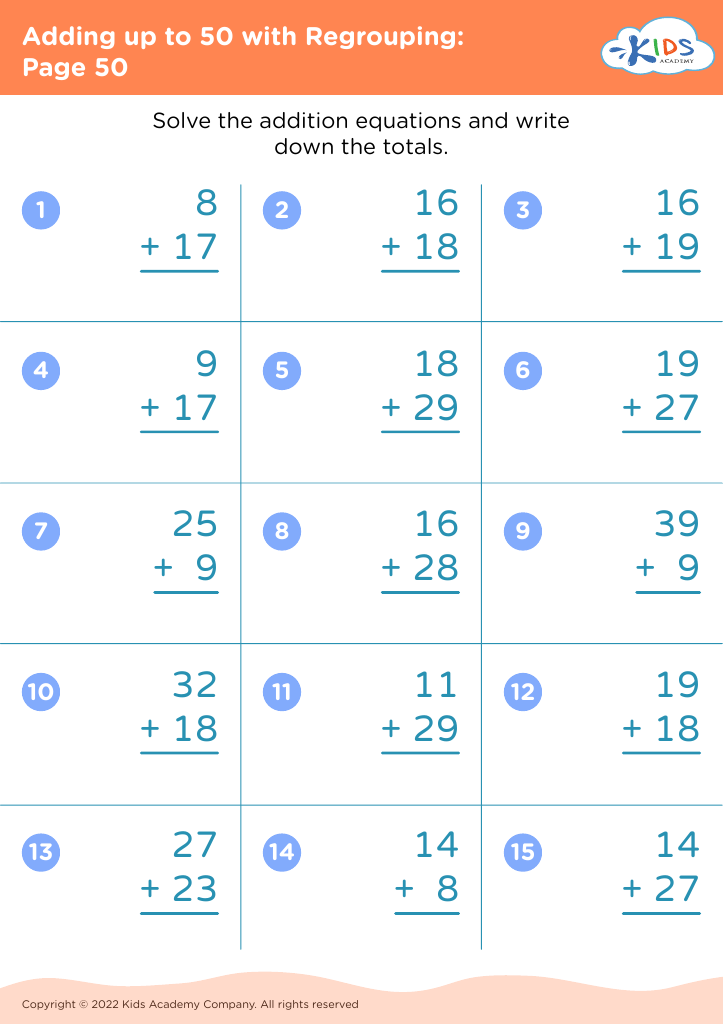
Adding up to 50 with Regrouping: Page 50
Worksheet
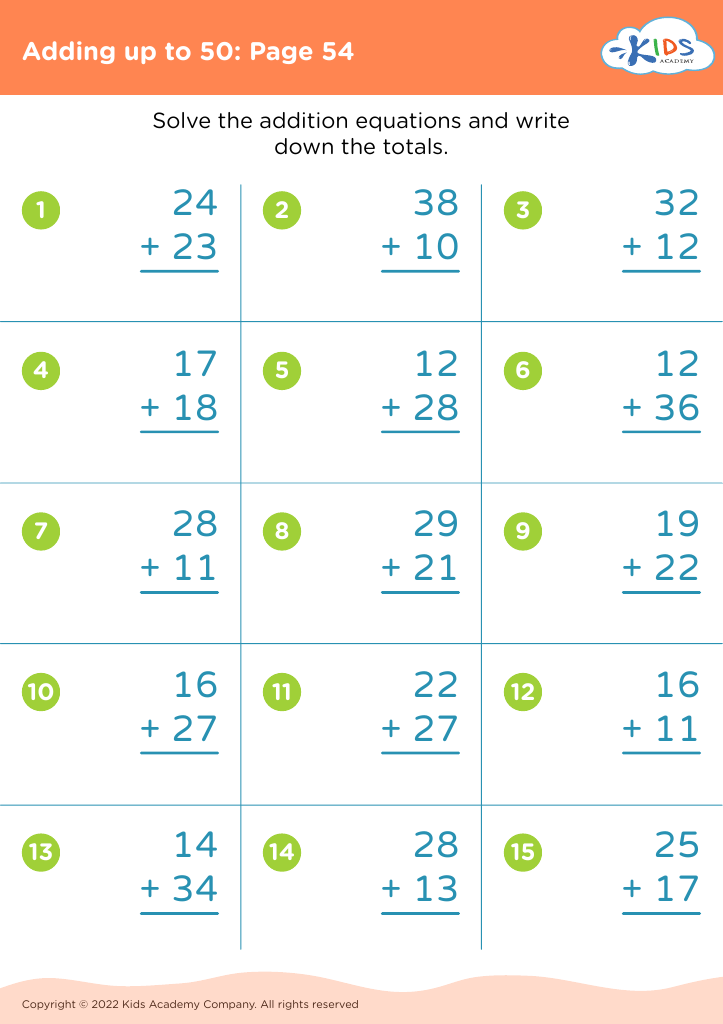
Adding up to 50: Page 54

Adding up to 50: Page 54

Adding up to 50: Page 54
Worksheet
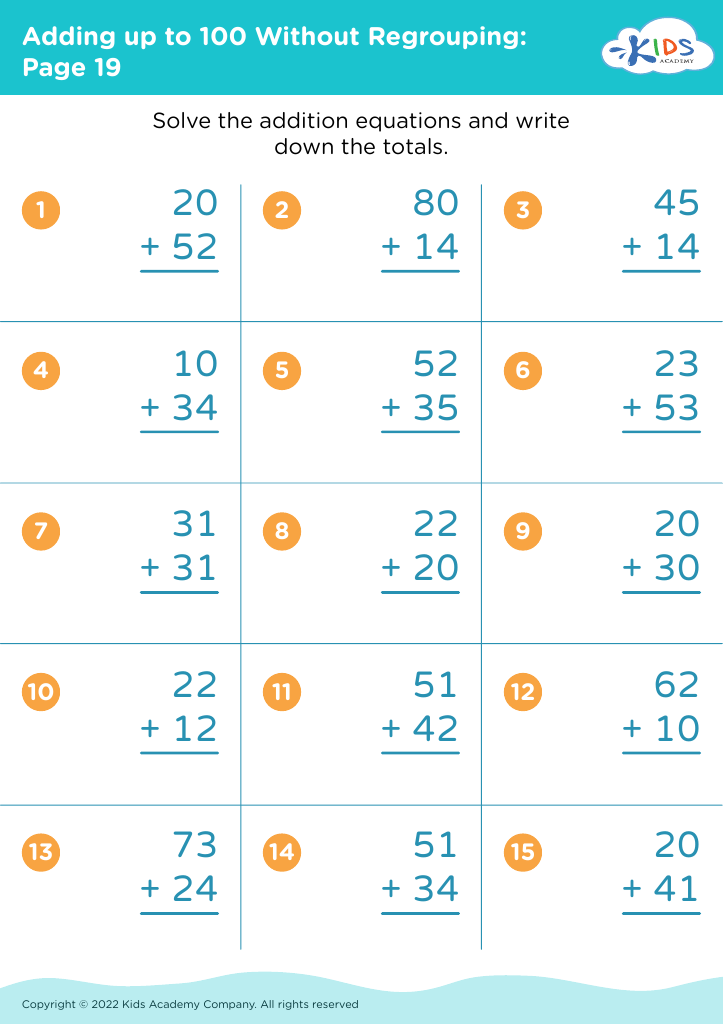
Adding up to 100 Without Regrouping: Page 19
Worksheet
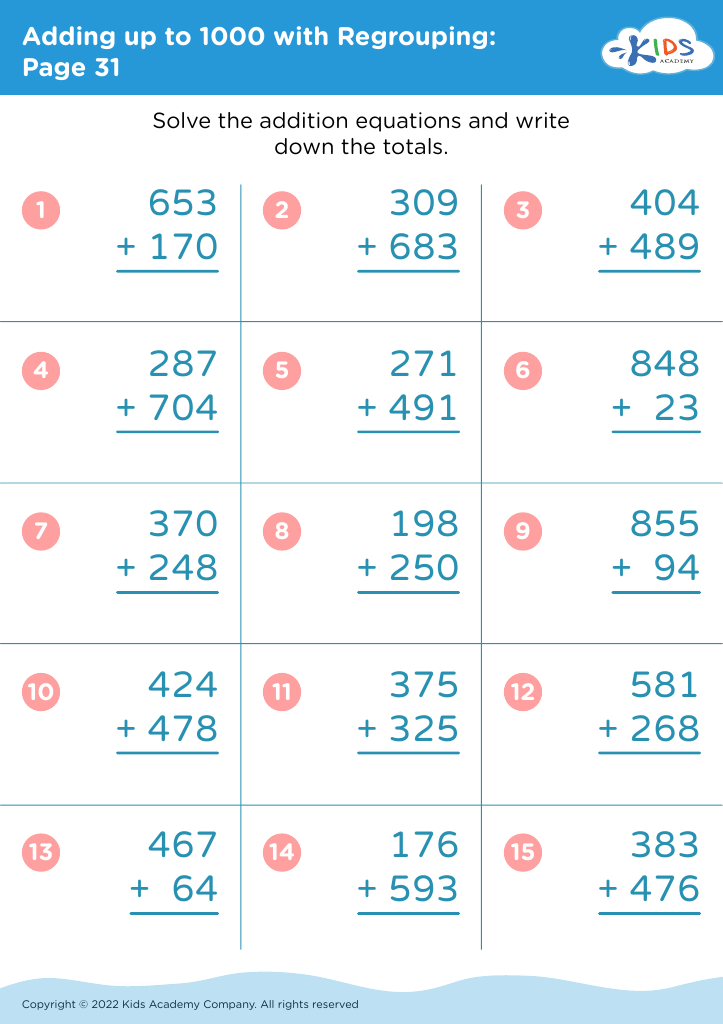
Adding up to 1000 with Regrouping: Page 31
Worksheet
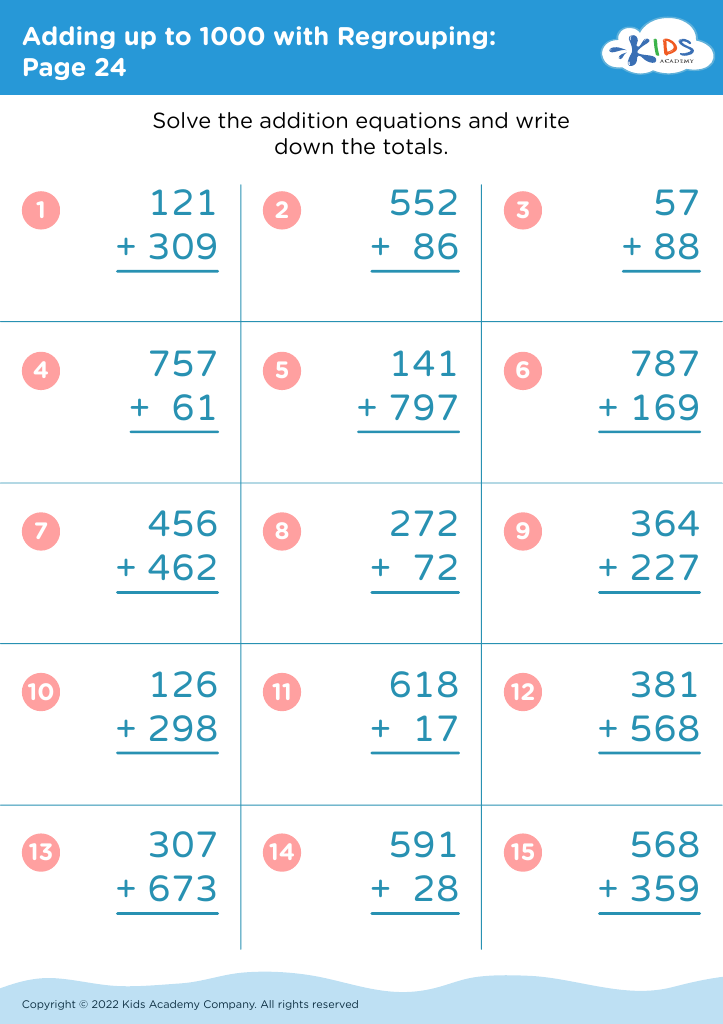
Adding up to 1000 with Regrouping: Page 24
Worksheet
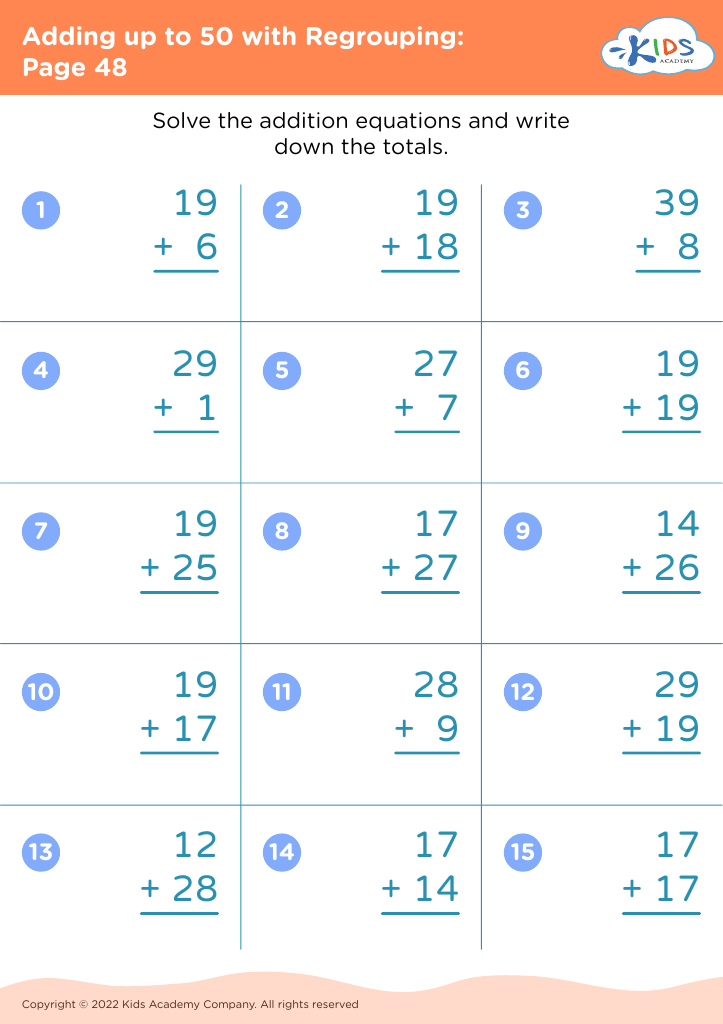
Adding up to 50 with Regrouping: Page 48
Worksheet
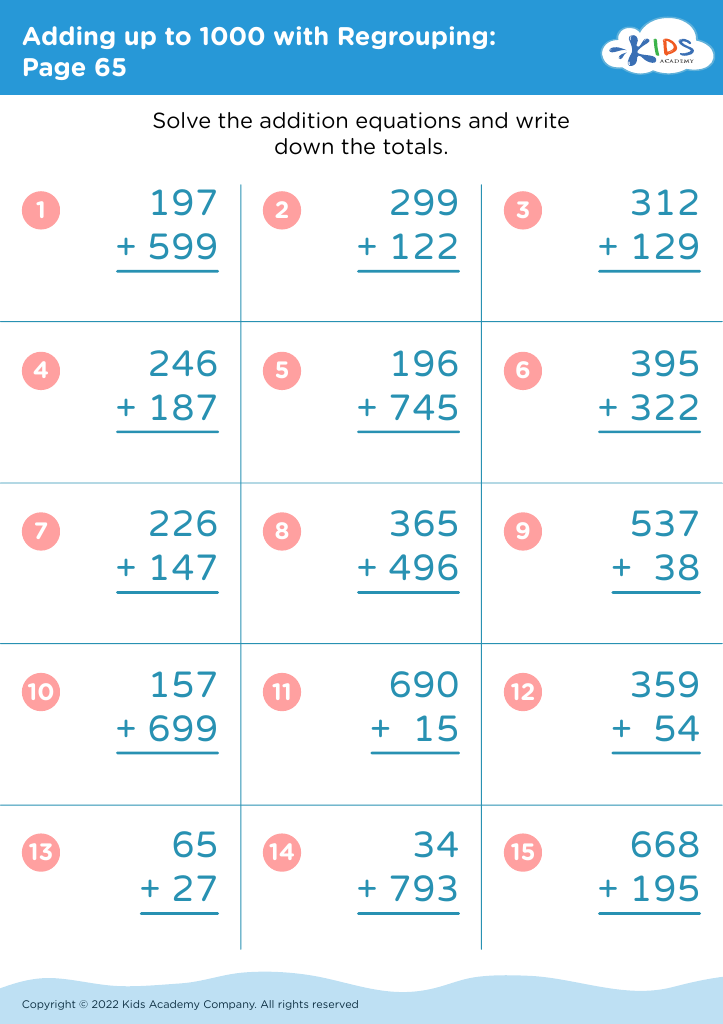
Adding up to 1000 with Regrouping: Page 65
Worksheet
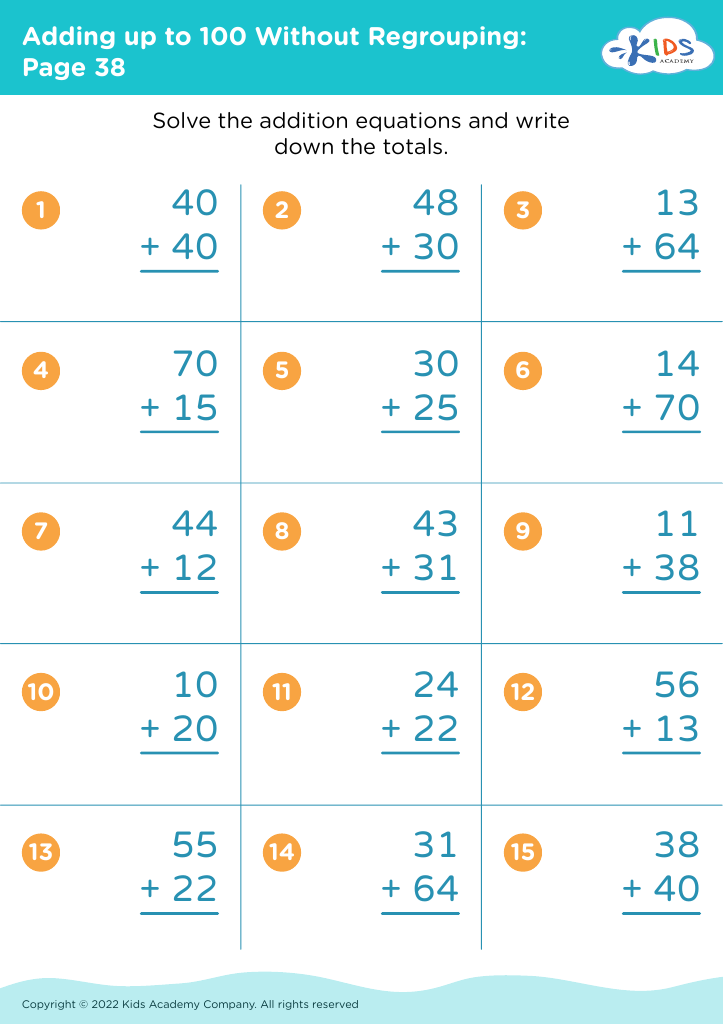
Adding up to 100 Without Regrouping: Page 38
Worksheet
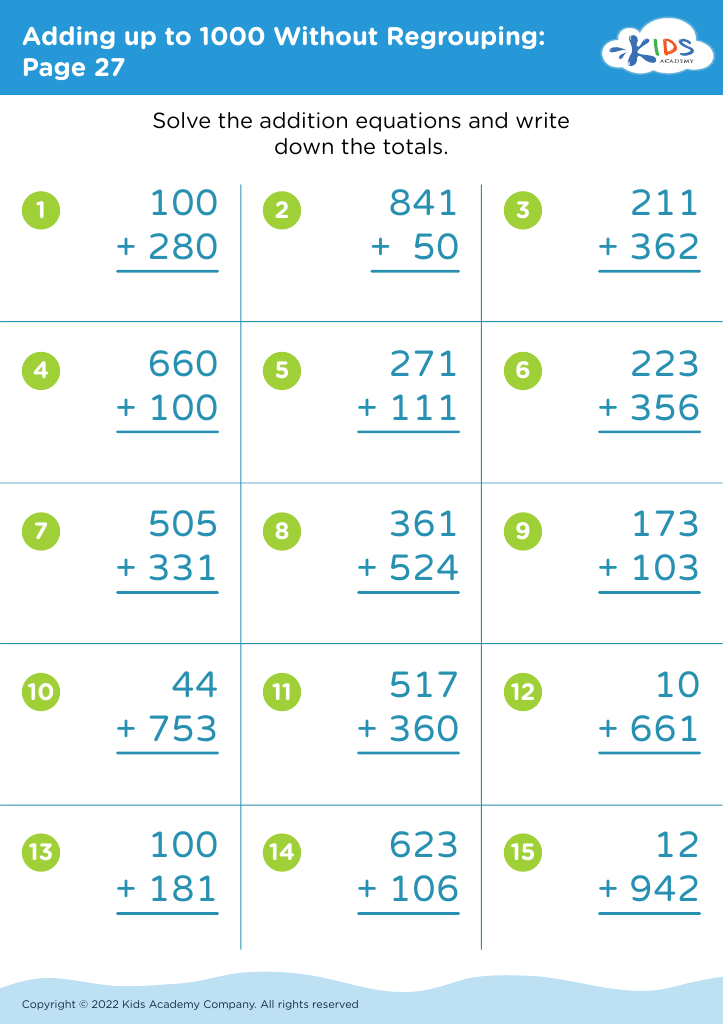
Adding up to 1000 Without Regrouping: Page 27
Worksheet
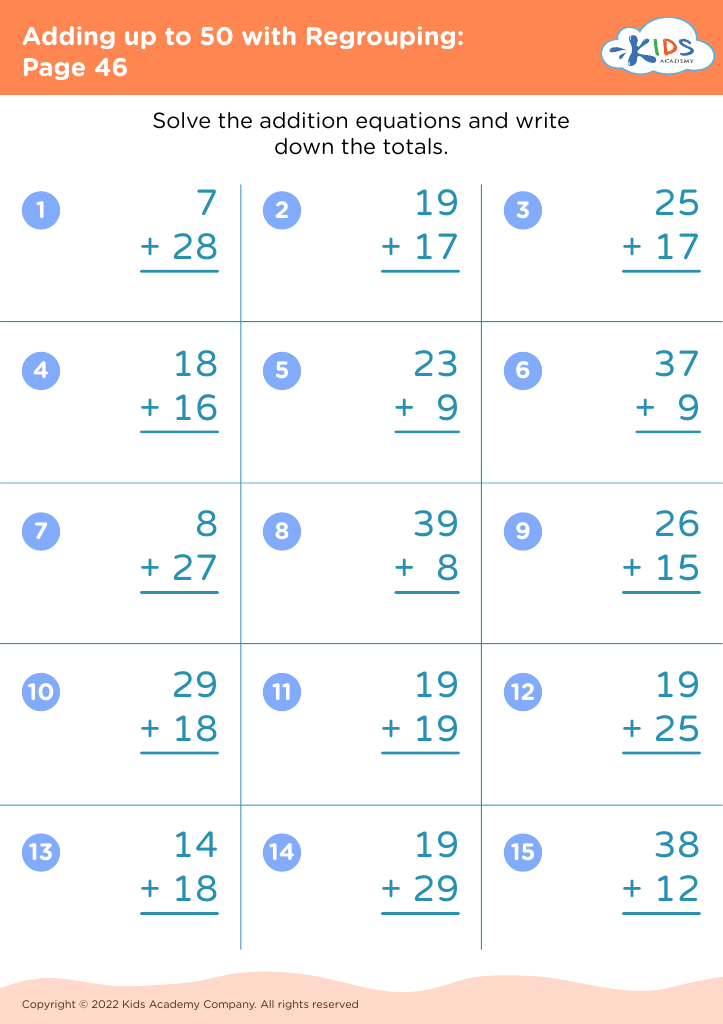
Adding up to 50 with Regrouping: Page 46
Worksheet
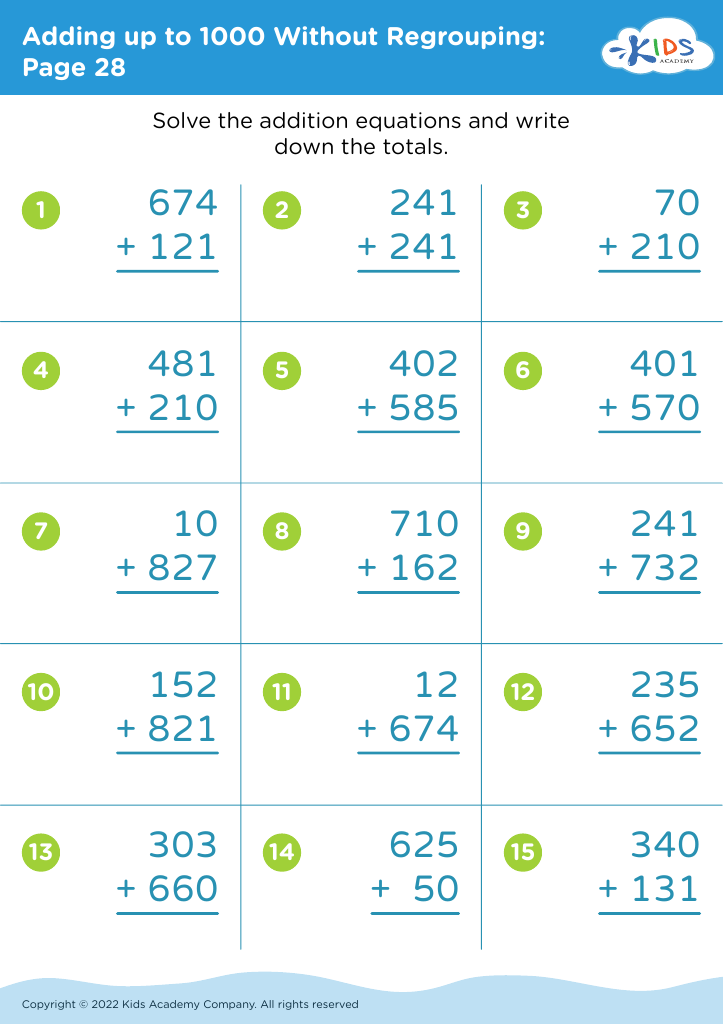
Adding up to 1000 Without Regrouping: Page 28
Worksheet
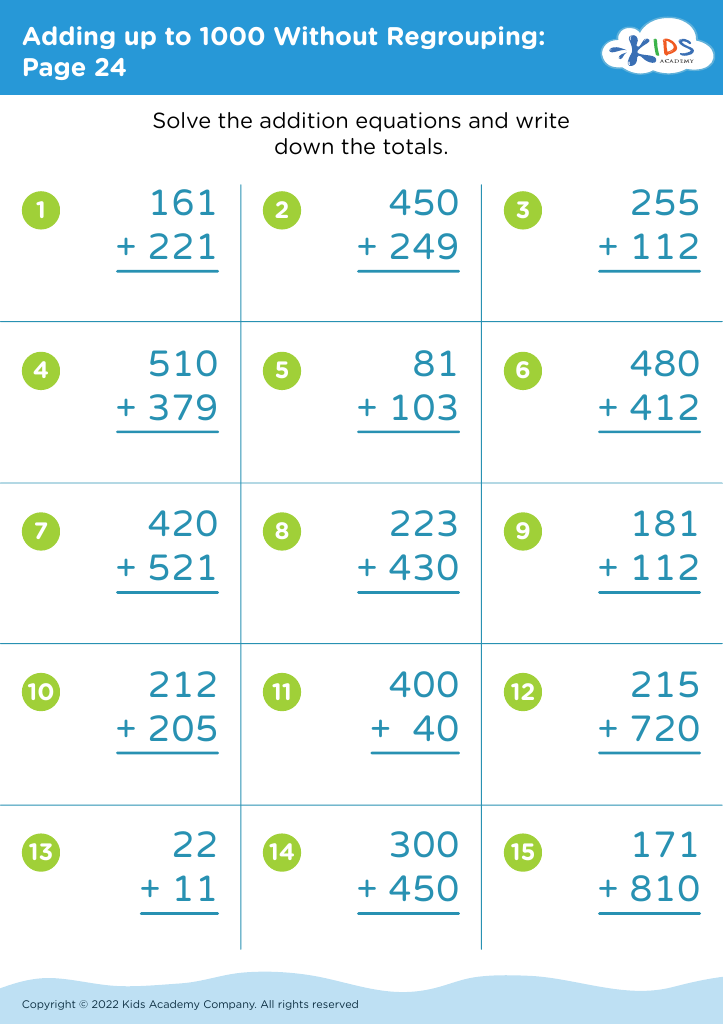
Adding up to 1000 Without Regrouping: Page 24
Worksheet


Simplifying fractions addition is a foundational math skill essential for young learners aged 4-9. At this age, children are developing their critical thinking and problem-solving abilities, making it an ideal time to introduce concepts that foster mathematical understanding. By understanding how to simplify fractions, children learn not only how to perform calculations but also how to grasp the relationships between numbers.

Furthermore, simplifying fractions helps to build confidence and reduces frustration when dealing with more complex mathematical operations later on. Parents and teachers play a vital role by creating a positive learning environment that encourages exploration and inquiry. Engaging children in activities involving fractions—like visual aids, games, or real-life situations—can enhance their understanding and retention.

Additionally, early exposure to these concepts can spark an interest in math, promoting analytical thinking skills that are invaluable throughout a child's education. Lastly, simplifying fractions builds basic number sense, which is crucial for future topics in mathematics, including geometry and algebra. By prioritizing this early skill development, parents and teachers set a strong mathematical foundation, paving the way for academic success in later years.