Basic counting skills Geometry Worksheets for Ages 4-9
3 filtered results
-
From - To
Discover engaging Basic Counting Skills Geometry Worksheets designed for children ages 4-9! Our interactive printable resources combine foundational counting skills with geometric concepts, helping young learners develop critical math abilities while having fun. Each worksheet features colorful illustrations and age-appropriate tasks, ensuring kids stay motivated and focused. Through activities that explore shapes, patterns, and spatial relationships, students gain confidence in their counting skills while enhancing their understanding of geometry. Perfect for homeschoolers, early education classrooms, or extra practice at home, our worksheets provide a solid mathematical foundation that will support your child's educational journey. Download and watch your little ones thrive in math!
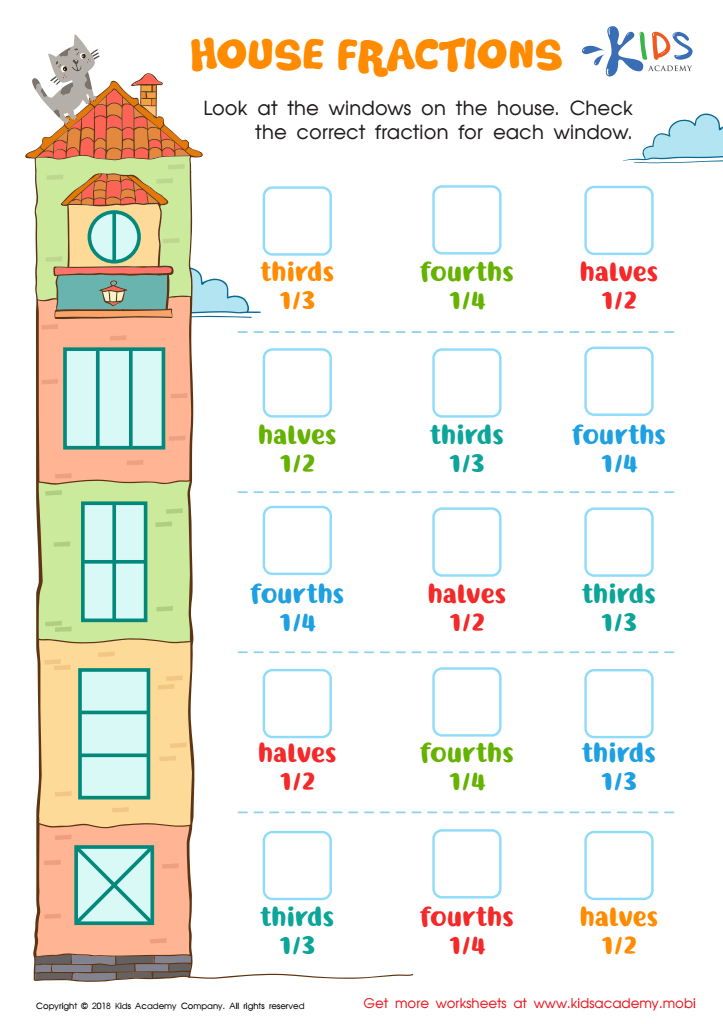
House Fractions Worksheet
 Assign to My Students











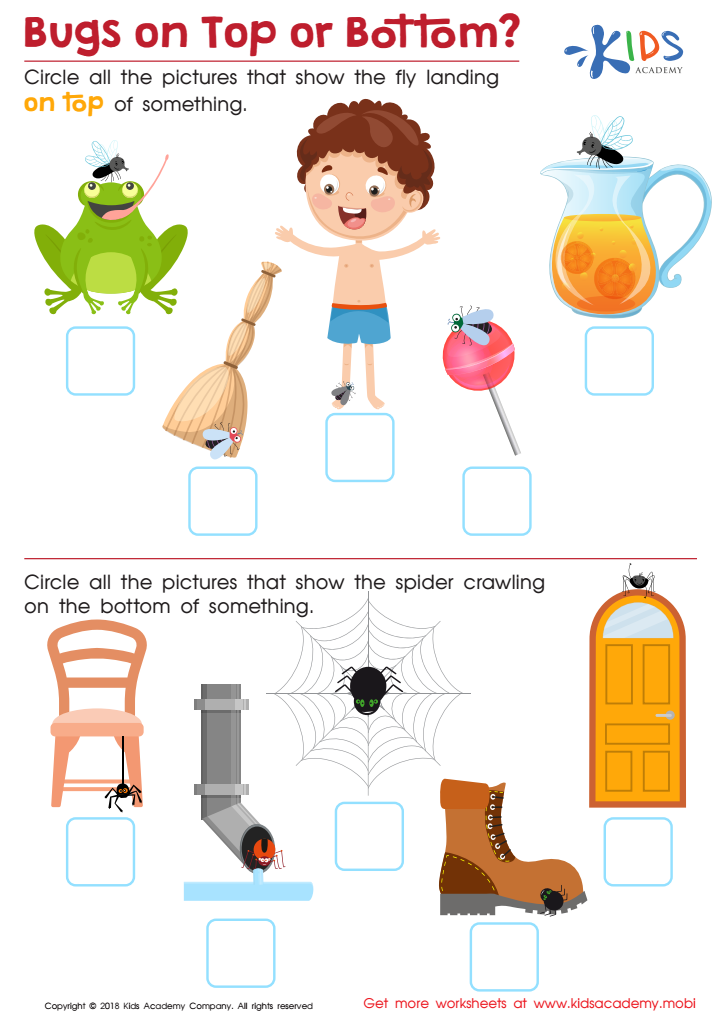
Bugs on Top or Bottom? Worksheet
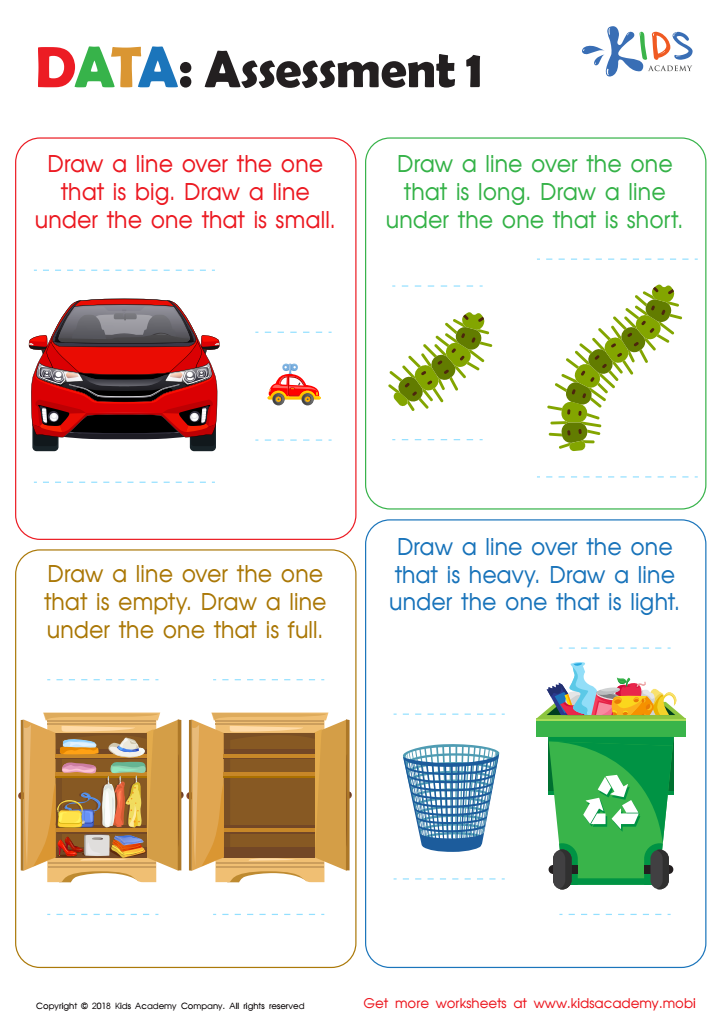
Data: Assessment 1 Worksheet








Basic counting skills and geometry are essential building blocks for young learners aged 4-9. Parents and teachers should prioritize these skills as they pave the way for a child’s cognitive development and problem-solving abilities.
First, counting lays the foundation for numerical literacy, allowing children to understand quantities and patterns. Mastering these concepts helps in everyday situations, from managing money to helping with measurements in cooking. Engaging with numbers also fosters critical thinking and encourages logical reasoning.
Geometry, on the other hand, introduces children to spatial awareness and shapes, which are crucial for reading maps, understanding directions, and visualizing concepts in later academic subjects like math and science. Recognizing and categorizing shapes helps develop fine motor skills, which are essential for writing and other practical tasks.
Together, these skills support overall intellectual growth and enhance children's ability to engage with their environment. They are critical for future learning, as they form the backbone of problem-solving and analytical abilities. Hence, by focusing on counting and geometry during early years, parents and teachers contribute significantly to a child’s academic success and lifelong learning. Early understanding of these concepts leads to greater confidence and proficiency in more advanced mathematical topics later in life.








