Spatial Orientation Geometry Worksheets for Ages 4-9
3 filtered results
-
From - To
Boost your child's spatial awareness with our engaging Spatial Orientation Geometry Worksheets, designed for children ages 4-9. Each worksheet offers fun activities that improve understanding of shapes, positions, and directions. Your child will enhance their problem-solving skills by following exercises that involve identifying patterns, recognizing geometric figures, and comprehending spatial relationships. These worksheets make learning enjoyable while fostering critical thinking and visual perception. Perfect for both classroom and home use, our expertly crafted resources align with educational standards. Give your child the tools to explore geometry with confidence and excitement. Visit us to download and print for free.
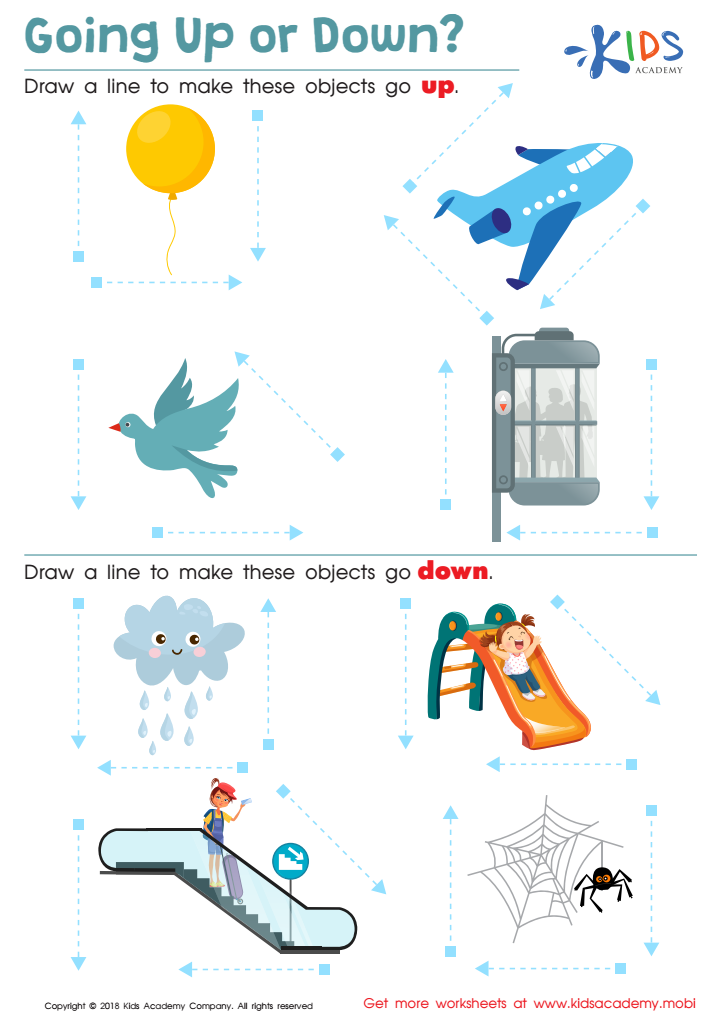
Going up or Down? Worksheet
 Assign to My Students











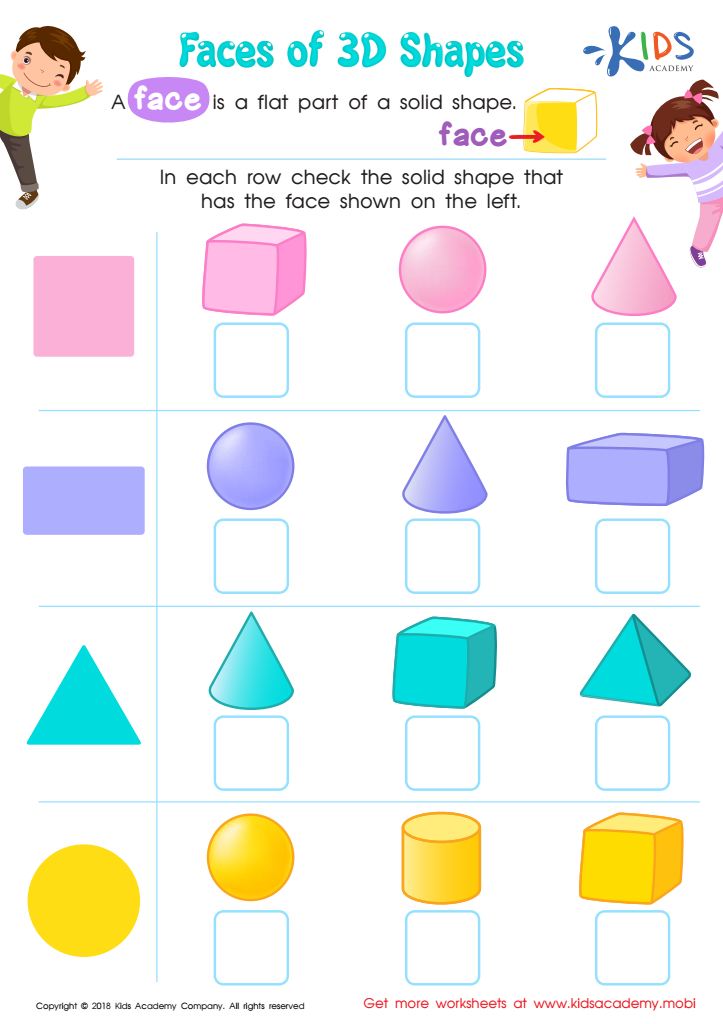
Faces of 3D Shapes Worksheet
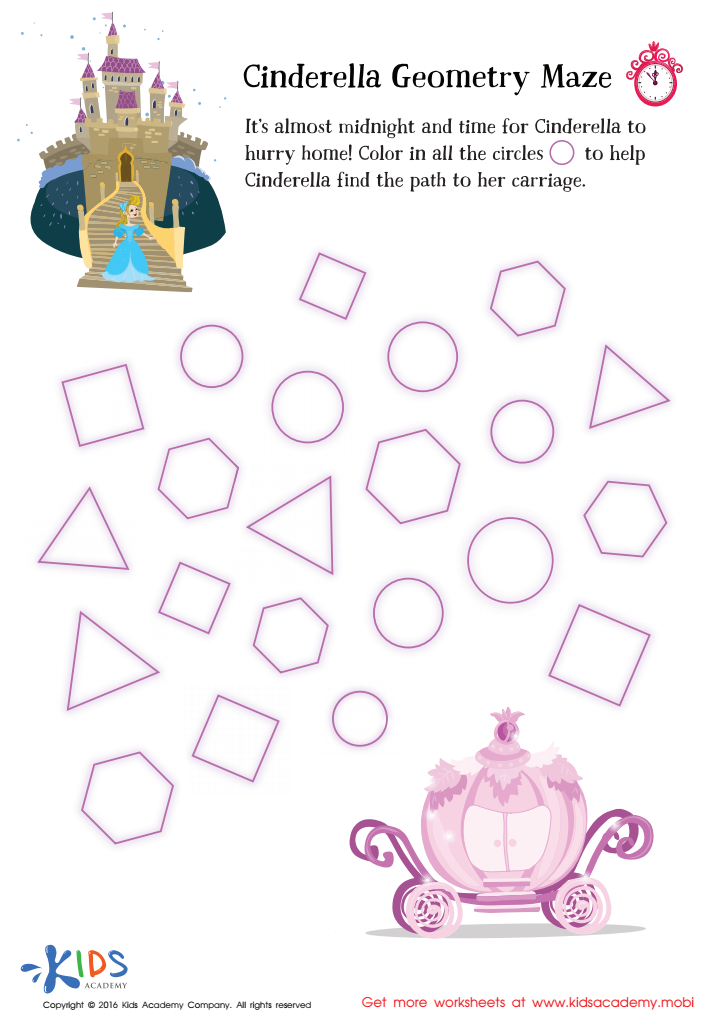
Cinderella Geometry Maze Worksheet








Spatial orientation geometry is a fundamental aspect of early childhood education, particularly for children between the ages of 4 and 9. This developmental stage is crucial for cognitive and motor skill enhancements, which are foundational for future academic and everyday life skills.
Firstly, spatial orientation helps children understand and maneuver within the world around them. This cognitive ability allows them to comprehend directions, such as left, right, up, down, and how objects relate to each other within a given space. Children enhance their problem-solving skills by learning how to navigate mazes, work puzzles, and even differentiate between shapes and sizes.
Secondly, strong spatial skills are linked to success in STEM (Science, Technology, Engineering, and Math) fields. Early engagement with spatial concepts lays the groundwork for future learning in mathematics, including geometry and algebra, by helping children visualize mathematical problems and understand spatial relationships.
Furthermore, spatial orientation skills support everyday tasks and safety. Activities such as tying shoes, packing a backpack, and having a sense of direction all benefit from a robust understanding of spatial relationships.
Incorporating spatial orientation geometry into early education helps children build critical cognitive skills, fosters academic success, and provides practical tools for daily living. By prioritizing this aspect of learning, parents and teachers can give children a solid foundation for a lifetime of development and achievement.








