Multiplication practice Numbers Worksheets for Ages 4-9
5 filtered results
-
From - To
Welcome to our "Multiplication Practice Numbers Worksheets" page, designed specifically for children ages 4-9! Our engaging worksheets make learning multiplication fun and interactive. Perfect for early learners, these resources help reinforce essential math skills through colorful visuals and playful exercises. Each worksheet promotes understanding of multiplication concepts, from basic facts to more complex problems, ensuring kids build a strong foundation. Whether in the classroom or at home, our multiplication practice enhances confidence and encourages a love for math. Start your child's journey to multiplication mastery today with our thoughtfully crafted worksheets that combine learning with creativity!
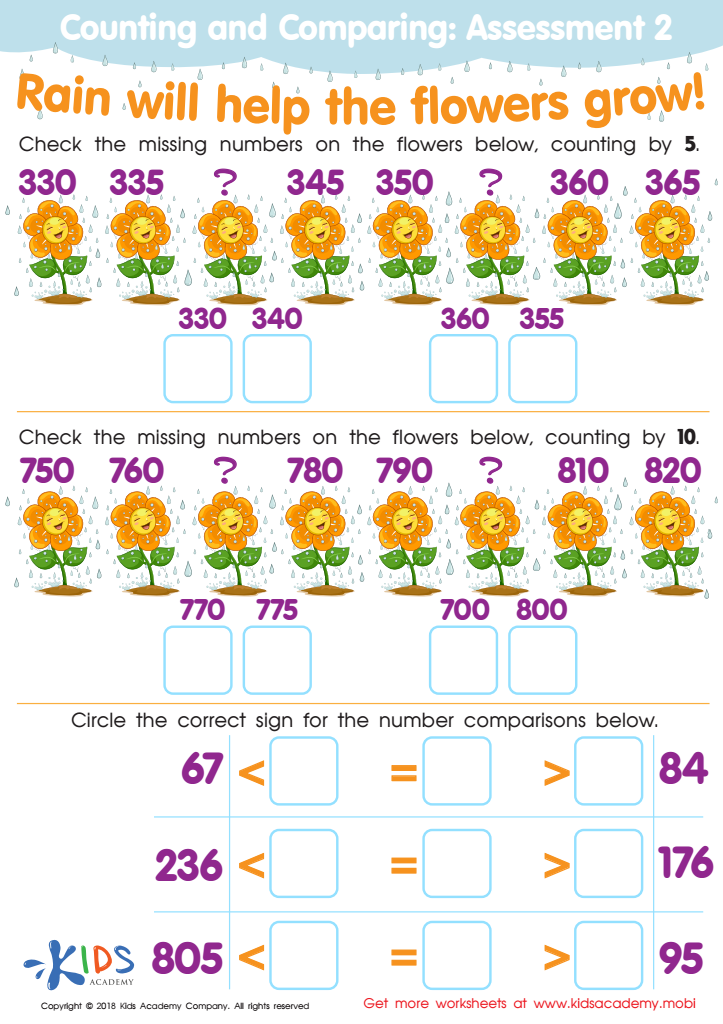
Counting and Comparing: Assessment 2 Worksheet
 Assign to My Students
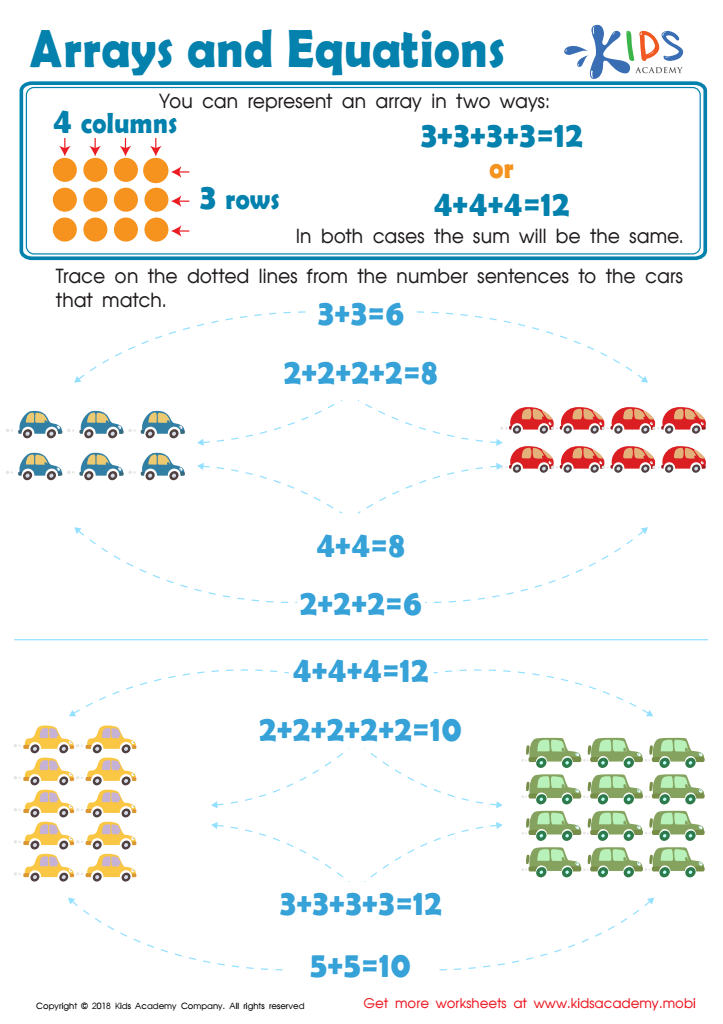
Arrays and Equations Worksheet
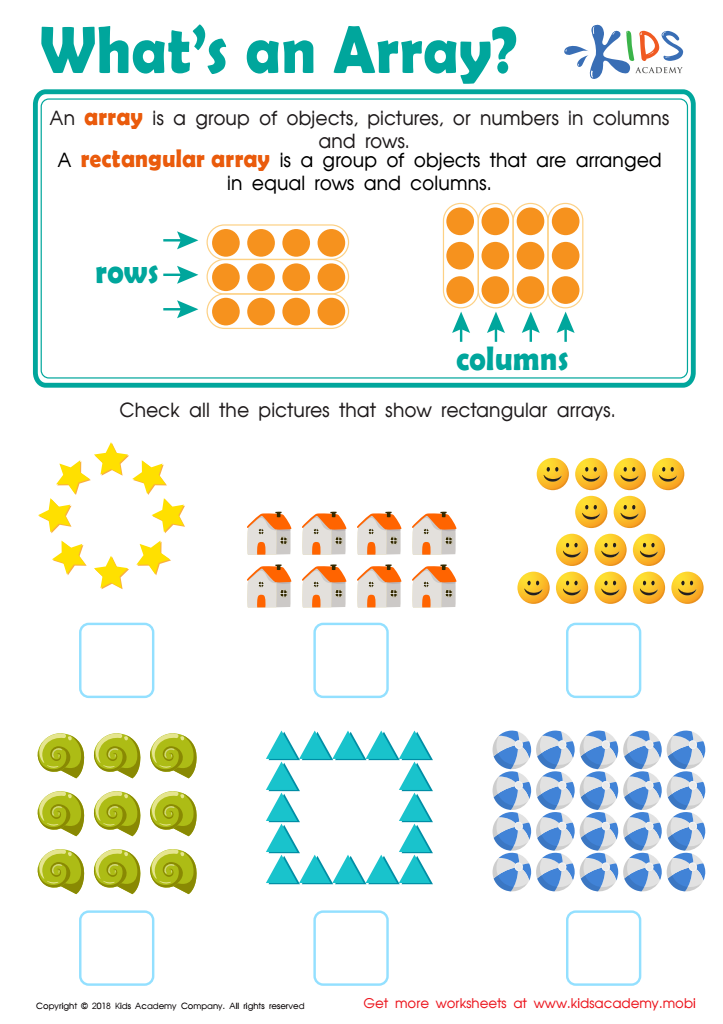
What's an Array? Worksheet
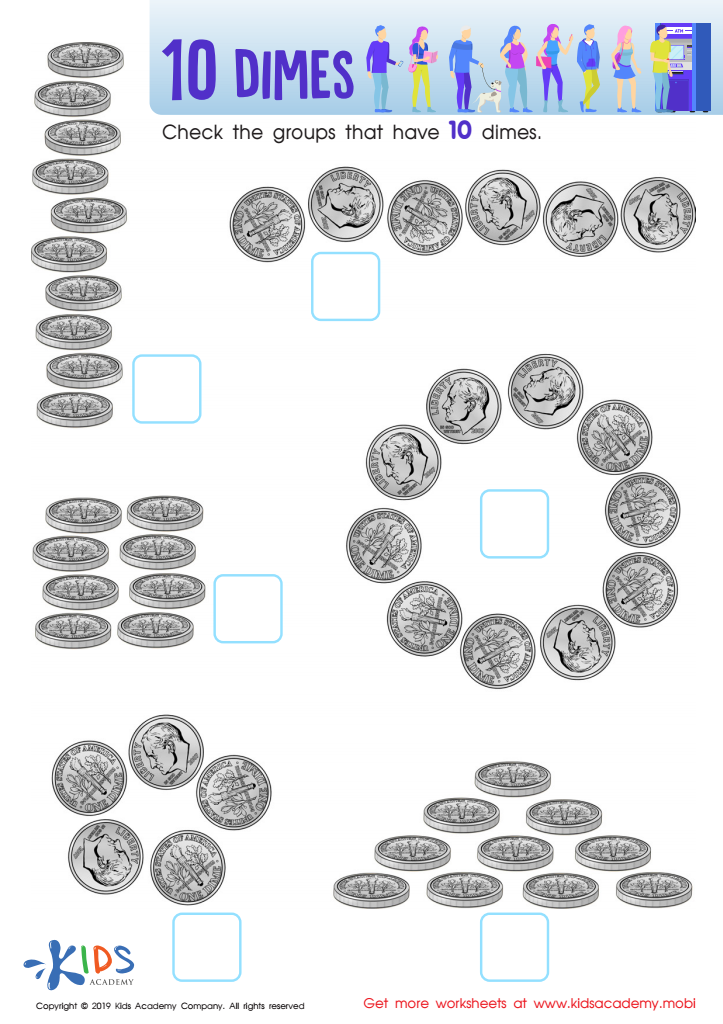
10 Dimes Worksheet
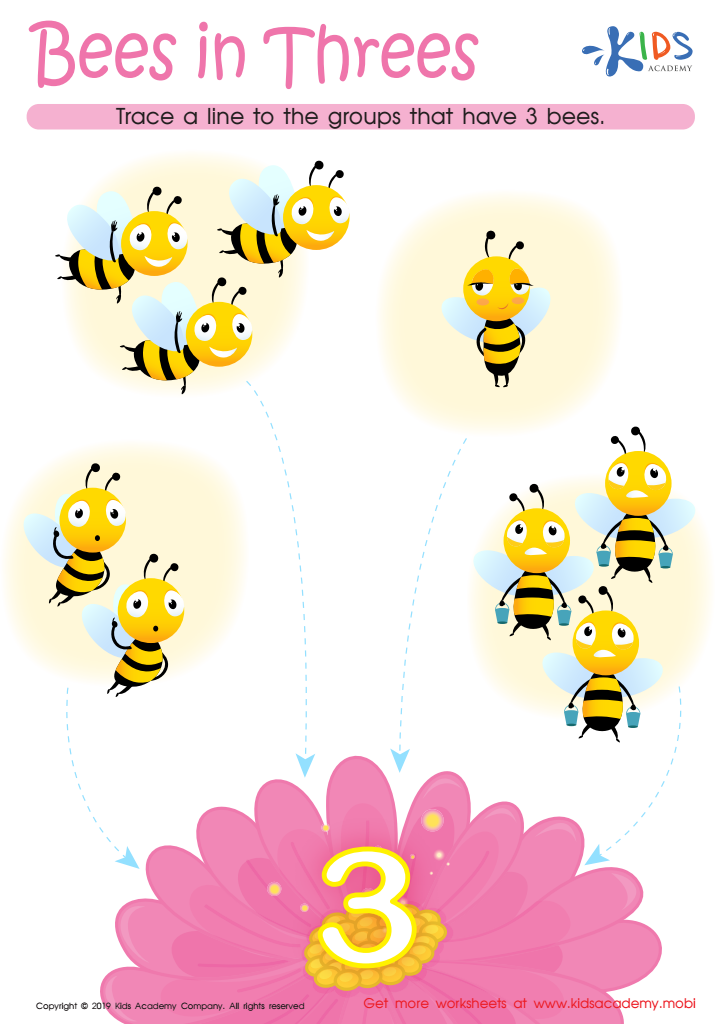
Bees in Threes Worksheet








Parents and teachers should prioritize multiplication practice for children aged 4 to 9 because foundational math skills are crucial for later academic success. Early mastery of multiplication enhances numerical fluency, making advanced concepts like division and fractions easier to grasp. Multiplication acts as a cornerstone in the mathematical curriculum, linking various areas of math with real-world applications such as grouping, sharing, and problem-solving.
Additionally, practicing multiplication boosts confidence. As children learn their multiplication tables and apply them in different contexts, they begin to view math as an achievable and exciting challenge, rather than a daunting subject. When they succeed, they develop a positive attitude towards learning and are more likely to engage in future math-related endeavors.
Furthermore, multiplication practice encourages critical thinking. Children learn to recognize patterns and develop strategies, which strengthens their overall cognitive abilities. It also fosters persistence as they encounter and solve challenges, preparing them for the complexities of life’s problems.
Ultimately, emphasizing multiplication practice during these formative years helps cultivate a solid mathematical foundation, promoting a lifelong appreciation for learning and shaping problem-solvers equipped for future challenges. Parents and teachers play a vital role in fostering these essential skills through consistent practice and encouragement.








