Understanding place value Numbers Worksheets for Ages 4-9
12 filtered results
-
From - To
Discover the essentials of place value with our engaging worksheets designed for children aged 4-9. These resources facilitate a comprehensive understanding of how numbers are structured and the significance of each digit’s position. Our fun and interactive exercises include identifying, reading, and writing numbers, enabling young learners to grasp core mathematical concepts. Perfect for classroom settings or home learning, these worksheets foster critical thinking and enhance number sense. Empower your child’s educational journey with our carefully crafted material that not only reinforces place value understanding but also ignites a lifelong love for math! Join us in making learning enjoyable and effective!
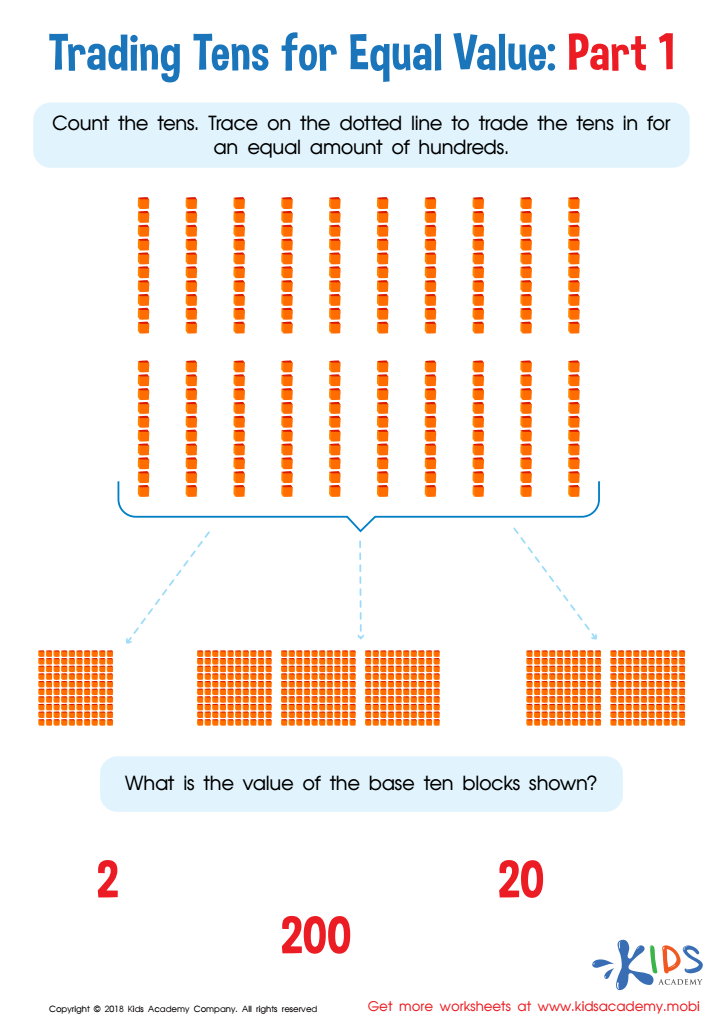
Trading Tens for Equal Value Worksheet: Part 1
 Assign to My Students
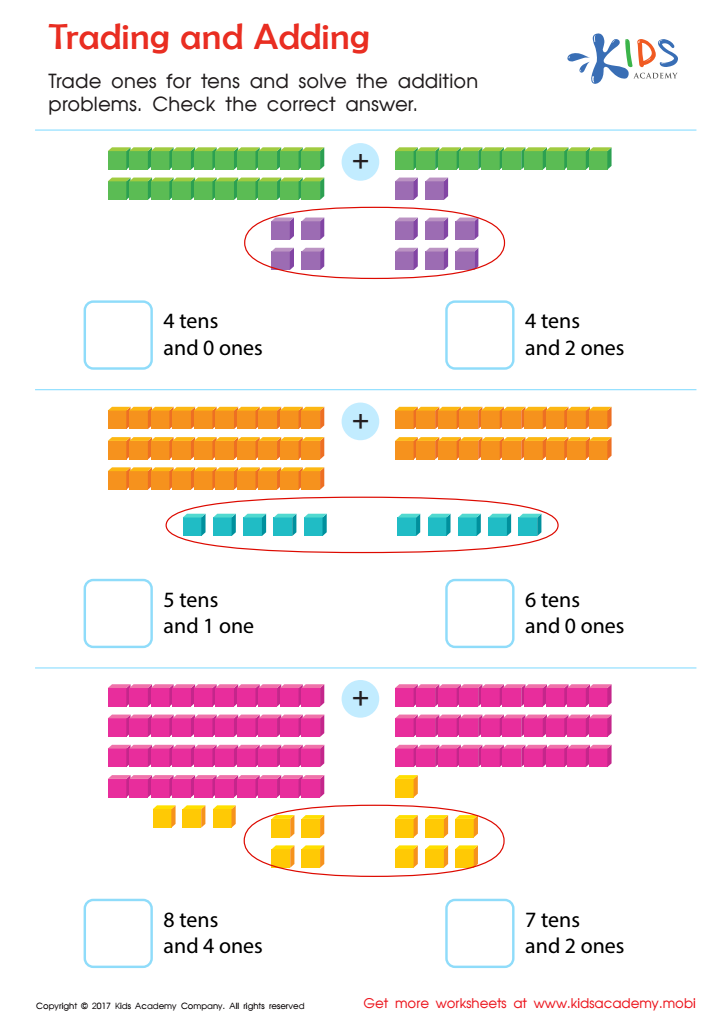
Trading and Adding Worksheet
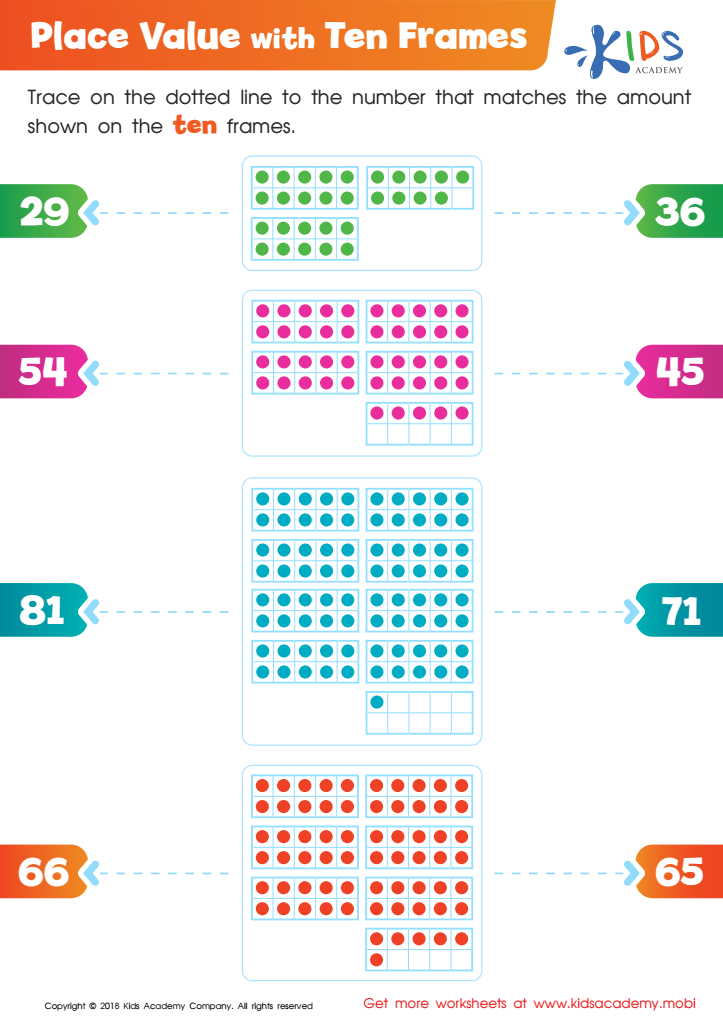
Place Values with Ten Frames Worksheet
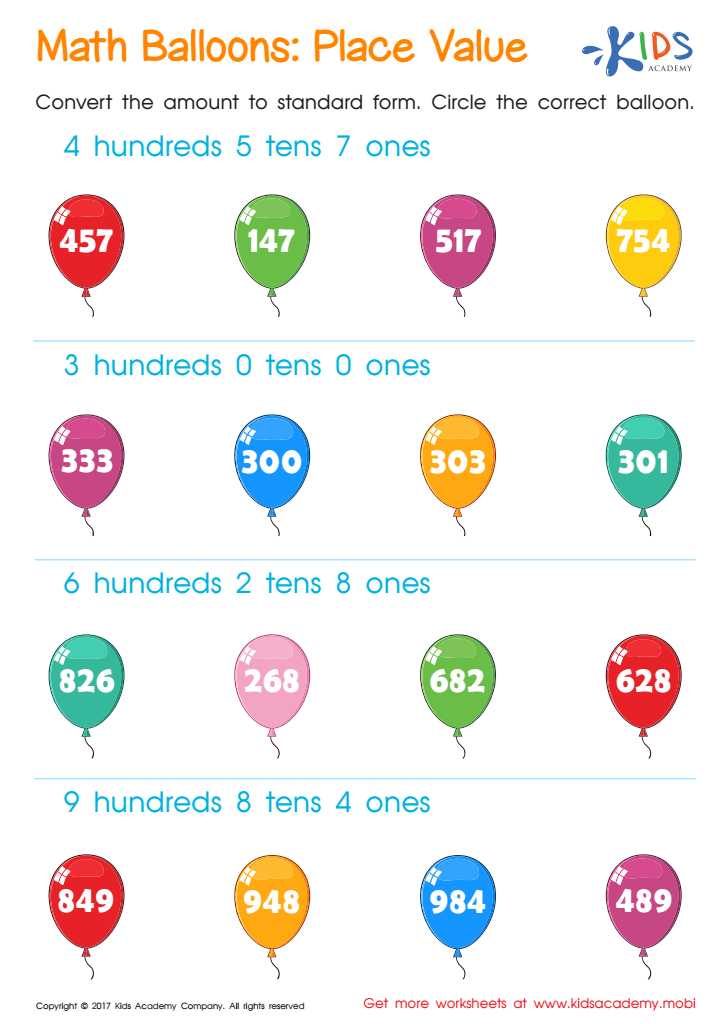
Place Value Printable Worksheet
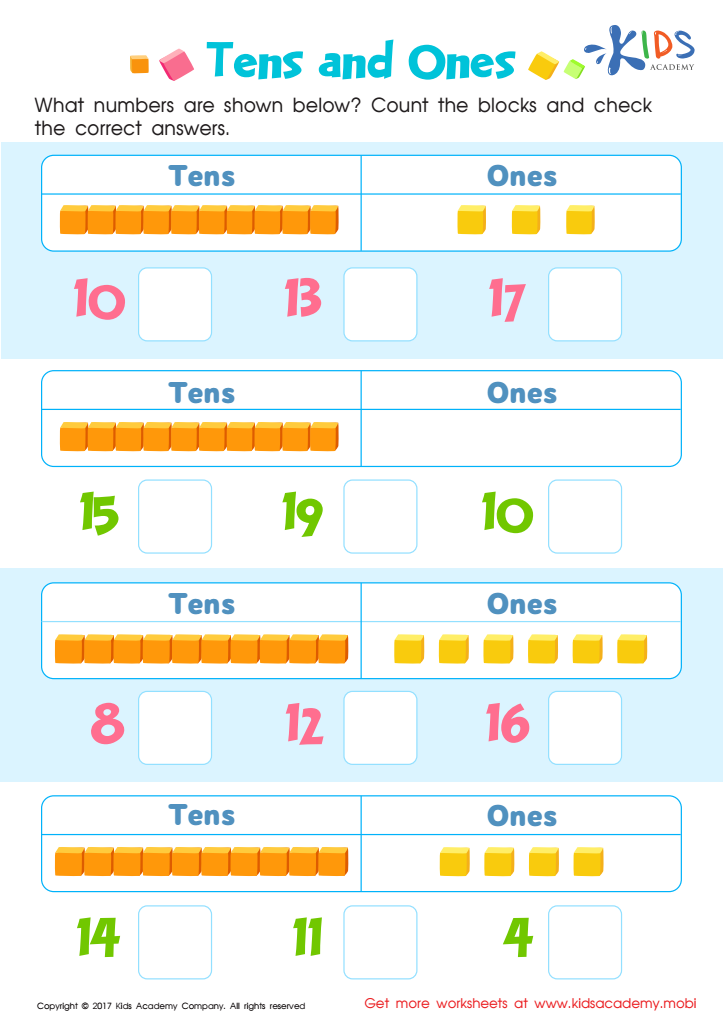
Tens and Ones Worksheet
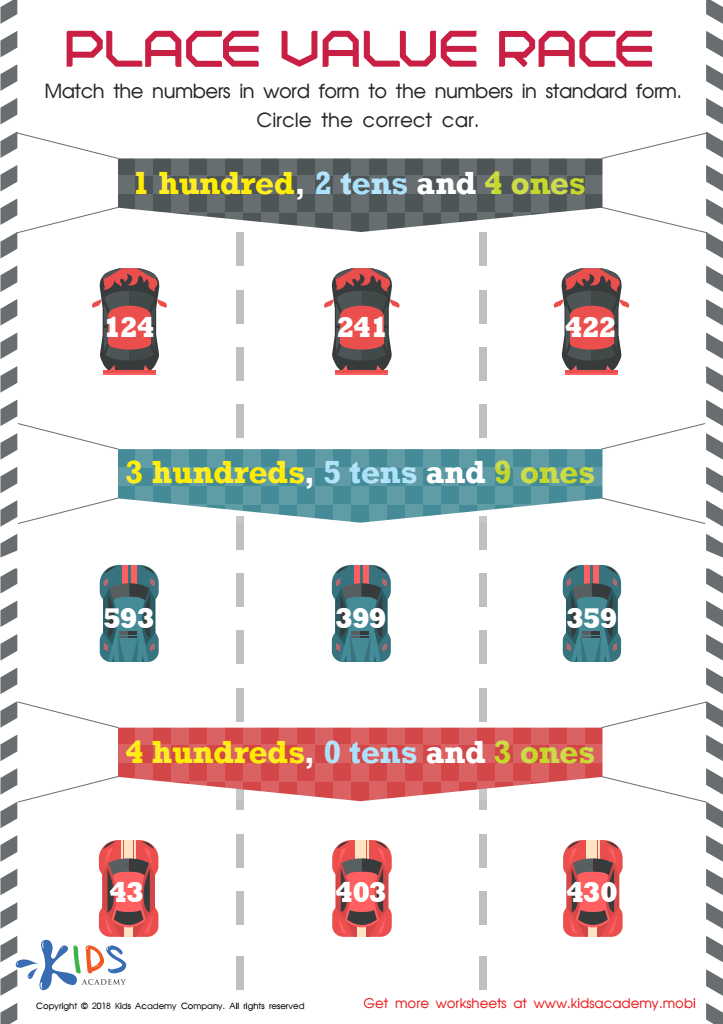
Place Value Race Worksheet
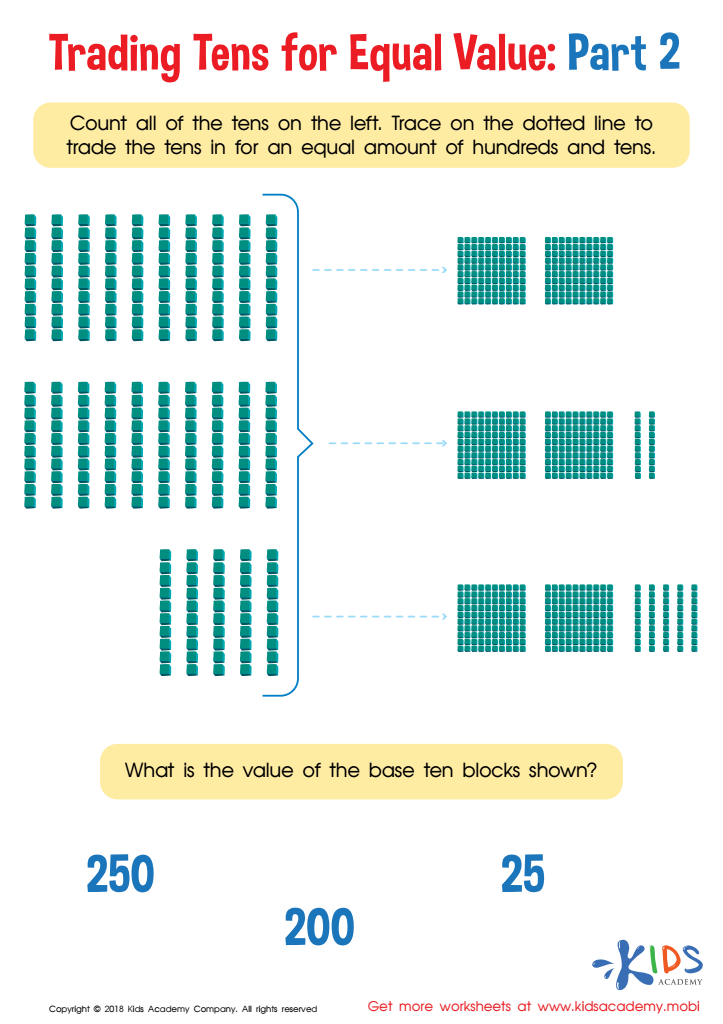
Trading Tens for Equal Value Worksheet: Part 2
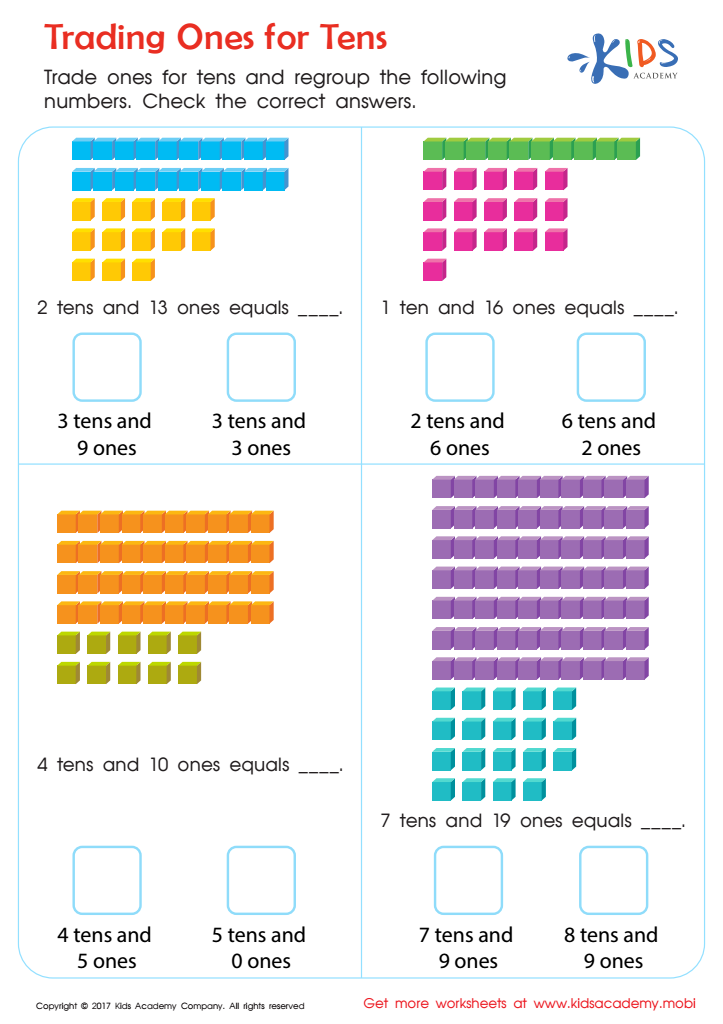
Trading Ones for Tens Worksheet
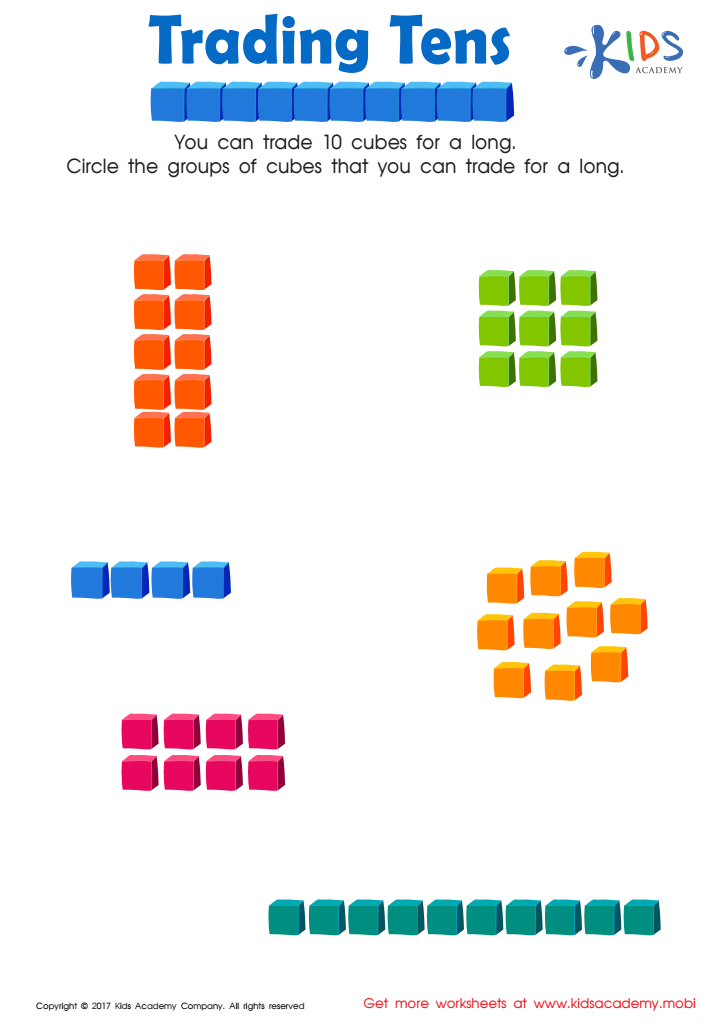
Trading Tens Worksheet
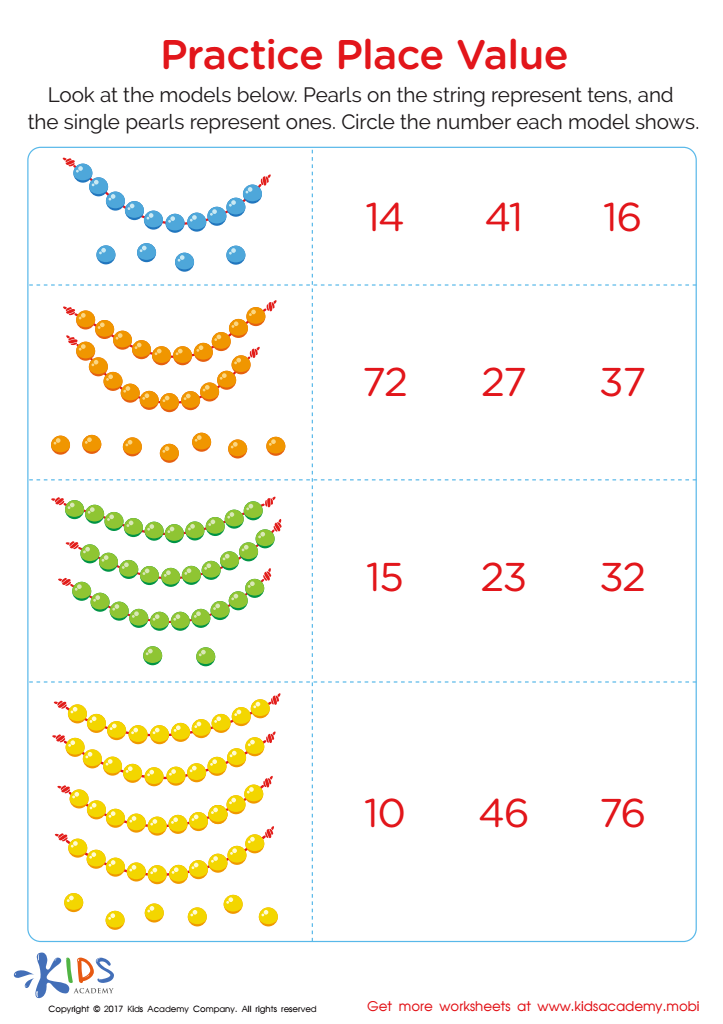
Practice Place Value Printable
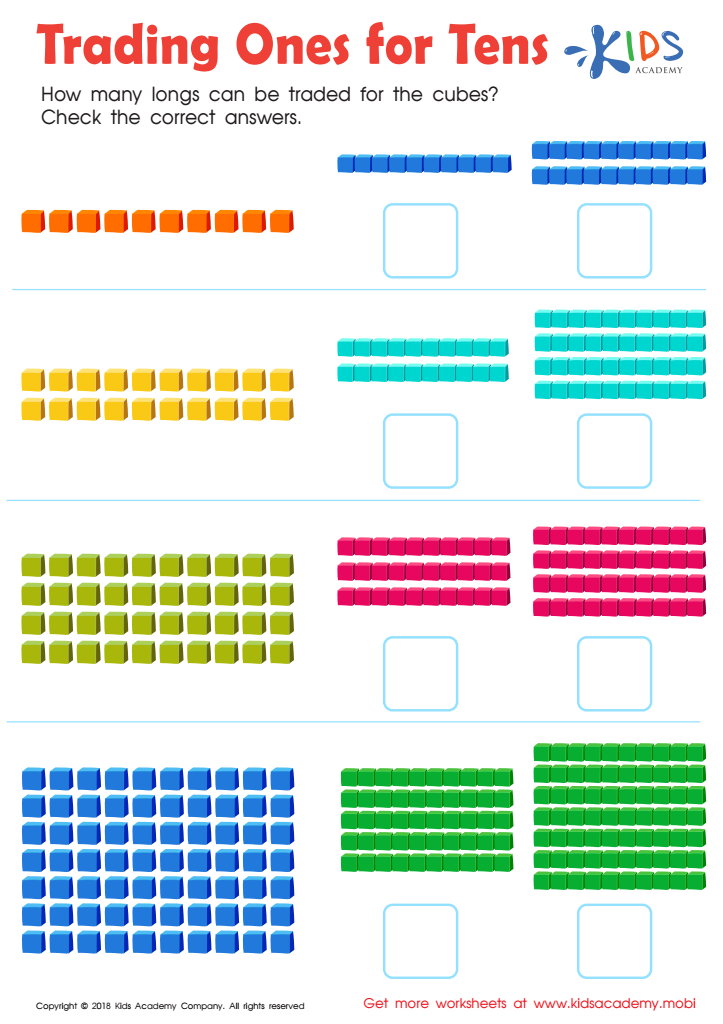
Trading Ones for Tens Worksheet: Part 2
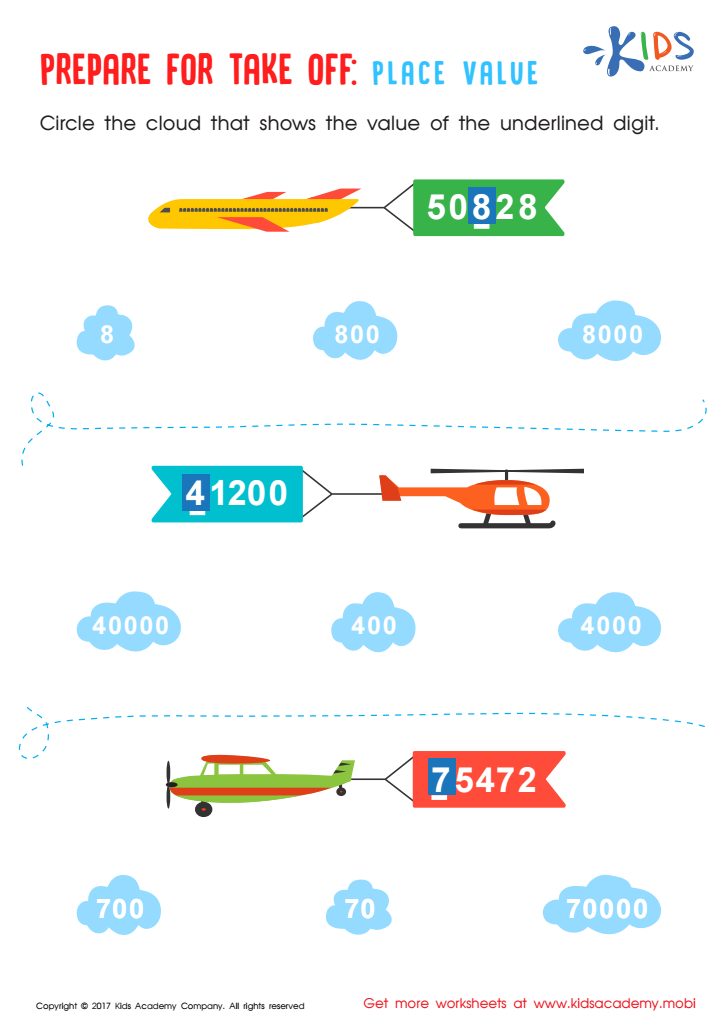
Free Place Value Worksheet for 3rd Grade








Understanding place value is crucial for children aged 4-9 as it forms the foundation of their mathematical knowledge. It allows them to comprehend how numbers are constructed, facilitating the transition from basic counting to more complex operations. Mastering place value helps children recognize the difference between digits in a number based on their position (units, tens, hundreds), which is essential for understanding larger numbers and developing efficient calculation strategies.
When children grasp place value, they can perform addition and subtraction more effectively, estimate quantities accurately, and even begin to explore multiplication and division. This foundational skill not only supports their current math learning but also builds confidence and encourages a positive attitude towards mathematics.
Moreover, understanding place value allows children to develop better problem-solving and critical thinking skills. As parents or teachers, fostering this knowledge ensures that children are equipped to tackle more advanced concepts in higher grades, laying the groundwork for future academic success. Engaging with place value through playful, hands-on activities can also make learning enjoyable, enhancing retention and interest in math. By prioritizing this area of understanding, adults can nurture a generation that is both numerically literate and enthusiastic about learning.








