Check out this FREE Trial Lesson on Math for age 4-9!

Z

Favorites
With answer key
Interactive
  • 4-9
  • Comparing Fractions
  • Math
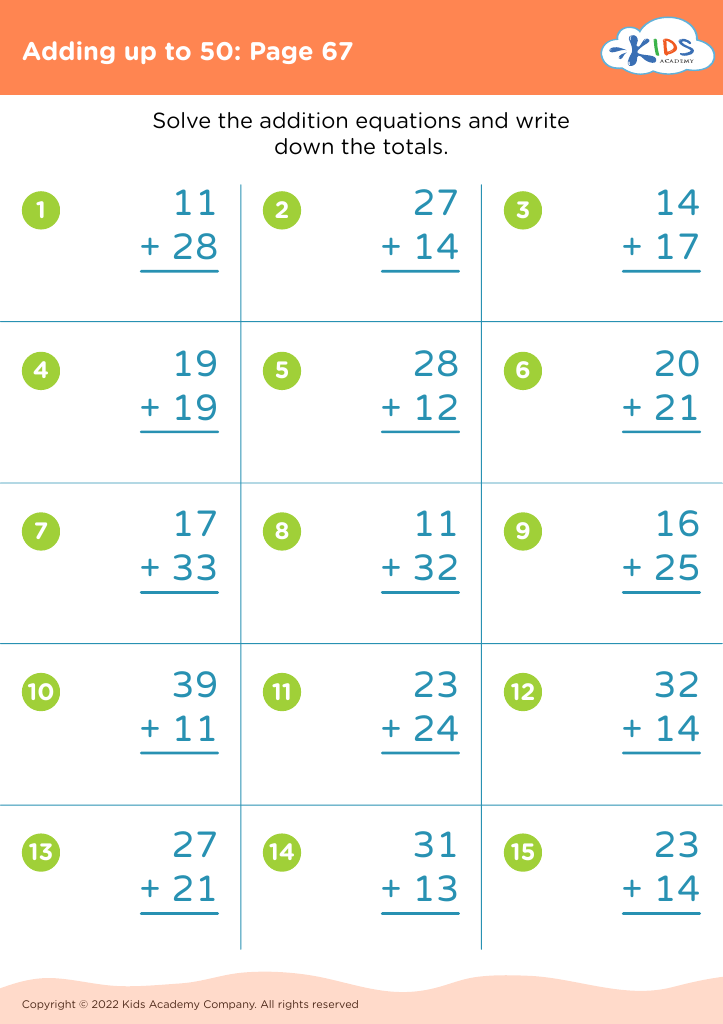
Adding up to 50: Page 67

Adding up to 50: Page 67

Adding up to 50: Page 67
Worksheet
Bubbling Over Worksheet

Bubbling Over Worksheet

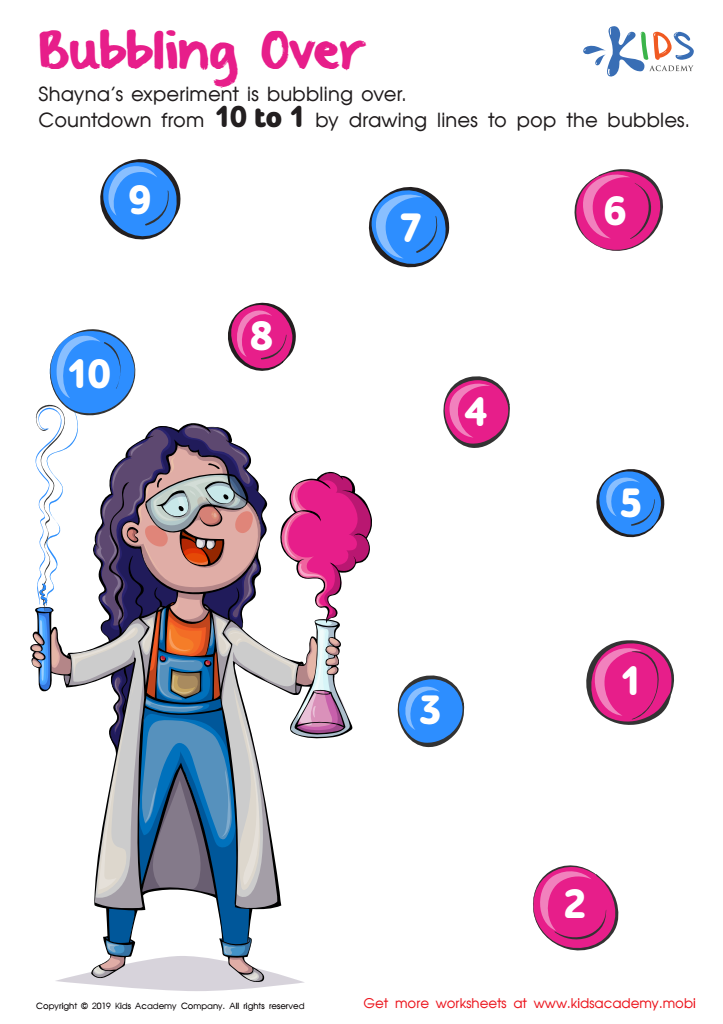
Students love science experiments at the lab! They get to practice their counting skills while creating a masterpiece or an unexpected catastrophe! Ask them to count down from 10 to 1 by drawing lines to 'pop' the bubbles coming out of Shayna's experiment in the worksheet.
Bubbling Over Worksheet
Worksheet
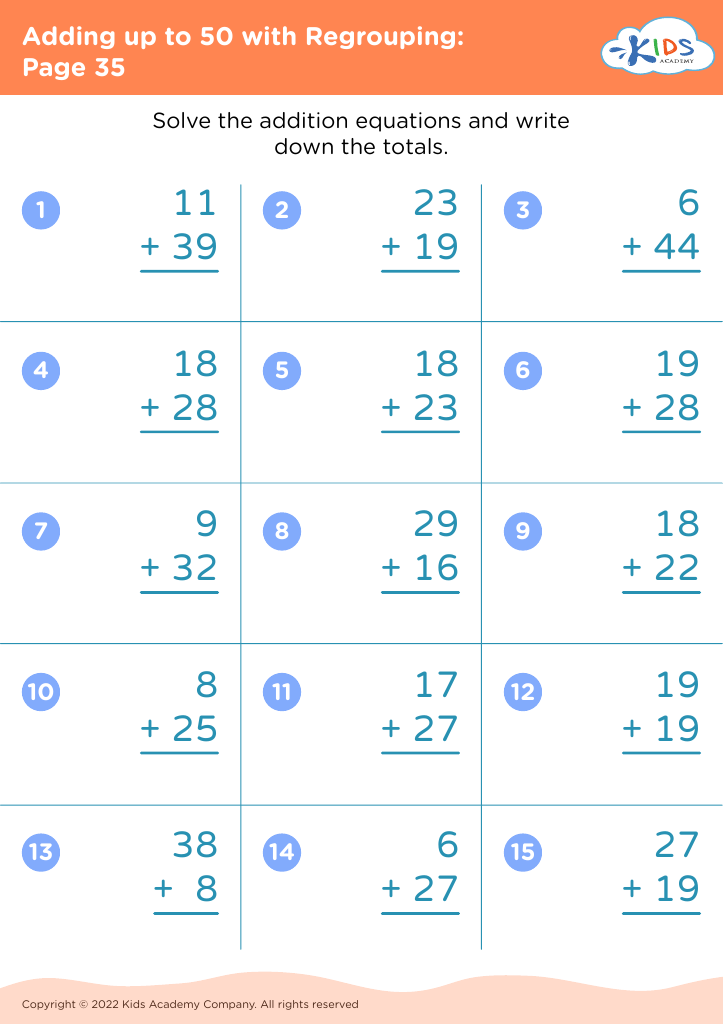
Adding up to 50 with Regrouping: Page 35
Worksheet
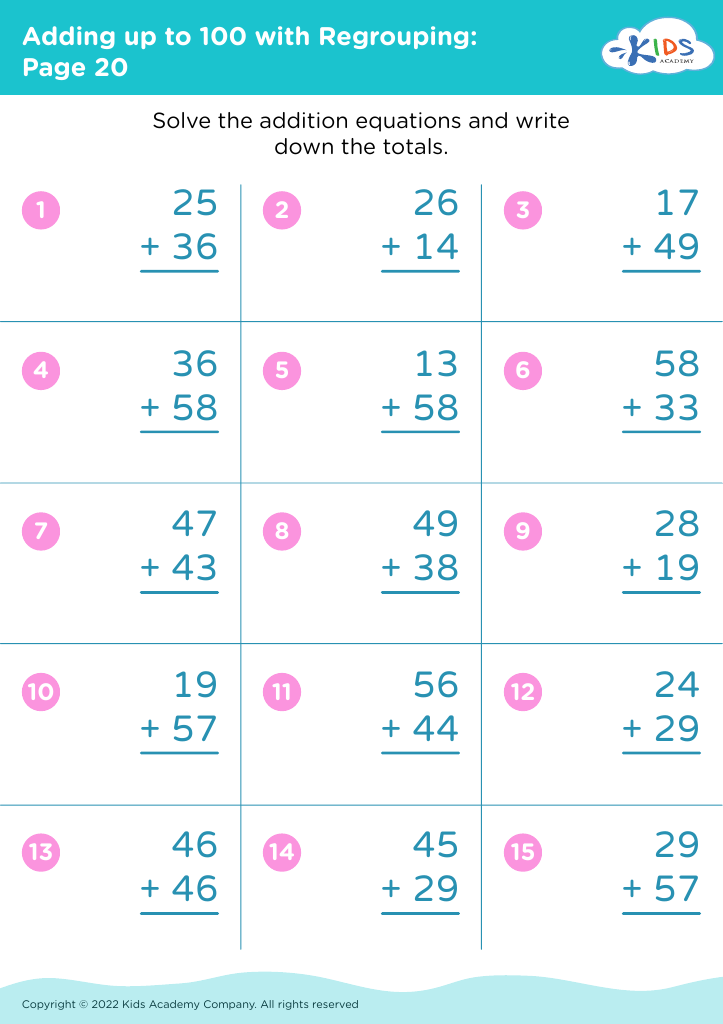
Adding up to 100 with Regrouping: Page 20
Worksheet
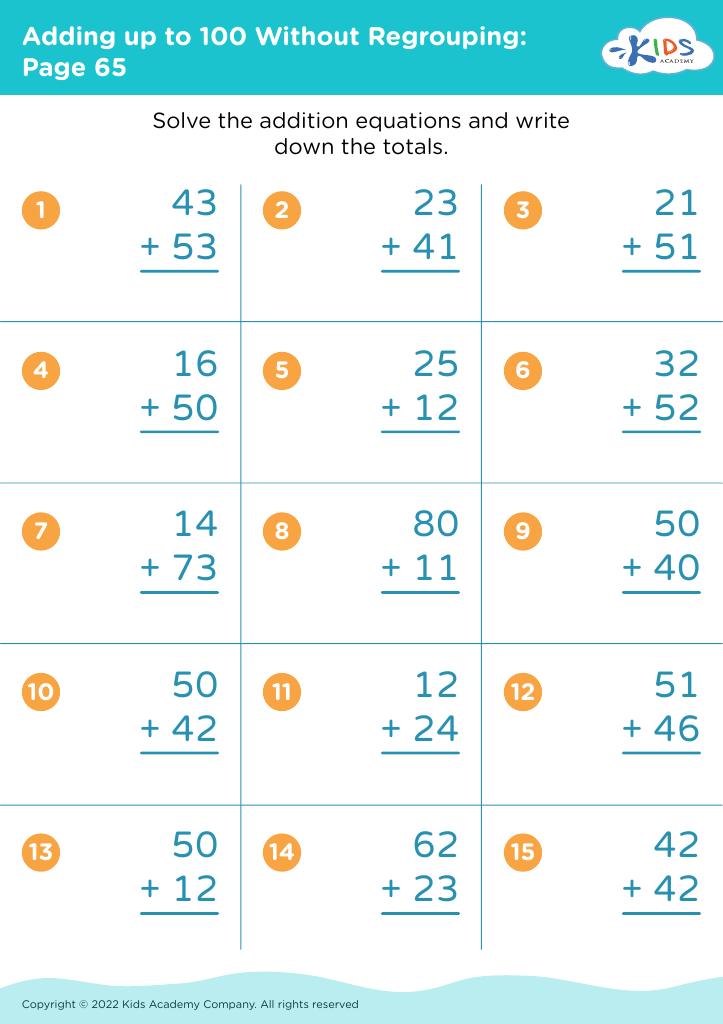
Adding up to 100 Without Regrouping: Page 65
Worksheet
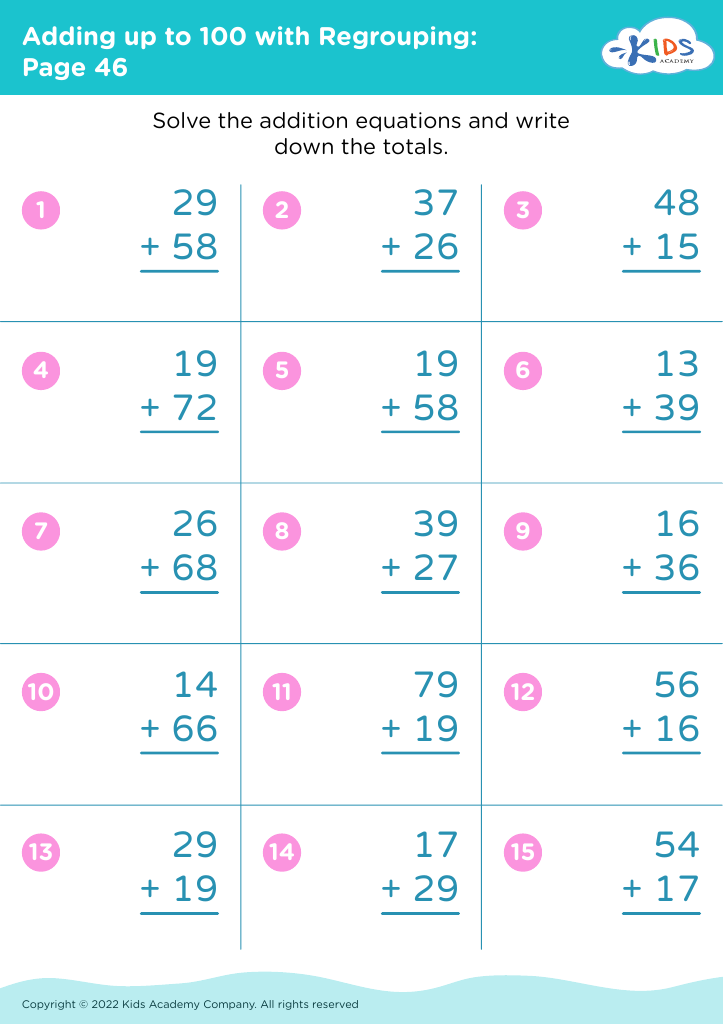
Adding up to 100 with Regrouping: Page 46
Worksheet
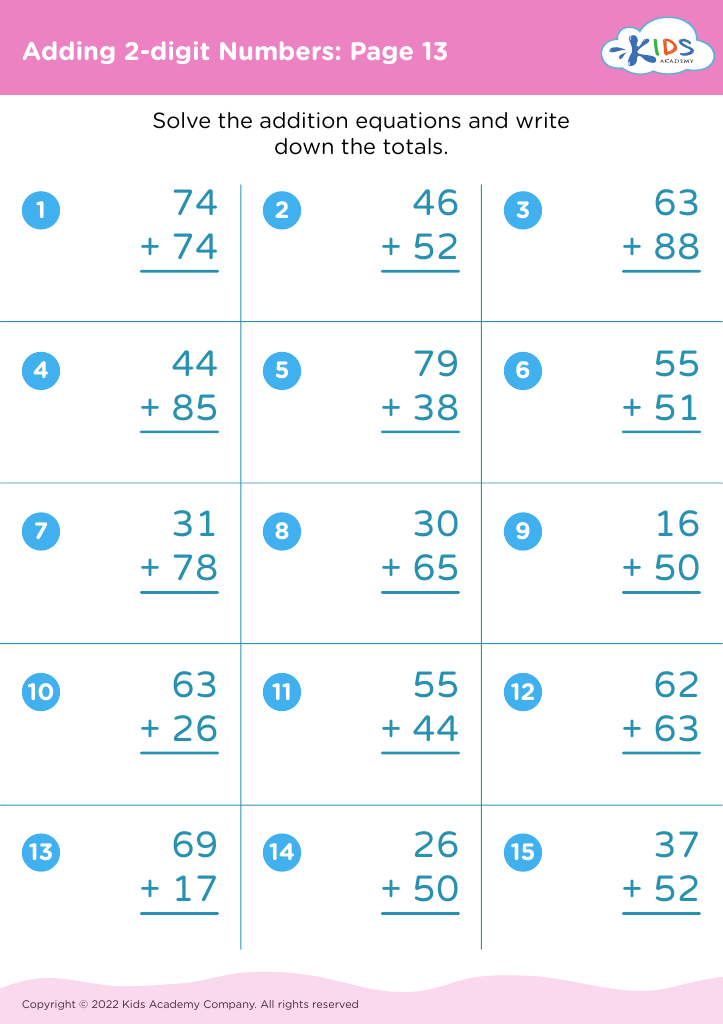
Adding 2-digit Numbers: Page 13

Adding 2-digit Numbers: Page 13

Adding 2-digit Numbers: Page 13
Worksheet
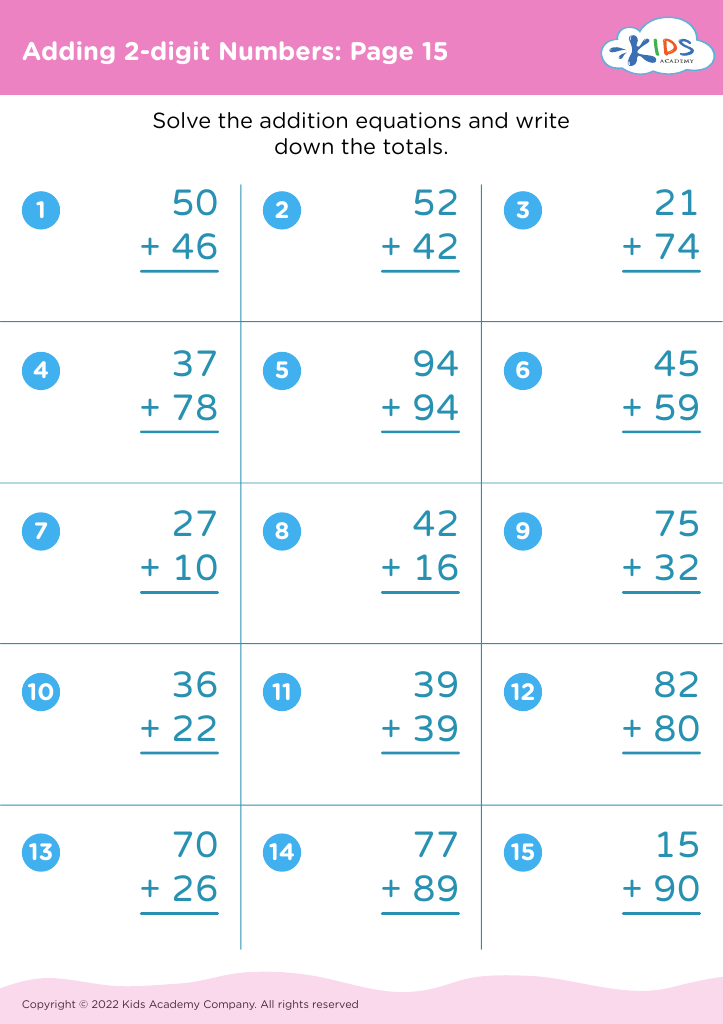
Adding 2-digit Numbers: Page 15

Adding 2-digit Numbers: Page 15

Adding 2-digit Numbers: Page 15
Worksheet
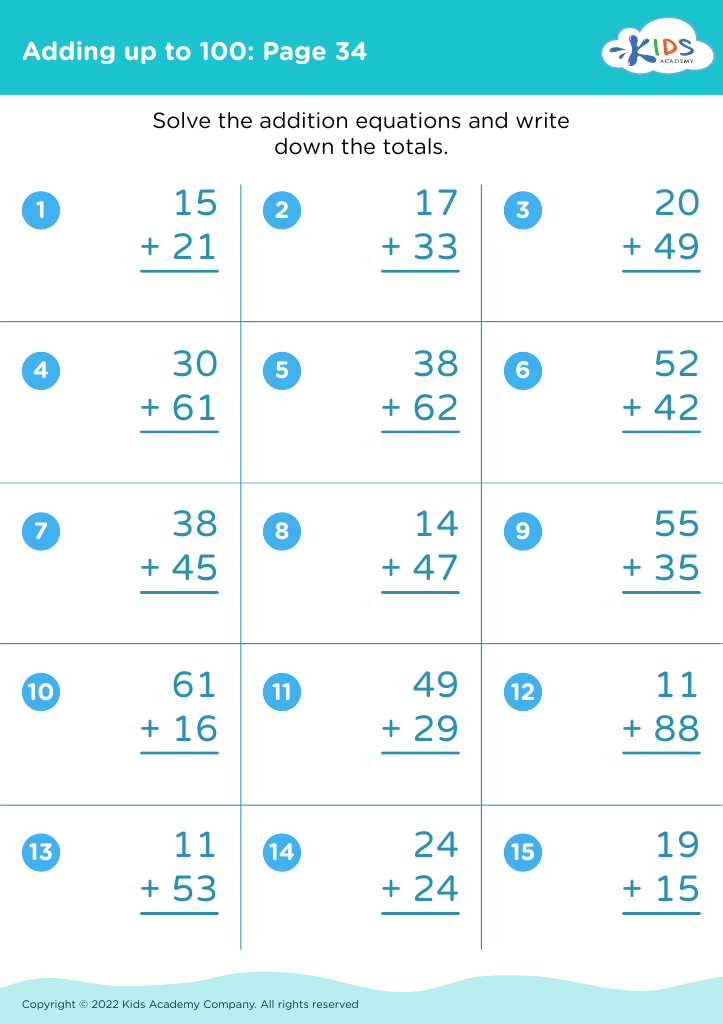
Adding up to 100: Page 34

Adding up to 100: Page 34

Adding up to 100: Page 34
Worksheet
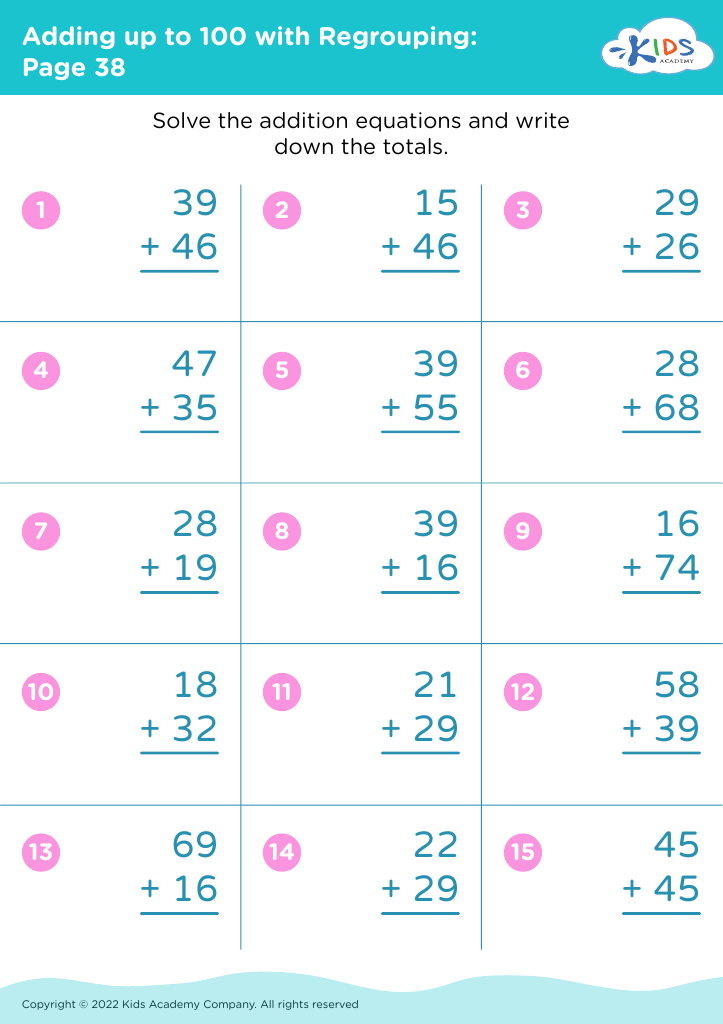
Adding up to 100 with Regrouping: Page 38
Worksheet
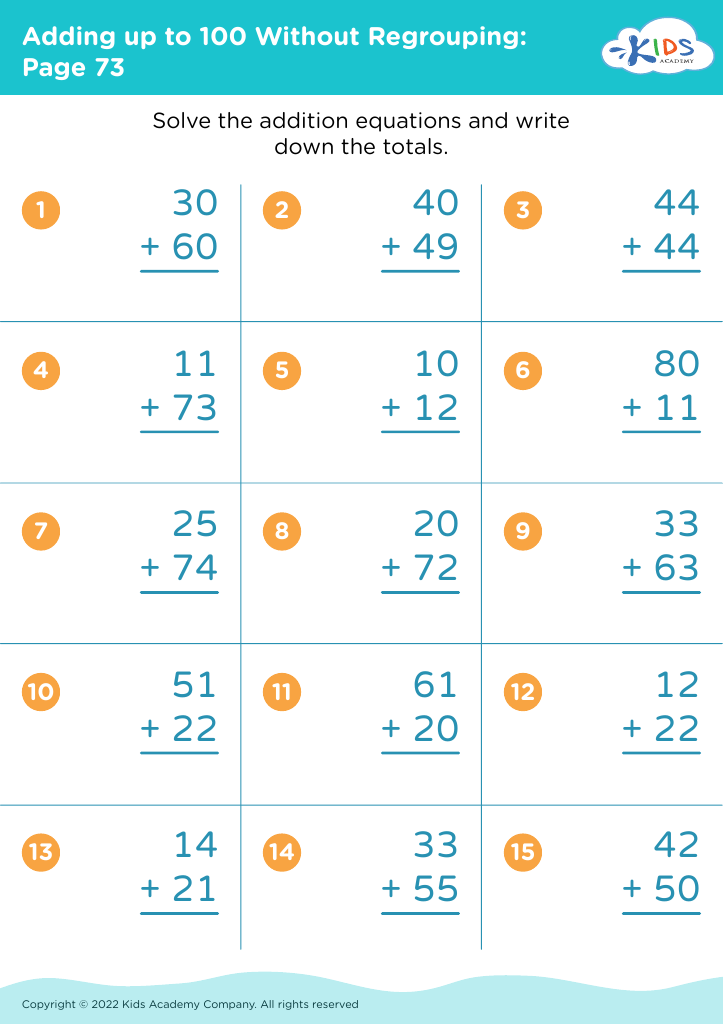
Adding up to 100 Without Regrouping: Page 73
Worksheet
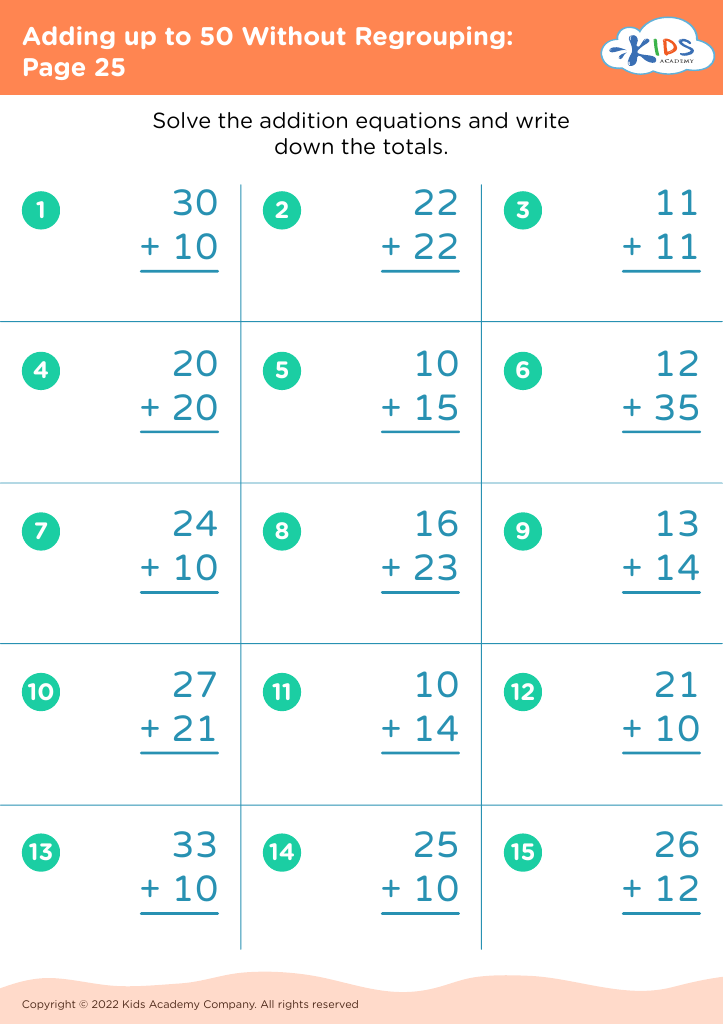
Adding up to 50 Without Regrouping: Page 25
Worksheet
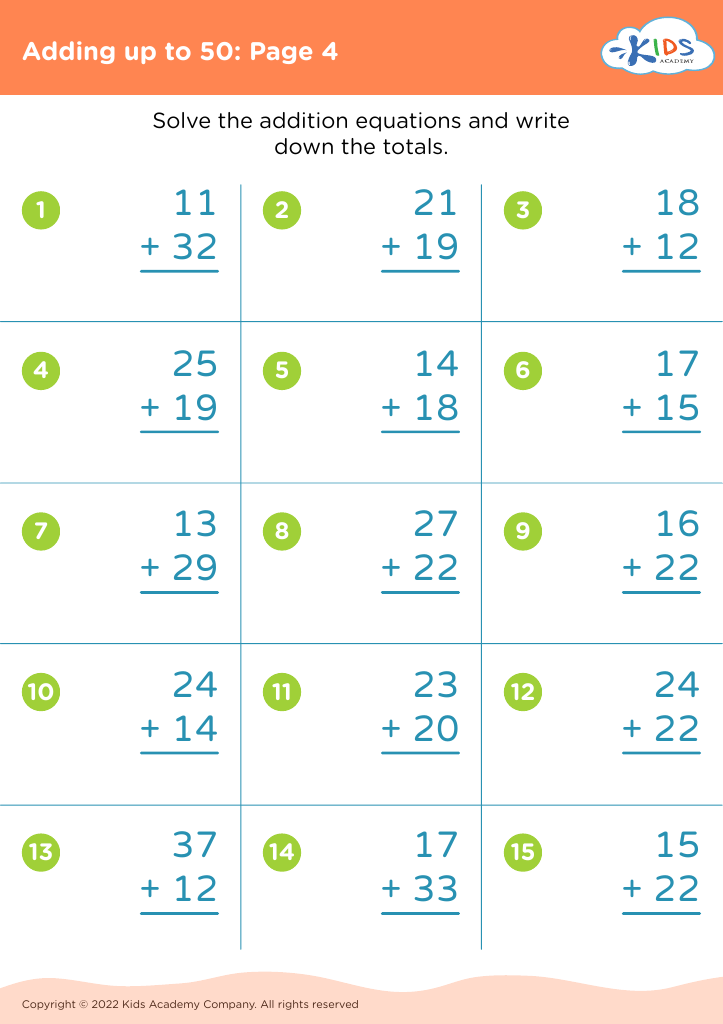
Adding up to 50: Page 4

Adding up to 50: Page 4

Adding up to 50: Page 4
Worksheet
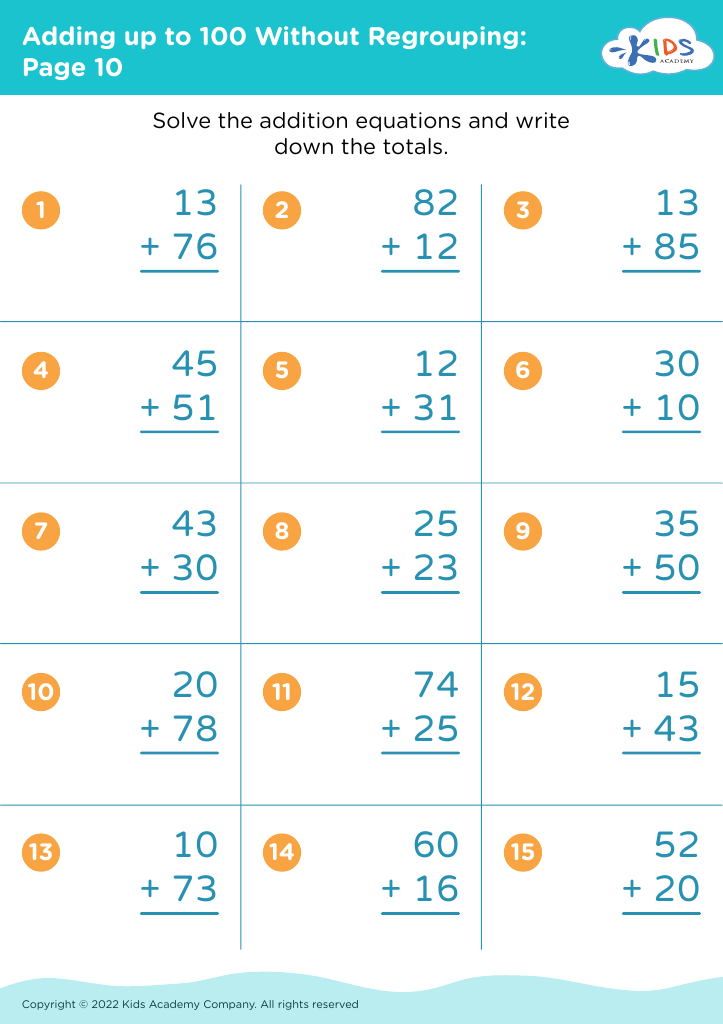
Adding up to 100 Without Regrouping: Page 10
Worksheet
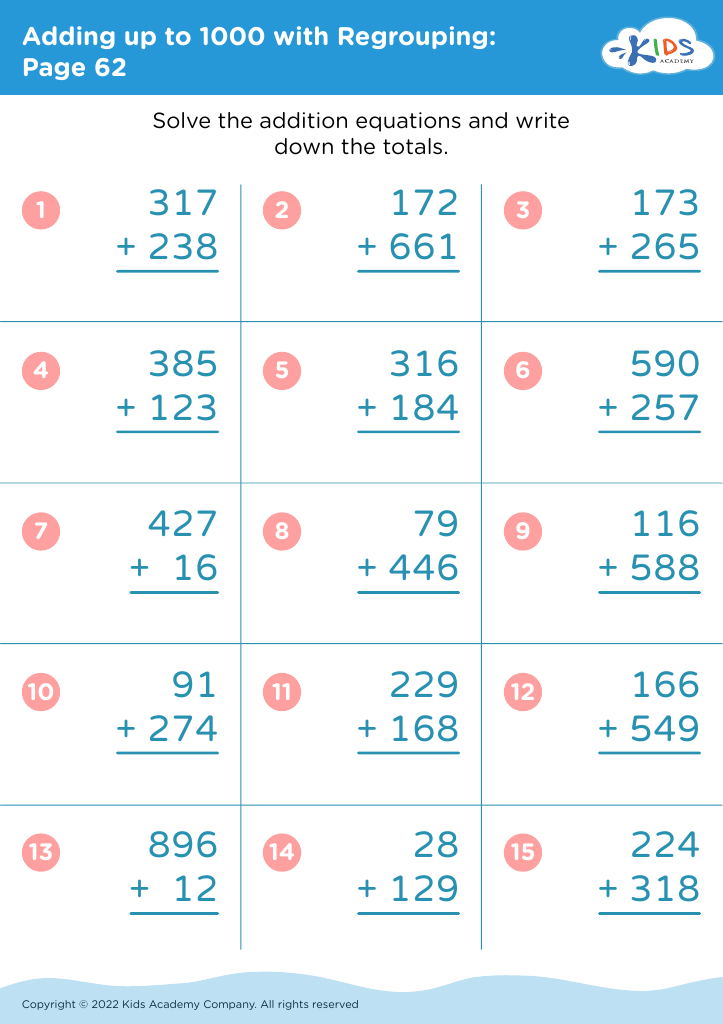
Adding up to 1000 with Regrouping: Page 62
Worksheet
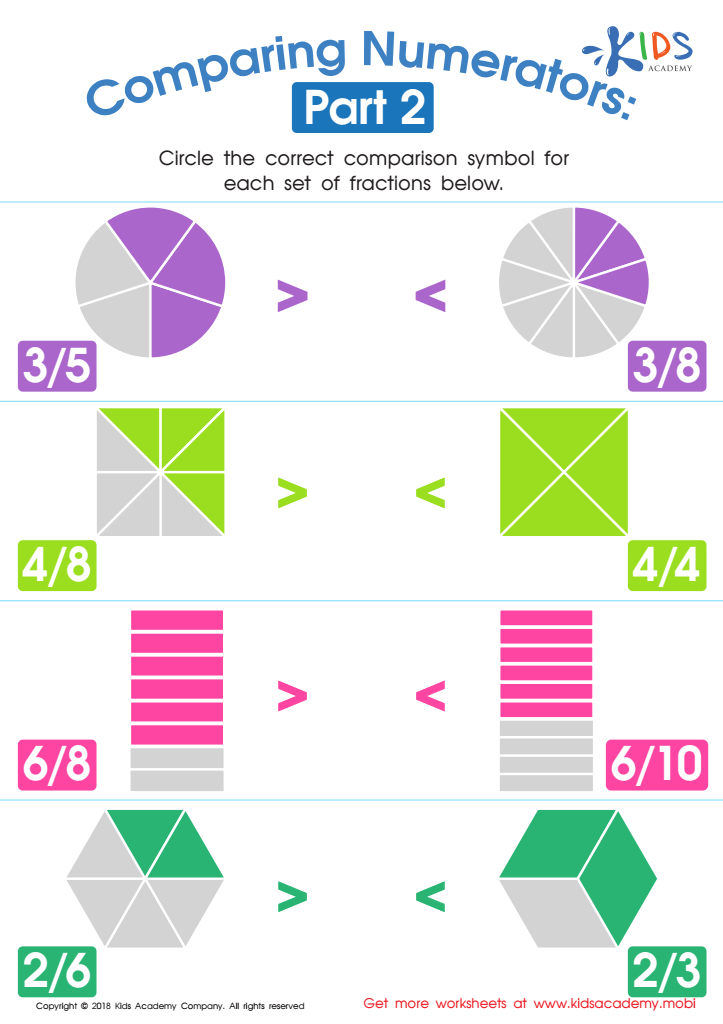
Comparing Numerators Part 2 Worksheet

Comparing Numerators Part 2 Worksheet

Before beginning this exercise, your child should have knowledge of fractions, including counting and identifying them in shaded areas of shapes. In the pdf, they must compare two fractions in each set and circle the symbol for the larger fraction. Help them as needed.
Comparing Numerators Part 2 Worksheet
Worksheet
Matching and Sorting  for Kindergarten: Assessment 2 Worksheet

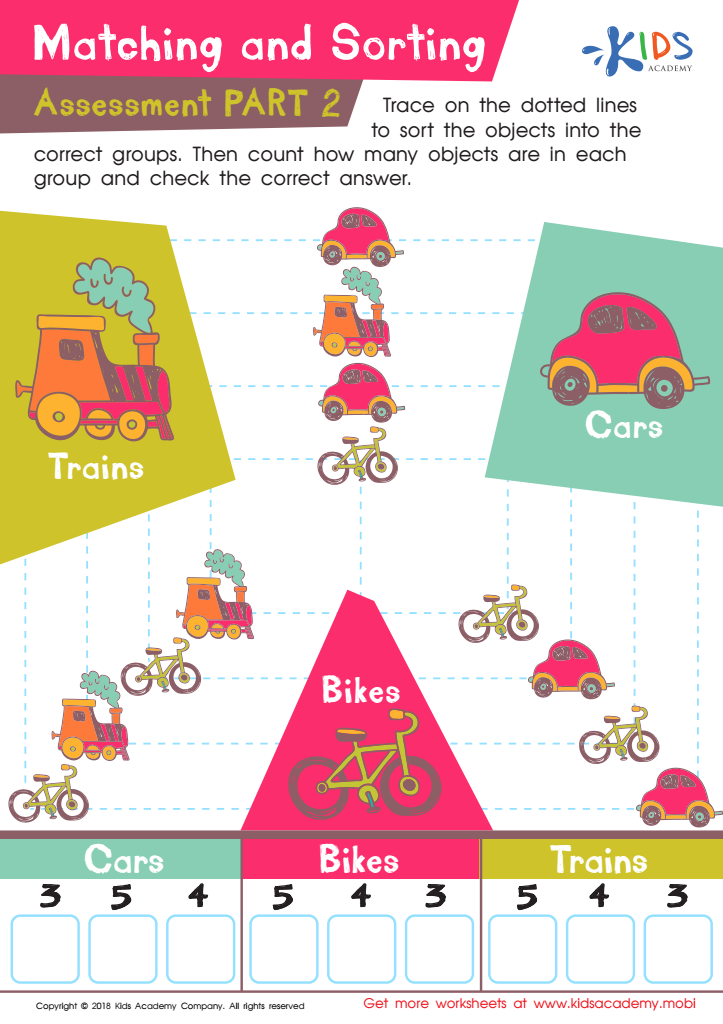
Matching and Sorting for Kindergarten: Assessment 2 Worksheet

This assessment tests matching, sorting and fine motor skills. It challenges kids to identify properties and attributes of pictures, trace guidelines and count the types of vehicles. It's a great way to practice basic number sense and hone in on important foundational skills.
Matching and Sorting for Kindergarten: Assessment 2 Worksheet
Worksheet
Piecing Together 16 Worksheet

Piecing Together 16 Worksheet

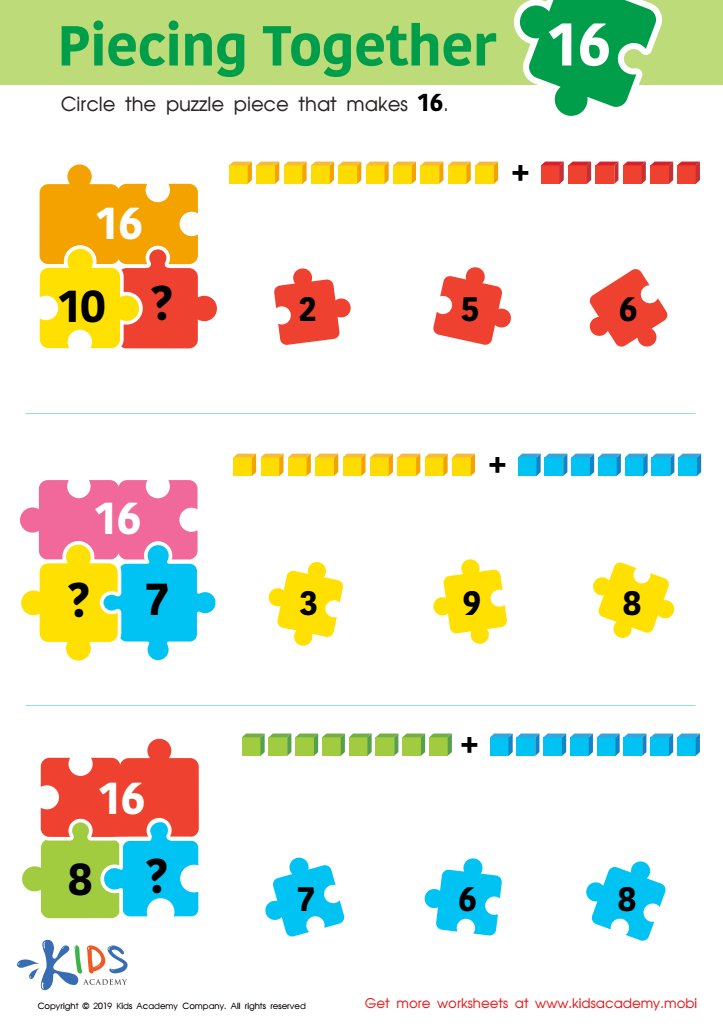
Combine learning with fun using this colorful worksheet! Ask your preschoolers what they see in the picture, then help them solve the mathematical equations on the puzzle pieces. One equation is missing on each; have them circle the piece that will make the bottom puzzle piece numbers equal 16. Use puzzles and bright colors to teach - it's one of the best ways your kids can learn!
Piecing Together 16 Worksheet
Worksheet
Pizza Fraction Printable

Fractions: Pizza Printable

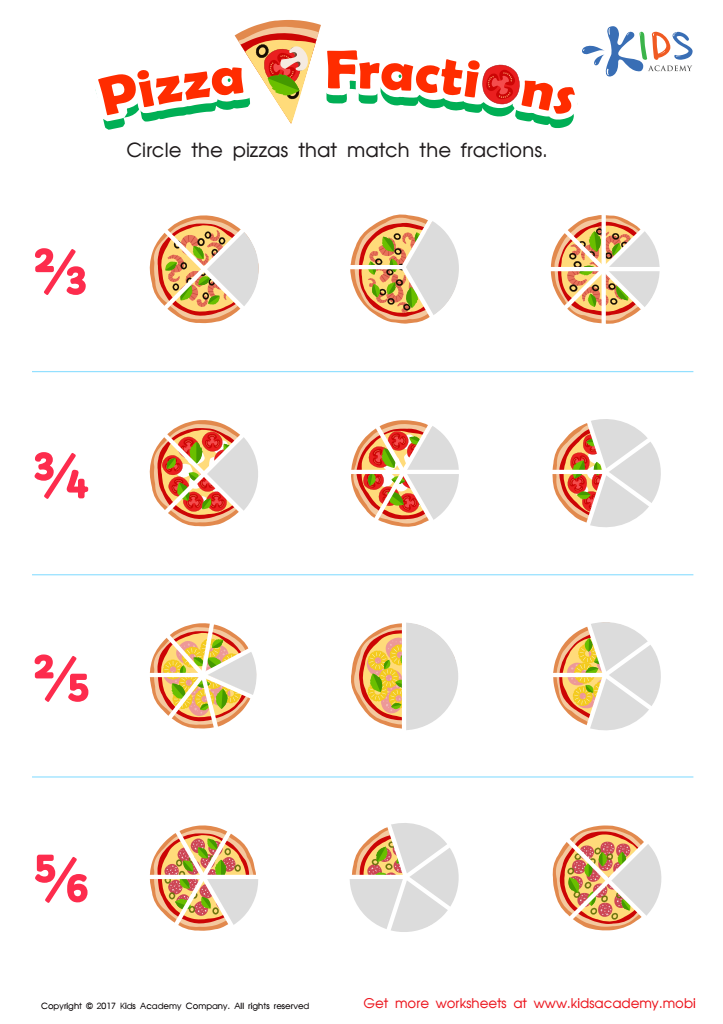
Fractions can be tricky for kids, but this pizza fractions printable can help! Kids can understand fractions by seeing them, as they use one of their favorite foods. It helps them grasp the concept and gain a deeper understanding of what fractions represent. Extend their learning by quizzing them when you order pizza next time.
Fractions: Pizza Printable
Worksheet
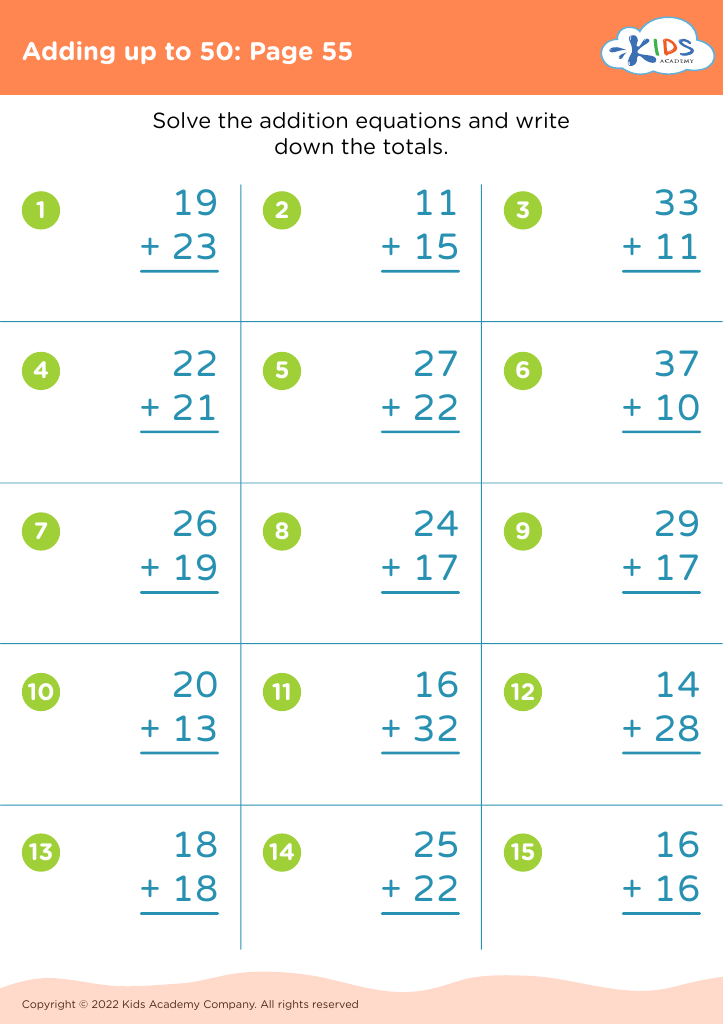
Adding up to 50: Page 55

Adding up to 50: Page 55

Adding up to 50: Page 55
Worksheet
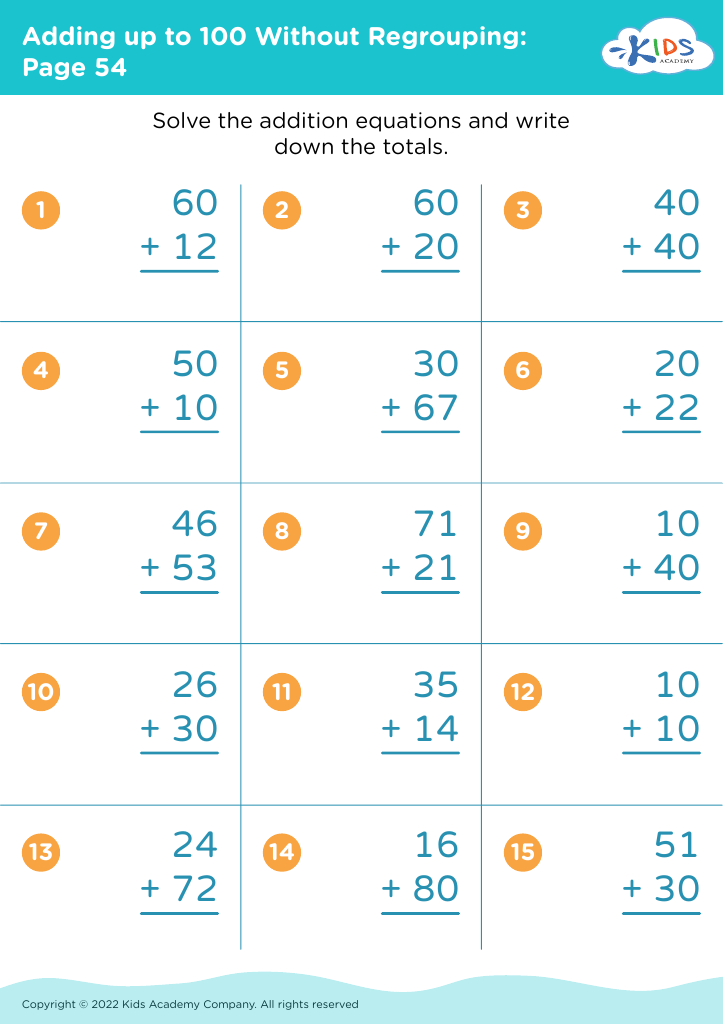
Adding up to 100 Without Regrouping: Page 54
Worksheet
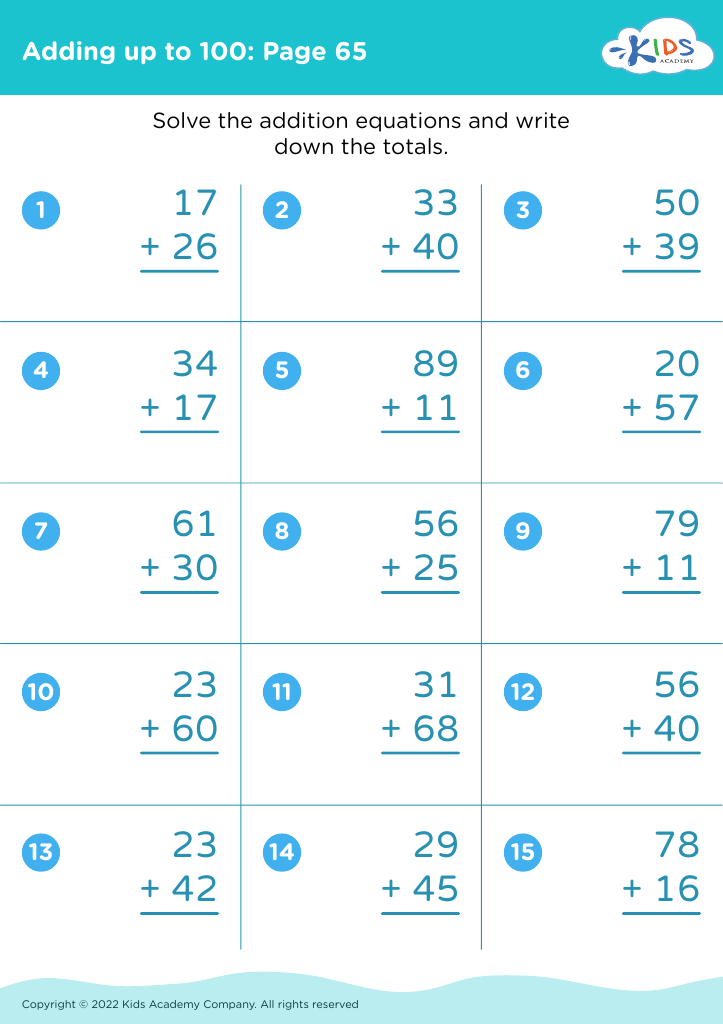
Adding up to 100: Page 65

Adding up to 100: Page 65

Adding up to 100: Page 65
Worksheet
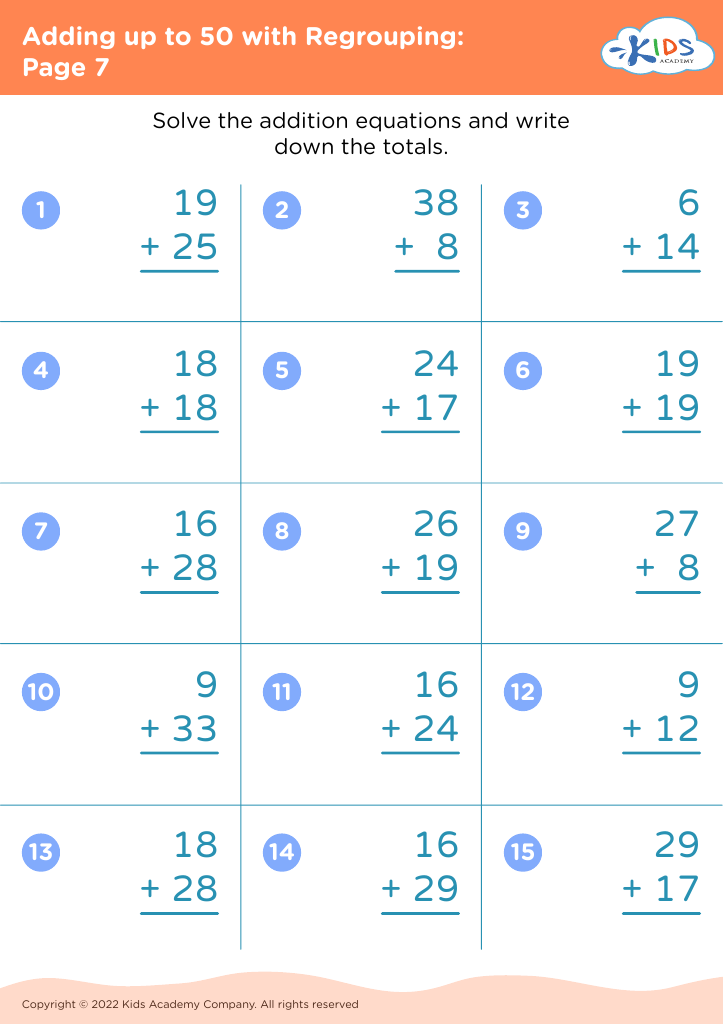
Adding up to 50 with Regrouping: Page 7
Worksheet
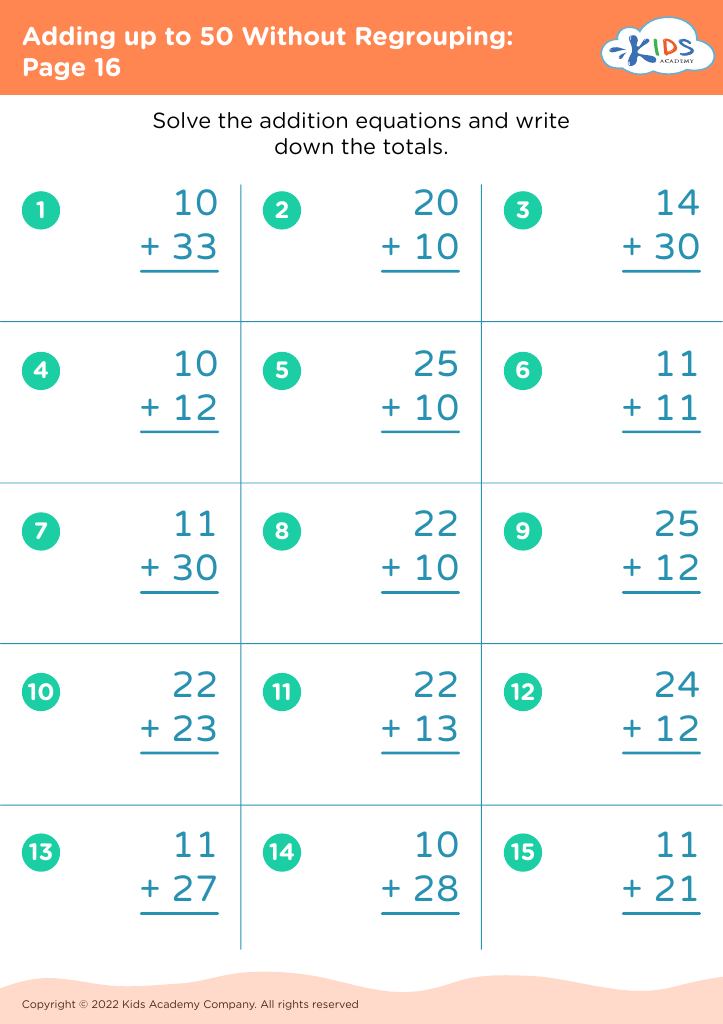
Adding up to 50 Without Regrouping: Page 16
Worksheet


Comparing fractions is a foundational mathematical skill crucial for children aged 4-9 as it lays the groundwork for more advanced concepts they'll encounter later. During these formative years, children's cognitive brains are highly receptive to grasping fundamental concepts that will serve as building blocks for future mathematical learning.

Fractions represent parts of a whole, and understanding how to compare them helps children develop critical thinking and problem-solving skills. By learning to compare fractions, kids can better comprehend relationships between different quantities, an essential skill for everyday decision-making and higher-level math.

Moreover, introducing fractions early can demystify the subject, making it less intimidating as students progress through their educational journey. It encourages numerical literacy, guiding children to think intuitively about proportions and equivalences. This early exposure is linked to greater confidence in math, fostering a positive attitude towards the subject.

For parents and teachers, promoting a strong foundational understanding of comparing fractions is vital. It equips children with the tools they need to navigate complex arithmetic and algebraic concepts in the future. Early competency in fractions ensures that kids are not left behind when the curriculum intensifies, setting them up for a lifetime of numerical competence and success.