Fraction comparison Math Worksheets for Ages 4-9
33 filtered results
-
From - To
Welcome to our engaging Fraction Comparison Math Worksheets designed specifically for kids aged 4-9! These worksheets provide a fun and interactive way for young learners to master the essential skill of comparing fractions. With colorful illustrations and age-appropriate activities, children will discover fraction concepts through engaging exercises that build confidence and competence. Our worksheets include various comparison scenarios, helping to strengthen their understanding of greater-than, less-than, and equal-to relationships. Perfect for both classroom and home learning, our fraction comparison materials aim to nurture a love for math while developing critical thinking skills. Explore new math adventures with us today!
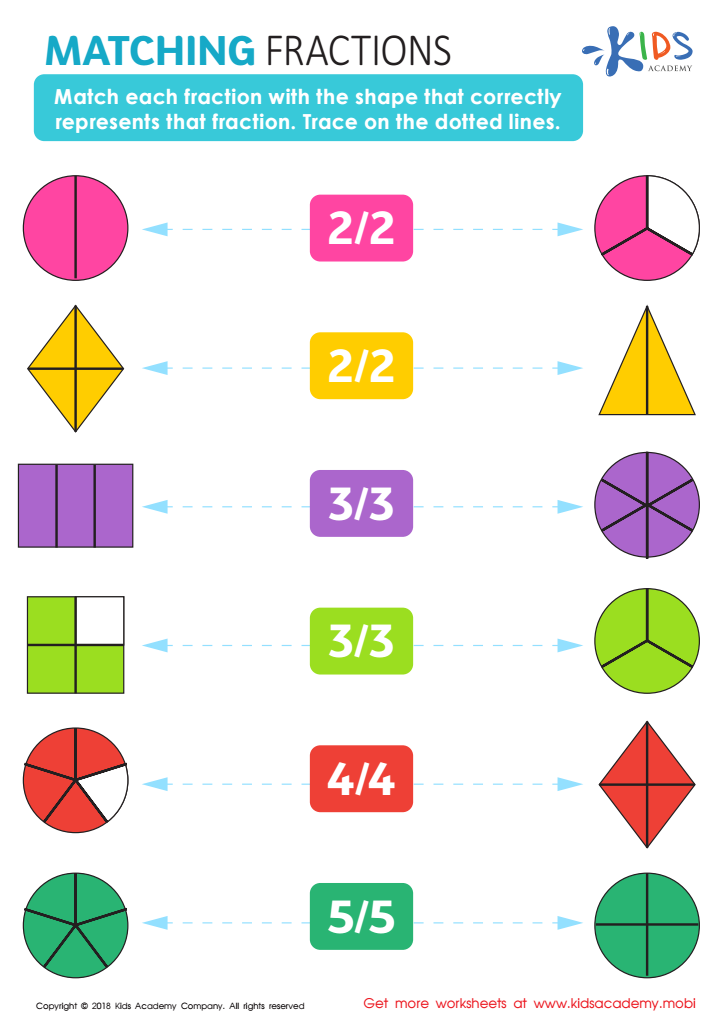
Matching Fractions Worksheet
 Assign to My Students
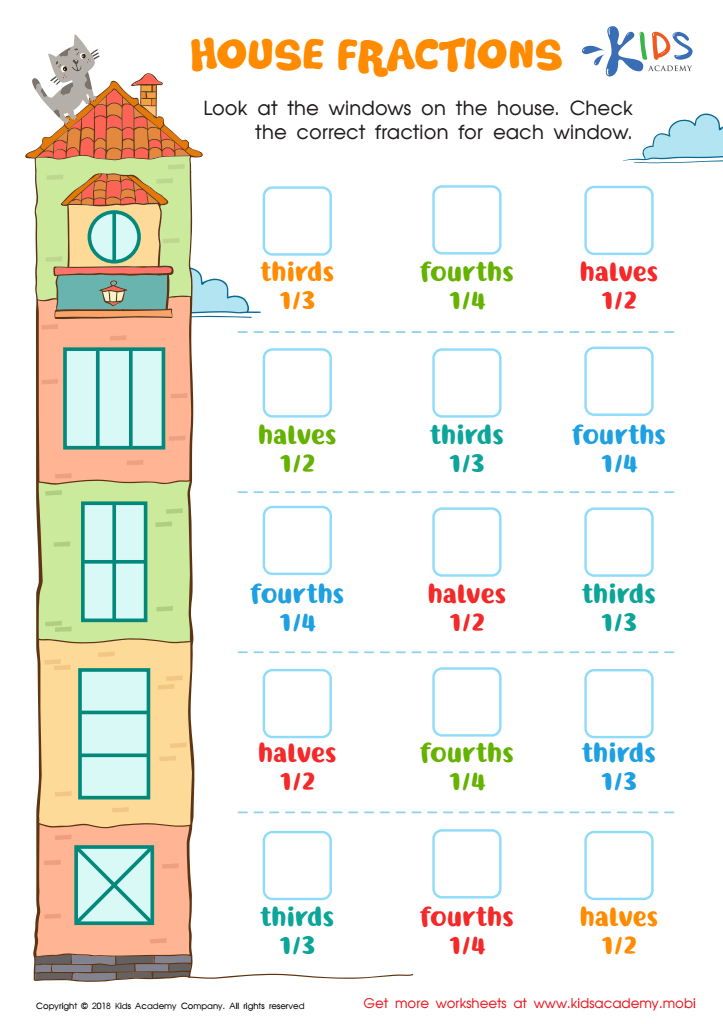
House Fractions Worksheet
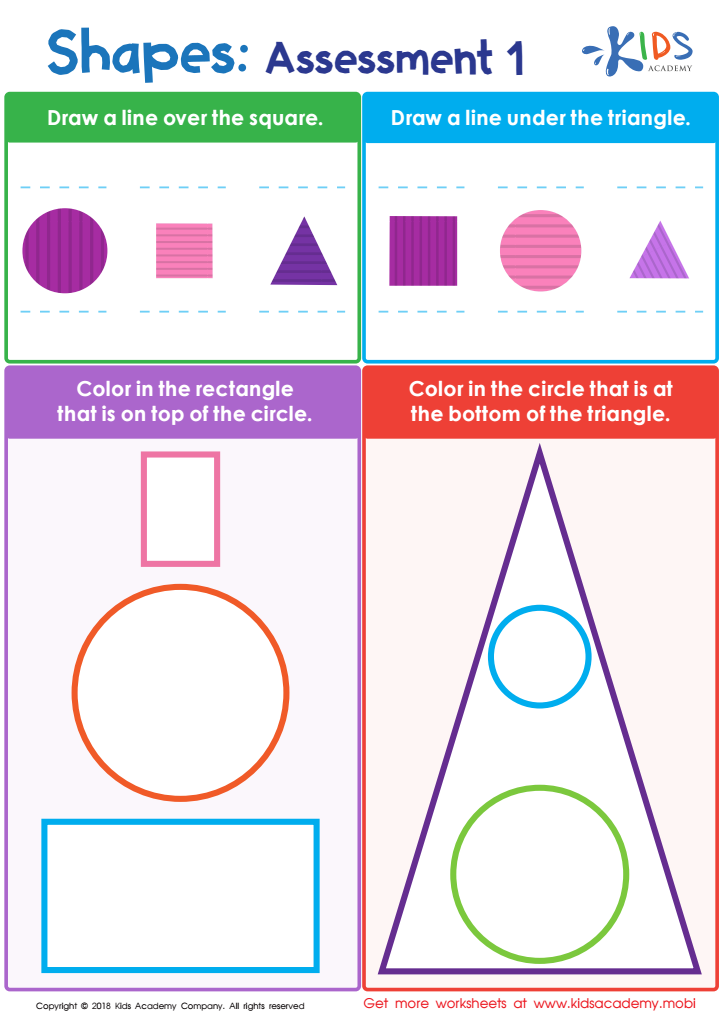
Shapes: Assessment 1 Worksheet
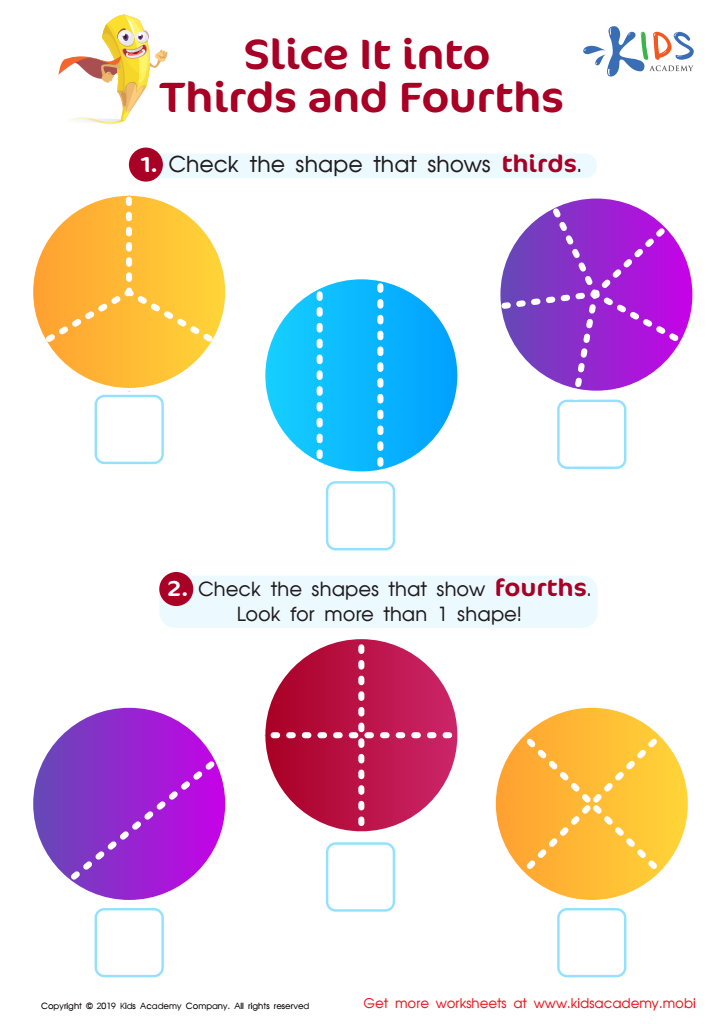
Slice in Thirds Fourths Worksheet
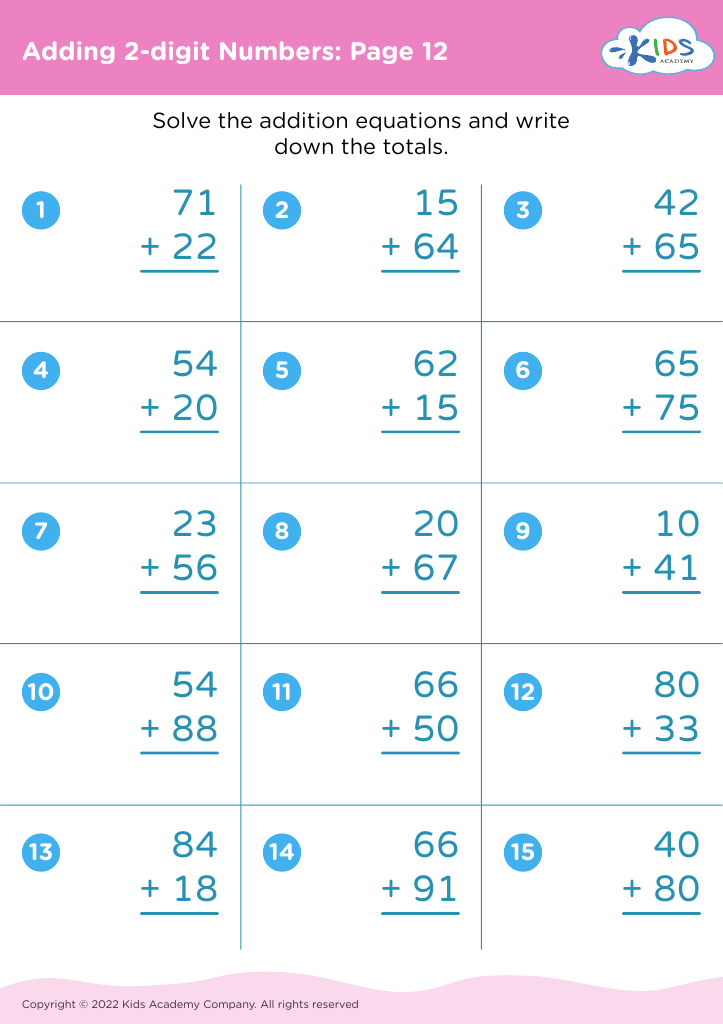
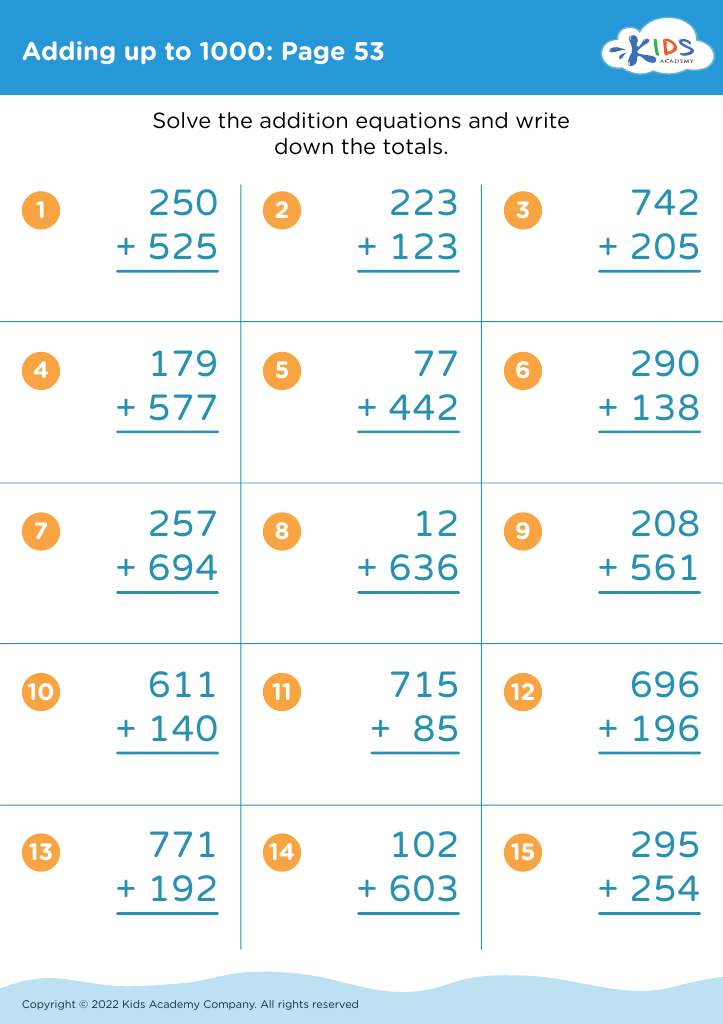
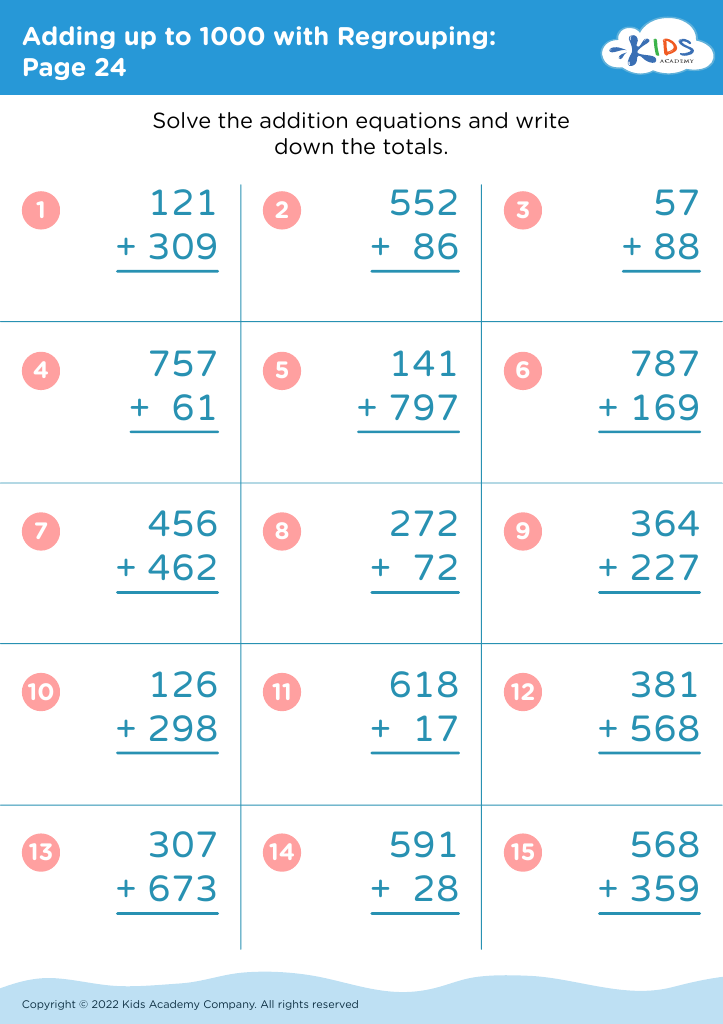





Fraction comparison is a fundamental mathematical skill that forms the basis for more complex operations and problem-solving in later grades. For parents and teachers of children aged 4 to 9, understanding fractions is essential for several reasons.
Firstly, early exposure to fraction concepts helps children develop number sense, a crucial cognitive skill that assists in logical reasoning and critical thinking. By comparing fractions, children learn to recognize relationships between numbers, which is vital for their overall mathematical understanding.
Secondly, fraction comparison promotes practical problem-solving skills. Children often encounter fractions in everyday situations—whether measuring ingredients for a recipe or sharing snacks. By mastering these comparisons, they can make informed decisions and engage in realistic scenarios.
Moreover, understanding fractions sets a solid groundwork for geometry, algebra, and data interpretation, ensuring that students will have the skills needed for success as they progress through school.
Lastly, mastery of fraction comparison fosters confidence in math. When children feel competent in their math skills, they are more likely to take risks and tackle challenges, laying the foundation for a positive attitude toward learning. Therefore, parents and teachers should prioritize fraction comparison, as it is crucial for developing lifetime learners and confident mathematicians.








