Fraction visualization Math Worksheets for Ages 4-9
10 filtered results
-
From - To
Discover an engaging collection of Fraction Visualization Math Worksheets designed for ages 4-9! These worksheets introduce young learners to the concept of fractions through fun, interactive visuals that make math approachable. Kids can explore simple fractions with colorful illustrations and hands-on activities that reinforce learning. Our carefully crafted resources cater to various learning styles, ensuring children develop a strong foundation in fractions while enhancing their critical thinking skills. Perfect for homeschooling, classroom activities, or supplemental practice, these worksheets make learning fractions enjoyable and effective. Help your child build confidence in math with our delightful fraction visualization resources today!
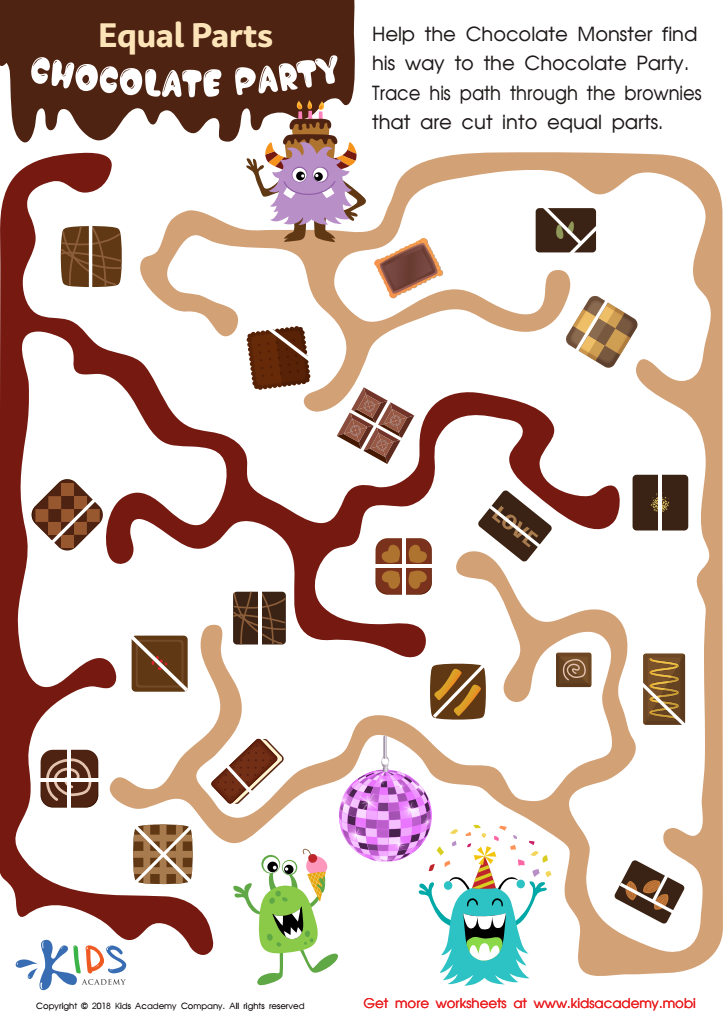
Equal Parts: Chocolate Party Worksheet
 Assign to My Students
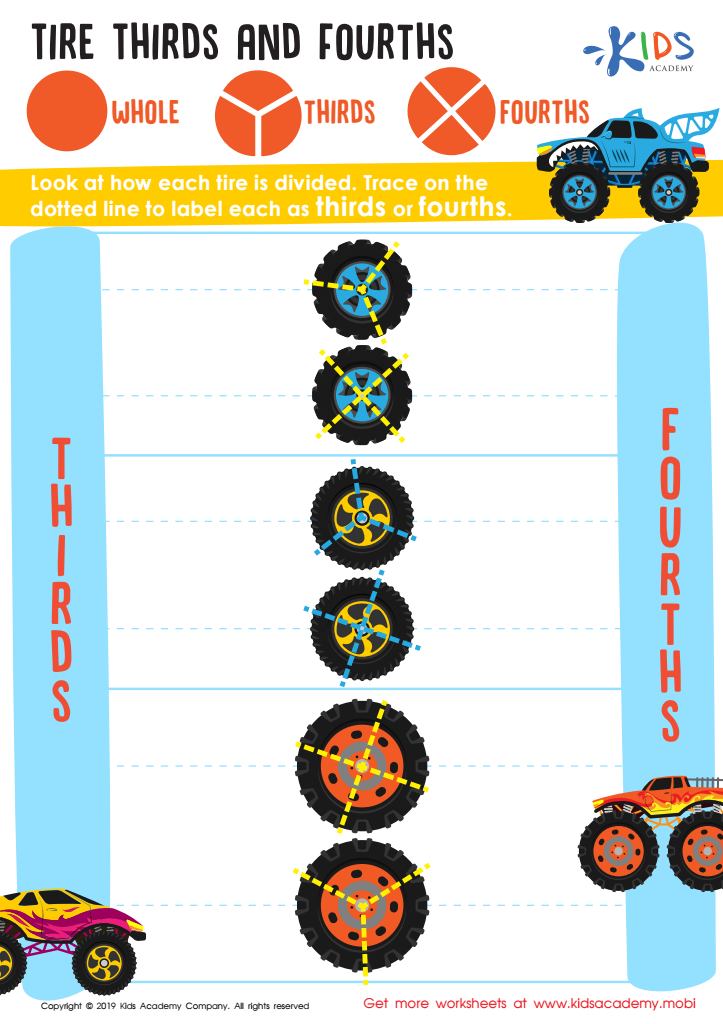
Tire Thirds and Fourths Worksheet
Bubbling Over Worksheet
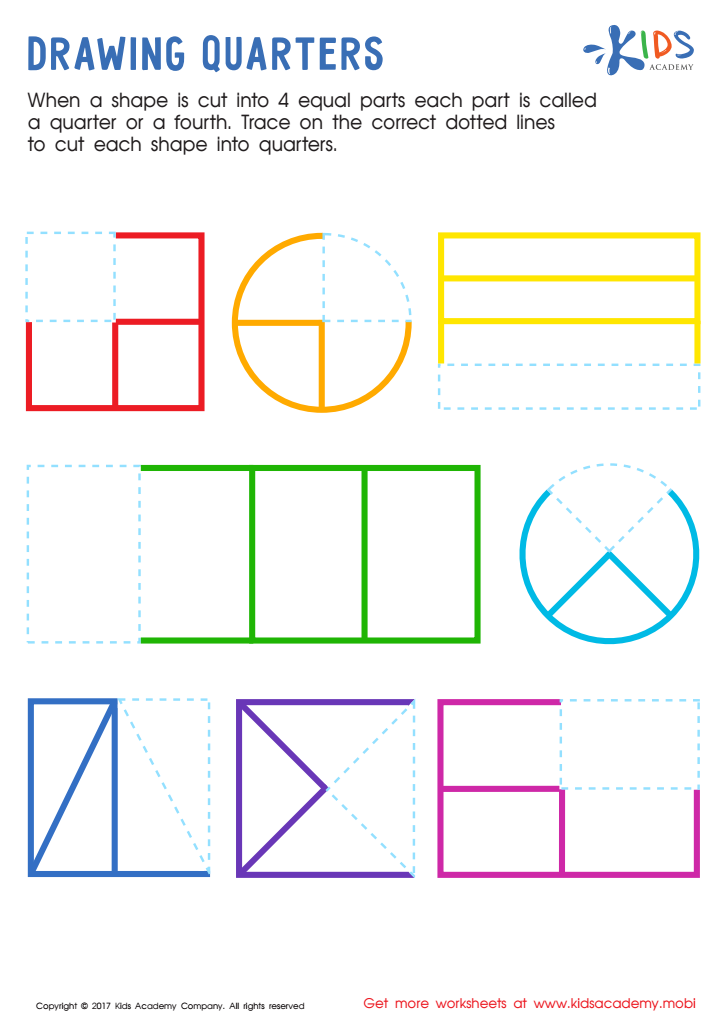
Drawing Quarters Worksheet
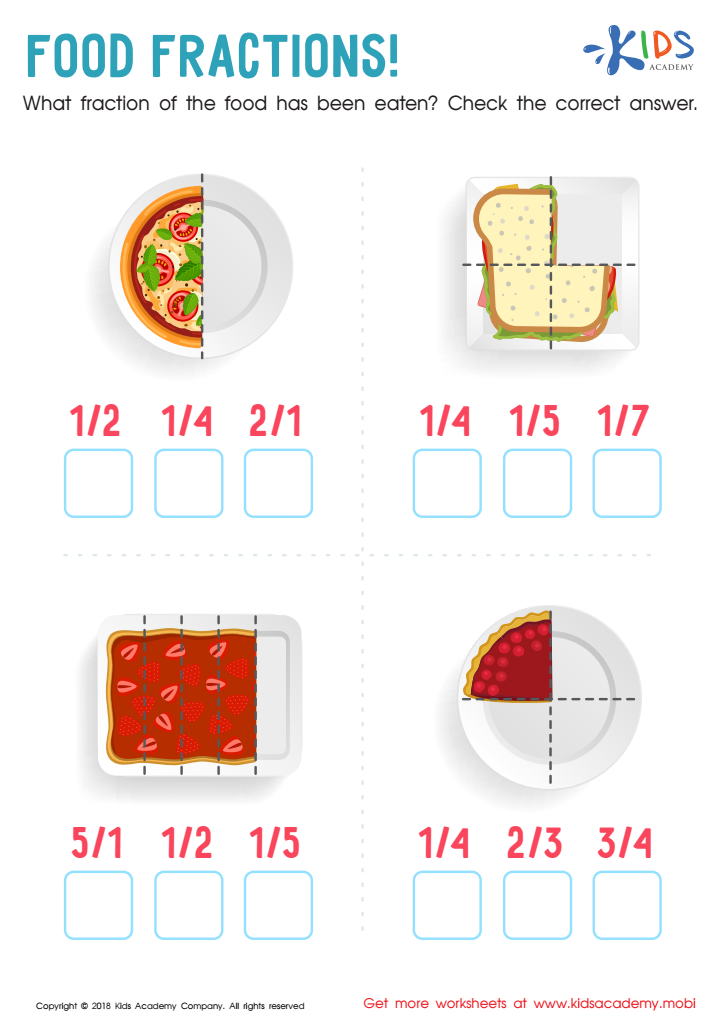
Food Fractions Worksheet
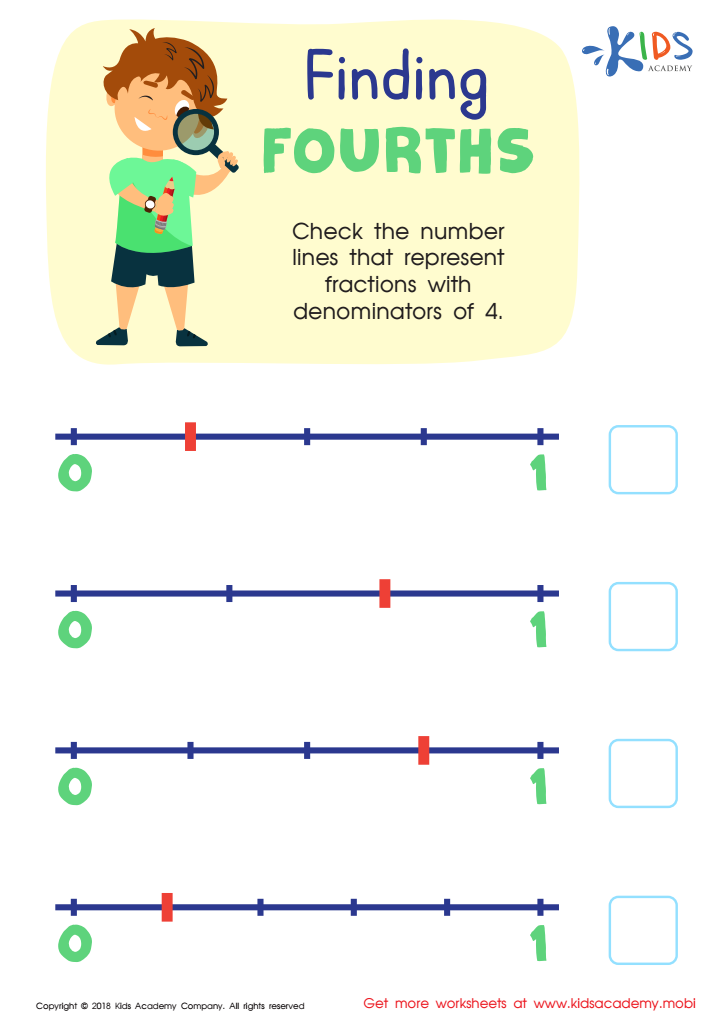
Finding Fourths Worksheet
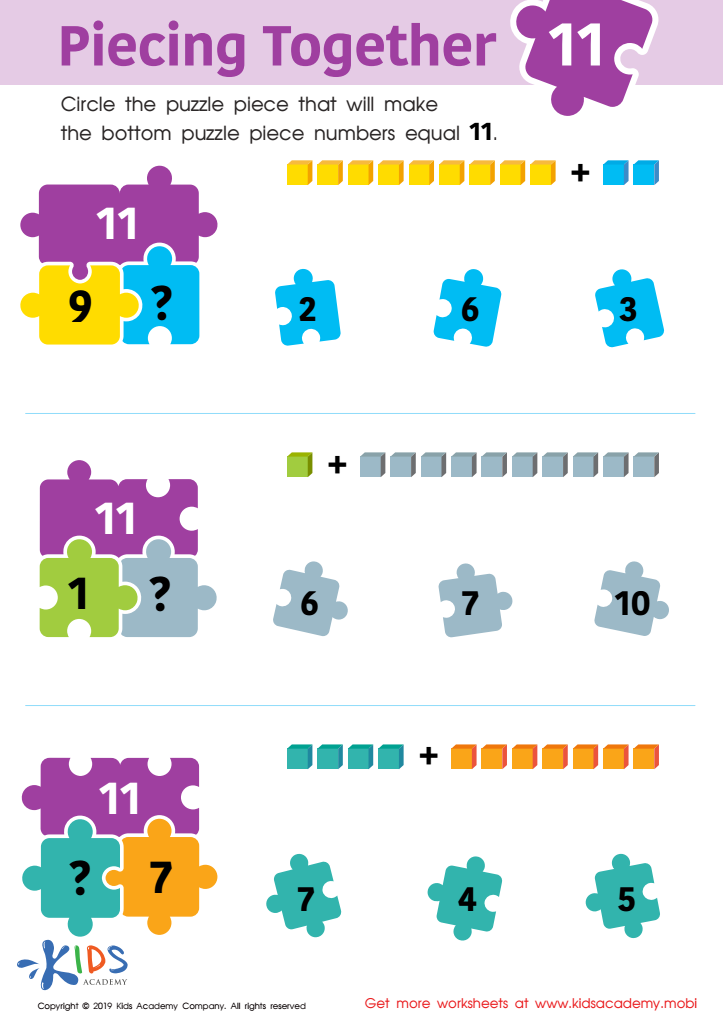
Piecing Together 11 Worksheet
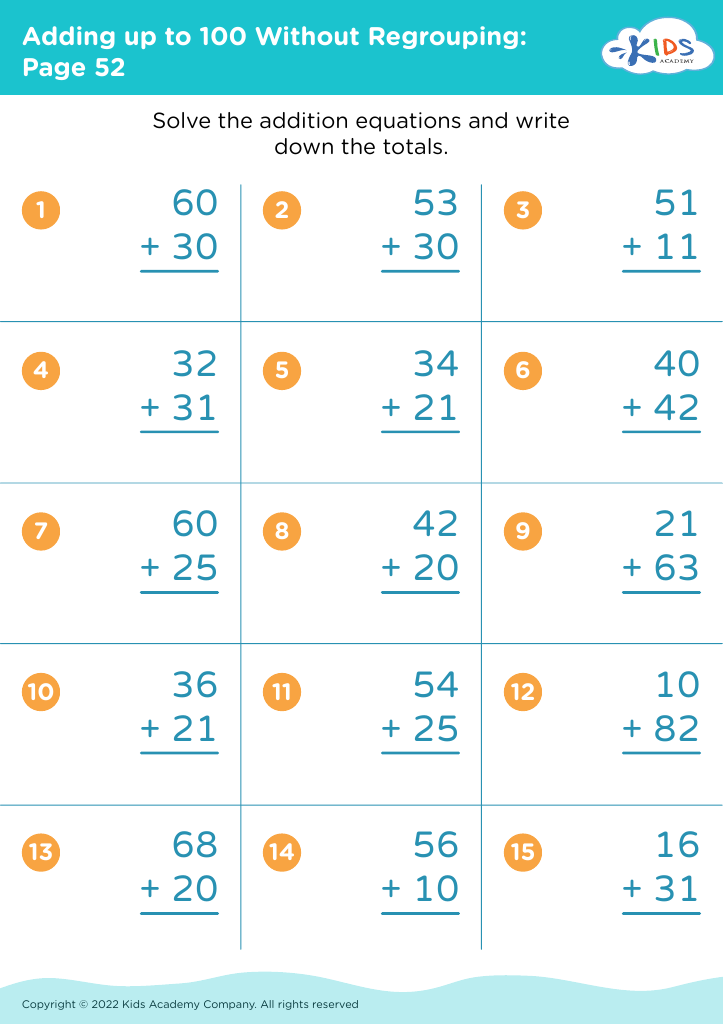
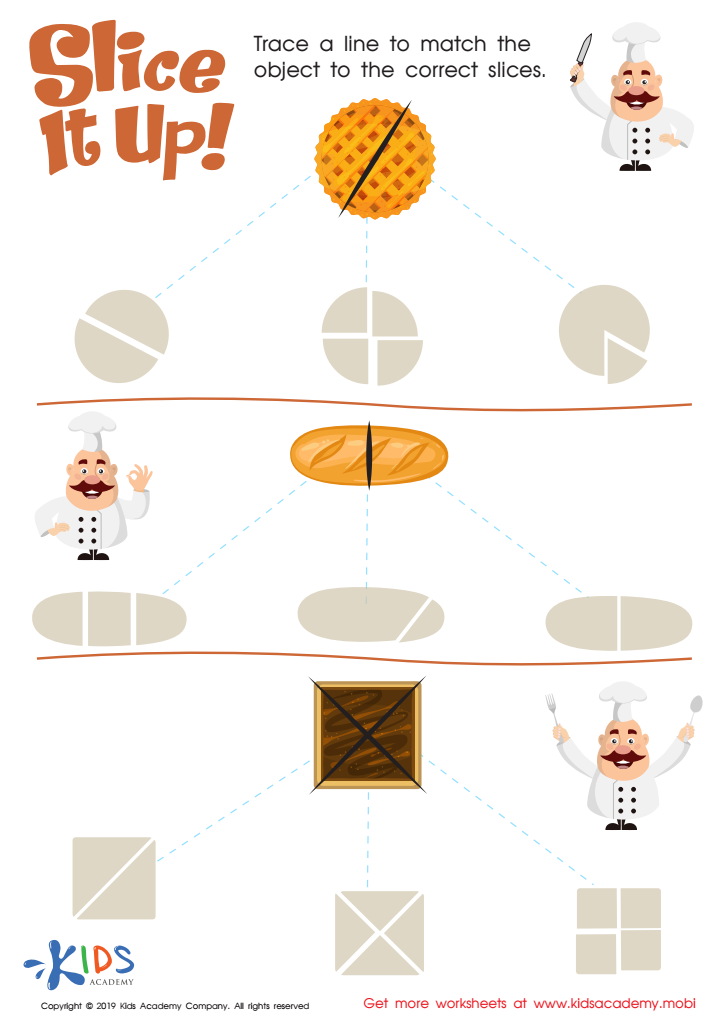
Slice It Up Worksheet
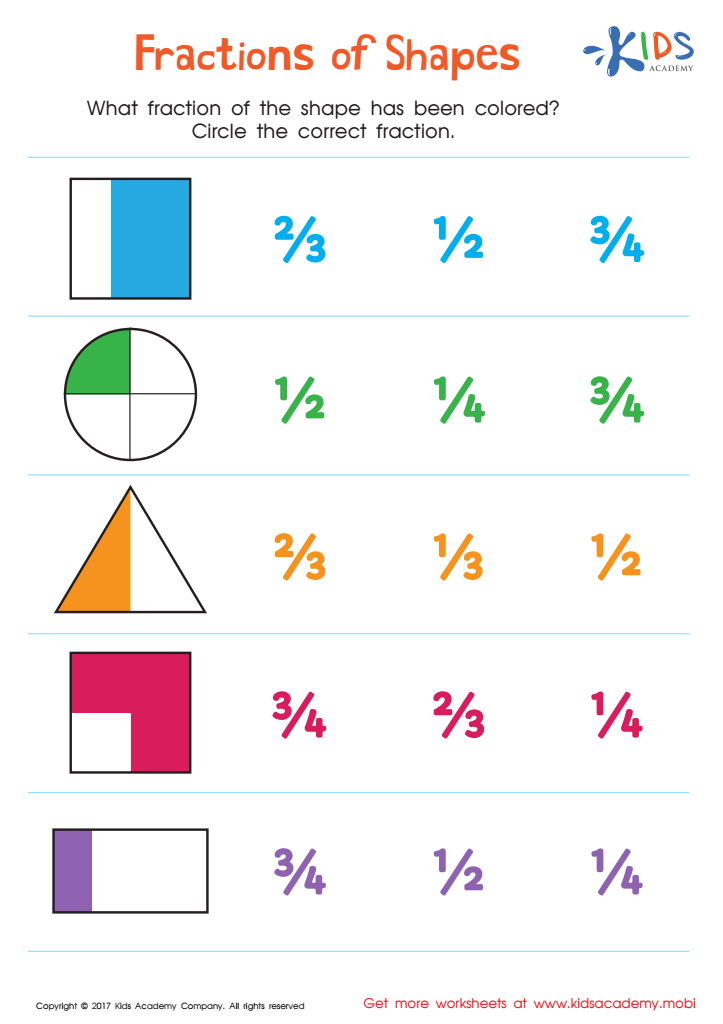
Fractions of Shapes: Math Concept Worksheet





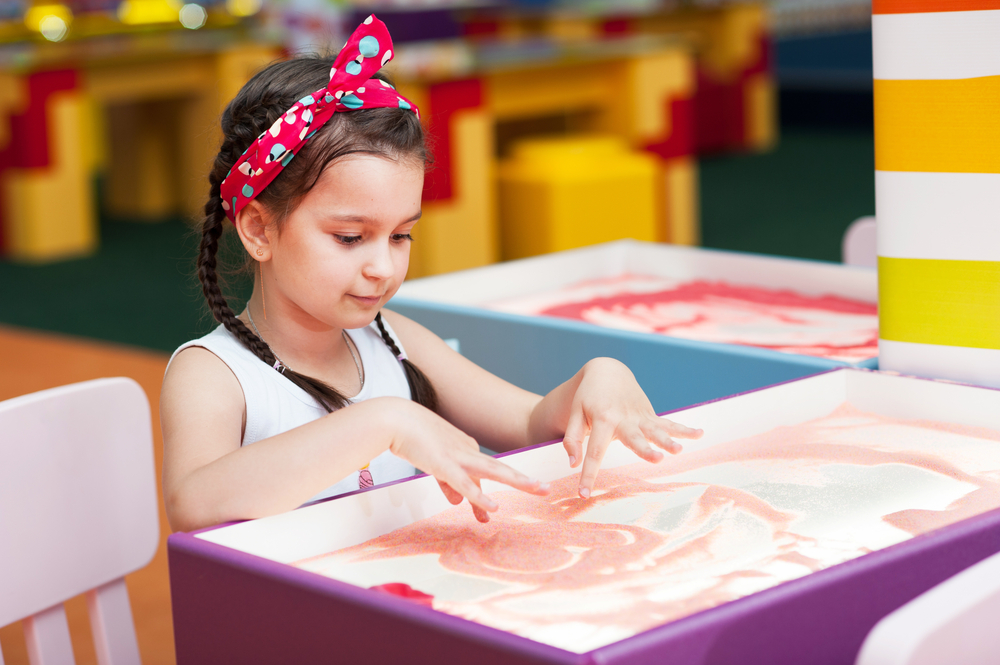

Fraction visualization is a crucial aspect of mathematics for children ages 4-9, as it lays the foundation for understanding more complex concepts later in their educational journey. At this developmental stage, children are often transitioning from concrete to abstract thinking. Visualization helps them grasp the intangible idea of fractions by using tangible concepts they can physically manipulate and see.
By engaging with visual aids like fraction circles, number lines, and colorful pie charts, children can better understand the size, value, and relationships of different fractions. This hands-on approach not only makes learning fun but also enhances retention and comprehension.
Parents and teachers should emphasize fraction visualization because it promotes critical thinking and problem-solving skills. Children who can visualize fractions can more easily compare, add, or subtract them in later years. Furthermore, these concepts are foundational not just for future math but also for real-life applications, such as cooking, shopping, and even sharing among peers.
Encouraging a strong understanding of fractions through visualization also helps to build confidence. When children can demonstrate their knowledge and make connections between visual representations and numerical expressions, they are more likely to embrace challenges and foster a positive attitude towards math.








