Check out this FREE Trial Lesson on Math for age 4-9!

L

Favorites
With answer key
Interactive
  • 4-9
  • Understanding fractions
  • Math
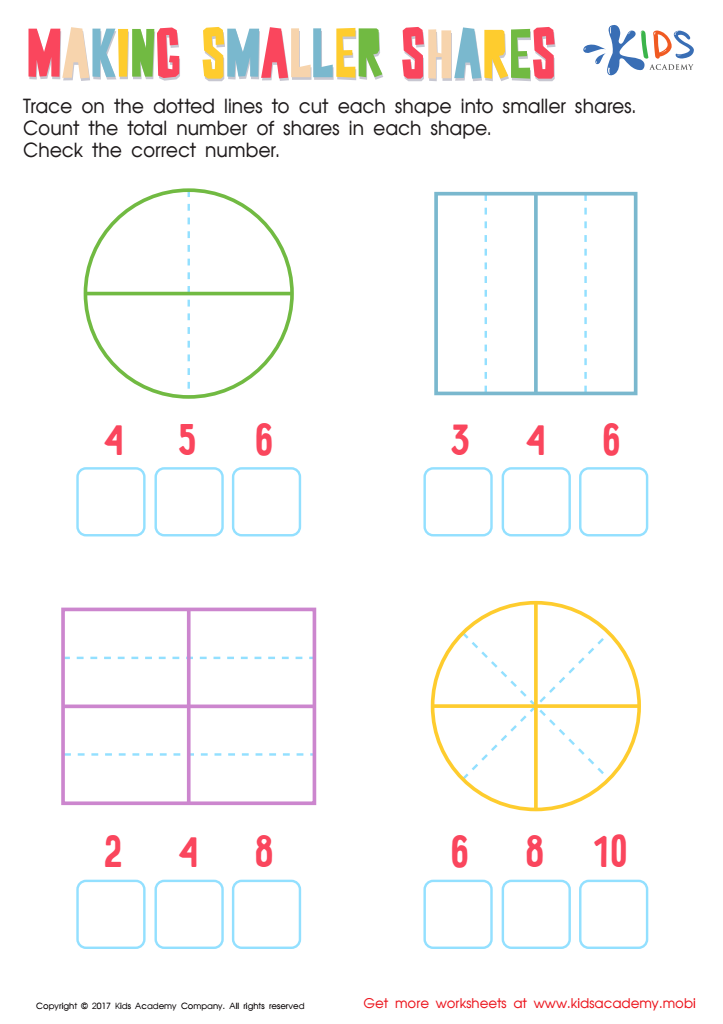
Making Smaller Shares Worksheet

Making Smaller Shares Worksheet

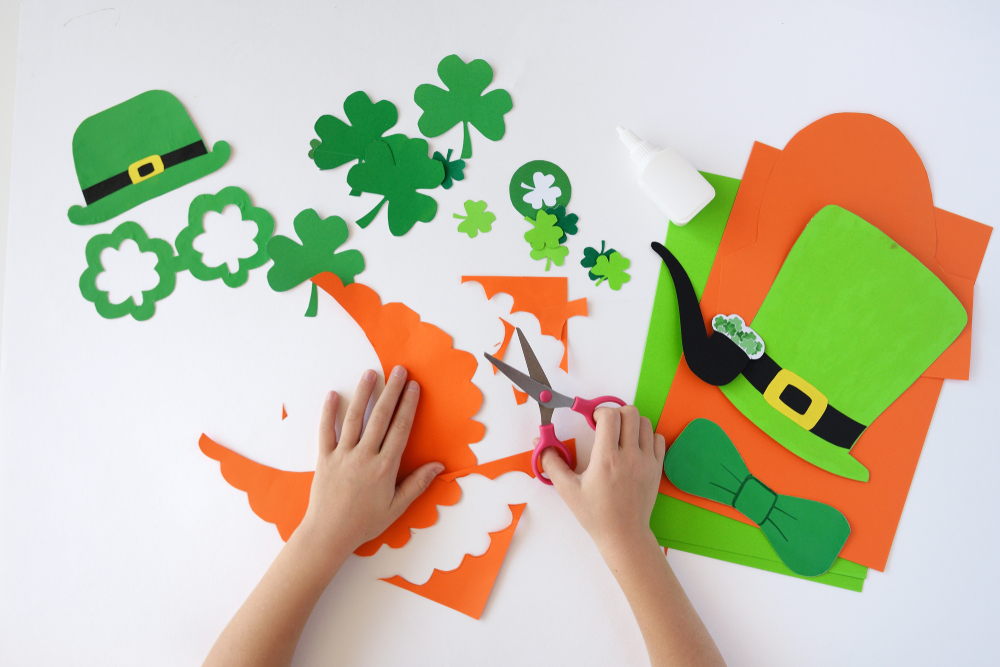
Help your kids learn shapes by having them cut out shapes on this tracing sheet. Point out the dotted lines, then guide their hand as they trace them, breaking shapes into smaller parts. Ask your children to count the number of parts and check the answers given.
Making Smaller Shares Worksheet
Worksheet
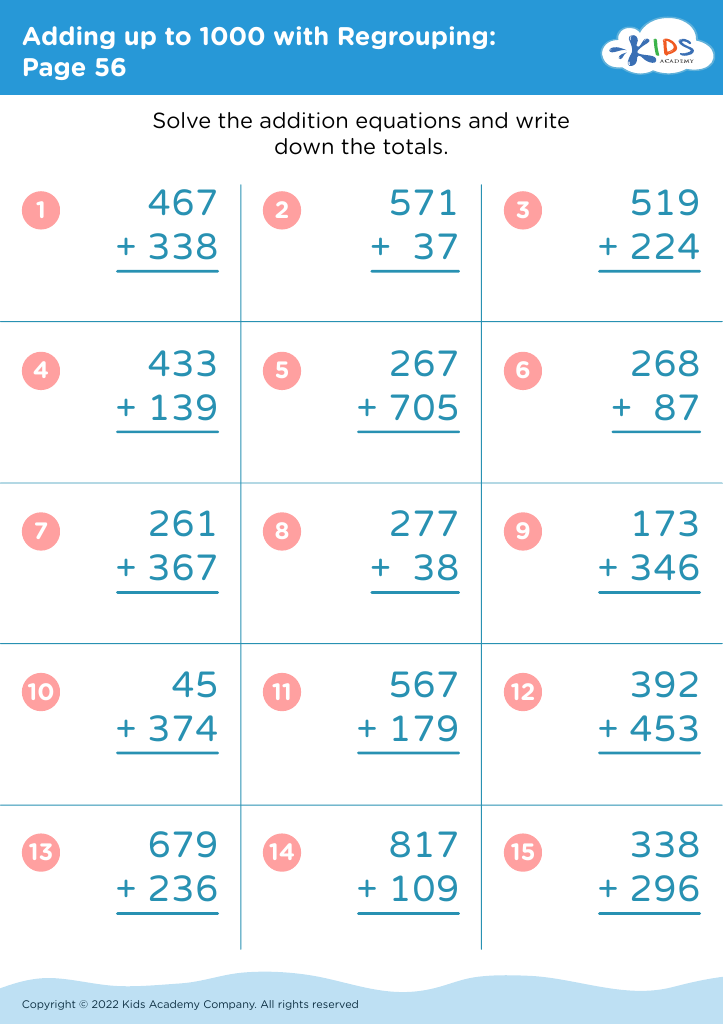
Adding up to 1000 with Regrouping: Page 56
Worksheet
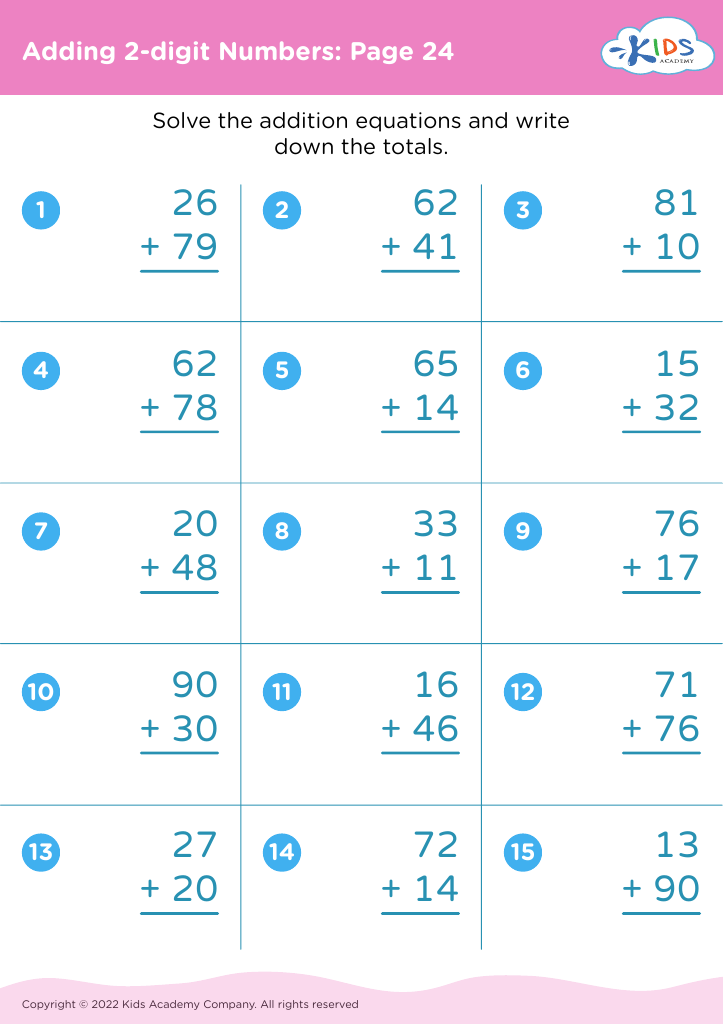
Adding 2-digit Numbers: Page 24

Adding 2-digit Numbers: Page 24

Adding 2-digit Numbers: Page 24
Worksheet
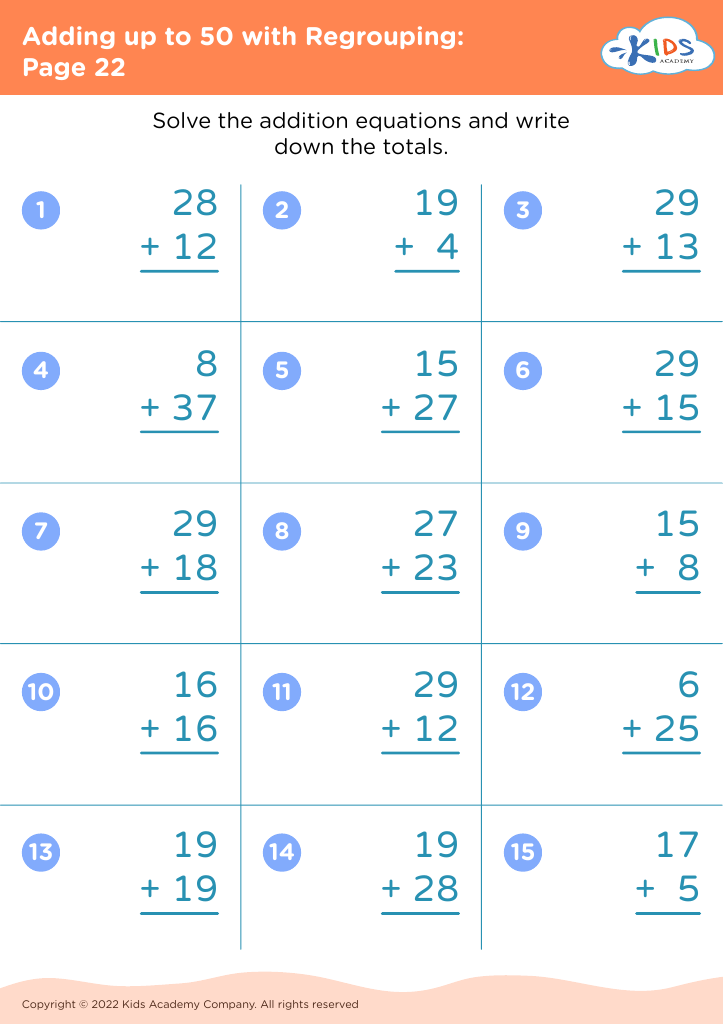
Adding up to 50 with Regrouping: Page 22
Worksheet
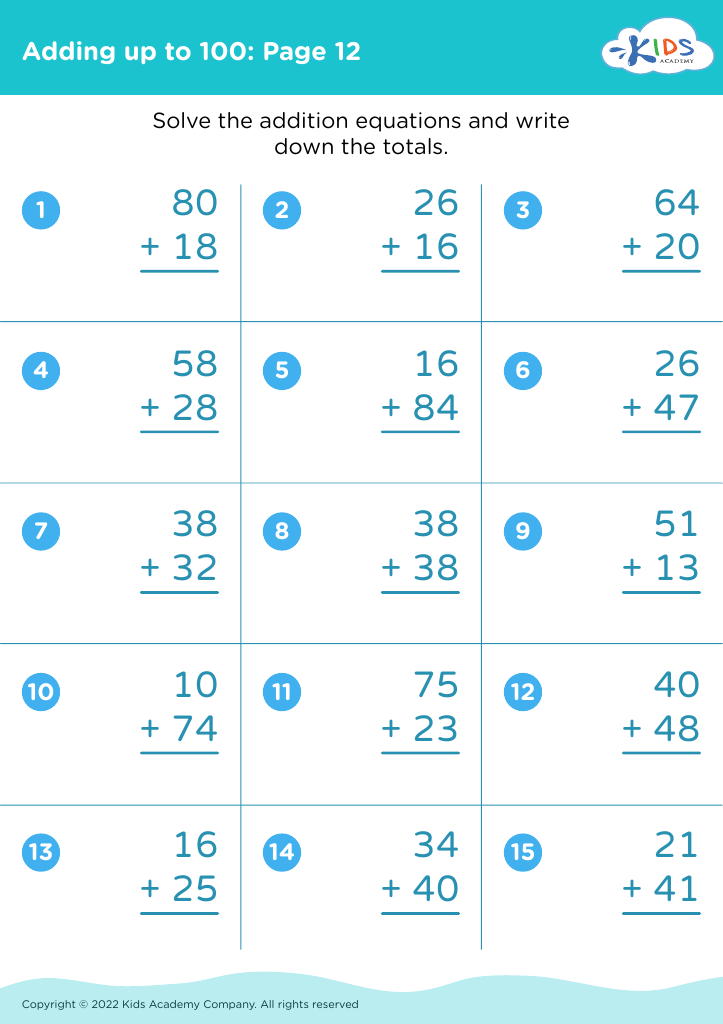
Adding up to 100: Page 12

Adding up to 100: Page 12

Adding up to 100: Page 12
Worksheet
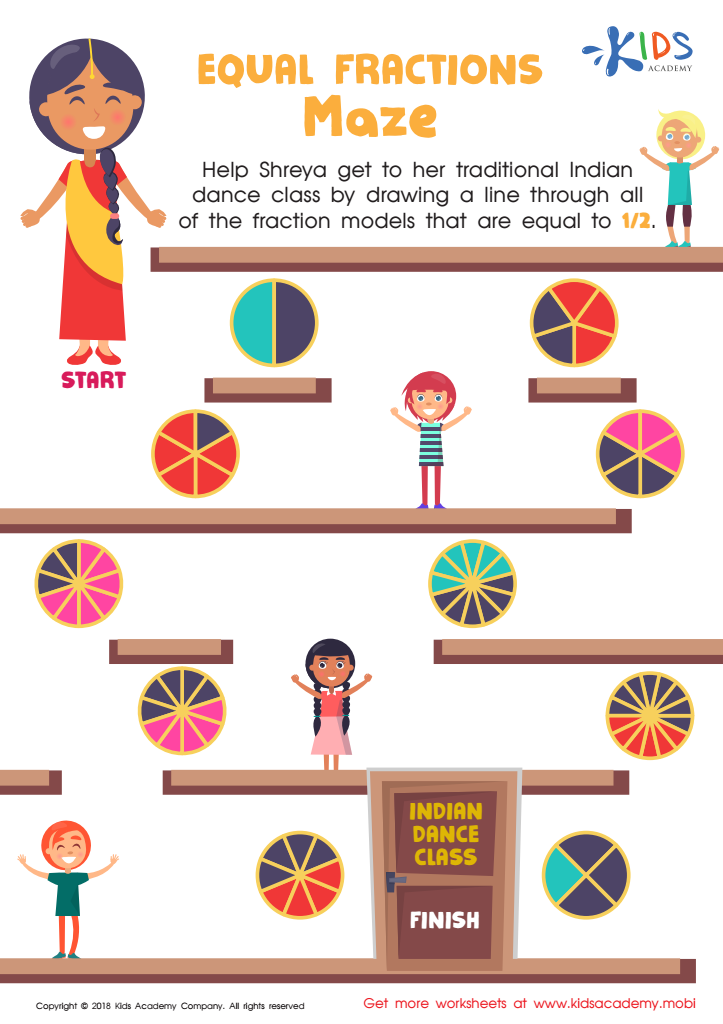
Equal Fractions Maze Worksheet
Equal Fractions Maze Worksheet
Help Shreya get to dance class! Draw a line through all fraction models that are equal to ½, starting at the entrance marked 'start'. Guide your kids through the maze paths and help Shreya -- she's an Indian girl who practices her cultures and traditions -- reach the door to her class.
Equal Fractions Maze Worksheet
Worksheet
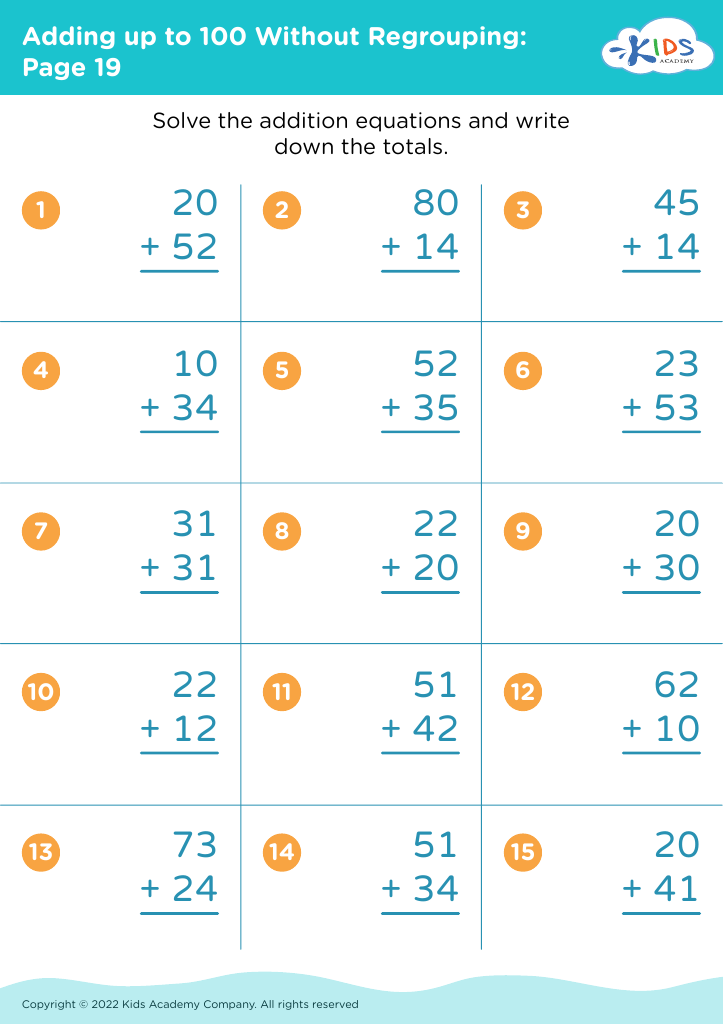
Adding up to 100 Without Regrouping: Page 19
Worksheet
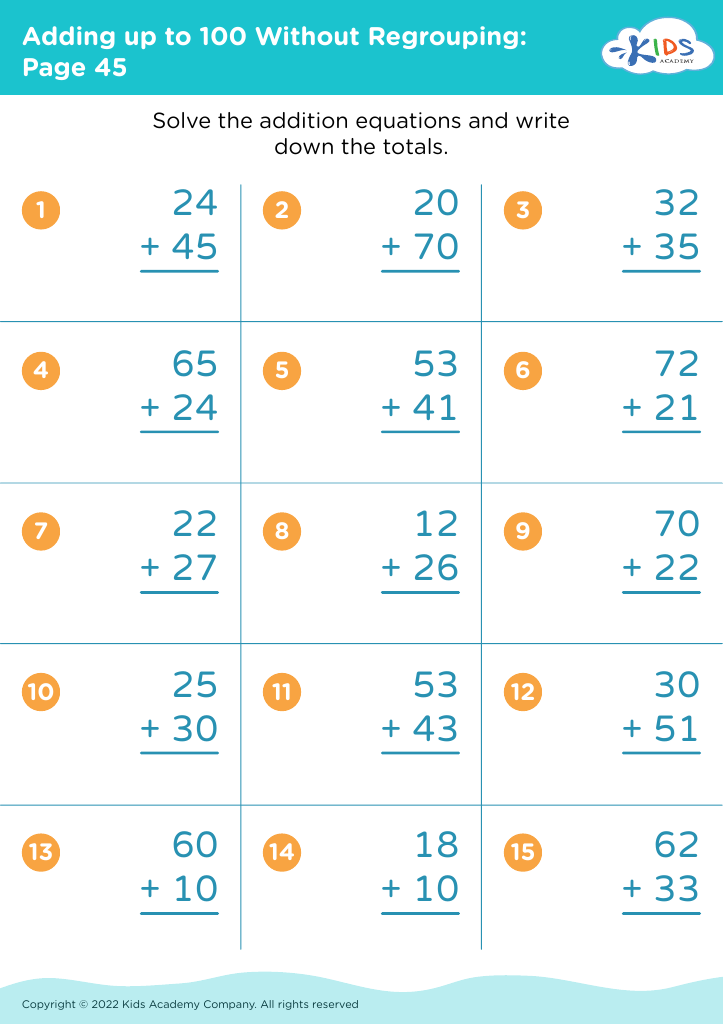
Adding up to 100 Without Regrouping: Page 45
Worksheet
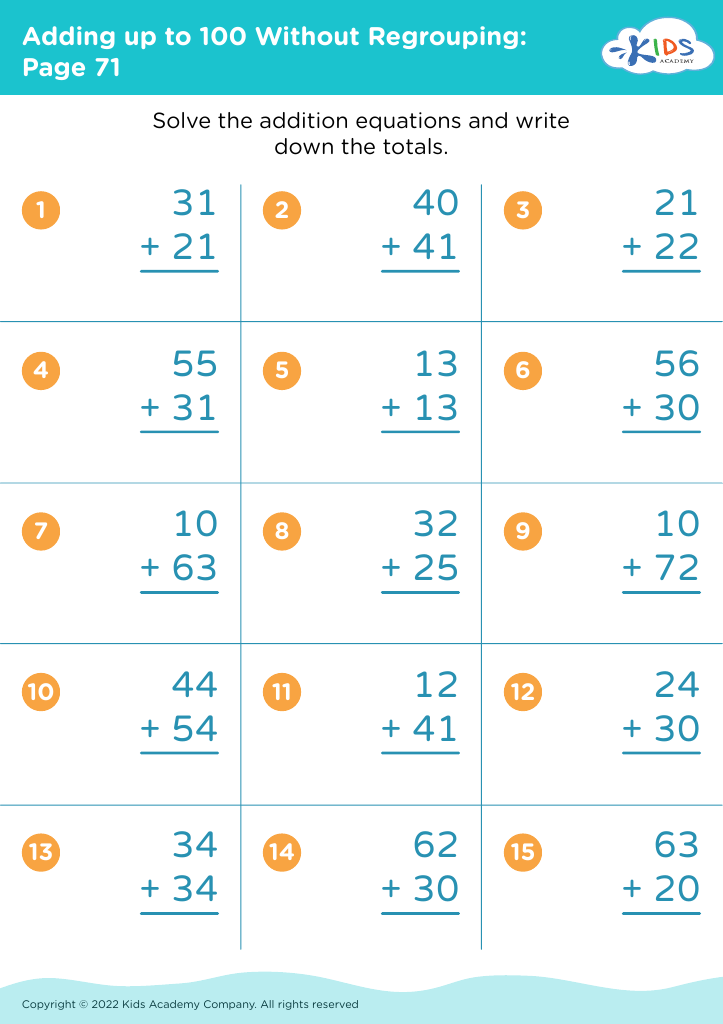
Adding up to 100 Without Regrouping: Page 71
Worksheet
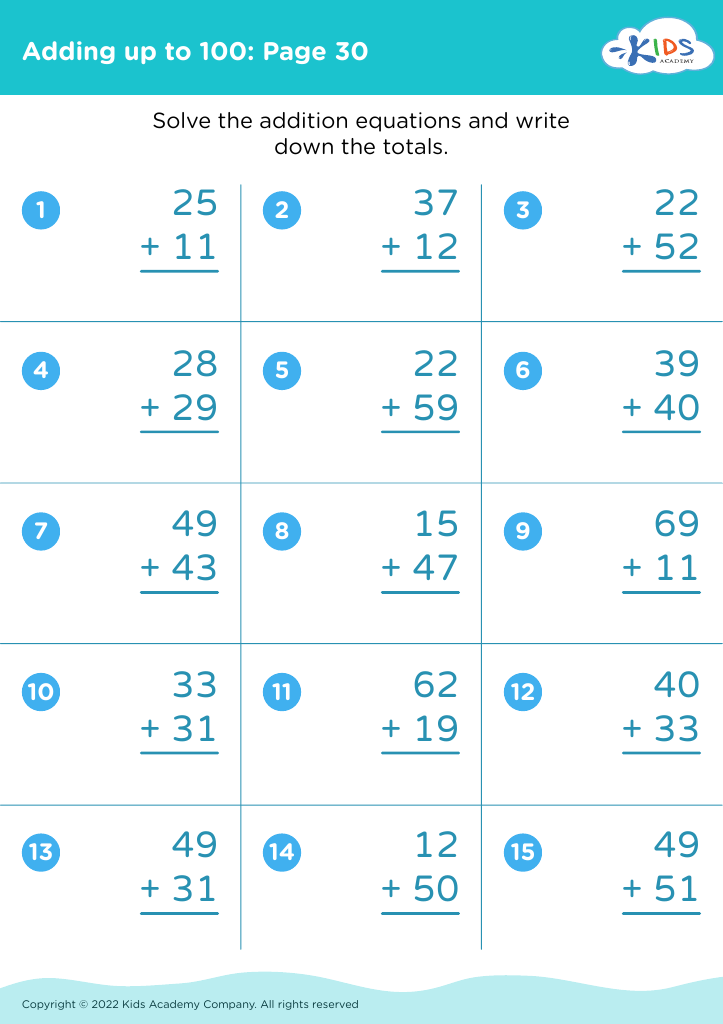
Adding up to 100: Page 30

Adding up to 100: Page 30

Adding up to 100: Page 30
Worksheet
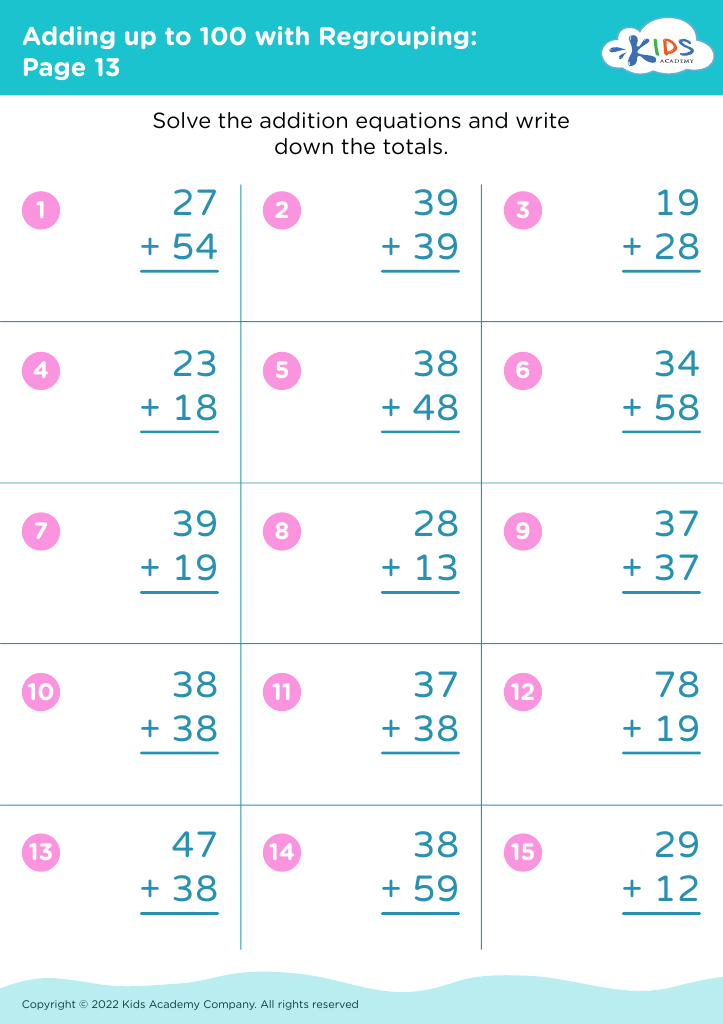
Adding up to 100 with Regrouping: Page 13
Worksheet
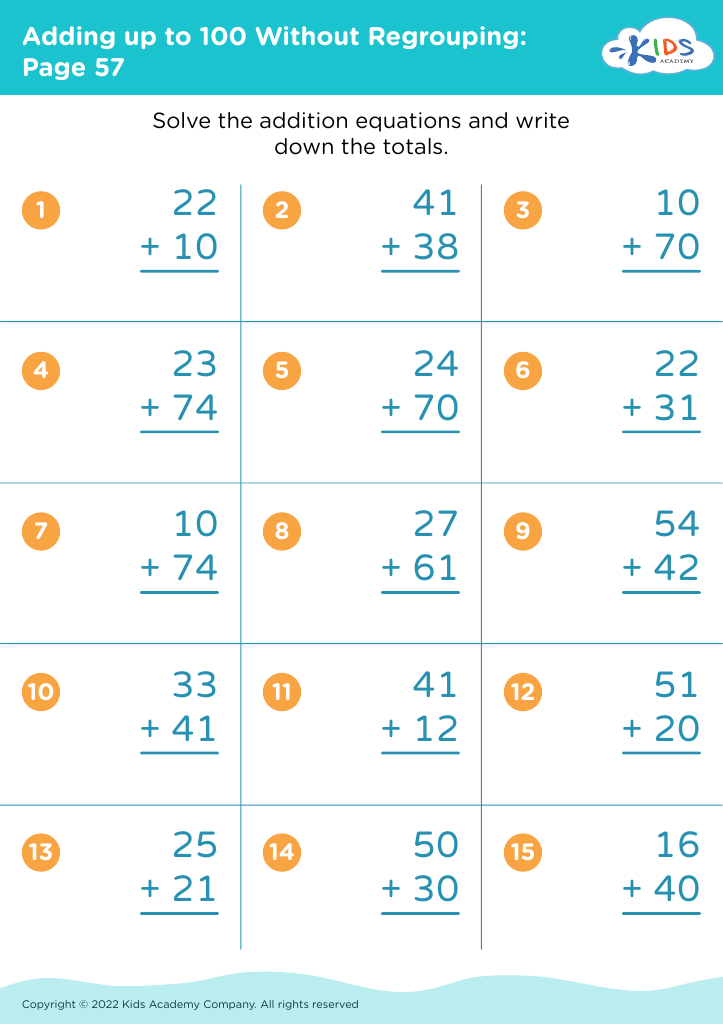
Adding up to 100 Without Regrouping: Page 57
Worksheet
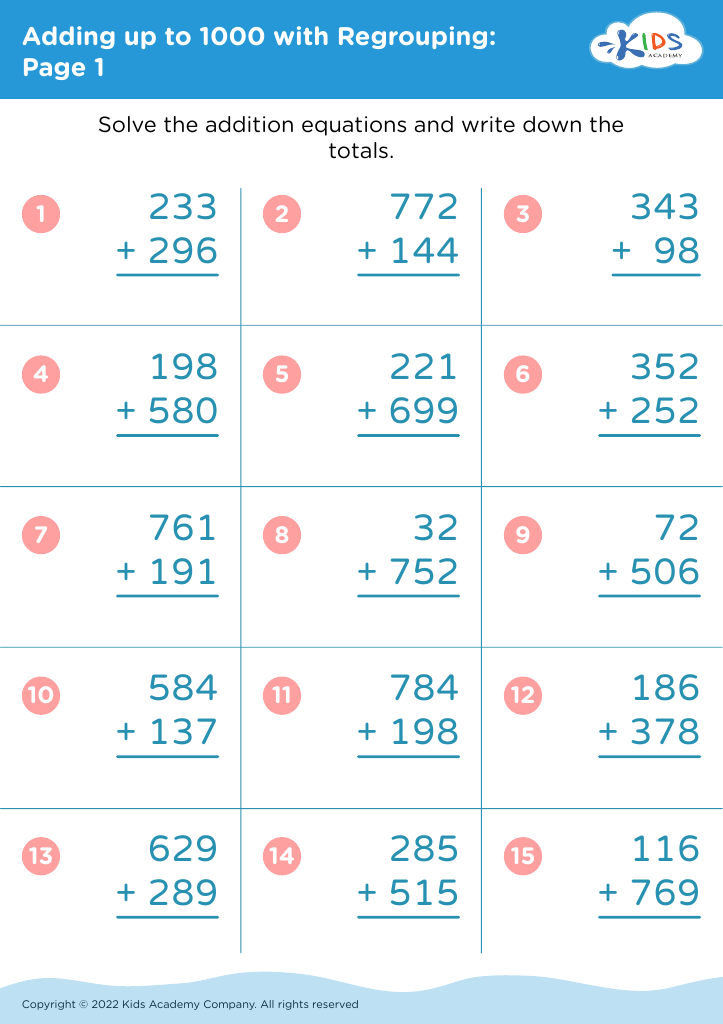
Adding up to 1000 with Regrouping: Page 1
Worksheet
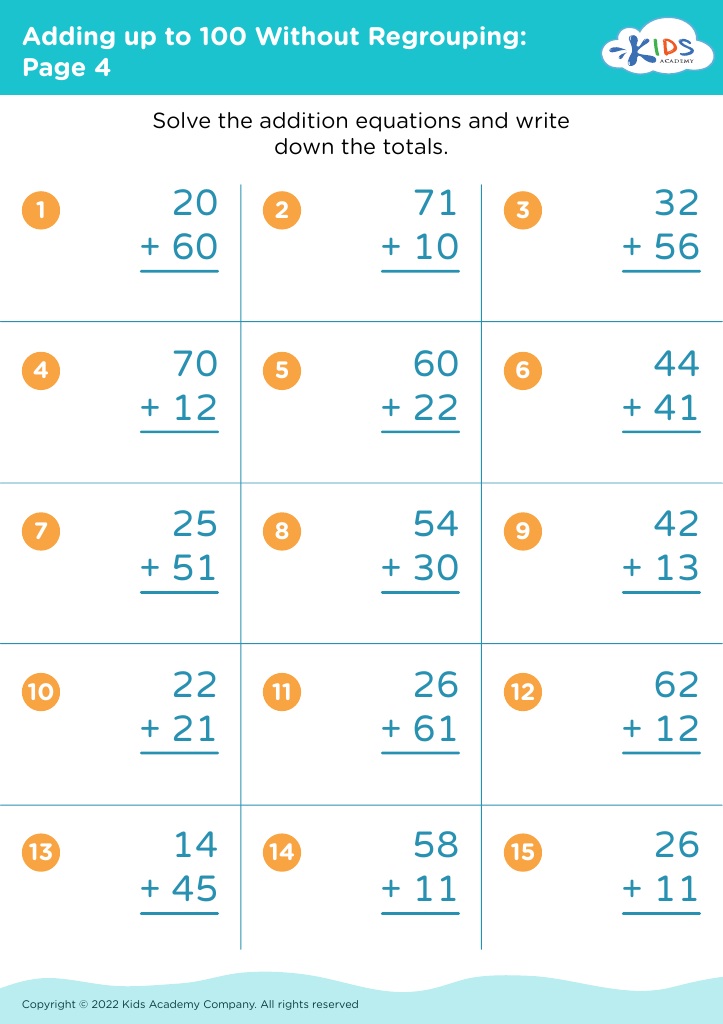
Adding up to 100 Without Regrouping: Page 4
Worksheet
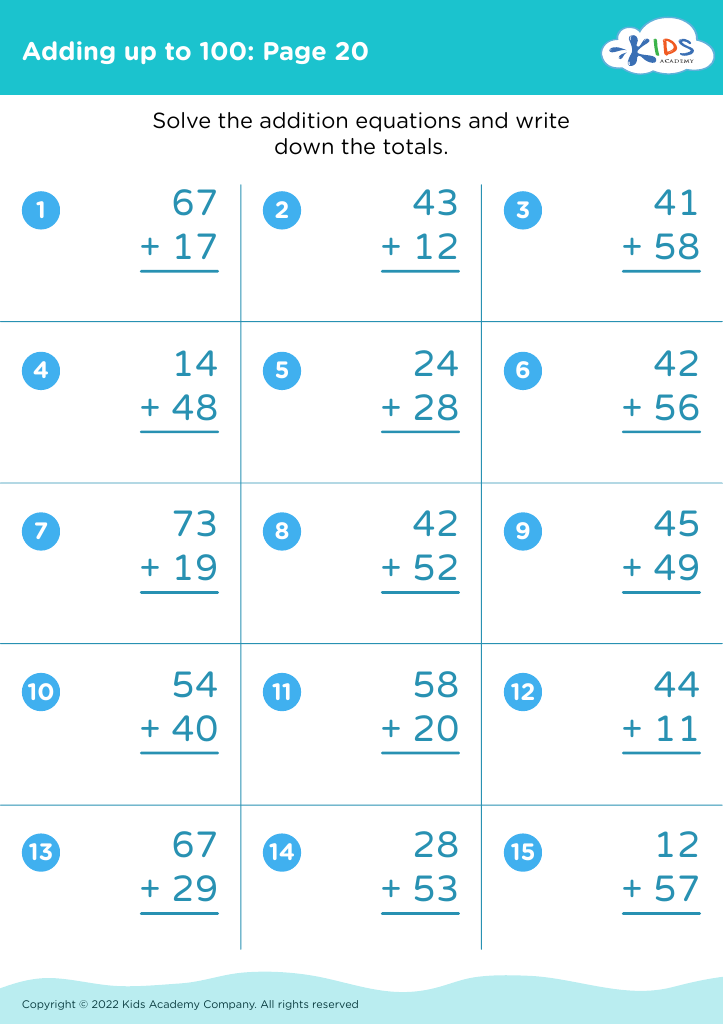
Adding up to 100: Page 20

Adding up to 100: Page 20

Adding up to 100: Page 20
Worksheet
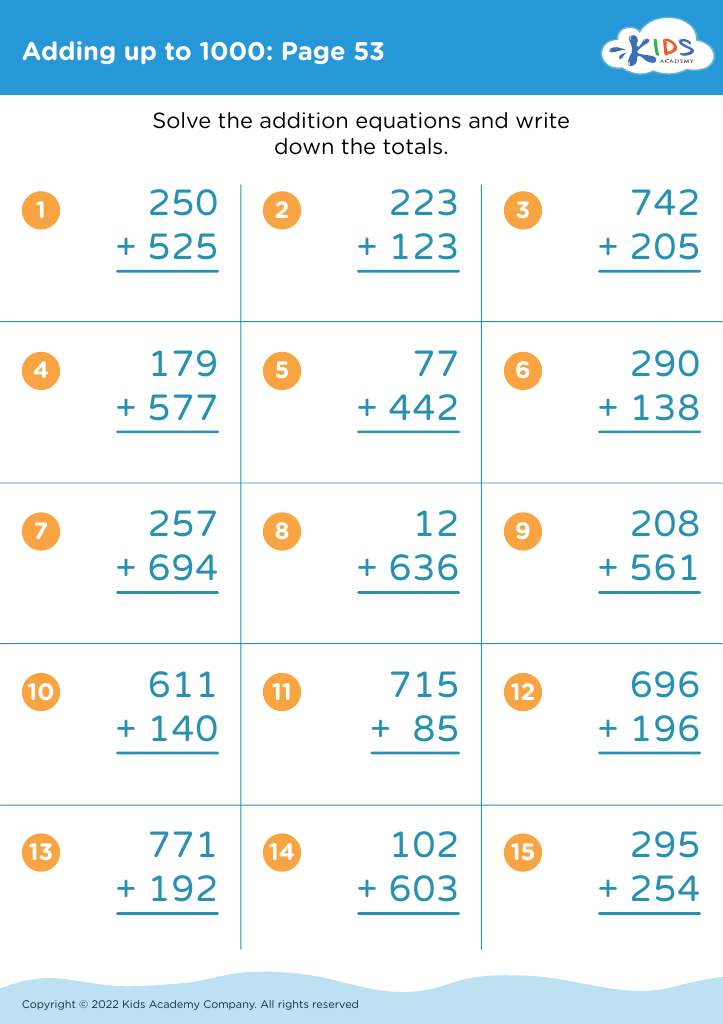
Adding up to 1000: Page 53

Adding up to 1000: Page 53

Adding up to 1000: Page 53
Worksheet
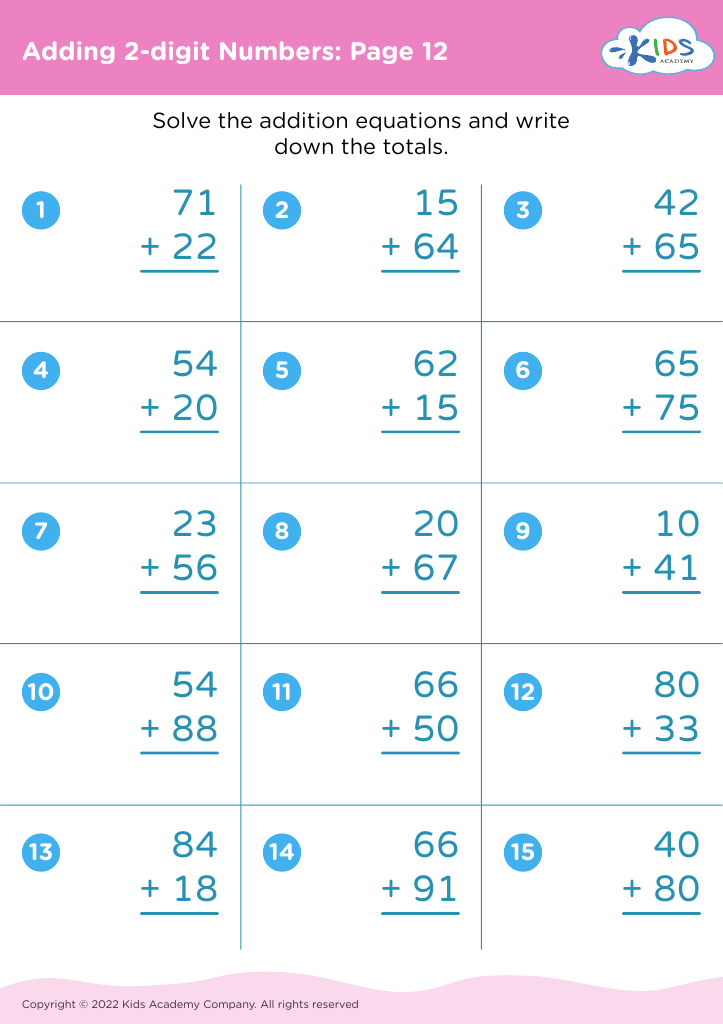
Adding 2-digit Numbers: Page 12

Adding 2-digit Numbers: Page 12

Adding 2-digit Numbers: Page 12
Worksheet
Piecing Together 11 Worksheet
Piecing Together 11 Worksheet

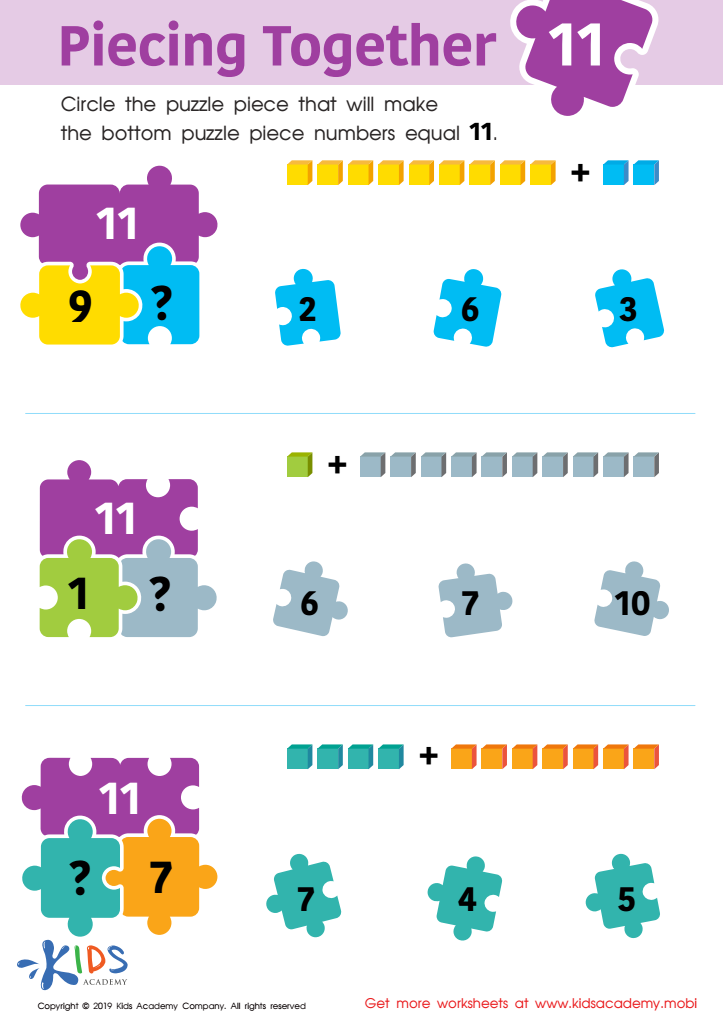
Engage your preschoolers with learning-filled fun! Show them this colorful worksheet, and ask them to identify the figures. Each puzzle piece features an equation, except one which is missing. Help the kids solve the problems and circle the piece that'll make the numbers equal 11. It's a surefire way to make learning enjoyable!
Piecing Together 11 Worksheet
Worksheet
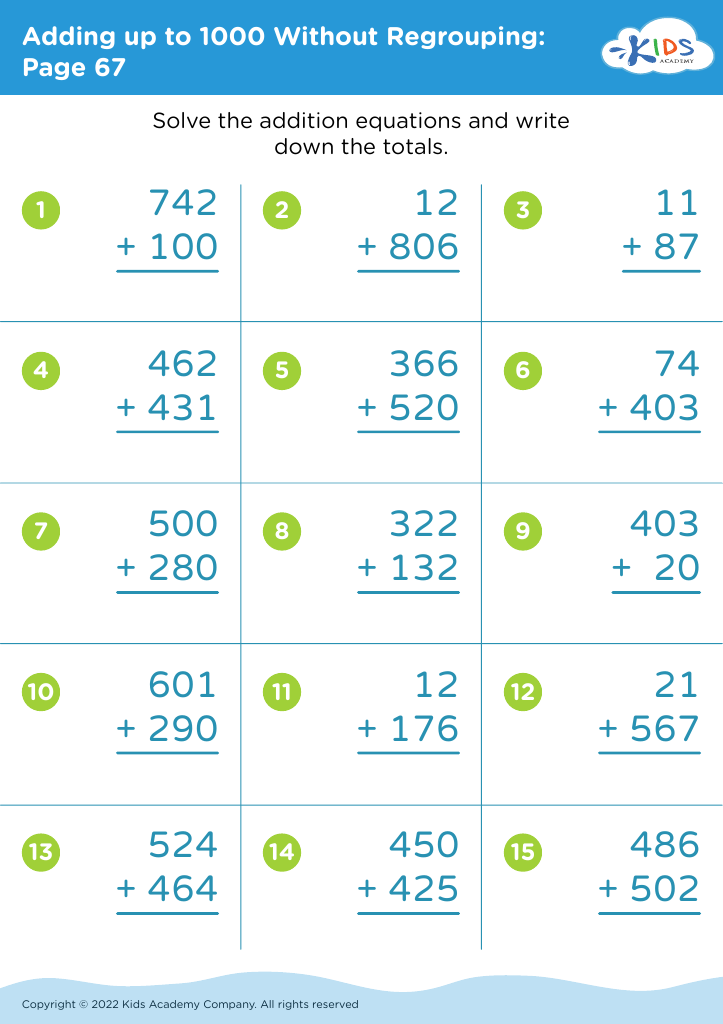
Adding up to 1000 Without Regrouping: Page 67
Worksheet
Matching and Sorting  for Preschool: Assessment 2 Worksheet
Matching and Sorting for Preschool: Assessment 2 Worksheet
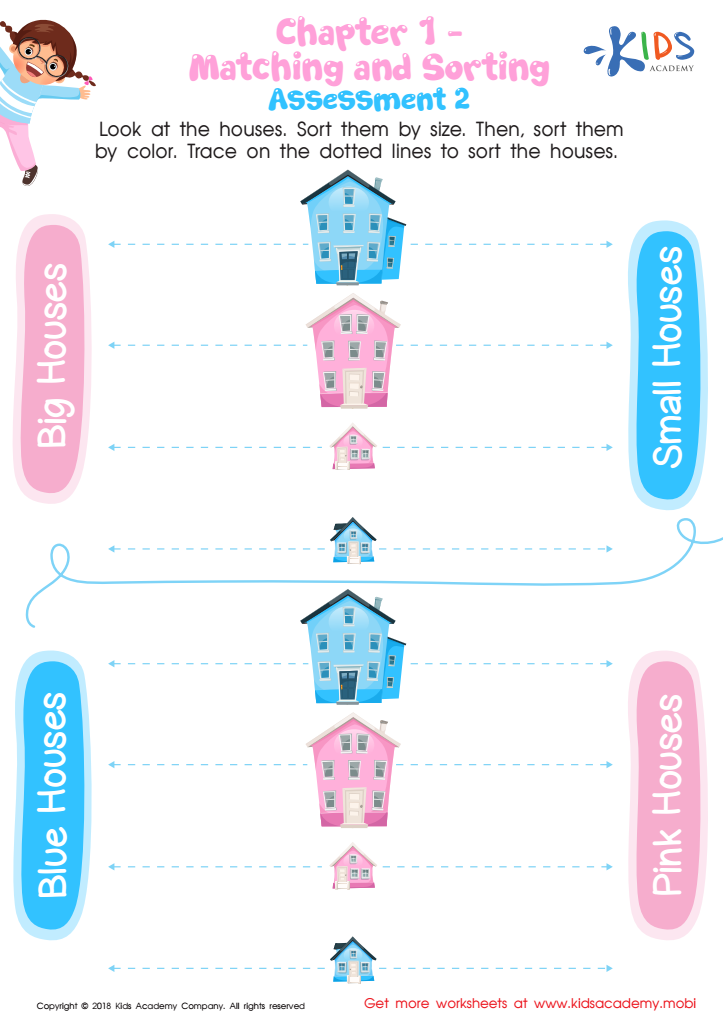
Encourage your kids to take a look at the colorful pictures. Ask them to name the objects. Next, point out any differences between the houses and let them sort them according to color and size. Finally, help them trace the houses on the dotted lines.
Matching and Sorting for Preschool: Assessment 2 Worksheet
Worksheet
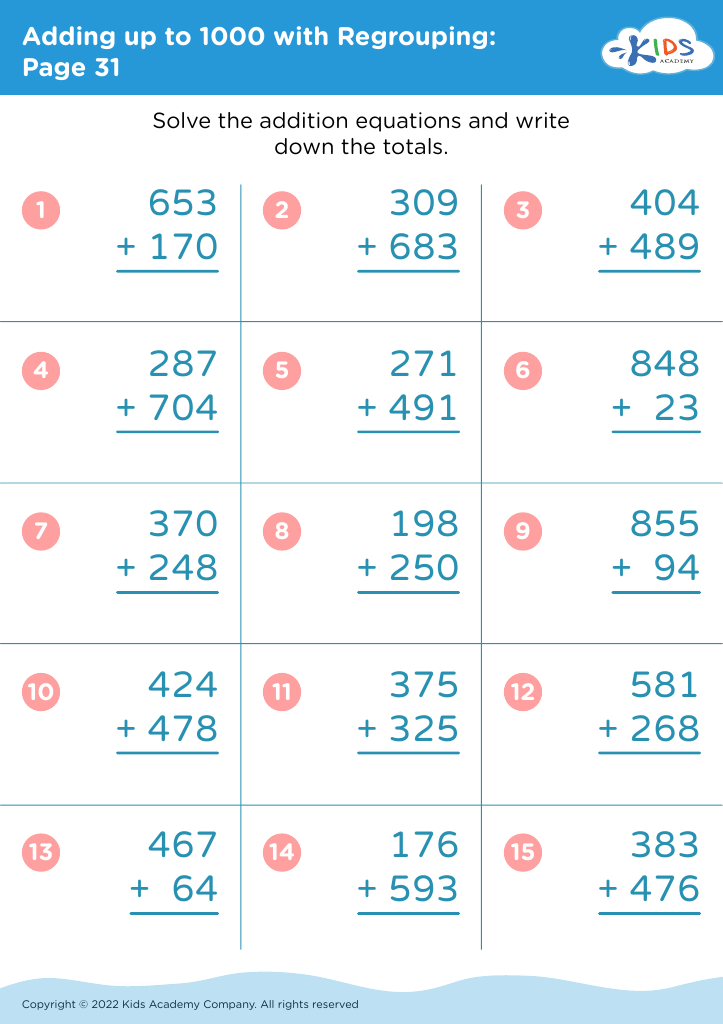
Adding up to 1000 with Regrouping: Page 31
Worksheet
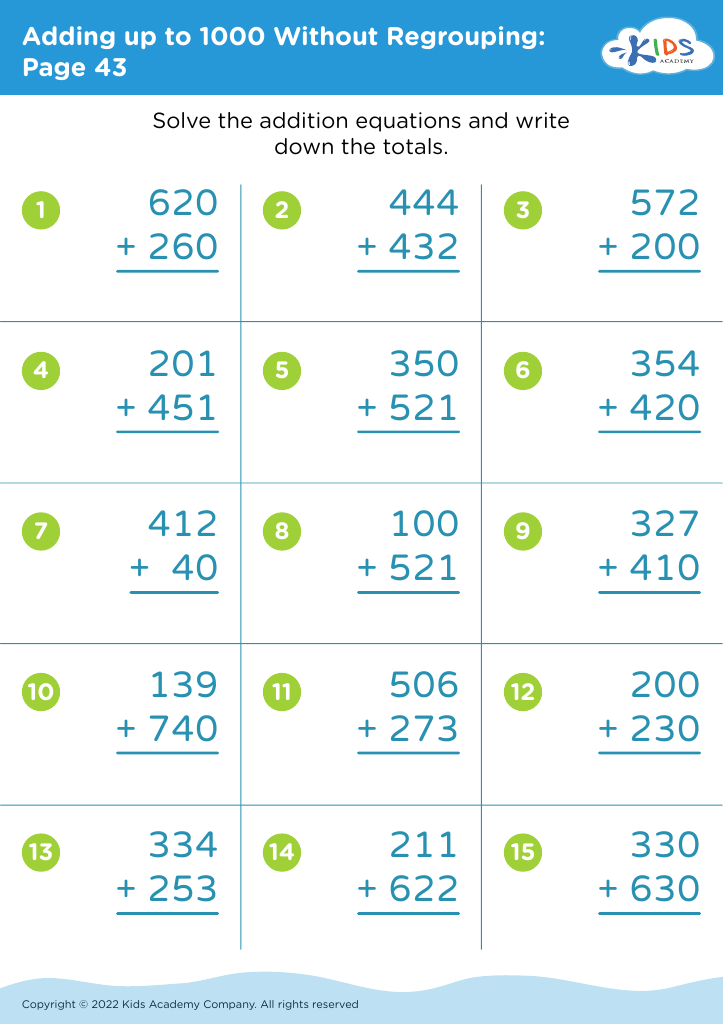
Adding up to 1000 Without Regrouping: Page 43
Worksheet
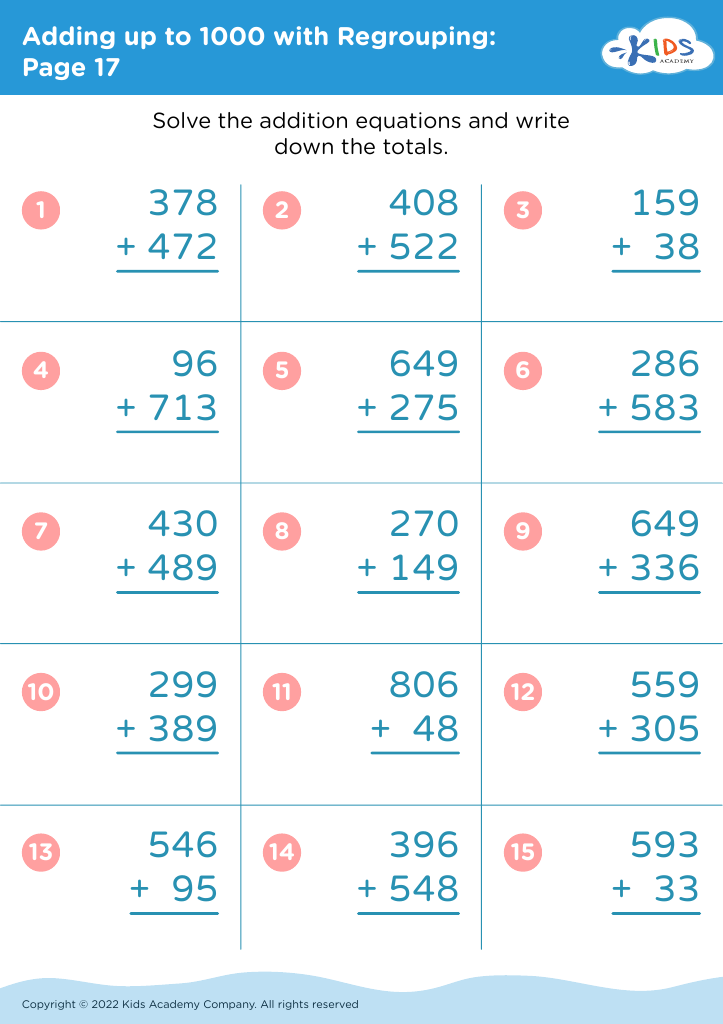
Adding up to 1000 with Regrouping: Page 17
Worksheet
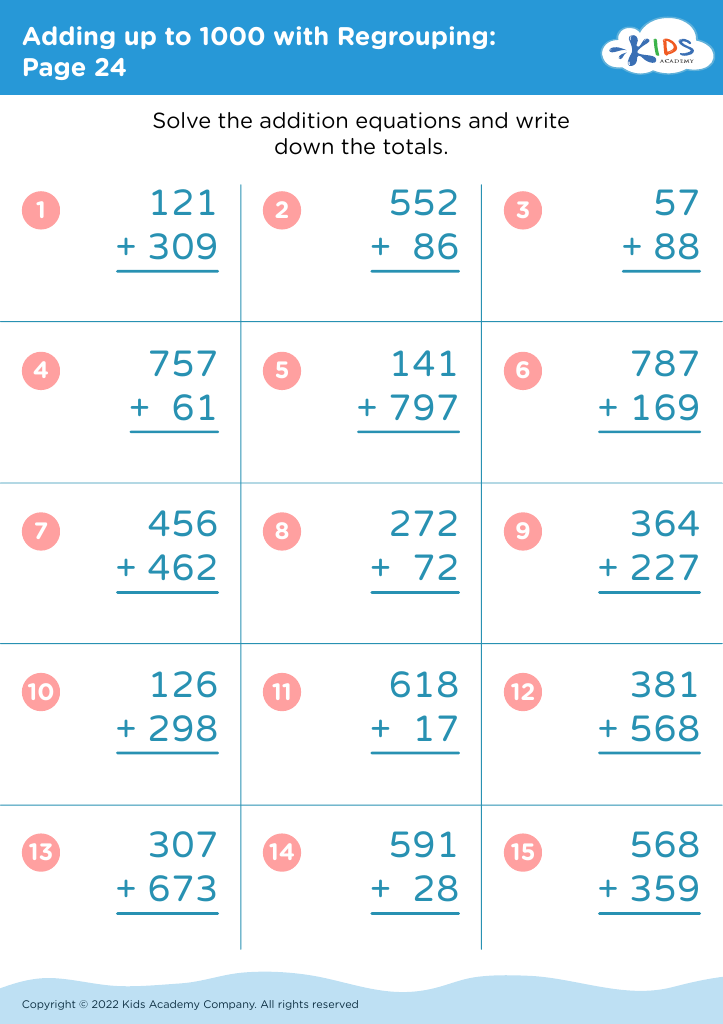
Adding up to 1000 with Regrouping: Page 24
Worksheet


Understanding fractions during the early years, ages 4-9, is crucial because it forms the foundation for advanced math skills and everyday problem-solving. At this stage, children's minds are highly receptive to new concepts, and acquiring a solid understanding of fractions can enhance their number sense.

Fractions are integral to many aspects of daily life, ranging from dividing food portions to understanding time. Introducing them early helps children to see math in the world around them, making learning relevant and engaging. Early familiarity with fractions can prevent future mathematics anxiety as students encounter more complex operations involving fractions, decimals, and percentages.

Moreover, learning fractions improves cognitive skills such as critical thinking, reasoning, and the ability to compare and estimate. These skills are not only valuable academically but also in everyday decision-making and problem-solving.

Parents and teachers play a pivotal role by providing hands-on experiences and visual aids, such as fraction circles or everyday objects, to make the concept actionable. Therefore, a strong grasp of fractions achieved through supportive teaching strategies will pave the way for confidence and proficiency in mathematics, empowering children during their educational journey and beyond. Investing in this understanding now promotes lasting mathematical success and practical life skills.