Understanding tens Math Worksheets for Ages 4-9
4 filtered results
-
From - To
Explore our engaging "Understanding Tens" math worksheets designed for children aged 4-9! These worksheets help young learners grasp the concept of tens through fun and interactive activities. Designed to reinforce foundational math skills, our resources include colorful visuals and various exercises that make learning enjoyable. Children will practice counting, identifying tens, and basic addition, building their confidence in math. Perfect for homeschooling or classroom use, these worksheets cater to different learning styles and promote critical thinking. Encourage your child's mathematical journey today with our thoughtfully crafted materials that make mastering tens a breeze!
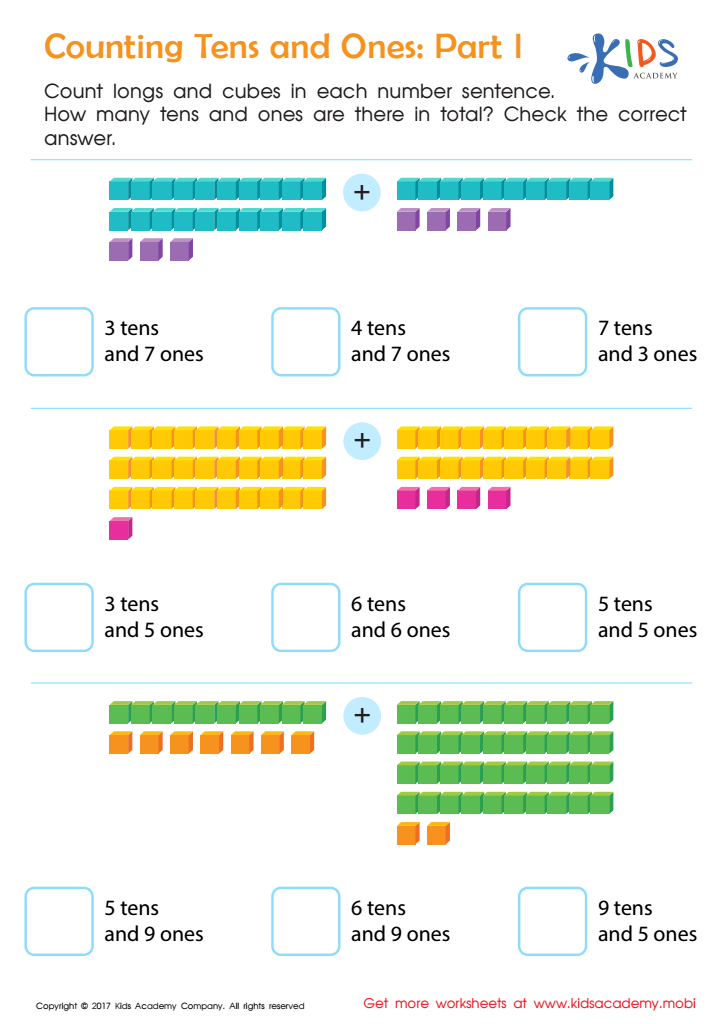
Counting Tens and Ones: Part 1 Worksheet
 Assign to My Students
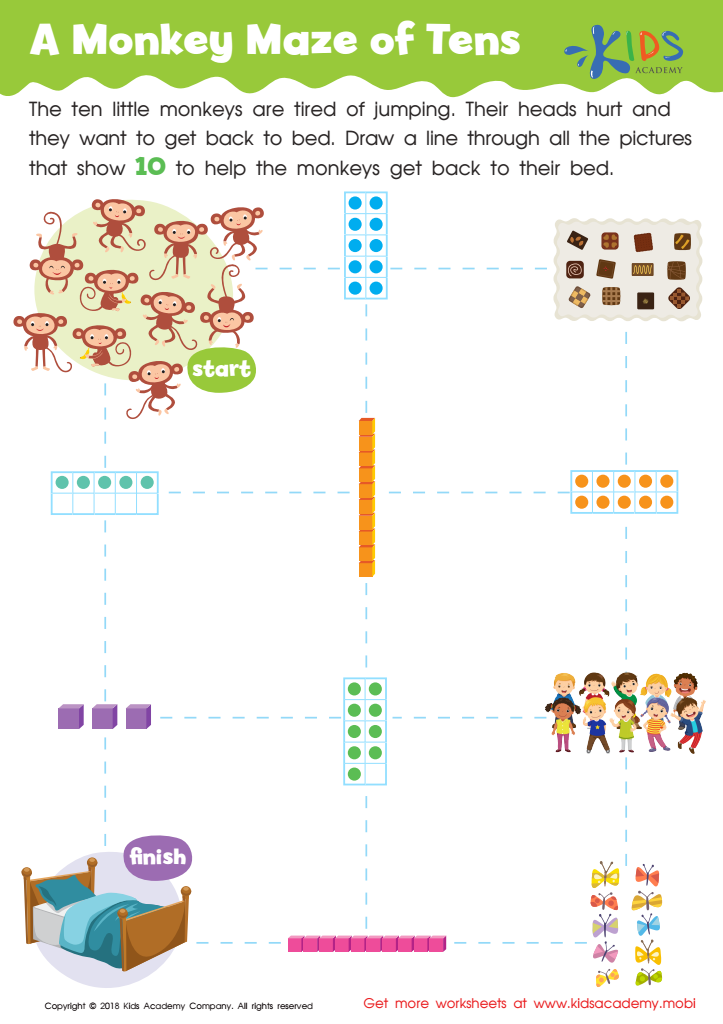
A Monkey Maze of Tens Worksheet
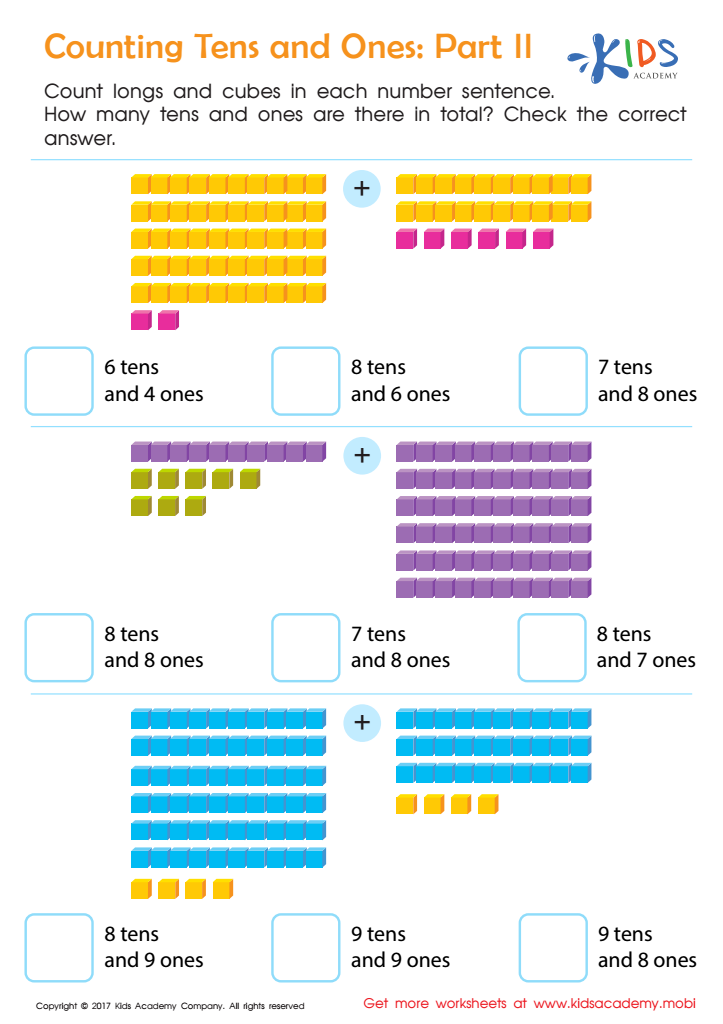
Counting Tens and Ones: Part 2 Worksheet
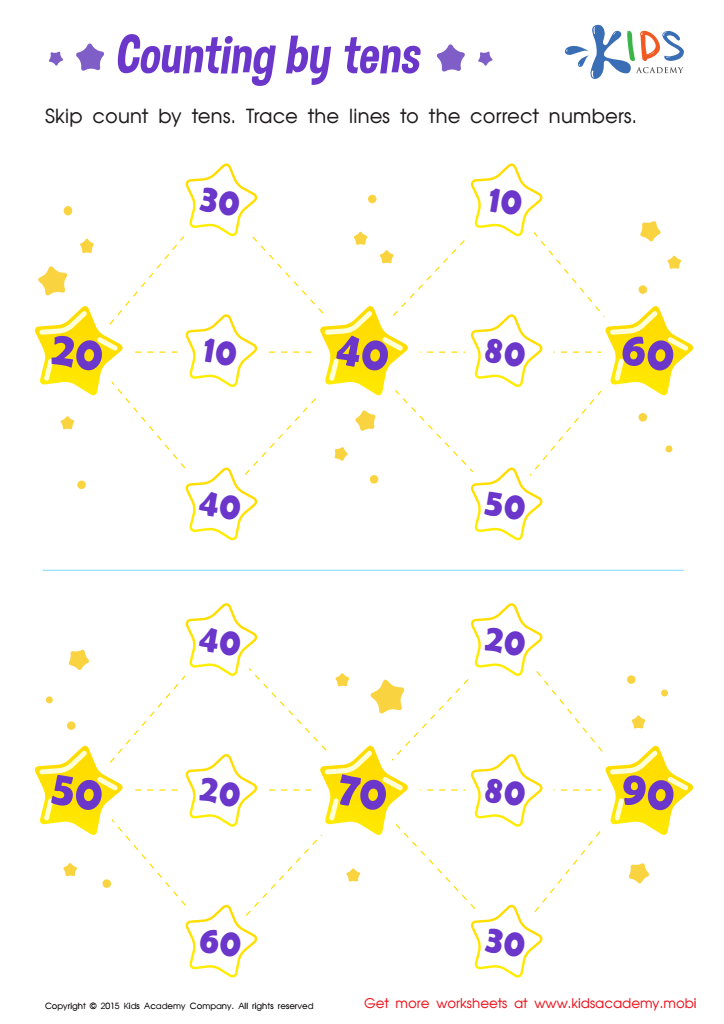
Learn Dozens: Counting by Tens Printable








Understanding tens in math for children ages 4-9 is crucial for several reasons. First, it lays the foundation for basic arithmetic skills. By grasping the concept of tens and ones, children develop a strong number sense that is essential for performing addition and subtraction efficiently. For instance, being able to group numbers into tens allows children to simplify calculations, making them more confident in tackling math problems.
Moreover, this concept aids in pattern recognition and helps children understand the place value system, which is fundamental for more complex math later on, such as multiplication and division. It also promotes critical thinking, as students begin to see the relationships between numbers, enhancing their problem-solving abilities.
Additionally, engaging in tens-related activities fosters a sense of achievement and enthusiasm for learning math. When parents and teachers emphasize the importance of these foundational skills, they encourage a positive attitude towards math, paving the way for lifelong learning.
Finally, understanding tens can help children apply math in real-world contexts, such as counting money or organizing objects. Therefore, prioritizing the understanding of tens is vital for parents and teachers committed to nurturing mathematically competent and confident children.








