Color recognition Matching Worksheets for Ages 4-9
3 filtered results
-
From - To
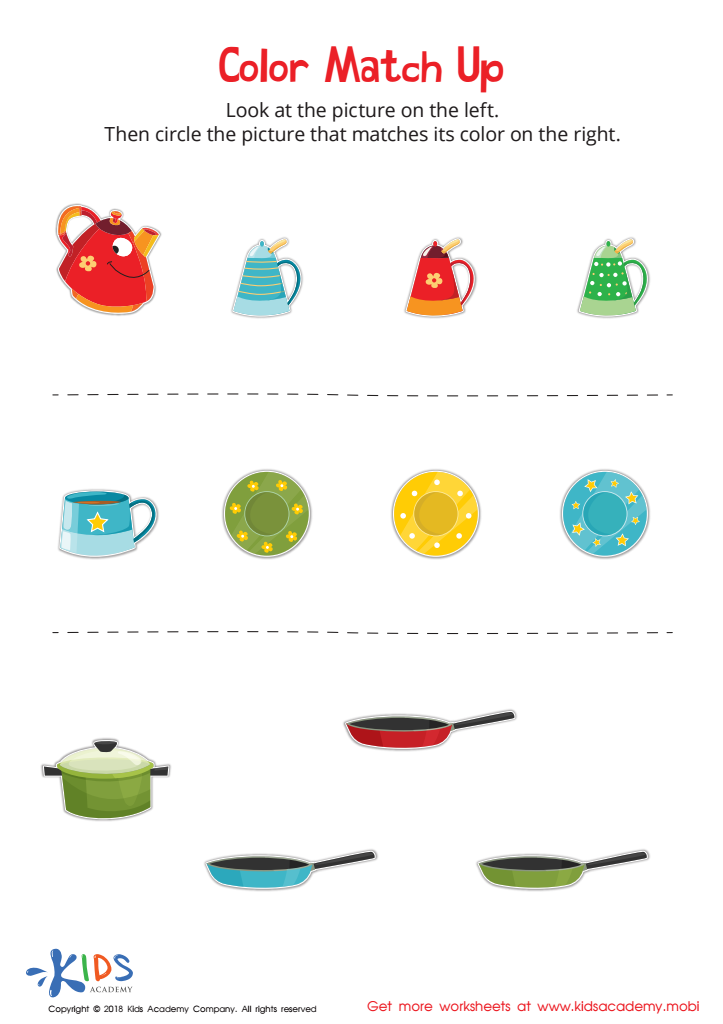
Discover the joy of learning with our Color Recognition Matching Worksheets designed for ages 4-9. Perfect for building foundational skills, these engaging worksheets boost color recognition, matching abilities, and cognitive development. Utilizing vibrant illustrations and fun exercises, children will delight in identifying and pairing colors while strengthening their visual discrimination skills. Tailored to various skill levels, our worksheets support both individual learning and classroom activities. Inspire confidence and creativity in your child with these essential tools for early education. Unlock their potential today with our interactive Color Recognition Matching Worksheets.
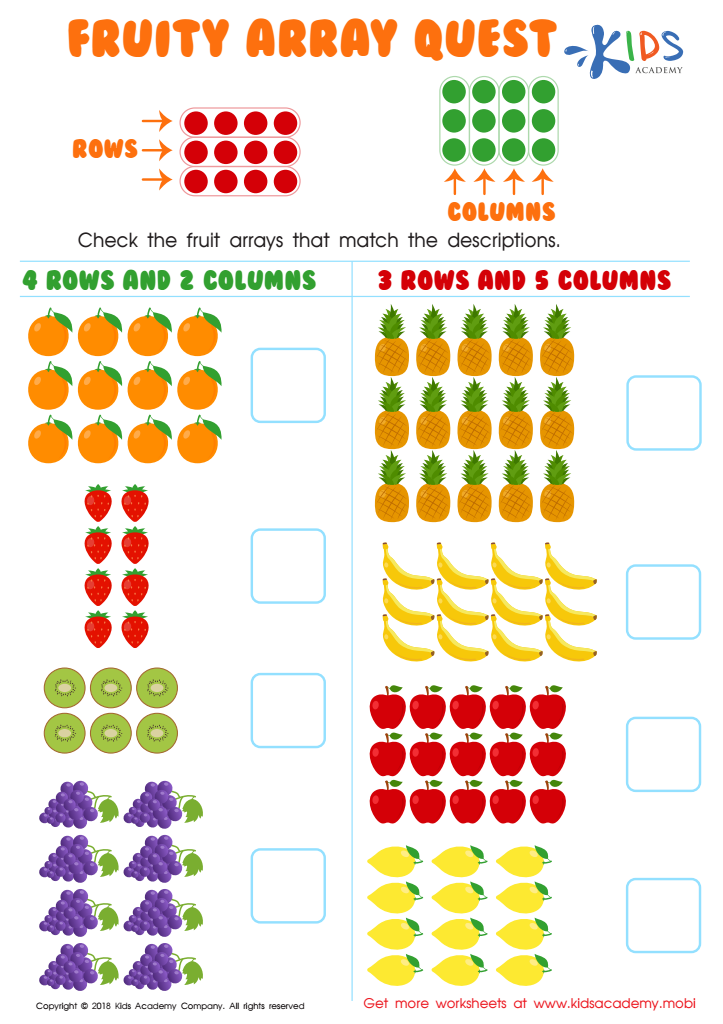
Fruity Array Quest Worksheet
 Assign to My Students
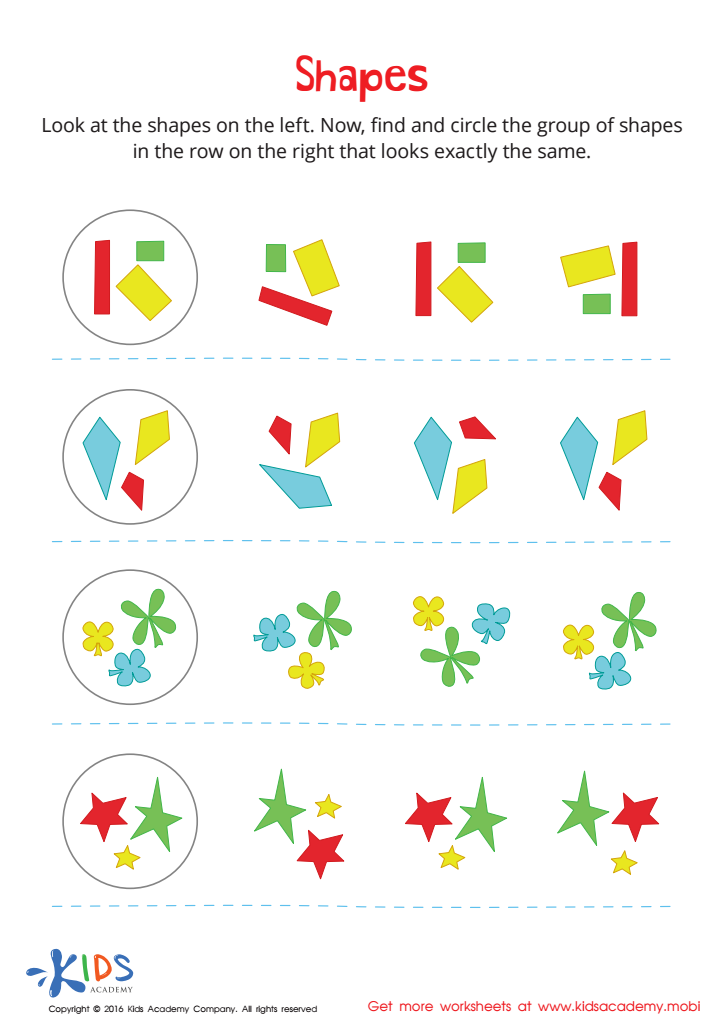
Shapes Worksheet






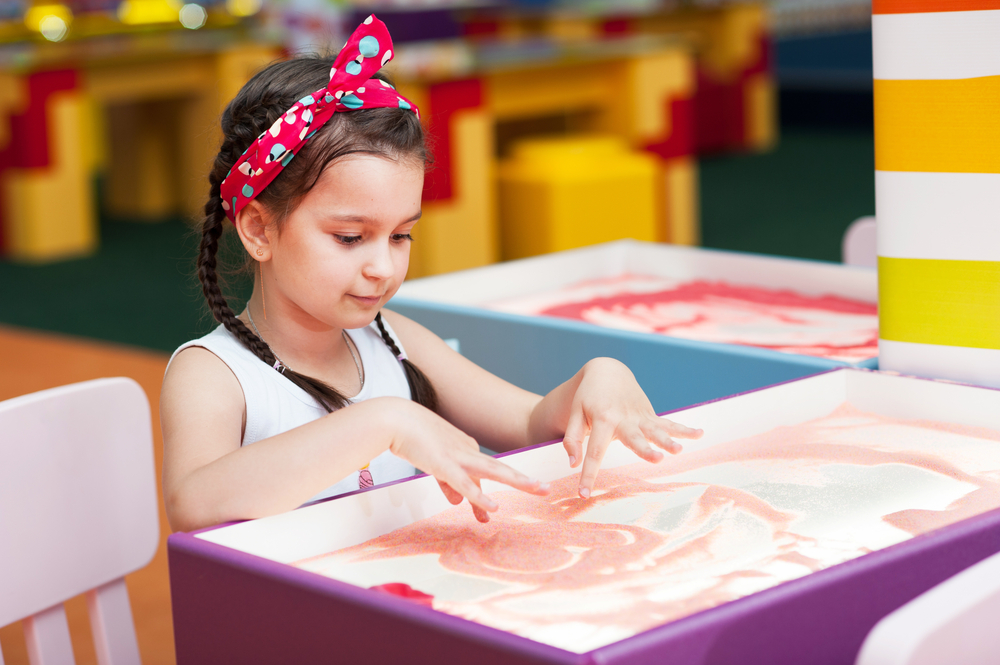

Color recognition and matching hold a significant place in early childhood development, particularly for children aged 4-9. For parents and teachers, fostering these skills is crucial as they form the building blocks of cognitive and academic growth. Recognizing and matching colors sharpens visual discrimination, a critical perceptual skill aiding in identifying differences and similarities, which translates into better reading and math skills.
Colors serve as first vocabulary lessons for young learners, providing linguistic tools to describe their world. This descriptive ability enhances communication skills and, further down the line, improves complex verbal expression and writing capabilities. Psychologically, recognizing colors can aid in emotional development, as children often use colors to express feelings and convey their emotional states.
Curriculum-wise, color-related activities promote fine motor skills, improving hand-eye coordination essential for handwriting. Moreover, playing color matching games enforces attention to detail and increases concentration spans.
Incorporating color recognition into learning contexts makes abstract concepts more tangible. For instance, in math, children can identify patterns using color-coded systems, enhancing the comprehension of sequences. Thus, actively engaging in color recognition activities ensures a holistic approach to developmental milestones, catering to visual literacy, motor skill enhancement, emotional expression, communication, and cognitive advancement.








