Cognitive Development Tracing Shapes Worksheets for Ages 4-9
4 filtered results
-
From - To
Unlock your child's potential with our Cognitive Development Tracing Shapes Worksheets designed for ages 4-9. These interactive worksheets combine fun and learning, helping young minds enhance their cognitive skills, including problem-solving, recognition, and fine motor progression. By tracing various shapes, children will develop hand-eye coordination while also gaining familiarity with geometric forms. Perfect for use at home or in classrooms, these activities encourage independent learning and nurture critical thinking abilities. Support your child's academic journey and cognitive growth through engaging and educational exercises tailored to their developmental stage. Discover the joy of learning with our tracing shapes worksheets today!
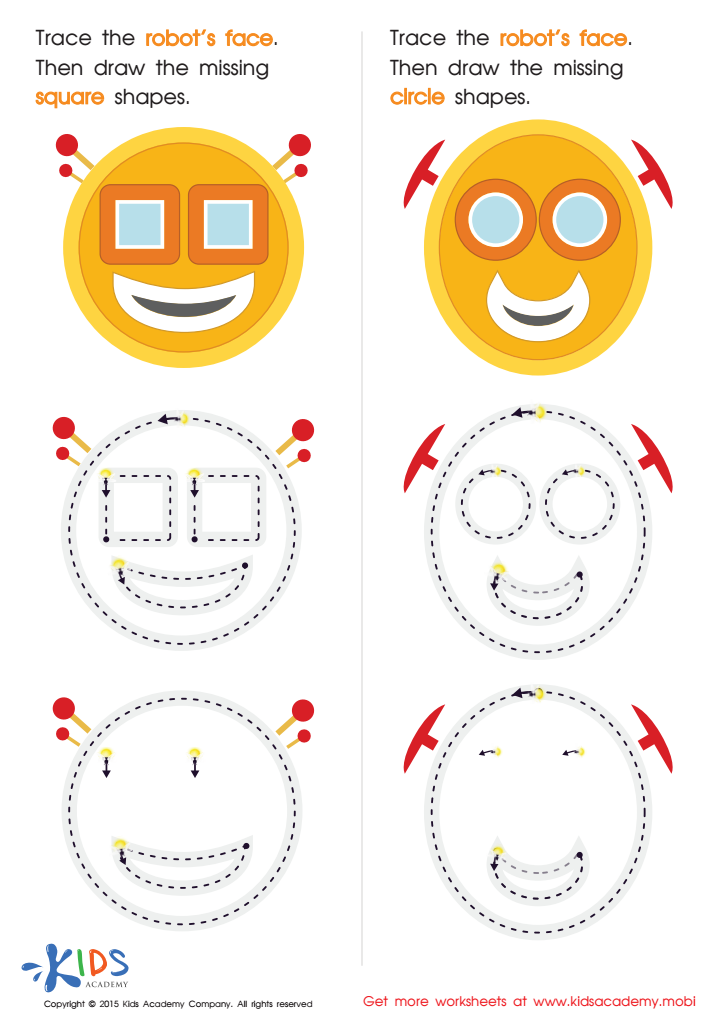
Practicing to Draw Circles And Squares Printable
 Assign to My Students
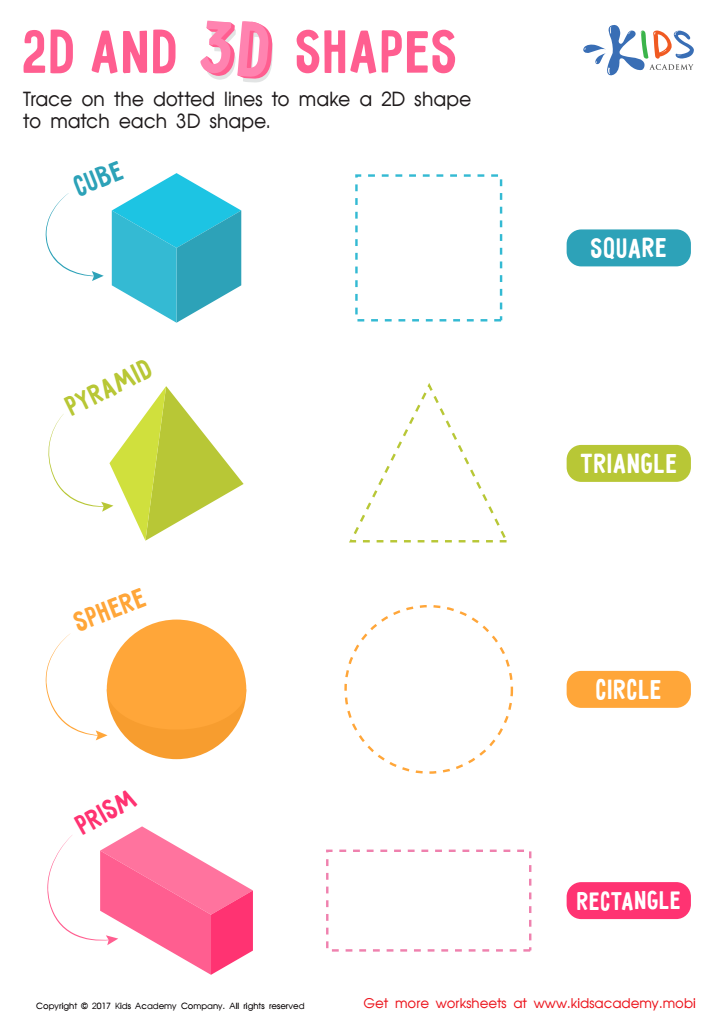
2D and 3D Shapes Worksheet
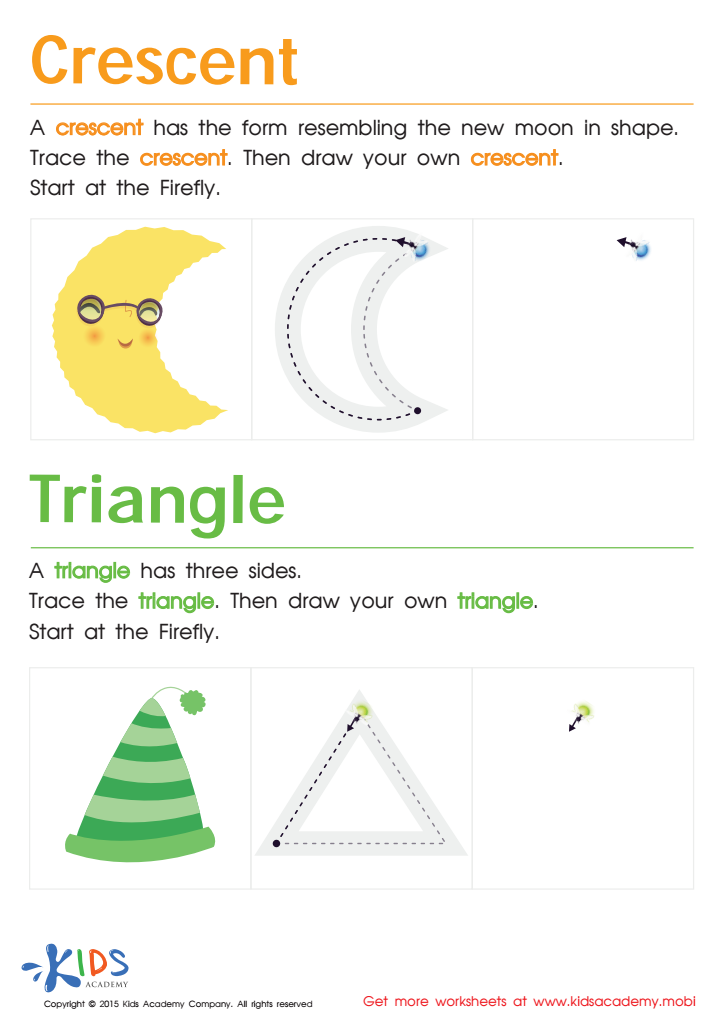
Learning to Draw Crescents And Triangles Worksheet
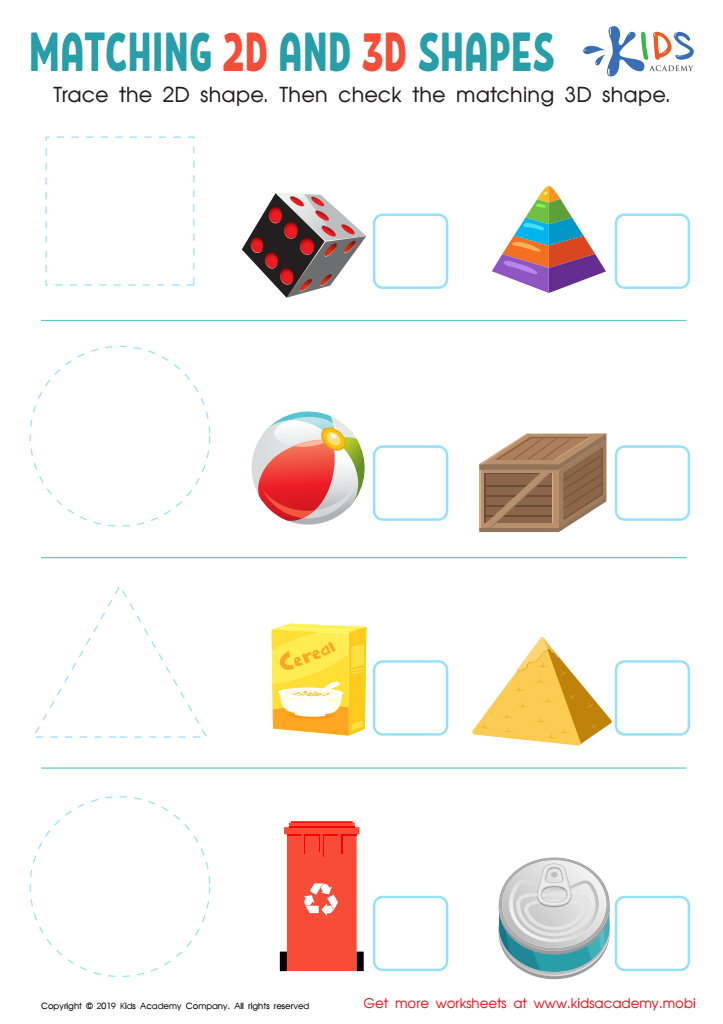
Matching 2D and 3D Shapes Worksheet








Parents and teachers should care about cognitive development tracing shapes for children ages 4-9 because it is a crucial foundational skill that supports overall brain development and academic future. Tracing shapes helps children enhance their fine motor skills, including hand-eye coordination and muscle control, which are crucial for writing. It also fosters critical thinking and problem-solving abilities by encouraging youngsters to recognize patterns, outlines, and spatial relationships.
Engaging in tracing activities aids in the development of visual perceptual skills. This includes being able to discern differences and similarities in shapes, which is critical for learning letters and numbers. These skills can impact reading and math proficiency, areas that form the core of a child's academic journey.
Furthermore, tracing shapes contributes to a child's ability to concentrate and focus. Completing a tracing task requires attention to detail and sustained effort, building the patience necessary for more complex tasks in later grades.
Overall, it provides a fun and interactive method for children to explore and become comfortable with the basic concepts of geometry. The early mastery of these skills offers a strong educational foundation that supports early learning targets and transitions smoothly into later, more advanced stages of education.