Filters

16 filtered results

Clear all filters
Favorites
With answer key
Interactive

16 filtered results

Difficulty Level

Grade


Introduce children aged 4-9 to the joys of following instructions with our engaging Building Vocabulary Worksheets. Kids Academy offers carefully crafted, age-appropriate printable worksheets that make learning fun and interactive. These worksheets not only enhance vocabulary skills but also improve listening comprehension and ability to follow directions. Dynamic activities like labeling, matching, and completing simple tasks help children follow step-by-step instructions while learning new words. The colorful and playful designs keep young learners engaged and motivated. Nurture your child's communication skills, boost their confidence, and foster independence with our expert-curated vocabulary worksheets today!

Check out this FREE Trial Lesson on Building Vocabulary for age 4-9!

A

Favorites
With answer key
Interactive
  • 4-9
  • Following instructions
  • Building Vocabulary
Red and Blue Coloring Fun Worksheet

Red and Blue Coloring Fun Worksheet

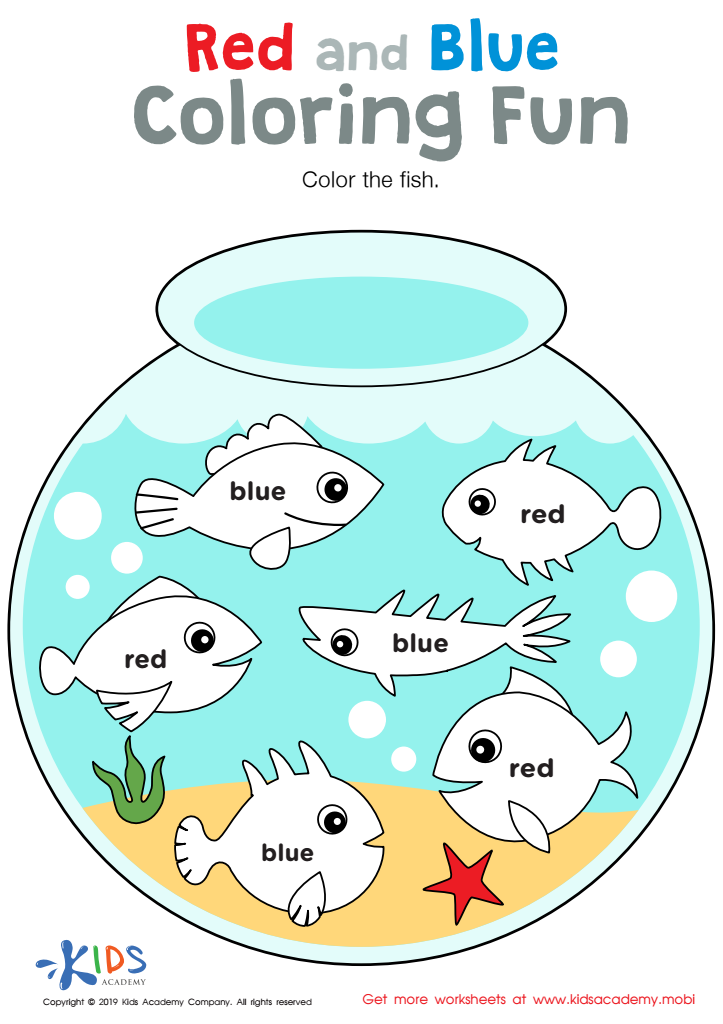
Kids know colors like red and blue. But can they read these words? Give them practice with this fun fish bowl coloring sheet. They'll look at the fish, then color them the corresponding hue. Home or classroom, they'll be sure to get a kick out of learning colors in this creative way!
Download (PDF)
Assign to My Students
Red and Blue Coloring Fun Worksheet
Worksheet
More Octopus Facts Worksheet

More Octopus Facts Worksheet

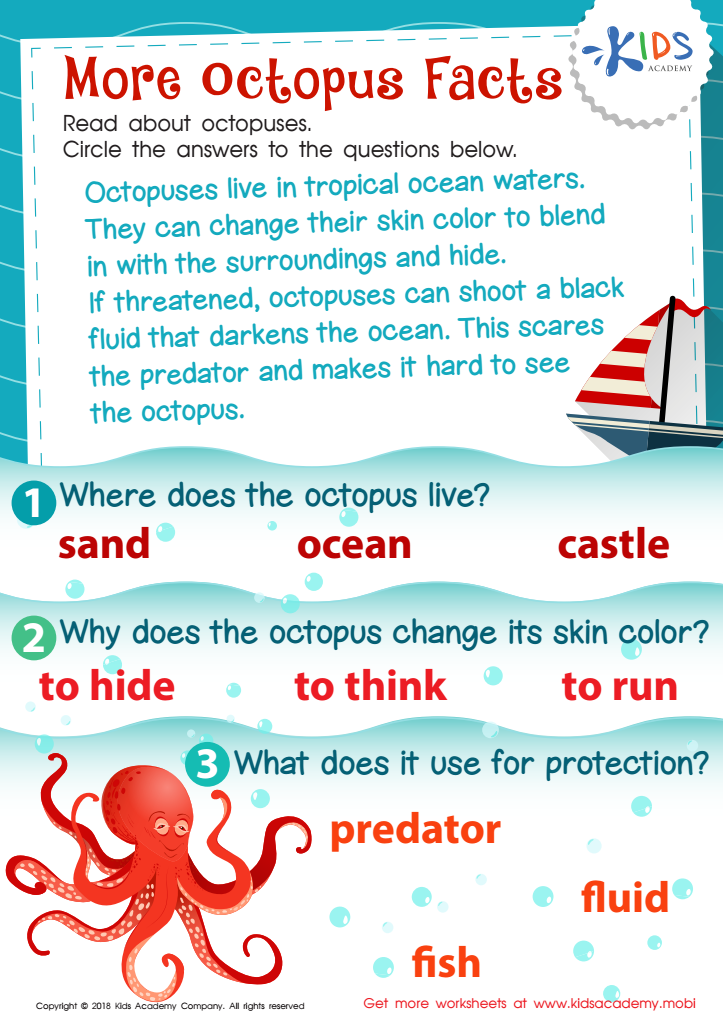
This worksheet will help your kids learn about the Octopus. Read the text carefully and have kids read with you. Now, ask them questions based on it and help them answer them by circling the right choices. Teaching your kids facts about animals will help them in the long run.
More Octopus Facts Worksheet
Worksheet
Colors: Assessment 2 Worksheet

Colors: Assessment 2 Worksheet

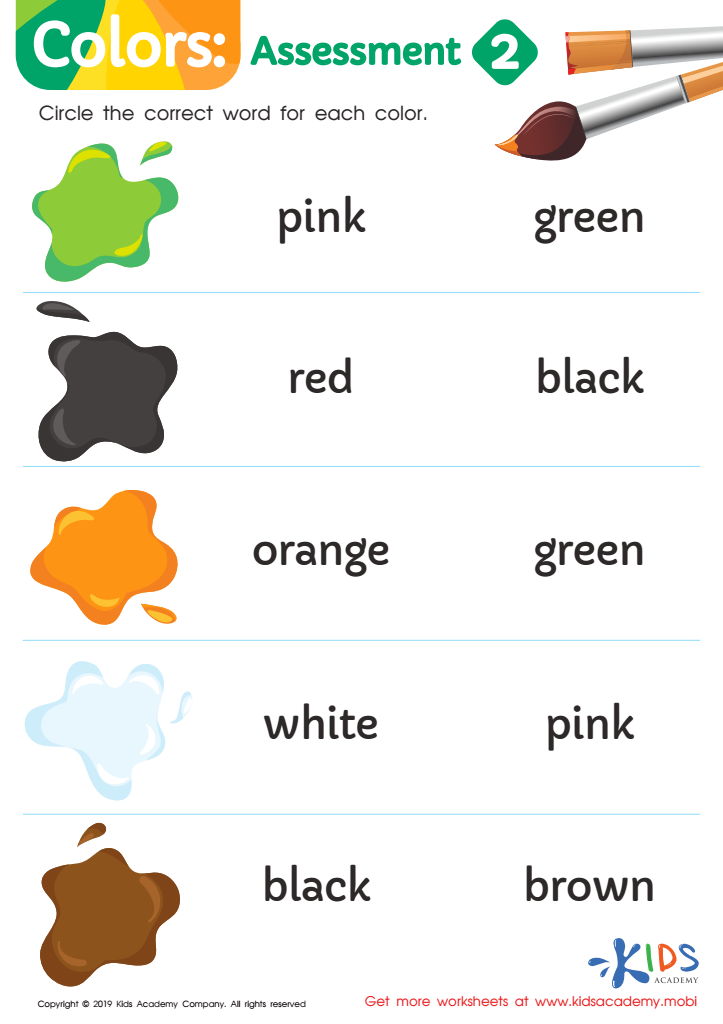
Teach color words to young students to build fluency and confidence. Check knowledge with an assessment worksheet. Have students look at paint samples and circle the correct color word. This assessment helps parents and teachers measure a child’s accuracy when reading color words.
Colors: Assessment 2 Worksheet
Worksheet
Monster's Face Coloring Worksheet

Monster's Face Coloring Worksheet

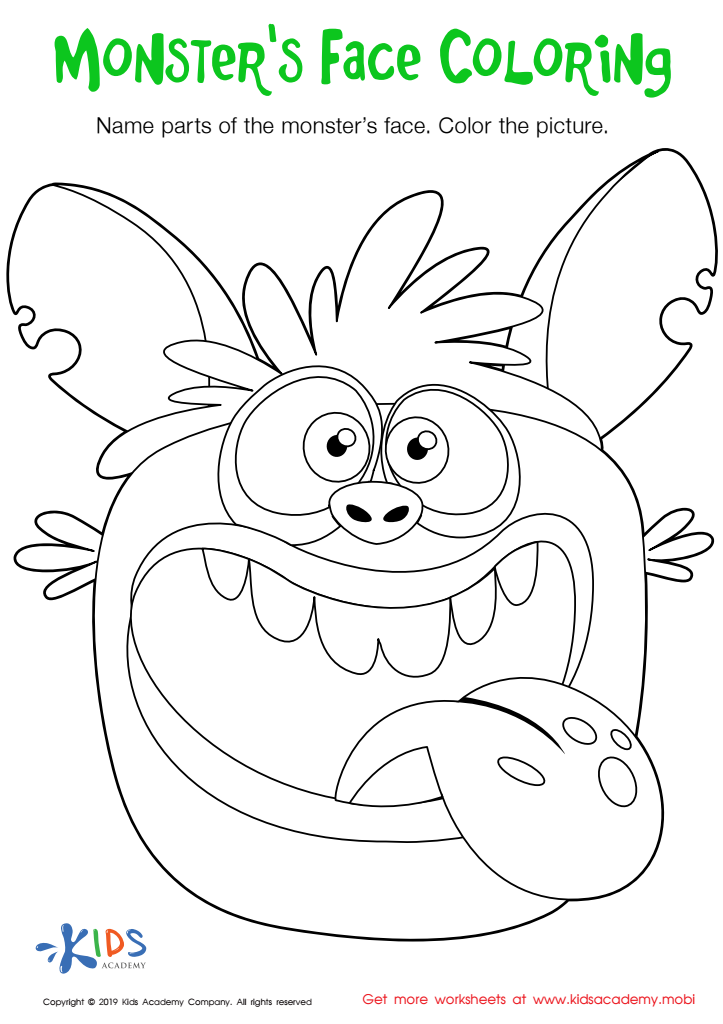
Have your students practice identifying face parts with this fun worksheet. Teach them how to say eyes, nose, mouth, and ears. Help them master these words so they can express themselves better. And have some fun with the monster coloring page too!
Download (PDF)
Assign to My Students
Monster's Face Coloring Worksheet
Worksheet
Which Is It? Worksheet

Which Is It? Worksheet

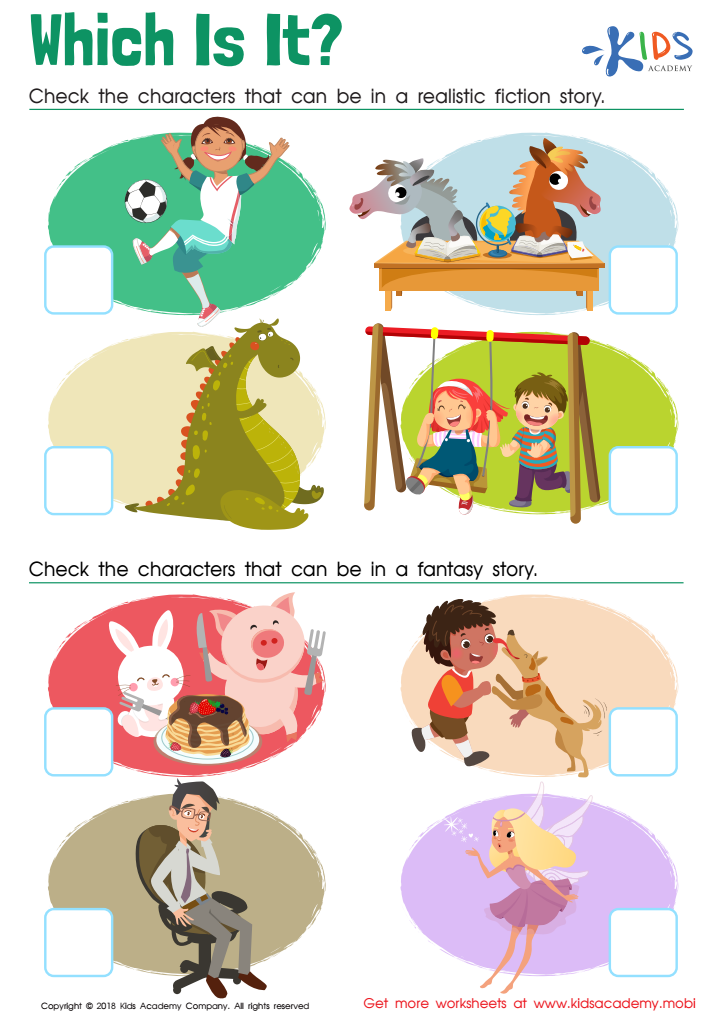
This colorful worksheet helps young readers identify elements of fact and fiction using fun picture clues. They can check off characters who exist in realistic fiction stories, which makes learning the difference between the two genres fun and engaging.
Which Is It? Worksheet
Worksheet
Red and Green Worksheet

Red and Green Worksheet

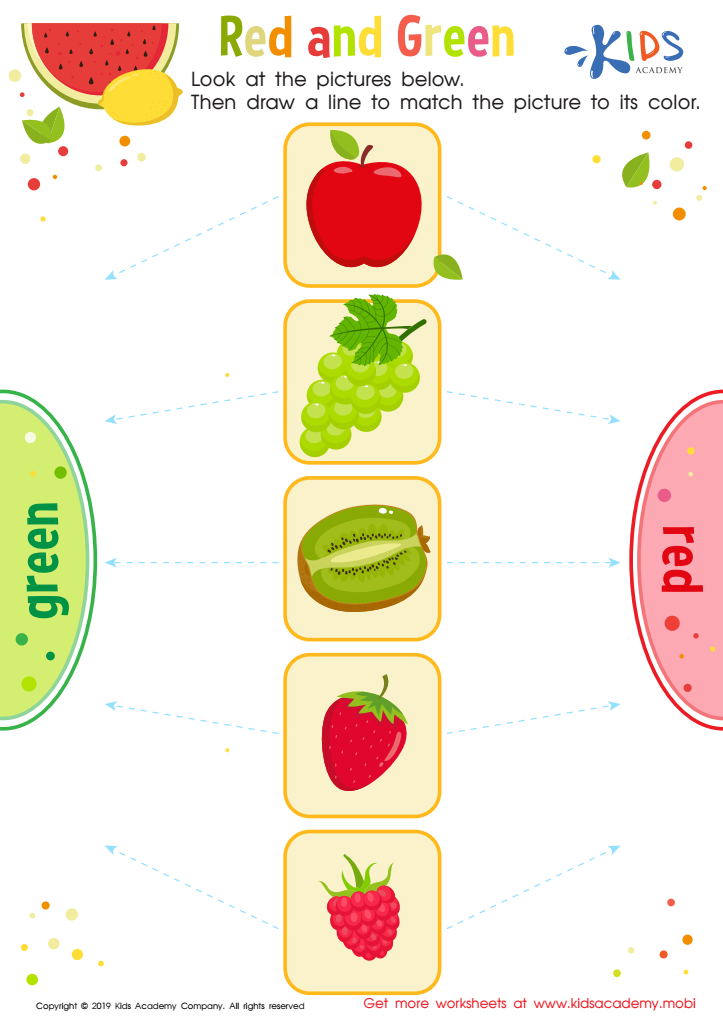
Engage your kids in fun exercises and colorful pictures to help build their vocabulary. Start with a colorful worksheet - can they identify the colors? Guide them to draw a line from each picture in the middle to the correct color. It's a great way to boost their vocabulary and have fun at the same time!
Red and Green Worksheet
Worksheet
Assessment: Aquarium Sign Worksheet
Assessment: Aquarium Sign Worksheet
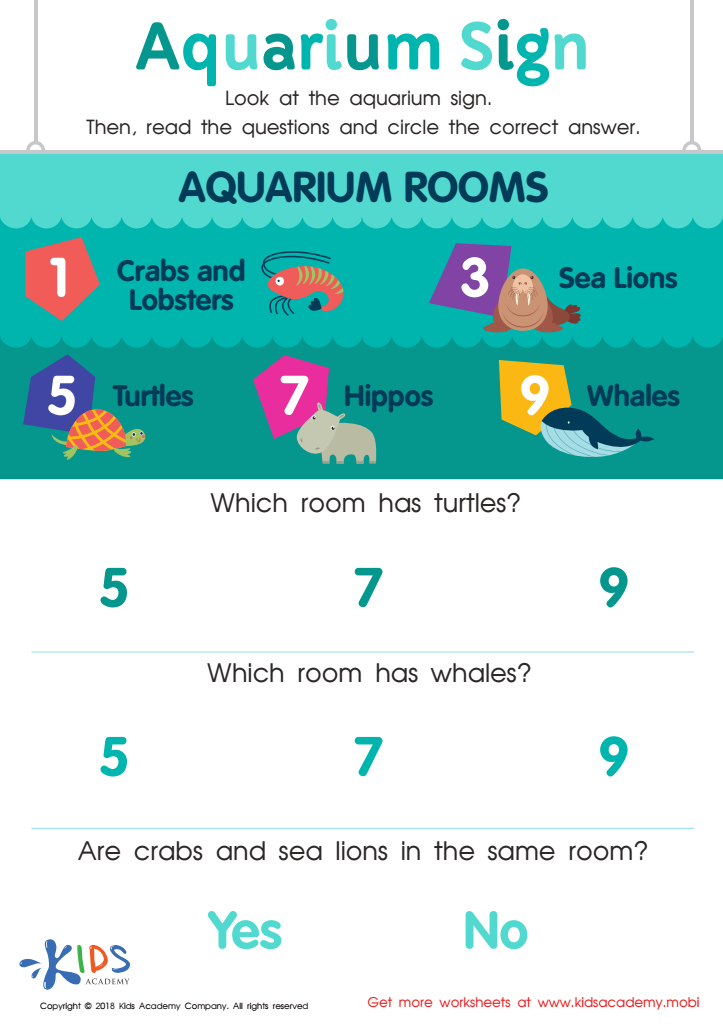
Take your kids to an aquarium and marvel at the sea creatures! Help them identify the animals they see, and ask them which one is their favorite. Look at the aquarium sign and point to each creature. Ask your kids the questions and help them circle the right answer.
Assessment: Aquarium Sign Worksheet
Worksheet
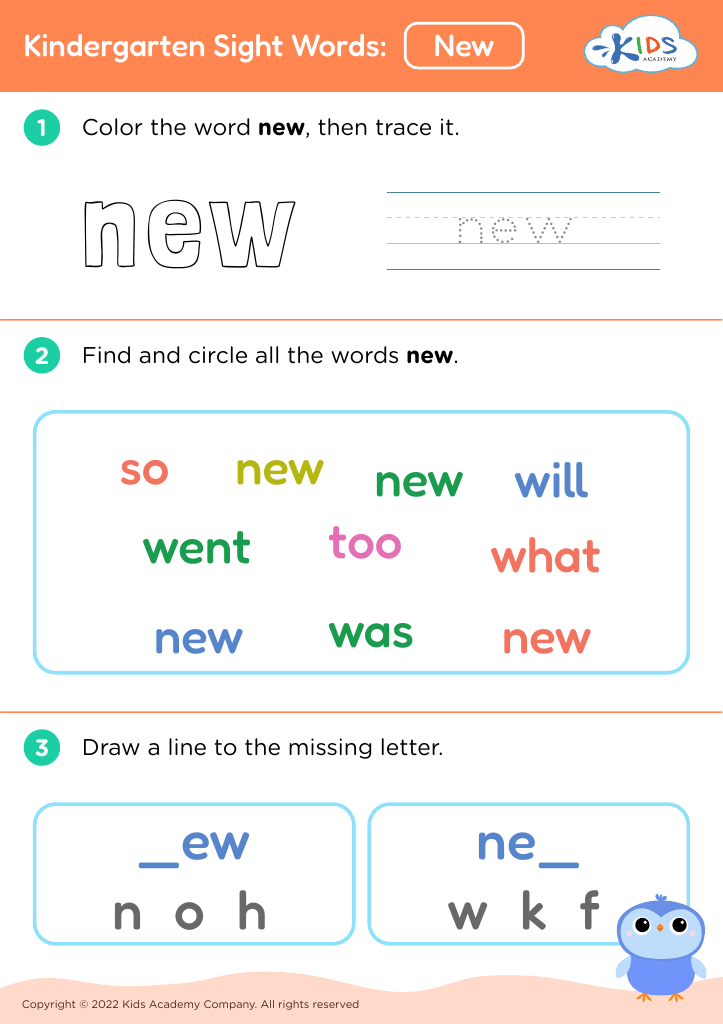
Kindergarten Sight Words: New

Kindergarten Sight Words: New

Kindergarten Sight Words: New
Worksheet
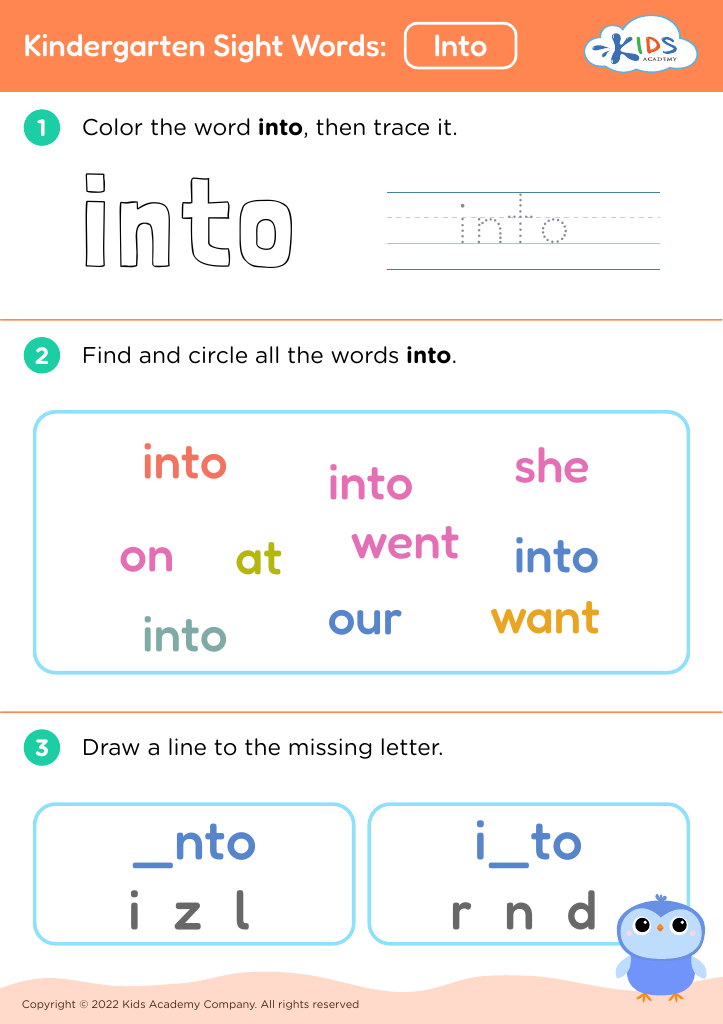
Kindergarten Sight Words: Into

Kindergarten Sight Words: Into

Kindergarten Sight Words: Into
Worksheet
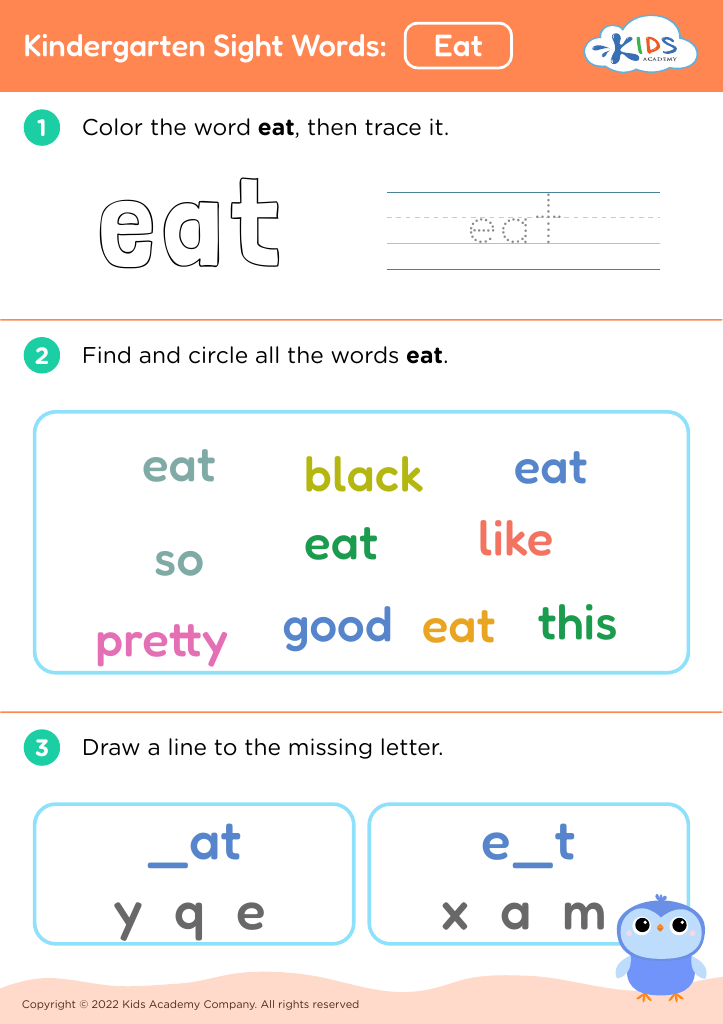
Kindergarten Sight Words: Eat

Kindergarten Sight Words: Eat

Kindergarten Sight Words: Eat
Worksheet
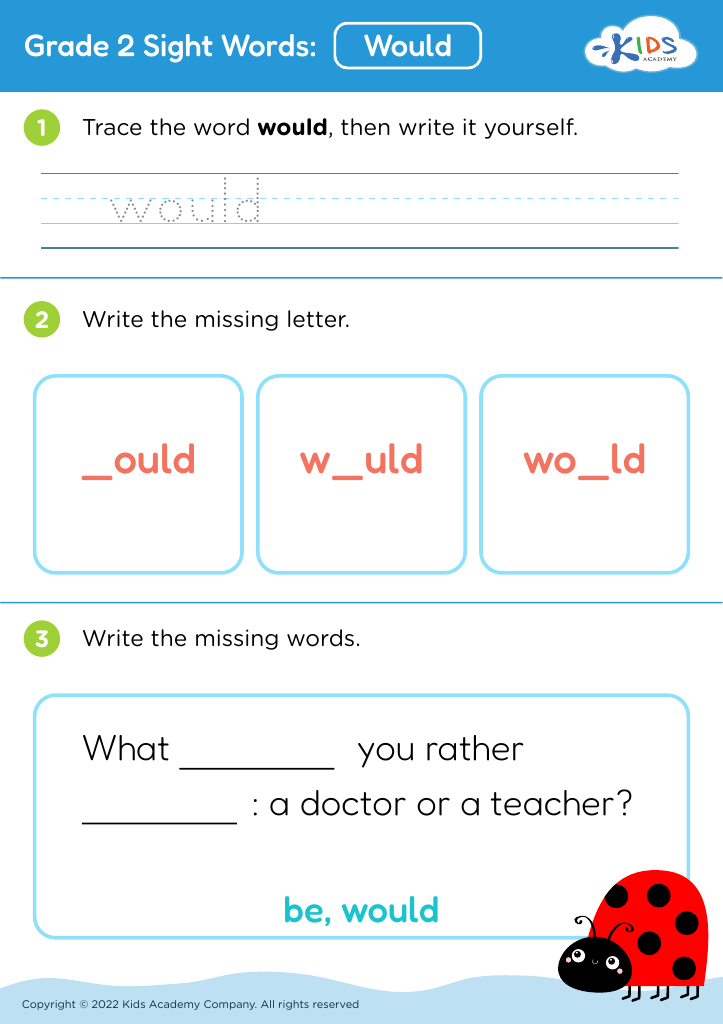
Grade 2 Sight Words: Would

Grade 2 Sight Words: Would

Grade 2 Sight Words: Would
Worksheet
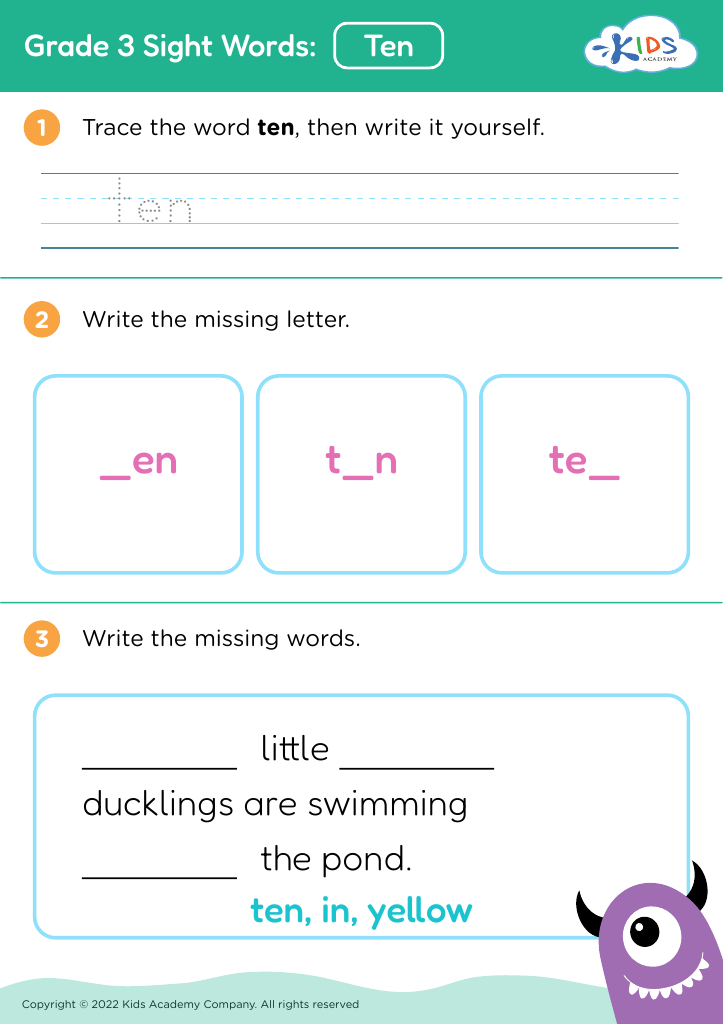
Grade 3 Sight Words: Ten

Grade 3 Sight Words: Ten

Grade 3 Sight Words: Ten
Worksheet
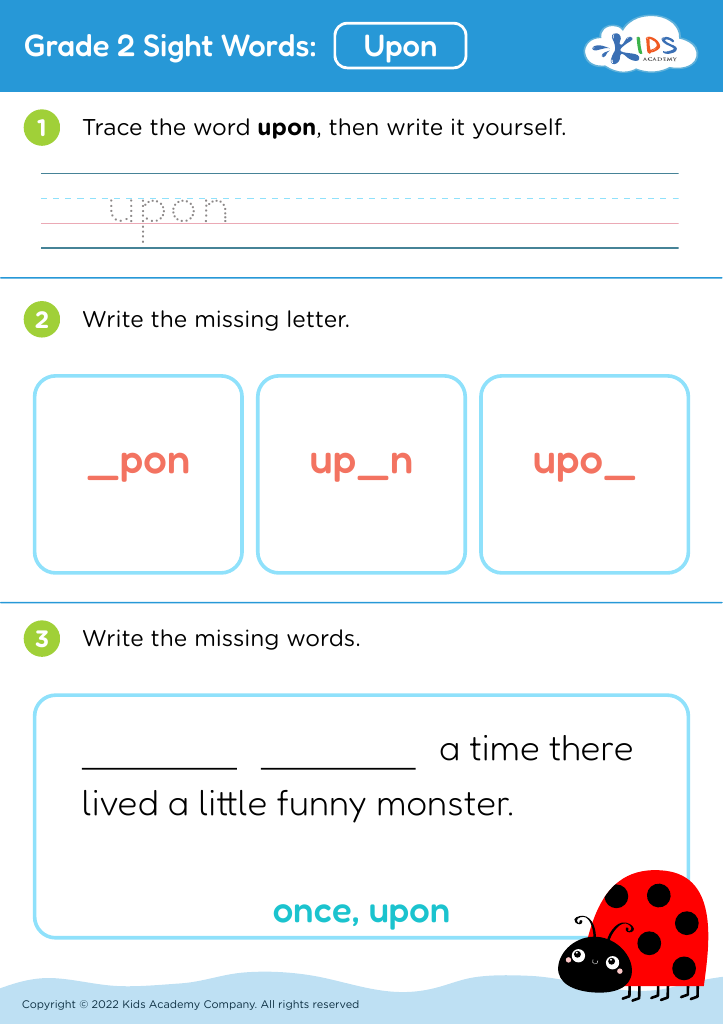
Grade 2 Sight Words: Upon

Grade 2 Sight Words: Upon

Grade 2 Sight Words: Upon
Worksheet
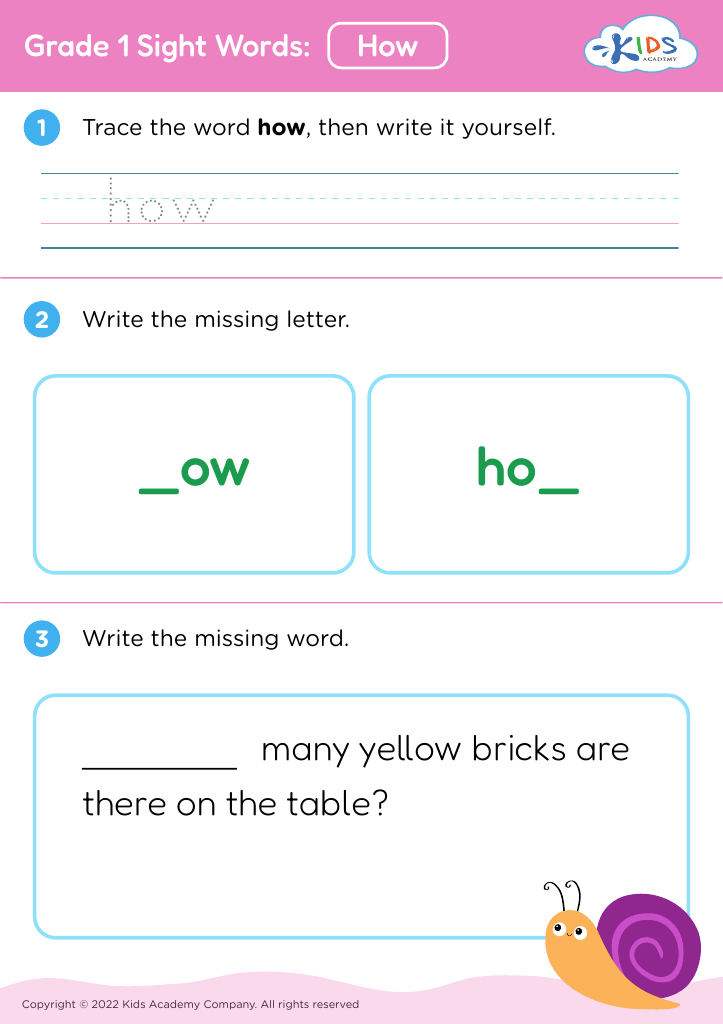
Grade 1 Sight Words: How

Grade 1 Sight Words: How

Grade 1 Sight Words: How
Worksheet
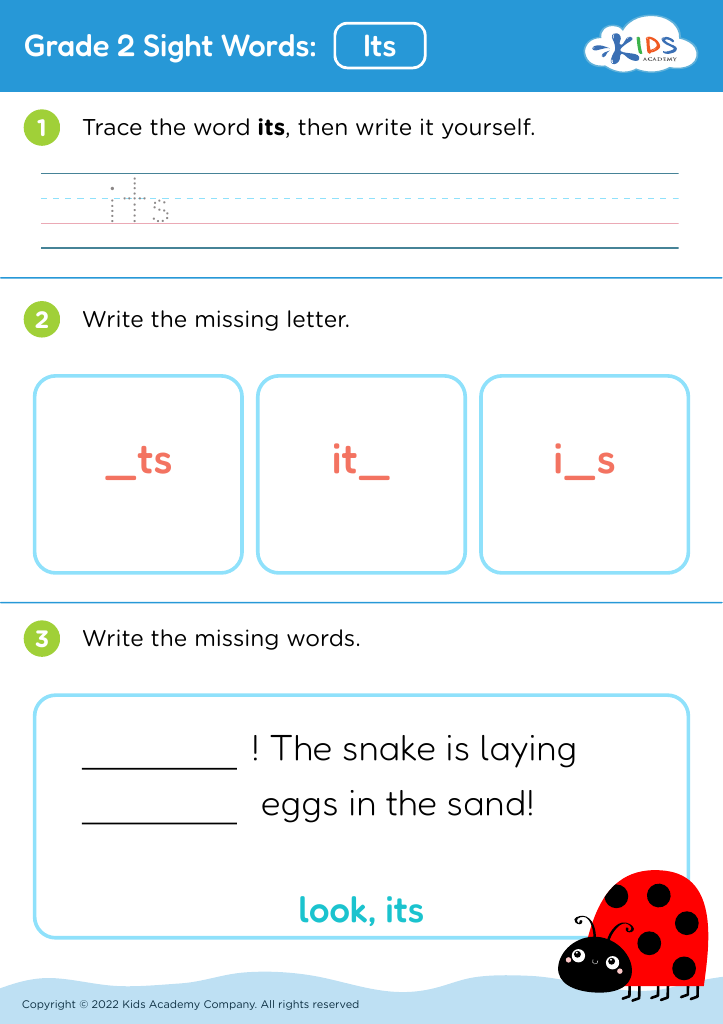
Grade 2 Sight Words: Its

Grade 2 Sight Words: Its

Grade 2 Sight Words: Its
Worksheet
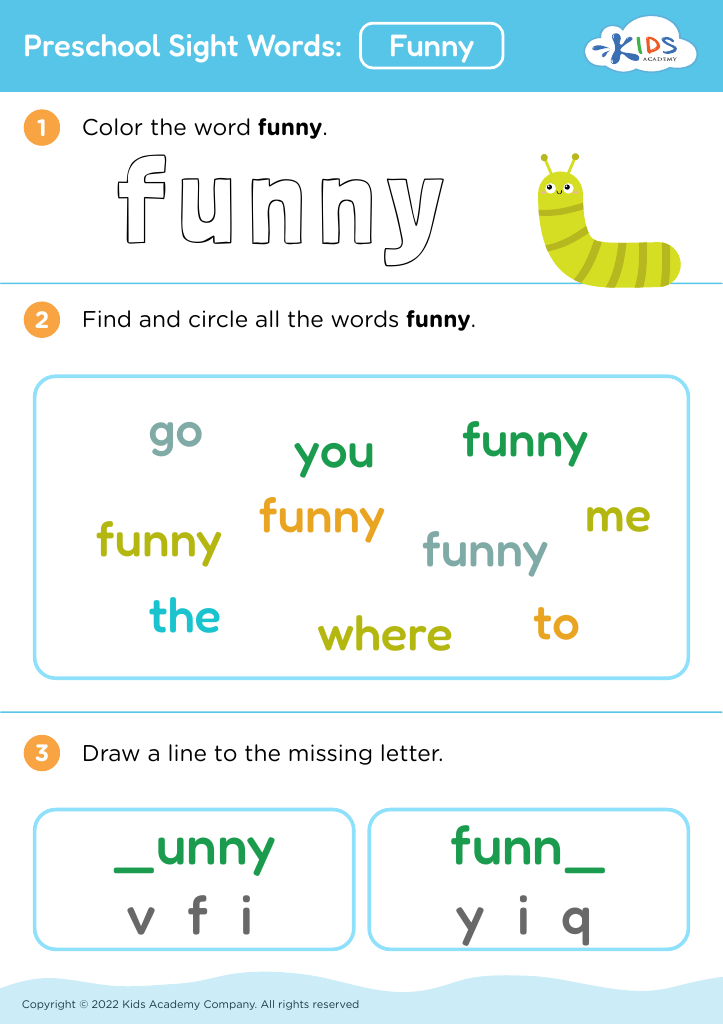
Preschool Sight Words: Funny

Preschool Sight Words: Funny

Preschool Sight Words: Funny
Worksheet


Parents and teachers should place significant emphasis on developing the skills of following instructions and building vocabulary for children aged 4-9 because these foundational abilities are critical for cognitive and social development. At this young age, children are rapidly absorbing information and forming the building blocks for future learning.

Firstly, following instructions is essential as it cultivates discipline, attention, and obedience—all vital traits for academic success and everyday life. It enables children to function smoothly in structured environments, be it classrooms or social settings, by teaching them to listen attentively, process information, and act accordingly. This skill helps in minimizing confusion and mistakes, thus promoting a smoother learning process and stronger interpersonal relationships.

Secondly, building vocabulary at an early age is crucial as it directly impacts a child's communication abilities, reading comprehension, and overall literacy. A rich vocabulary allows children to express themselves clearly and understand others more comprehensively. This is instrumental for not only academic achievement but also emotional intelligence, as it gives children the words they need to articulate their feelings, ask questions, and engage in conversations.

In summary, fostering the abilities to follow instructions and build a robust vocabulary sets a strong foundation for lifelong learning, effective communication, and social interaction, ultimately equipping children with essential tools to succeed in various realms of life.