Enhance critical thinking Reading Worksheets for Ages 4-9
3 filtered results
-
From - To
Fuel your child's mind with our "Enhance Critical Thinking Reading Worksheets for Ages 4-9" by Kids Academy. Tailor-made to unlock young minds’ potential, these expertly crafted worksheets are designed to develop critical thinking and problem-solving skills in early readers. Each activity combines fun, themed content with engaging questions that push children to analyze, infer, and deduce while reading. Perfect for both classroom and home settings, our worksheets offer dynamic, educational challenges suitable for various reading levels. Empower your child to think deeper and read smarter with a collection that cultivates keen analytical abilities from an early age.
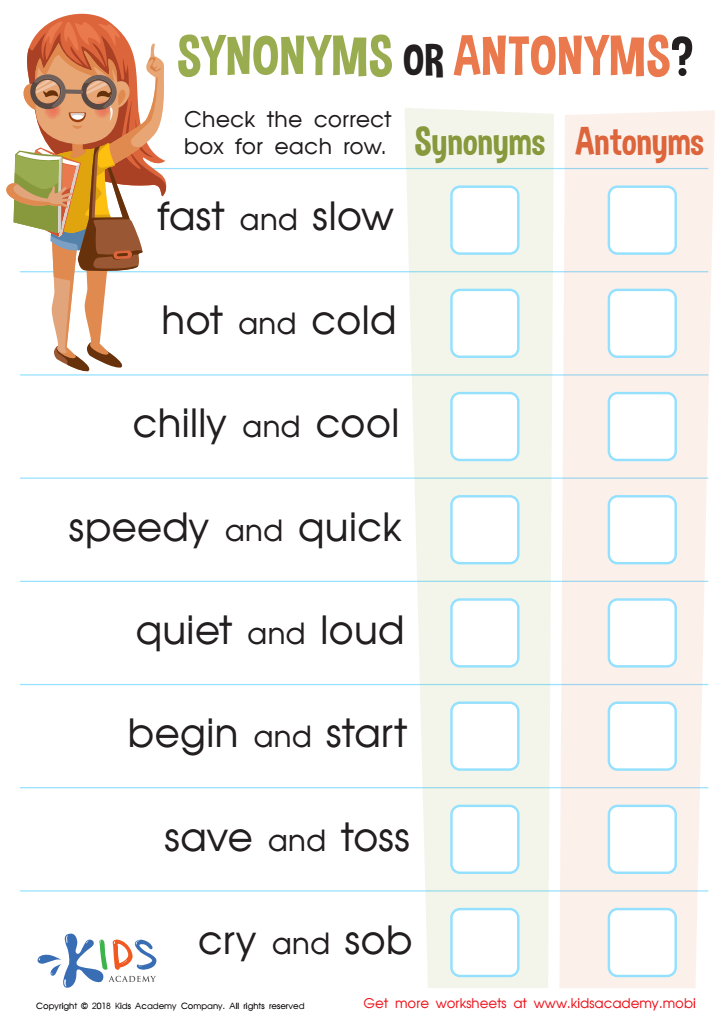
Synonyms or Antonyms: Assessment Worksheet
 Assign to My Students
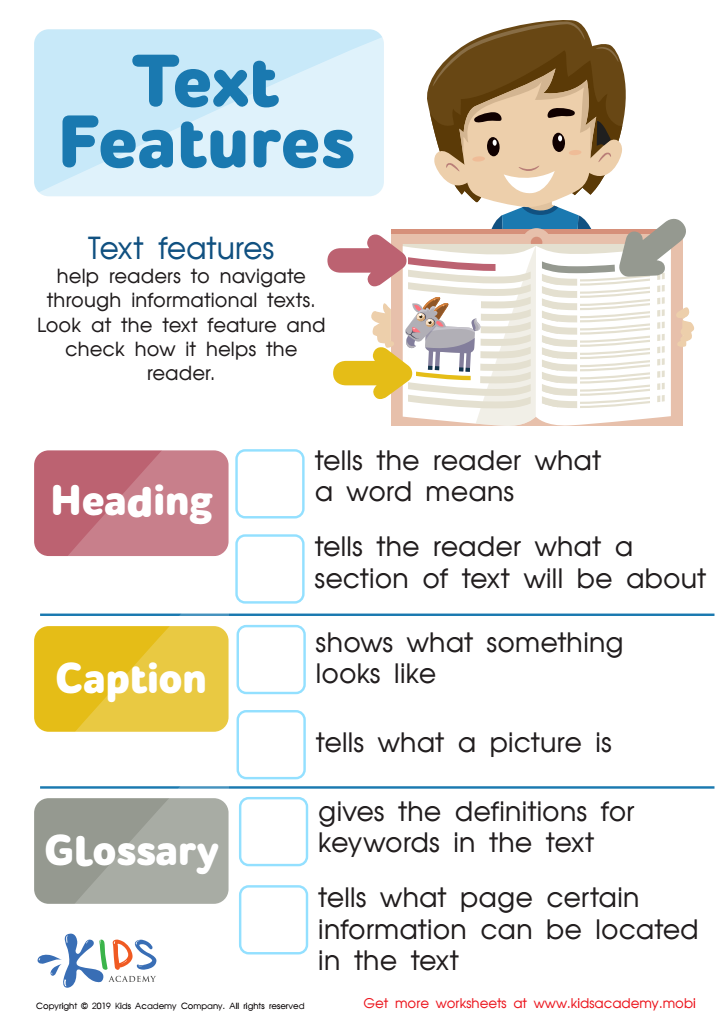
Text Features Worksheet







Enhancing critical thinking through reading for children ages 4-9 is vitally important for both parents and teachers as it fosters early cognitive development and sets the foundation for lifelong learning. During these formative years, children's brains are particularly receptive to new information and developing their ability to analyze, evaluate, and create.
Firstly, critical thinking skills enable children to better understand storylines and characters, fostering deeper comprehension. When children are encouraged to ask questions about the plot, infer meanings, and predict outcomes, they become active rather than passive readers. This is not only engaging but helps strengthen memory and retention skills.
Secondly, developing critical thinking at an early age aids in problem-solving and decision-making, which are essential life skills. When children learn to think critically, they can navigate complex situations both in and out of the classroom more effectively. They become capable of reasoned thinking and are better equipped to understand different perspectives, which fosters empathy and social interaction skills.
Lastly, promoting critical thinking through reading builds a strong academic foundation. These skills are transferable across subjects such as math, science, and social studies, enhancing overall educational achievement. By making critical thinking a focus from an early age, parents and teachers provide children with the tools necessary for academic and personal success later in life.








