Moral lesson understanding Reading Worksheets for Ages 4-9
5 filtered results
-
From - To
Explore our "Moral Lesson Understanding Reading Worksheets" designed for children aged 4-9 to cultivate essential life skills through engaging stories. These worksheets provide stimulating reading exercises that encourage young learners to identify and discuss moral lessons within various narratives. By integrating comprehension and critical thinking, children enhance their understanding of values such as kindness, empathy, and honesty. Our resources foster a love for reading while promoting ethical reasoning in real-life situations. Perfect for classroom or at-home learning, these worksheets empower kids to reflect on their actions and decisions, nurturing responsible, thoughtful individuals. Start your child’s moral education journey today!
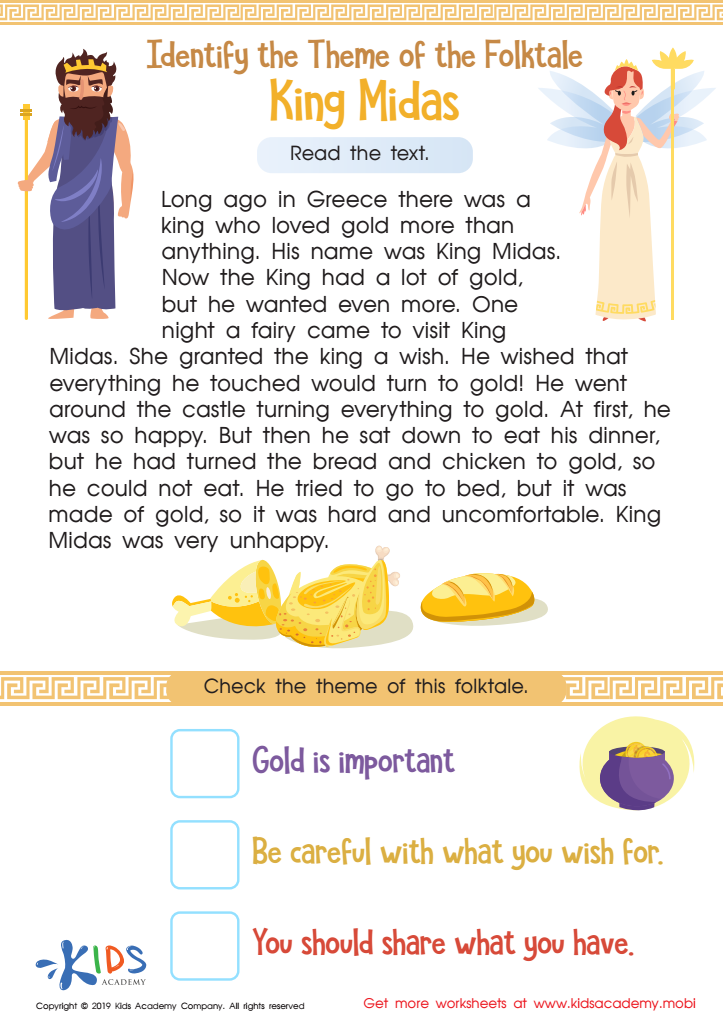
King Midas Worksheet
 Assign to My Students
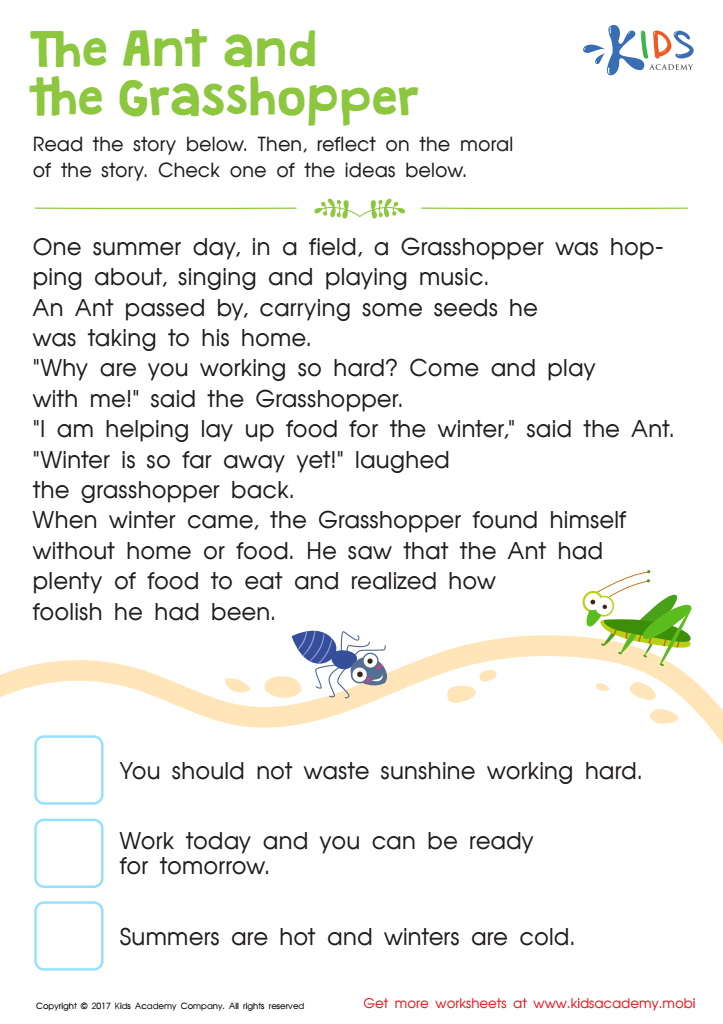
The Ant and The Grasshopper Printable
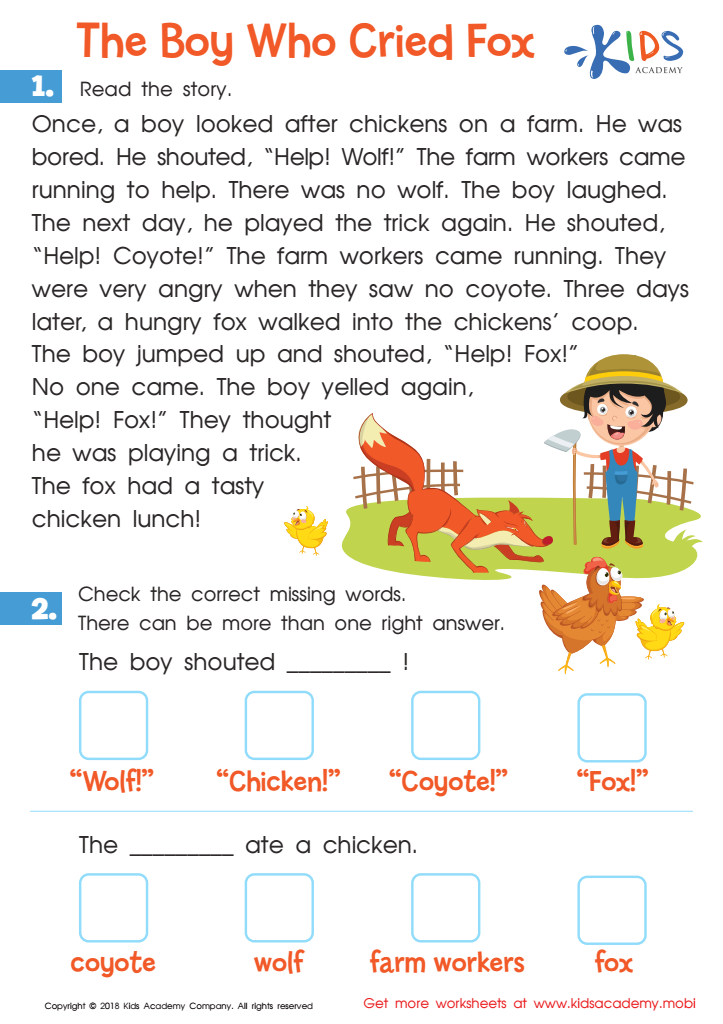
The Boy Who Cried Fox Worksheet
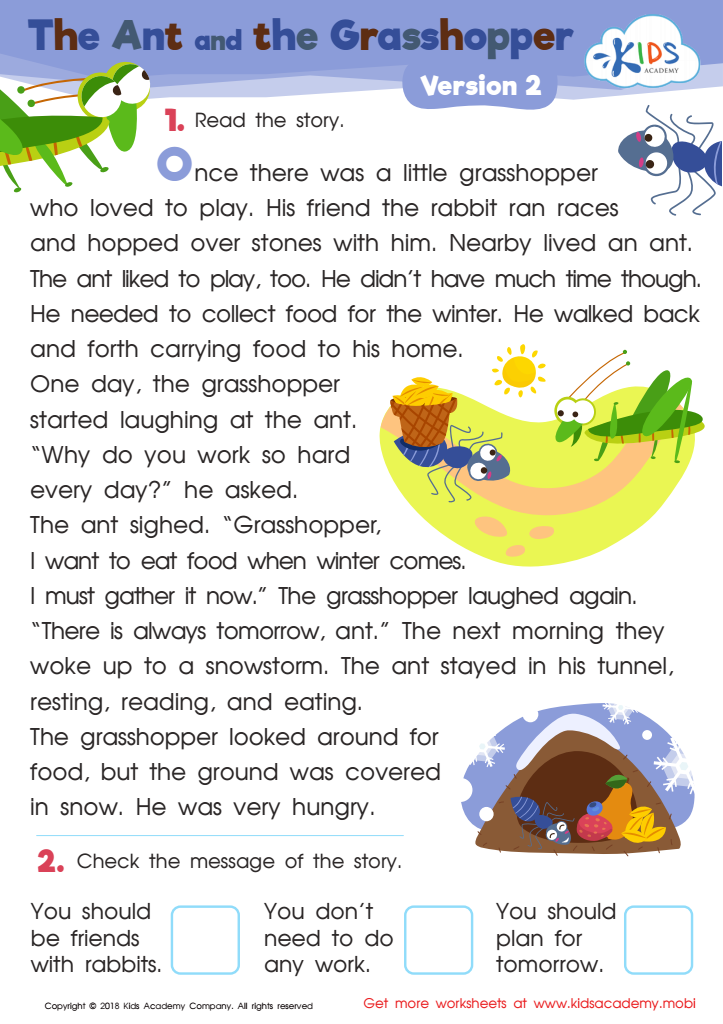
The Ant and The Grasshopper Version 2 Worksheet
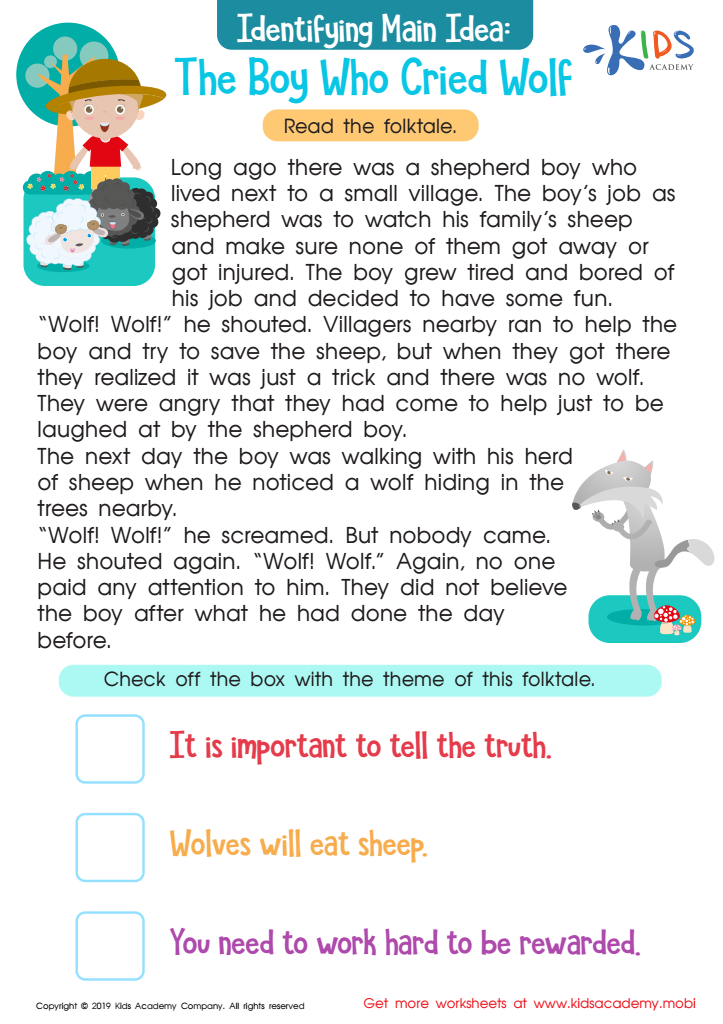
The Boy Who Cried Wolf Part 2 Worksheet








Understanding moral lessons in reading for children ages 4-9 is vital for their emotional and character development. At this formative stage, children are impressionable, and stories serve as a powerful medium to instill values such as empathy, honesty, kindness, and respect. When parents and teachers emphasize moral lessons in stories, they help children identify right from wrong in a relatable and engaging way. This understanding promotes critical thinking as children learn to analyze characters' actions and their consequences.
Moreover, books featuring moral dilemmas can foster discussions about choices and accountability, encouraging children to articulate their thoughts and feelings. Engaging narrative elements can make complex ideals accessible, fostering a love for reading while enriching their social and emotional literacy. This not only prepares them to navigate interpersonal relationships but also lays the groundwork for responsible citizenship in the future.
Lastly, moral understanding nurtures a well-rounded character, which is essential in today’s diverse society. By engaging with stories that teach moral values, both parents and teachers play a crucial role in guiding children towards becoming compassionate, informed, and conscientious individuals, ready to contribute positively to their communities.








