Rhyming skills development Reading Worksheets for Ages 4-9
3 filtered results
-
From - To
Enhance your child's reading skills with our Rhyming Skills Development Worksheets, specially designed for ages 4-9. These engaging, printable resources help young learners understand the concept of rhymes through fun activities that encourage language play. Each worksheet promotes phonemic awareness, vocabulary building, and critical listening skills, making learning enjoyable and effective. Perfect for both classroom and home settings, our worksheets include a variety of exercises, from matching rhyming words to completing sentences, ensuring comprehensive skill growth. Foster a love for reading and boost your child's confidence with our captivating and educational rhyming worksheets today!
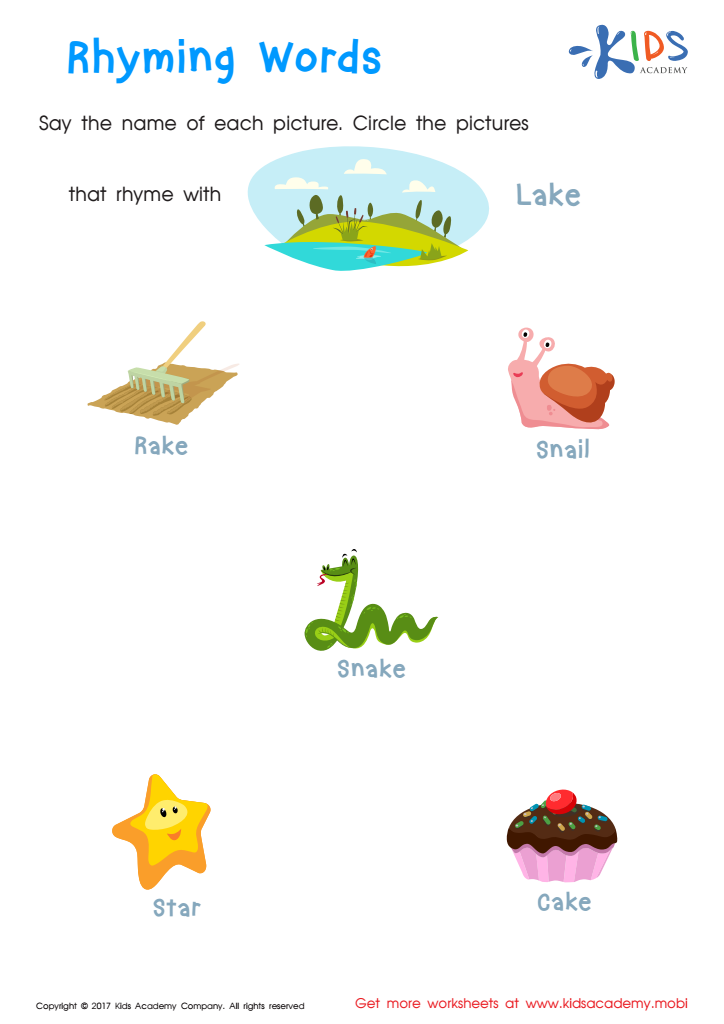
Rhyming Words Rhyming Worksheet
 Assign to My Students
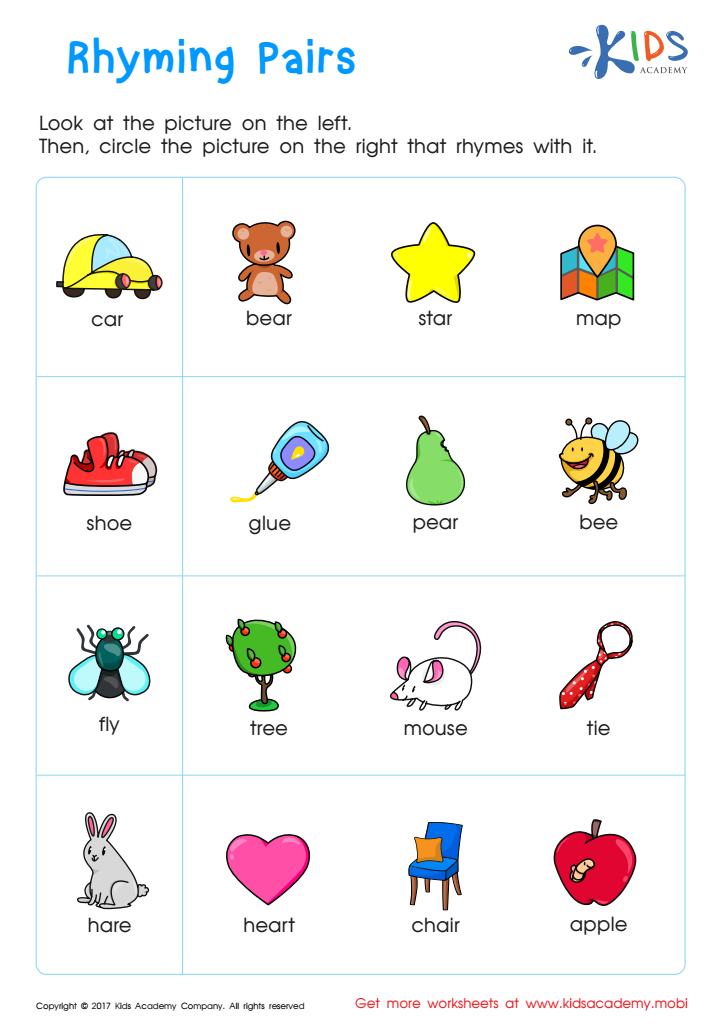
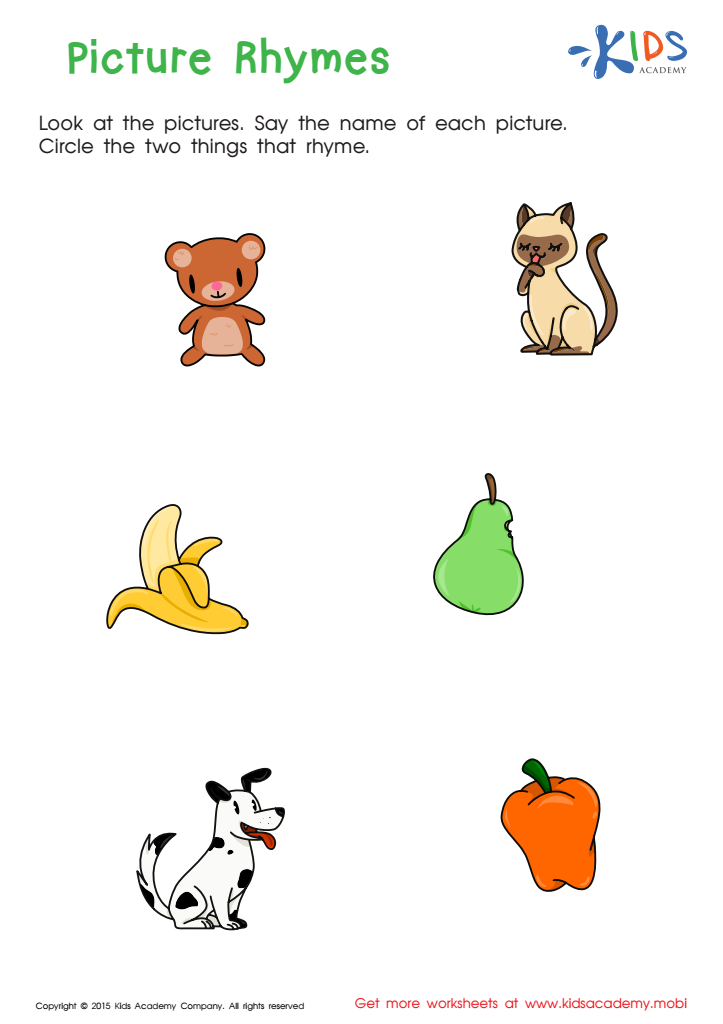
First Words: Picture Rhymes Worksheet








Rhyming skills development is crucial for children aged 4-9, as it forms a foundational element of early literacy and overall language development. First, recognition of rhyme enhances phonological awareness, allowing children to understand how sounds work together in words. This skill is key for developing future reading abilities, as it enables better decoding of unfamiliar words.
Additionally, engaging with rhymes fosters vocabulary growth. Children are introduced to new words in an enjoyable context, which helps them remember meanings more easily. Rhyming enhances listening skills, as kids learn to differentiate between similar-sounding words, strengthening their ability to process and comprehend spoken language.
Moreover, rhymes promote an enjoyment of language and encourage creativity. Through playful engagement with sounds, children develop a love for books and storytelling. This early exposure can lead to sustained reading habits and a lifelong passion for literature.
Lastly, rhyming activities can create opportunities for interaction between parents and teachers, facilitating meaningful bonding while supporting educational goals. Overall, prioritizing rhyming skills development fosters essential cognitive and linguistic proficiencies, empowering children to become skilled communicators and confident readers as they progress through their education.








