Sound recognition Reading Worksheets for Ages 4-9
5 filtered results
-
From - To
Unlock the magic of reading with our engaging Sound Recognition Reading Worksheets, specially designed for children ages 4-9! These interactive worksheets help young learners identify and differentiate sounds, a vital skill in developing strong reading abilities. Fun activities, including matching words to images and phonetic exercises, make sound recognition enjoyable. Each worksheet is crafted to promote phonetic awareness and boost confidence in early readers. Perfect for homeschooling or classroom settings, our resources align with educational standards and provide a comprehensive foundation in literacy. Start your child's reading journey today with our easy-to-use sound recognition activities and watch their skills soar!
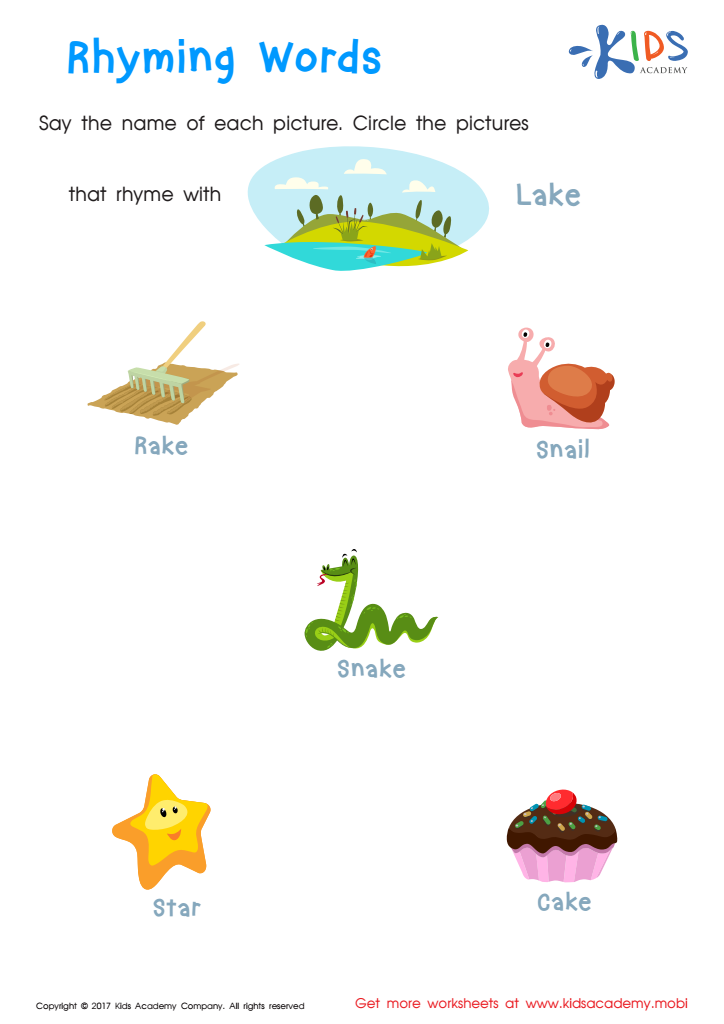
Rhyming Words Rhyming Worksheet
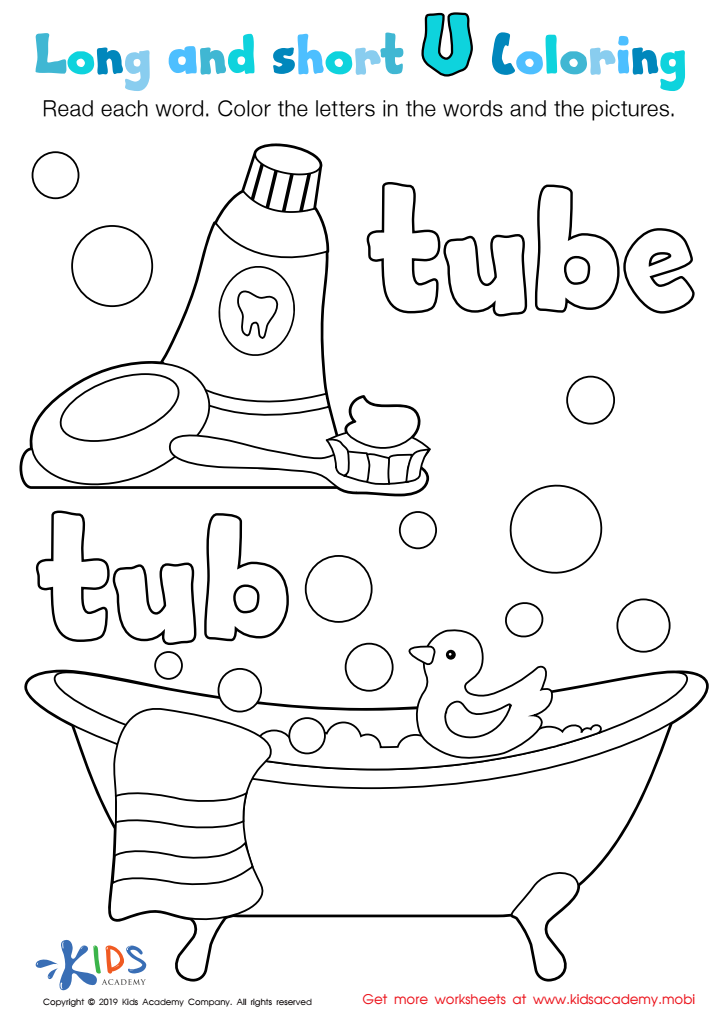
Long and Short U Worksheet
 Assign to My Students
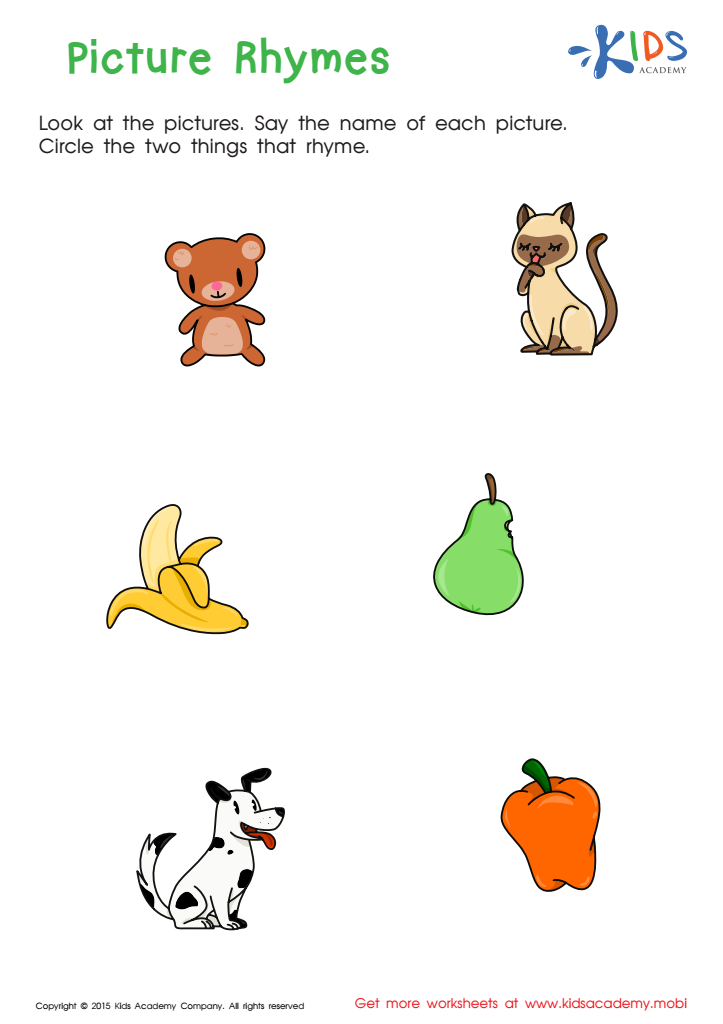
First Words: Picture Rhymes Worksheet
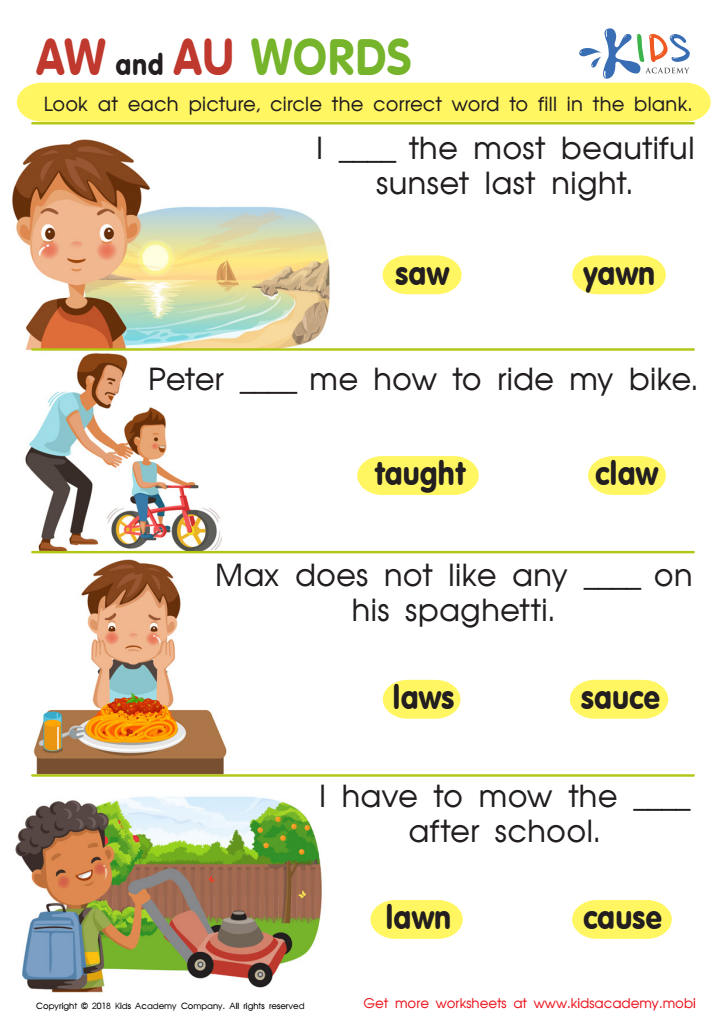
Reading: AW and AU Words Worksheet


.jpg)





Sound recognition is a crucial skill in early literacy development for children aged 4-9. It refers to the ability to identify and process the different sounds in spoken words, which forms the foundation for reading and writing. Parents and teachers should prioritize this skill because it directly impacts a child's reading ability.
Firstly, sound recognition helps children develop phonemic awareness—the understanding that words are made up of distinct sounds or phonemes. This understanding is essential for decoding unfamiliar words, ultimately leading to improved reading fluency. Children who excel in sound recognition are more likely to grasp the relationship between letters and sounds, facilitating quicker learning of letter-sound correspondence.
Additionally, fostering sound recognition supports vocabulary expansion. As children learn to recognize sounds, they become more adept at distinguishing between similar-sounding words, enhancing comprehension and language skills.
Furthermore, sound recognition contributes to overall academic success. Reading proficiency in early years is linked to later academic achievement. By emphasizing this skill, parents and teachers can empower children with confidence and motivation in their reading journey, setting a solid foundation for lifelong learning and love for reading.
Ultimately, investing in sound recognition during these formative years pays dividends in a child’s educational experience.








