Understanding perspectives Reading Worksheets for Ages 4-9
3 filtered results
-
From - To
Explore our "Understanding Perspectives Reading Worksheets" designed for children ages 4-9. These engaging materials help young learners develop critical thinking skills by exploring different viewpoints in stories and interactions. Each worksheet encourages empathy and comprehension through age-appropriate texts and questions that invite discussion. Ideal for teachers and parents, these resources promote literacy while fostering important social and emotional skills. Dynamic activities include drawing, storytelling, and matching exercises that resonate with young minds. Enhance your child's reading experience and cultivate a deeper understanding of perspectives with our thoughtfully crafted worksheets that make learning both fun and impactful!
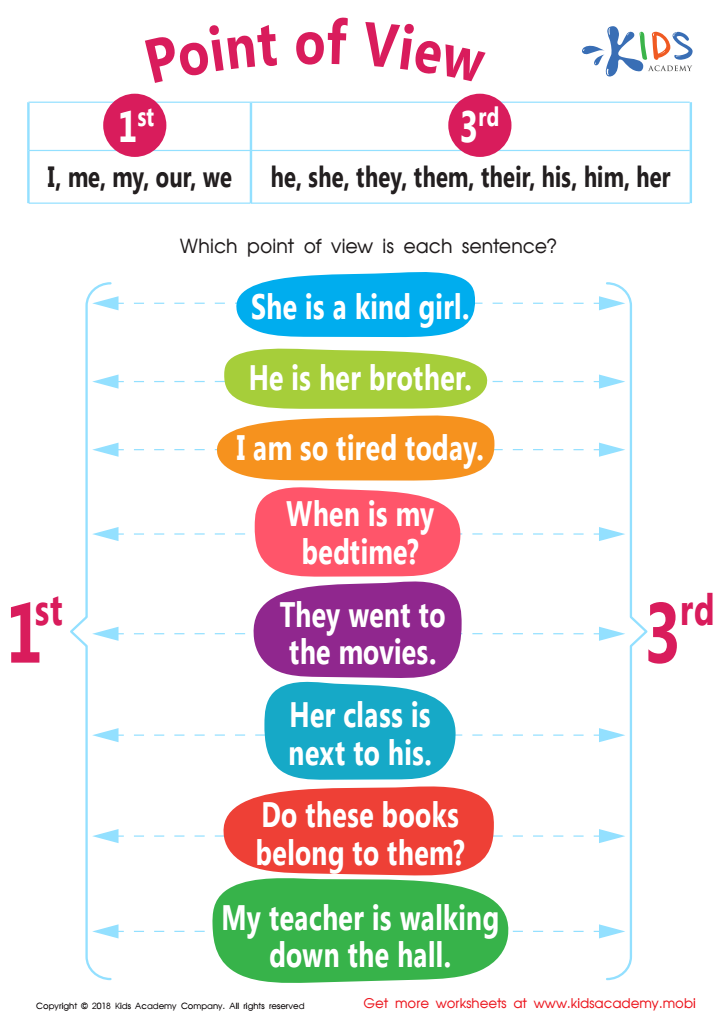
Point of View Worksheet
 Assign to My Students
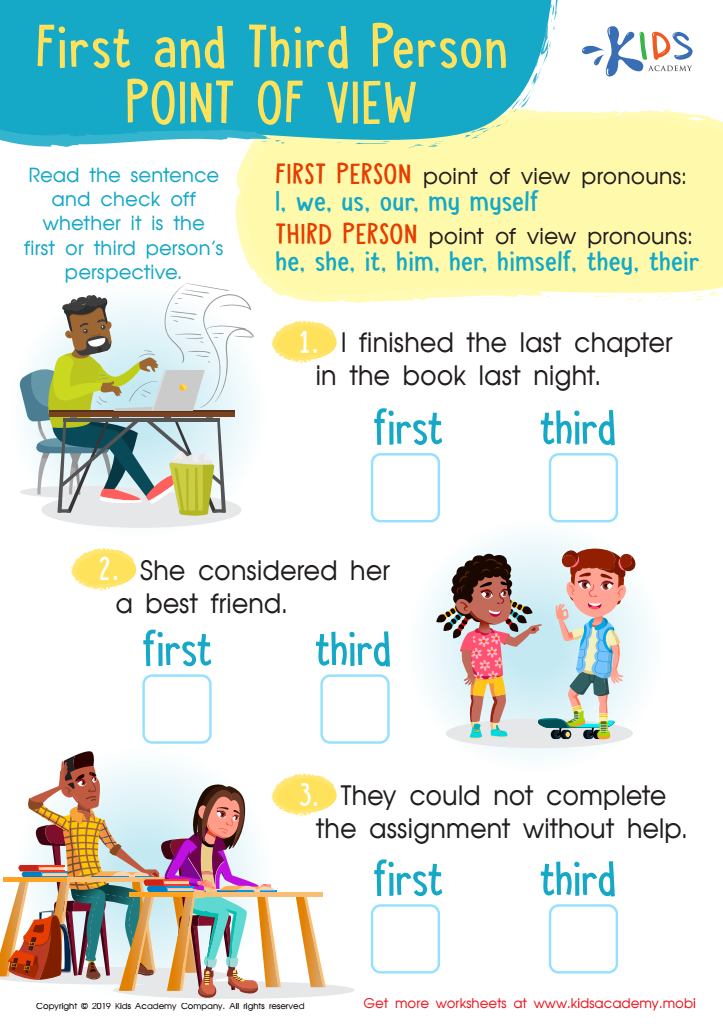
First and Third Person Point of View Worksheet
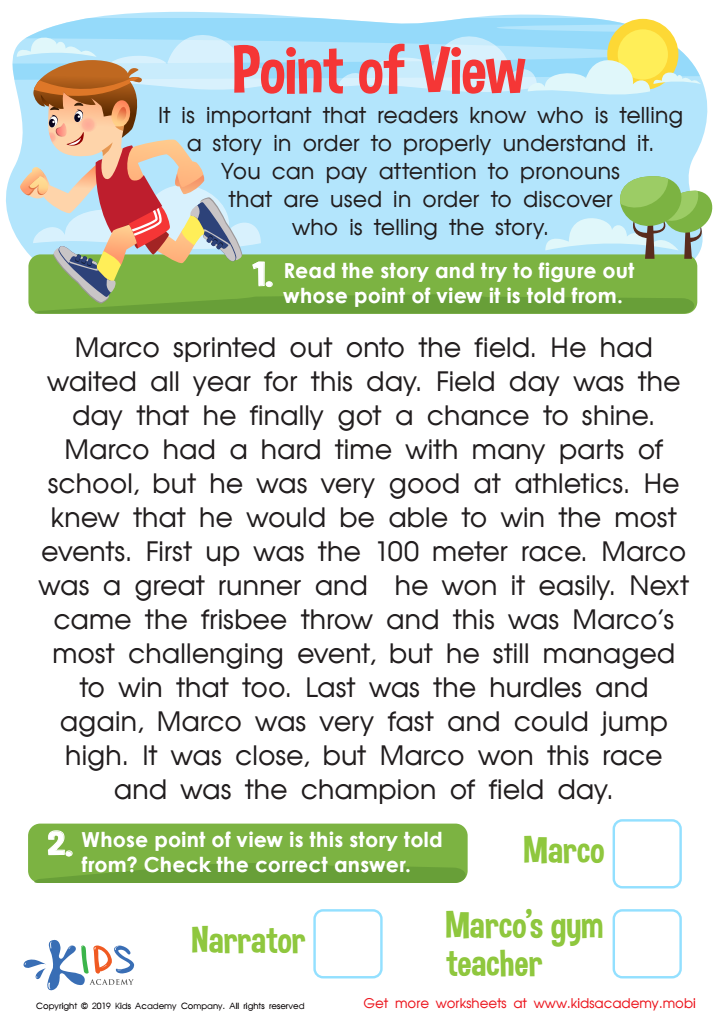
Point of View Worksheet








Understanding perspectives in reading is crucial for children ages 4-9 as it fosters empathy, critical thinking, and richer comprehension skills. During these formative years, children are developing their ability to see the world through various lenses, which is essential for social interactions and emotional intelligence. When they learn to appreciate different perspectives in stories, they begin to identify with characters and understand their emotions, motivations, and values.
This skill enhances overall reading comprehension; children who grasp multiple viewpoints can engage more deeply with texts. They better analyze conflicts, draw inferences, and anticipate outcomes, which promotes a more nuanced understanding of narratives. Furthermore, these interactions with diverse perspectives help combat biases from an early age, instilling an appreciation for diversity and inclusion.
For parents and teachers, encouraging this understanding in reading not only supports academic success but also contributes to shaping well-rounded individuals. It lays the groundwork for strong communication skills and conflict resolution abilities, which are essential for lifelong learning and relationships. By prioritizing understanding perspectives in reading, adults can nurture thoughtful, empathetic future leaders who respect and value different points of view in an increasingly interconnected world.








