Understanding prefixes Reading Worksheets for Ages 4-9
3 filtered results
-
From - To
Introduce young learners to the exciting world of prefixes with our specially designed reading worksheets for ages 4-9. These worksheets creatively illustrate how prefixes alter word meanings, boosting vocabulary and comprehension skills. Perfectly tailored to engage a child's curiosity, each activity incorporates playful themes and intuitive lessons, ensuring foundational mastery. From simple exercises to more engaging tasks, our worksheets foster an early love for reading and language. Equip your child with the tools they need to understand the building blocks of words and enhance their literacy journey today. Make learning fun and effective with Kids Academy’s enriching resources.
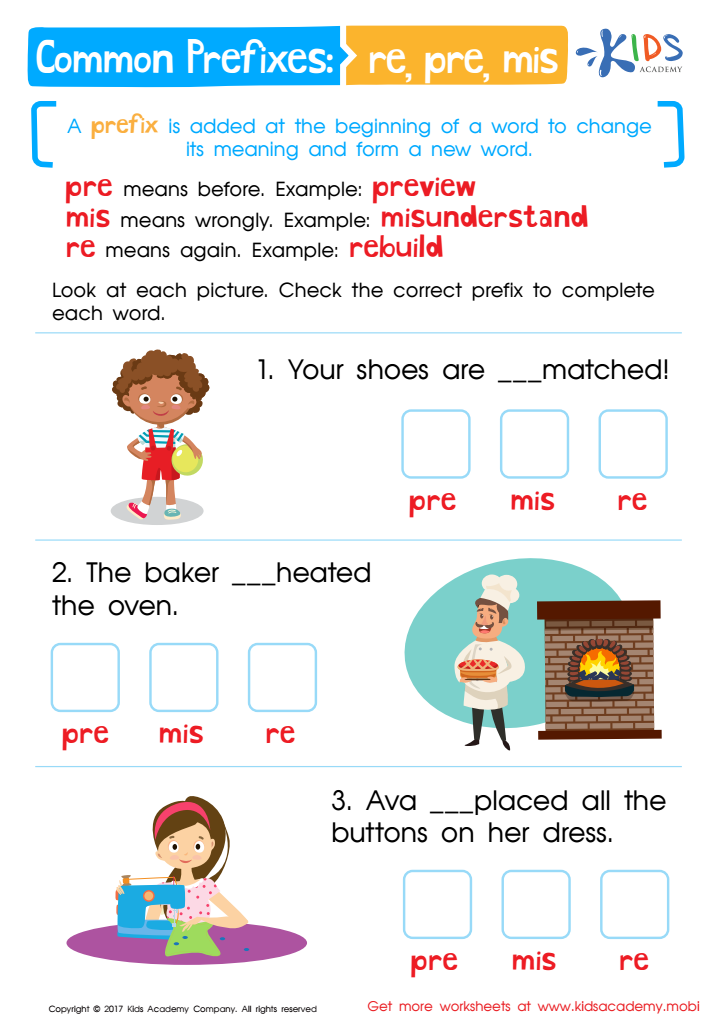
Common Prefixes Worksheet: RE, PRE, MIS
 Assign to My Students
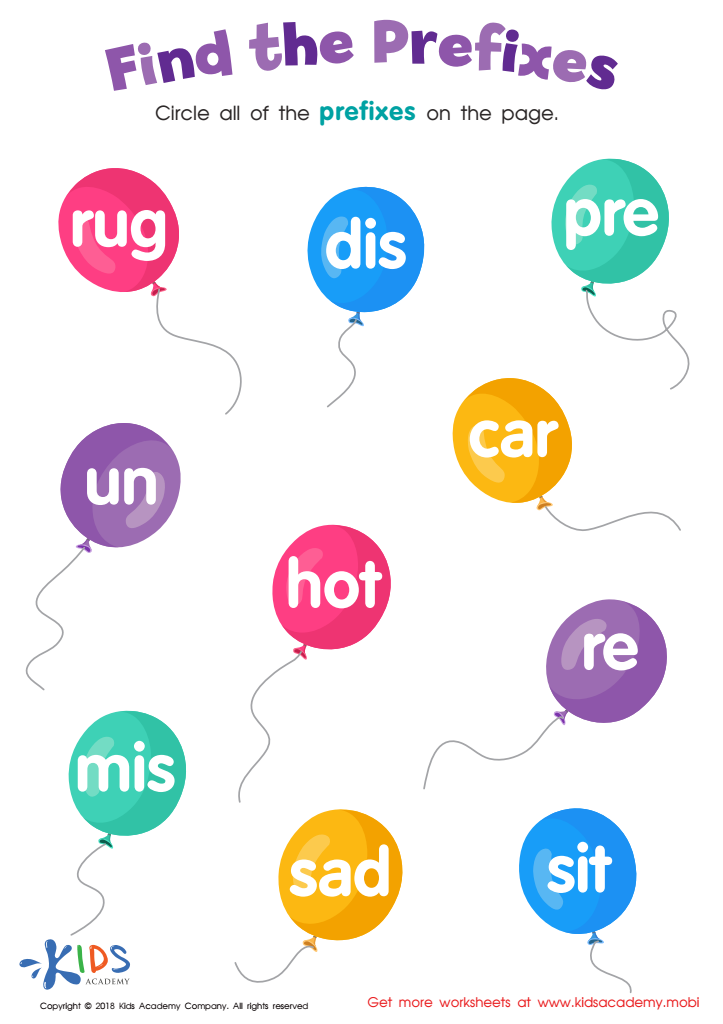
Reading: Find the Prefixes Worksheet
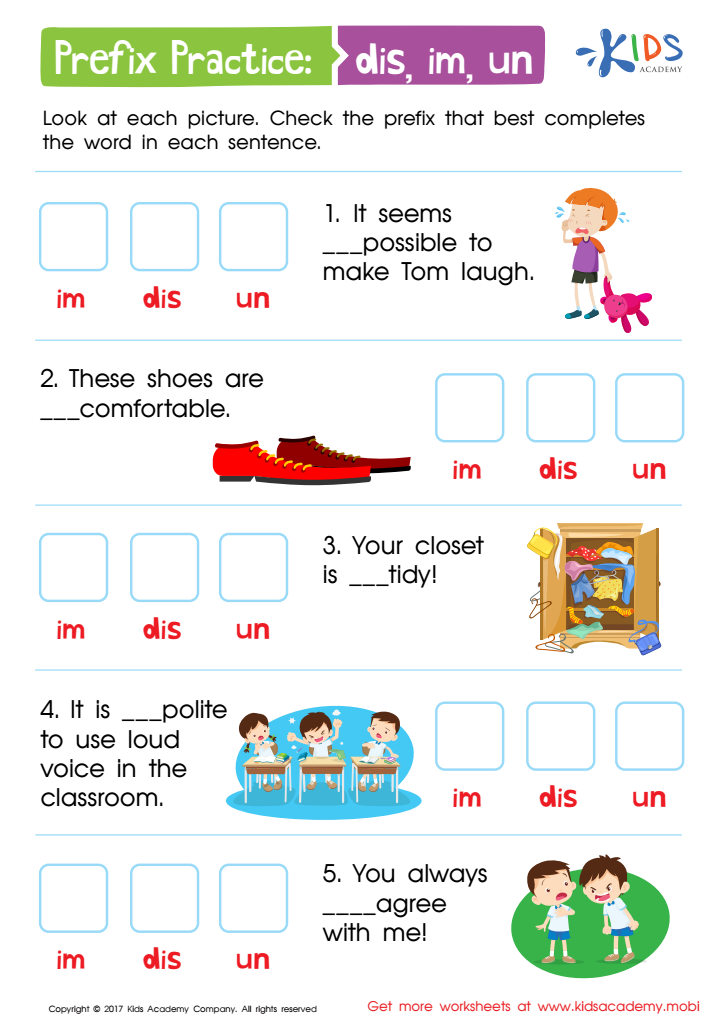
Prefix Practice Worksheet: DIS, IM, UM








Understanding prefixes is a foundational skill in reading and vocabulary development for young children aged 4-9. Parents and teachers should care about this because teaching prefixes expands a child's ability to decode and comprehend new words. For instance, by learning that the prefix "un-" means "not," children can understand that "unhappy" means "not happy." This preemptive learning strategy enhances their reading skills by making it easier for them to break down complex words into manageable parts.
Moreover, this understanding boosts children's confidence as they encounter and successfully decipher new words, making reading a more enjoyable and less intimidating experience. Vocabulary growth is closely linked to reading comprehension, which is crucial for academic success across all subjects. Children's early mastery of prefixes prepares them for the increasing complexity of language they will encounter in higher grades.
In addition, learning prefixes stimulates cognitive development by encouraging children to recognize patterns in language, which can translate to enhanced problem-solving skills. This kind of pattern recognition is not only applicable to reading but also to mathematics and scientific observation.
In summary, understanding prefixes is a key component in early literacy that provides children with the tools they need for academic success and cognitive development, making it an essential focus for both parents and teachers.








