Verb identification Reading Worksheets for Ages 4-9
3 filtered results
-
From - To
Enhance your child's reading skills with our Verb Identification Reading Worksheets for ages 4-9! These engaging, age-appropriate worksheets are designed to help young learners identify and understand verbs within sentences. Each worksheet features fun exercises and colorful illustrations to make learning interactive and enjoyable. Perfect for both classroom and at-home use, these worksheets promote critical literacy skills, boost vocabulary, and build a strong grammatical foundation. Ideal for early learners, educators, and parents, our verb identification activities transform verb recognition into an exciting adventure. To explore our full collection, visit Kids Academy now!
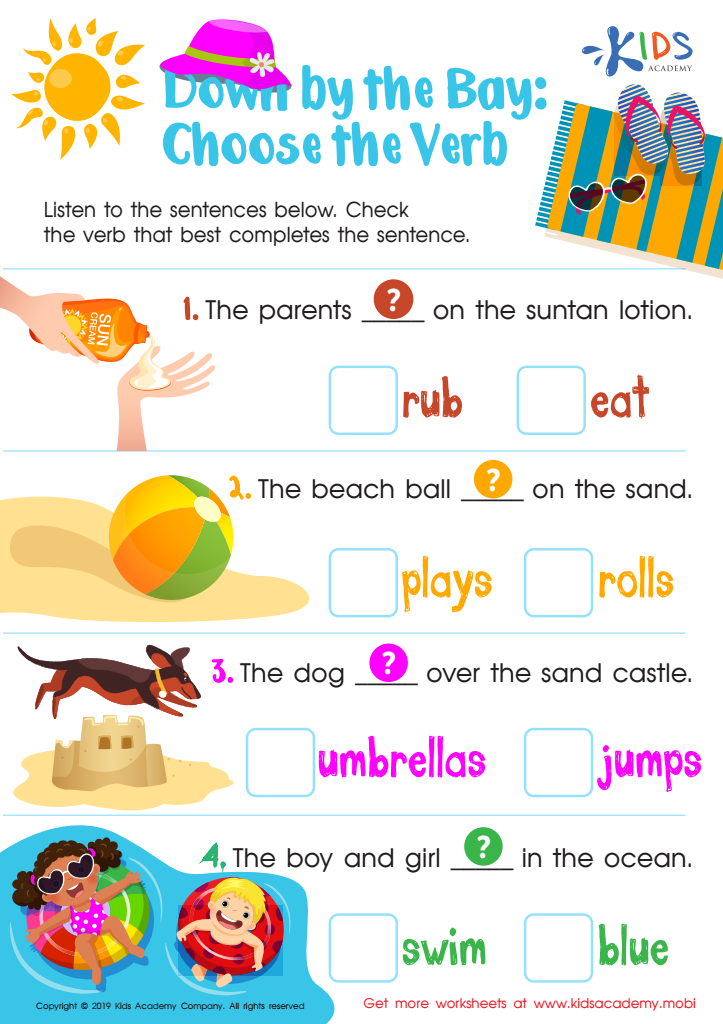
Down by the Bay: Choose the Verb Worksheet
 Assign to My Students
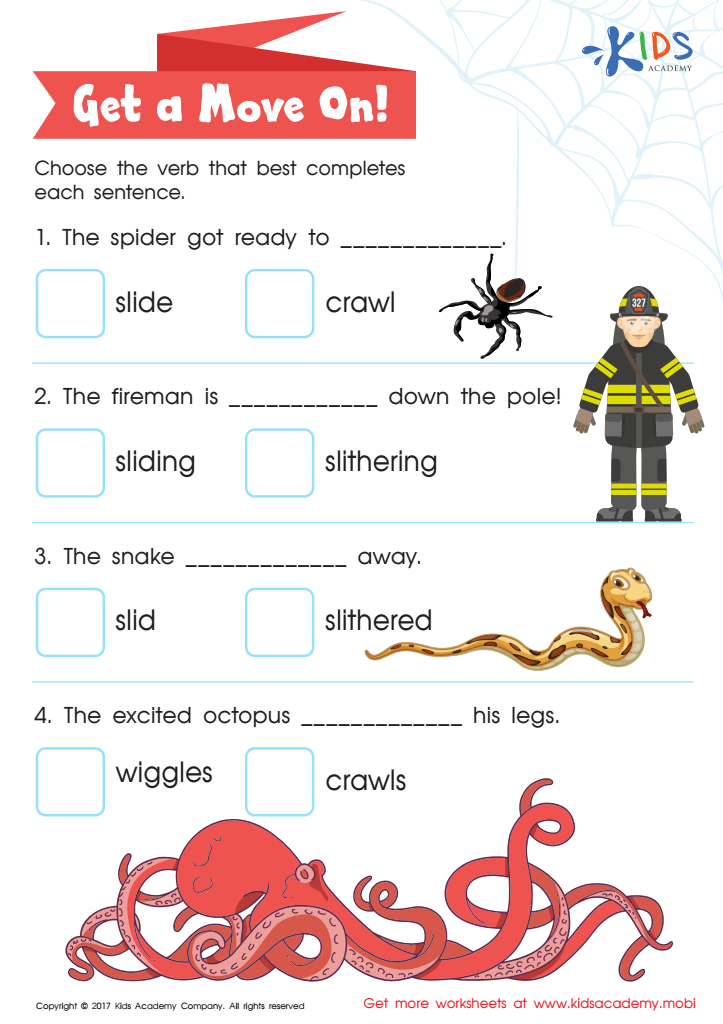
Verb Worksheet
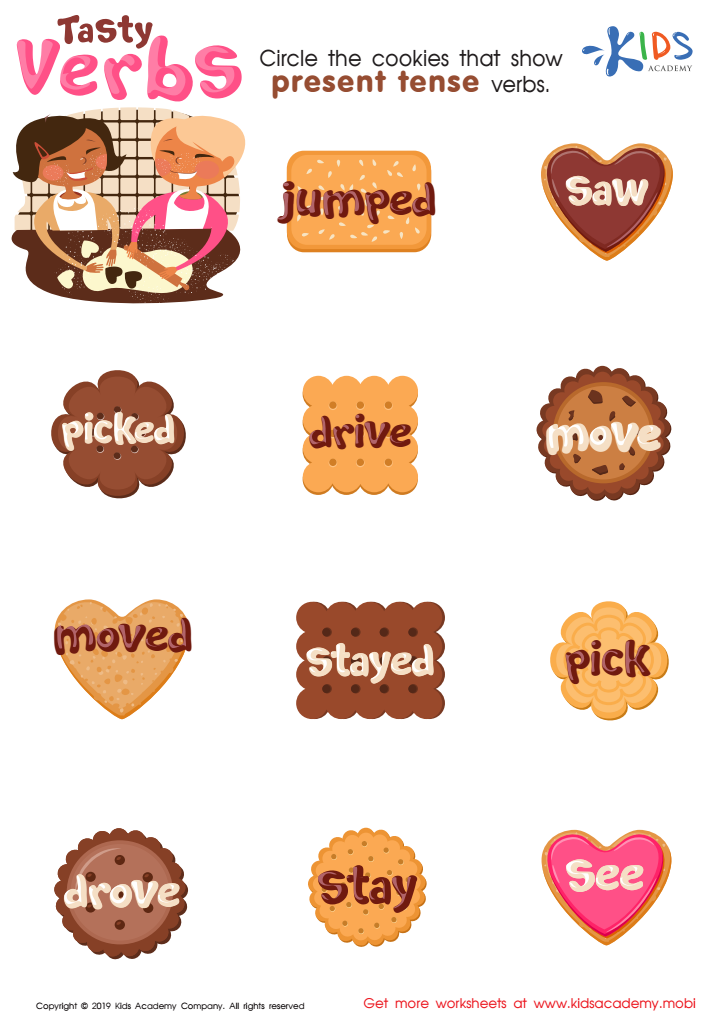
Tasty Verbs Worksheet






Parents and teachers should care about verb identification reading for children aged 4-9 because it is fundamental to language development and literacy skills. Verbs are action words that describe what a subject does, making them crucial for constructing meaningful sentences. When children learn to identify verbs early, they gain a better understanding of how sentences work, which is essential for both reading comprehension and expressive writing.
Moreover, recognizing verbs helps children improve their grammatical skills and enhances their ability to communicate effectively. For young learners, mastering verb identification lays the groundwork for more complex linguistic concepts they'll encounter later, such as verb tenses and sentence structure.
Additionally, engaging children in activities that focus on verbs fosters critical thinking and cognitive development. Fun and interactive methods, such as reading stories, playing educational games, or participating in hands-on writing exercises, can make learning enjoyable and memorable. By reinforcing verb usage, parents and teachers contribute to a child's confidence in using language creatively and accurately.
Overall, focusing on verb identification helps build a robust linguistic foundation, thereby facilitating academic success and everyday communication skills for young learners. This early investment pays dividends by empowering children with the tools they need for future learning challenges.








