Character analysis Reading Comprehension Worksheets for Ages 4-9
5 filtered results
-
From - To
Introduce your child to the fascinating world of stories with our Character Analysis Reading Comprehension Worksheets for ages 4-9. These engaging worksheets are designed to enhance young readers' ability to understand and analyze characters in a story. They help develop crucial learning skills by encouraging kids to observe character traits, motivations, and actions. Each worksheet combines fun activities with thought-provoking questions, fostering a love for reading and critical thinking abilities. Perfect for classroom or home use, these resources make character analysis accessible and enjoyable for young learners, setting a solid foundation for future literary exploration.
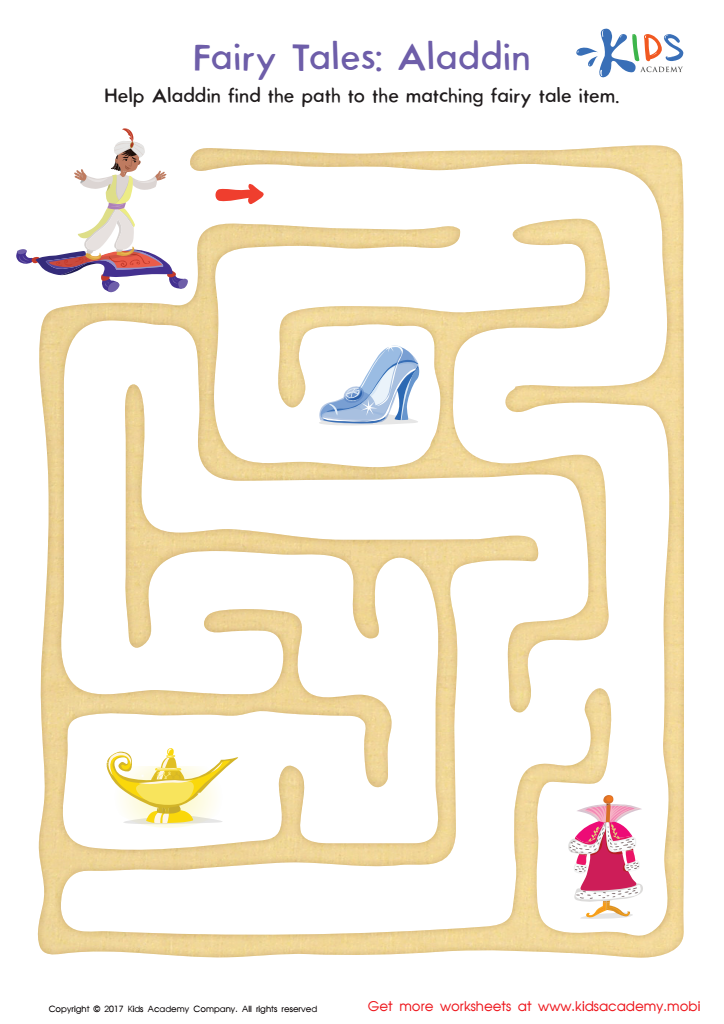
Fairy Tales Aladdin Printable
 Assign to My Students
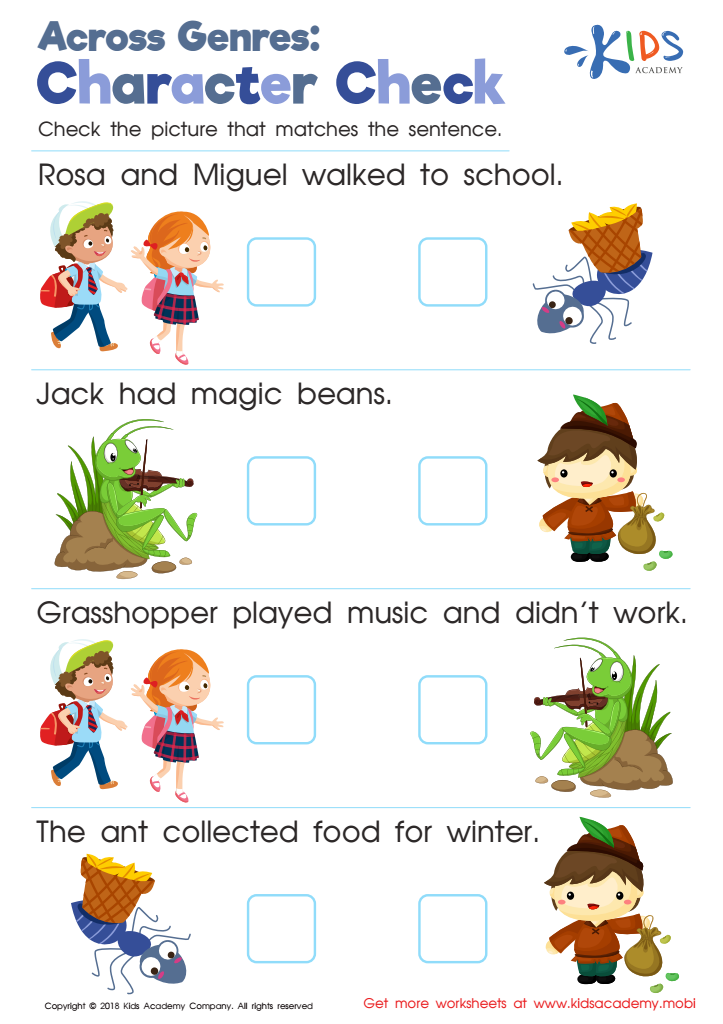
Across Genres: Character Check Worksheet
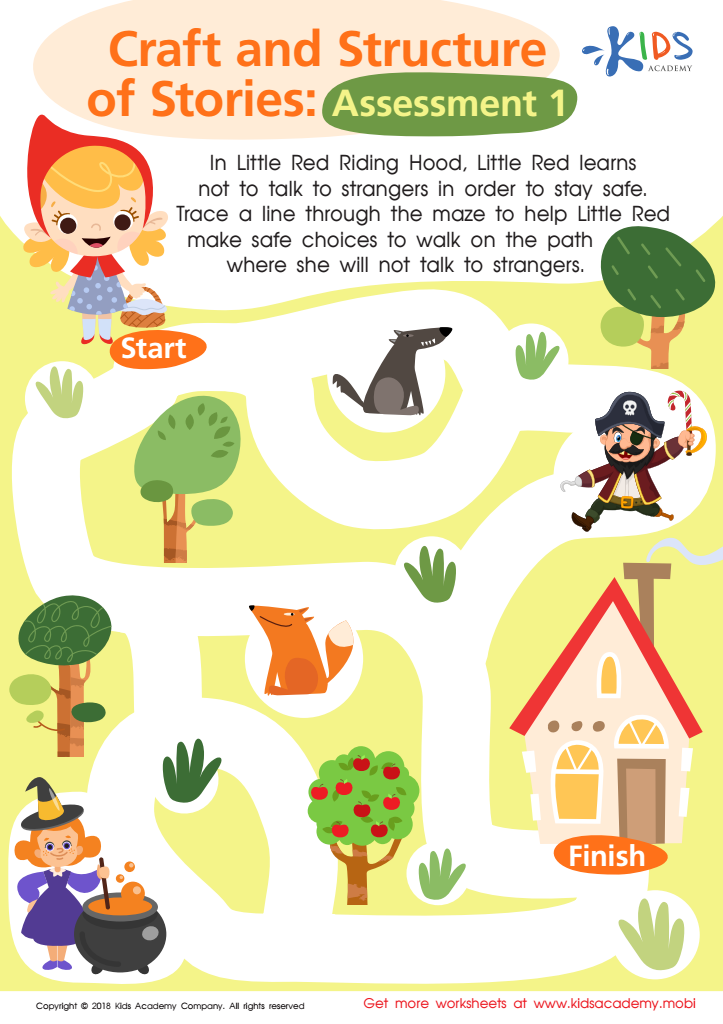
Craft and Structure of Stories: Assessment 1 Worksheet
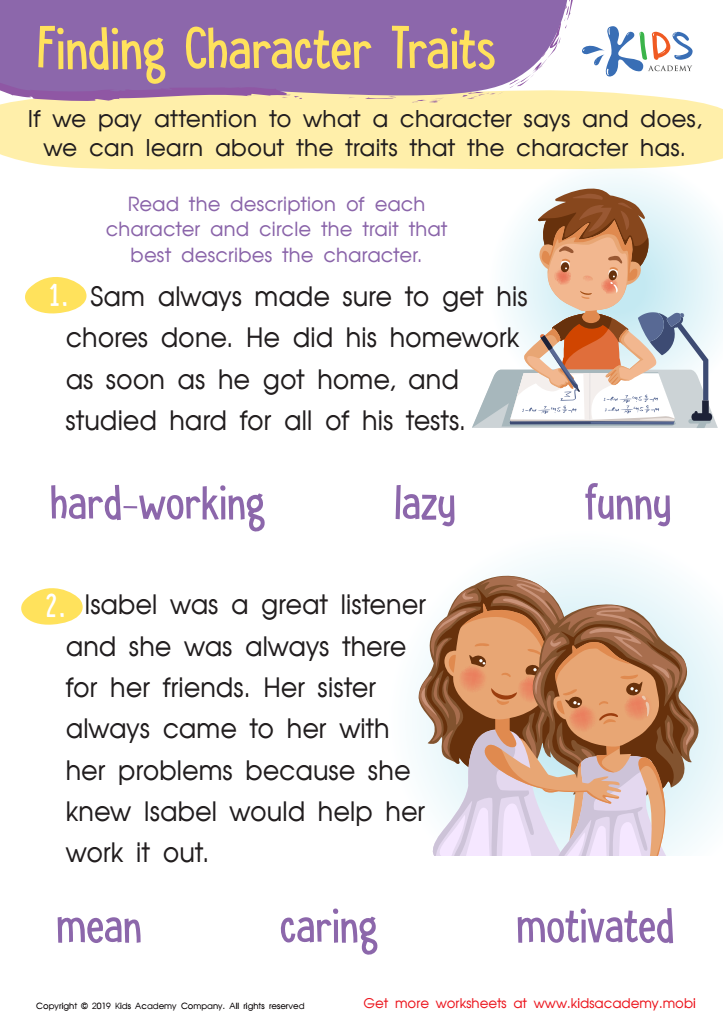
Finding Character Traits Worksheet
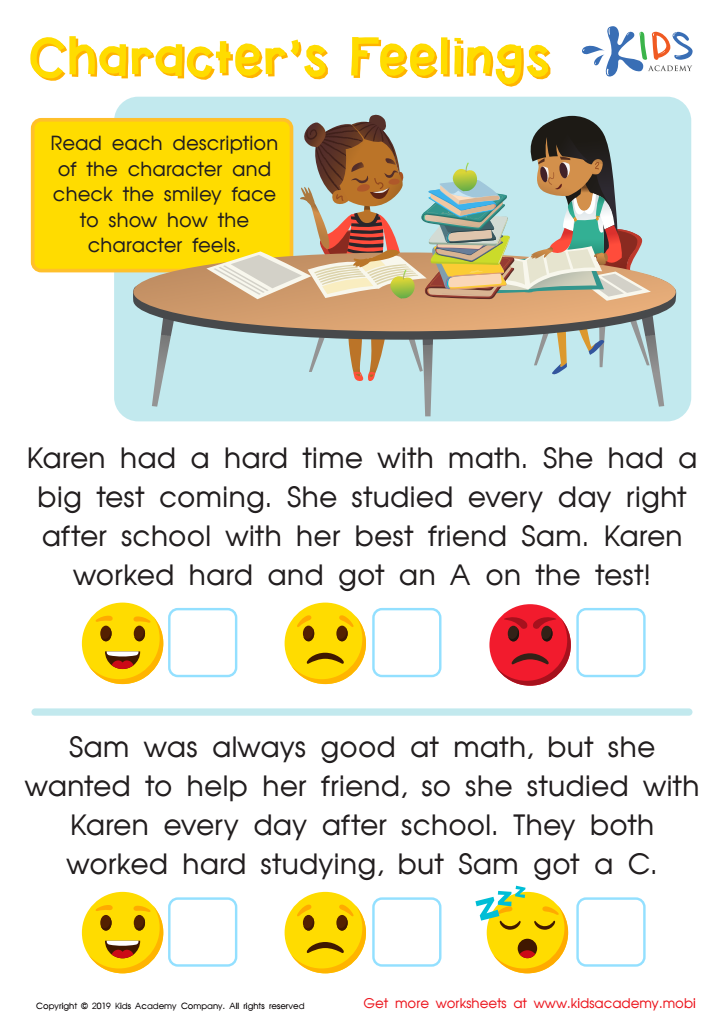
Character’s Feelings Worksheet








Character analysis in reading comprehension is vital for children ages 4-9 because it plays a fundamental role in developing key reading and cognitive skills that benefit their overall education and personal growth. By engaging with stories and understanding characters, young readers learn to empathize, identify emotions, and appreciate diverse perspectives, which fosters emotional intelligence. Recognizing character traits, motivations, and changes also strengthens critical thinking skills and invites children to make inferences and predictions, deepening their engagement with the text.
Further, character analysis can enhance vocabulary acquisition as children encounter descriptive words and phrases and explore their meanings within different contexts. Engaging with well-developed characters encourages children to discuss and reflect, improving oral language skills and promoting rich conversations at home or in the classroom. It helps students make connections between the narrative and their own lives, cementing learning experiences.
Lastly, these comprehension skills lay a strong foundation for future academic requirements across all subjects. As children develop the ability to analyze characters and stories, they become better prepared for more complex texts and ideas, ultimately growing into more insightful, thoughtful, and articulate individuals. In summary, investing in character analysis nurtures a holistic development that extends beyond reading to interpersonal and critical thinking skills essential for lifelong success.








