Critical thinking skills Reading Comprehension Worksheets for Ages 4-9
6 filtered results
-
From - To
Enhance your child's reading comprehension with our engaging worksheets designed for ages 4-9, focusing on critical thinking skills. Our curated materials encourage young learners to analyze, infer, and evaluate information while fostering a love for reading. Each worksheet features age-appropriate texts accompanied by thought-provoking questions, helping children develop their reasoning abilities and boost their confidence. Whether used at home or in the classroom, these worksheets support your child’s cognitive growth and comprehension skills in an enjoyable way. Start your child's journey to becoming a critical thinker today with our fun and educational reading comprehension resources!
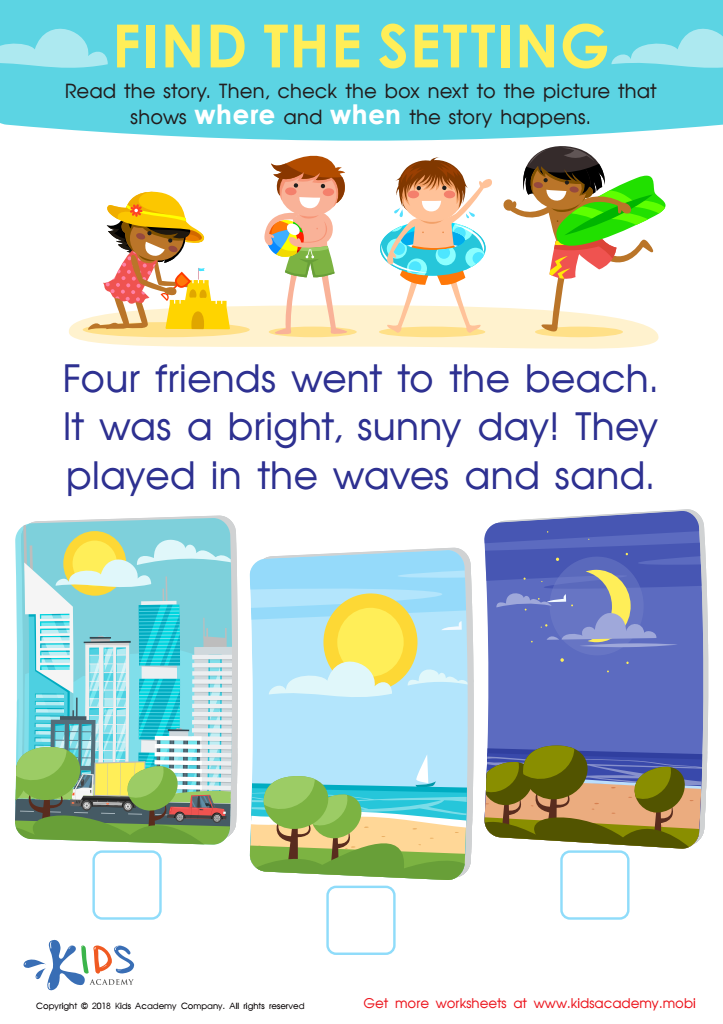
Find the Setting Worksheet
 Assign to My Students
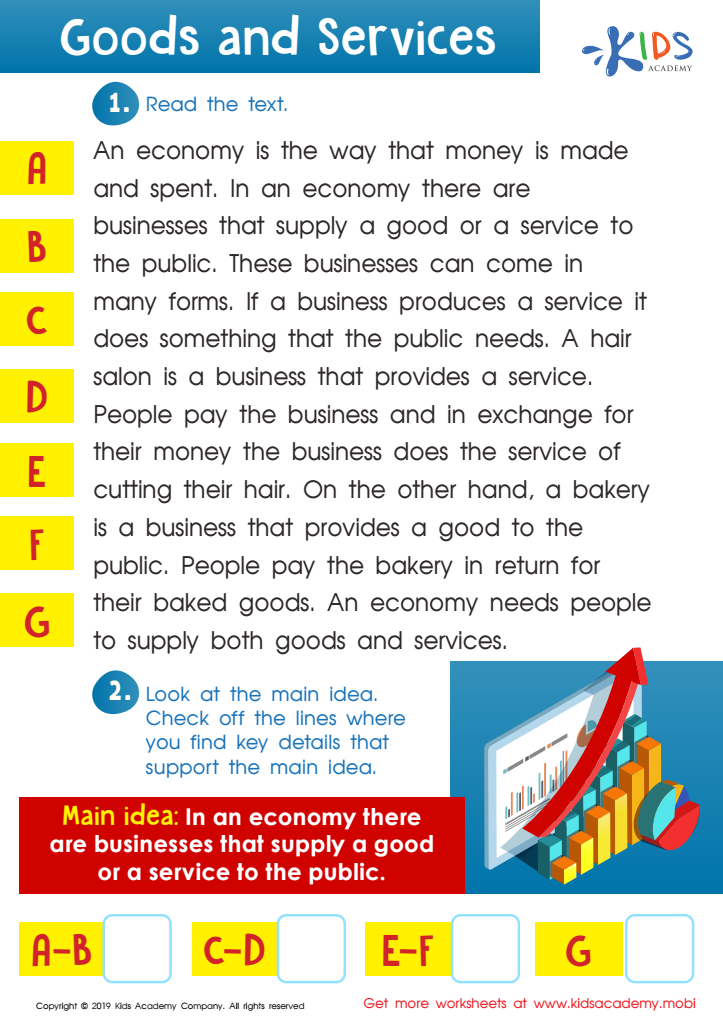
Goods and Services Worksheet
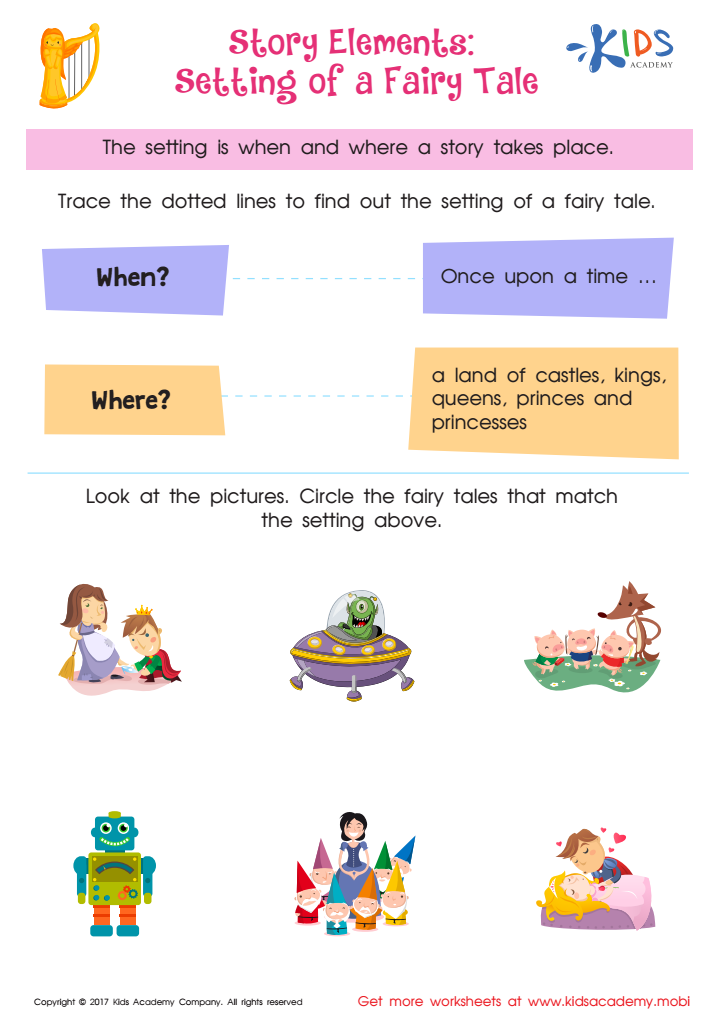
Story Elements: Setting of a Fairy Tale Printable
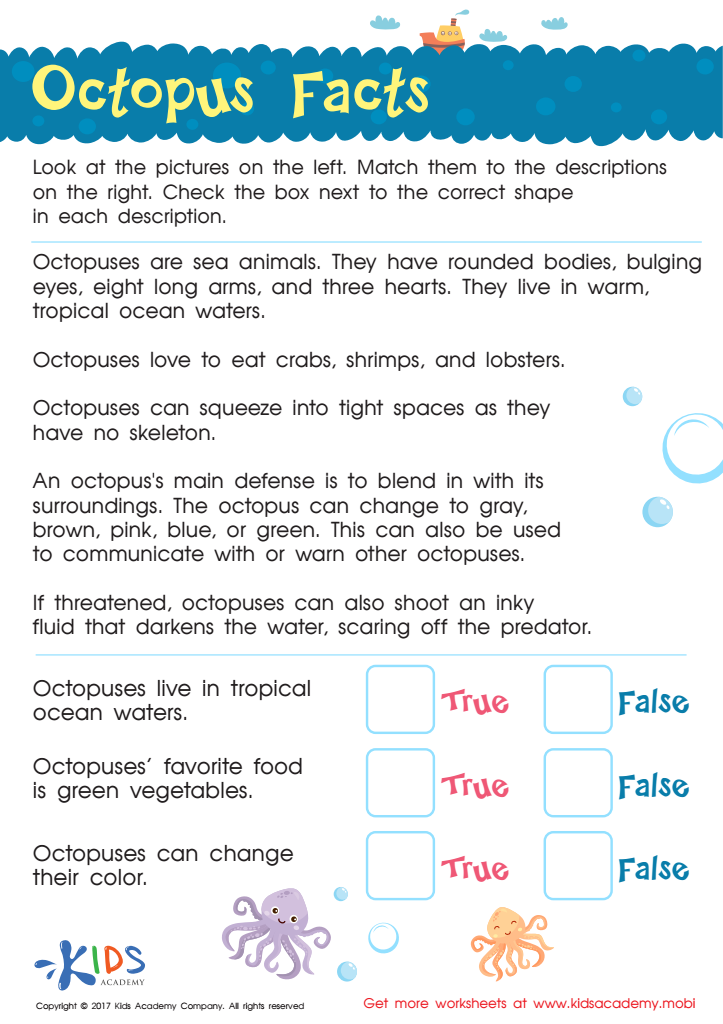
Octopus Facts Worksheet For Kids
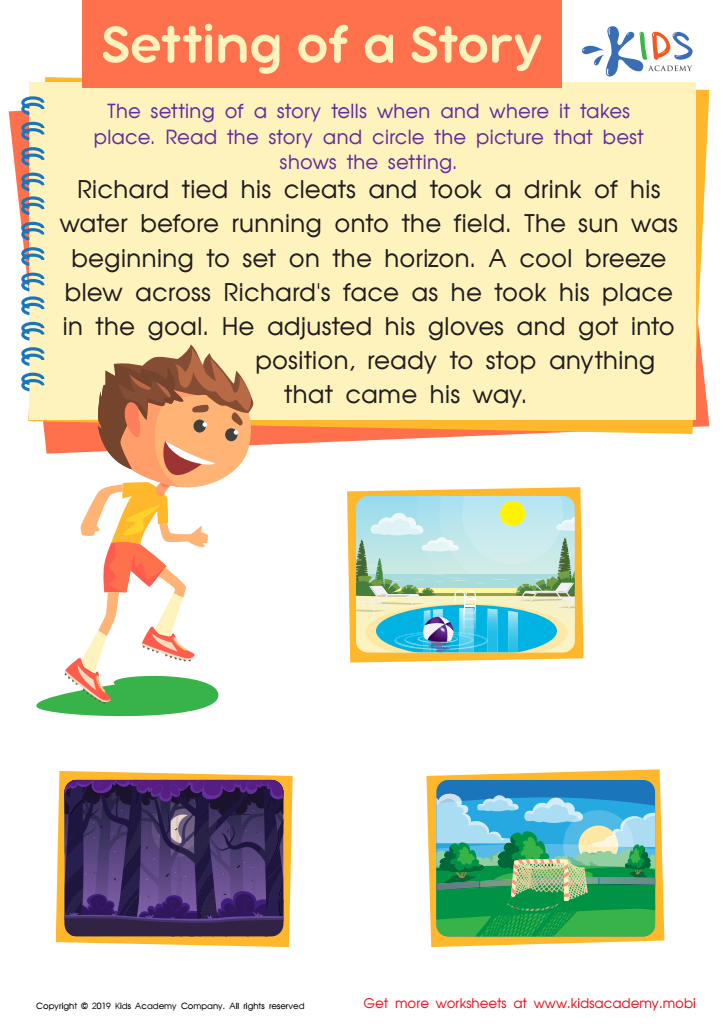
Setting of a Story Worksheet
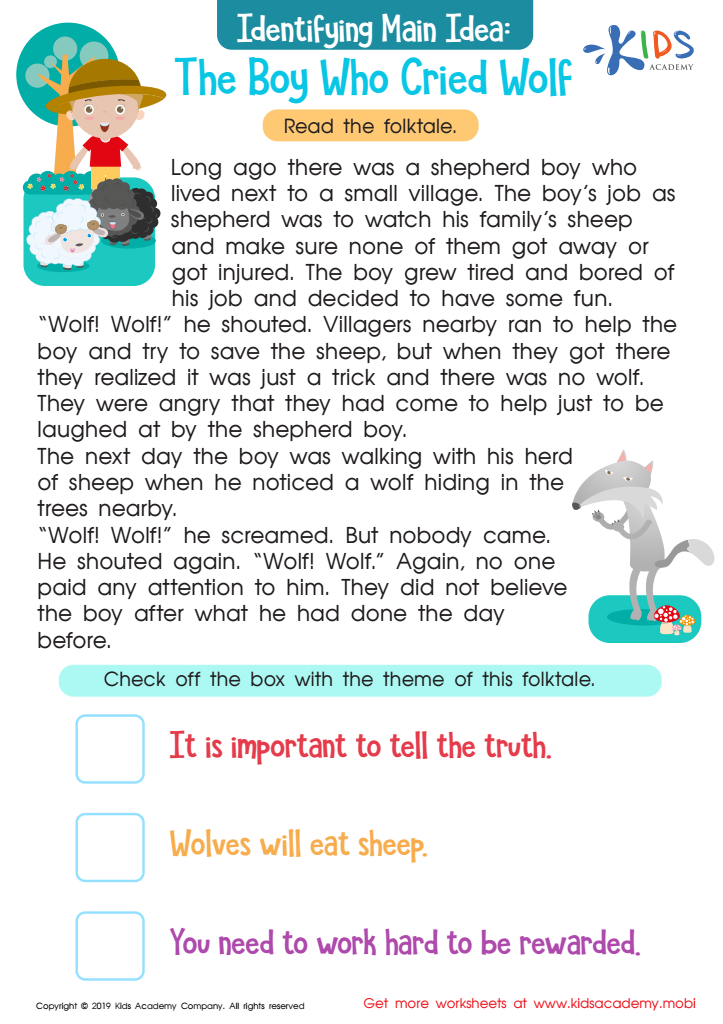
The Boy Who Cried Wolf Part 2 Worksheet








Critical thinking skills and reading comprehension are foundational for children's academic success and lifelong learning, especially for ages 4-9. During this critical developmental stage, children's brains are highly receptive to new concepts, and fostering these skills can enhance their ability to process and understand information.
Parents and teachers should care about these skills because they are interlinked with essential cognitive abilities. Strong comprehension leads to better retention and application of knowledge. When children learn to critically analyze text—questioning what they read and considering different perspectives—they develop the ability to think independently, a skill that will serve them well beyond the classroom.
Furthermore, critical thinking encourages creativity and problem-solving; children learn to evaluate situations, make informed decisions, and express their opinions confidently. Incorporating activities that promote these skills into daily reading practices empowers children to engage with texts deeply and actively, rather than passively consuming information.
Supporting critical thinking and reading comprehension in early education helps set the stage for effective communication and informed citizenship, paving the way for personal and academic growth. In essence, by nurturing these skills, parents and teachers play a vital role in shaping well-rounded, capable individuals.








