
Logical thinking Reading Comprehension Worksheets for Ages 4-9
6 filtered results
Difficulty Level
Grade
Age
-
From - To
Subject
Activity
Standards
Unlock your child’s potential with our "Logical Thinking Reading Comprehension Worksheets for Ages 4-9." Designed to enhance critical thinking, these engaging activities help children develop essential reading comprehension skills by encouraging them to analyze, compare, and draw conclusions. Perfect for young learners, our worksheets blend fun with learning, fostering a love for reading while sharpening logical reasoning abilities. Featuring age-appropriate content and vivid illustrations, these worksheets ensure that learning is both effective and enjoyable. Visit Kids Academy to explore our extensive collection and give your child the tools they need for successful reading and thoughtful problem-solving.
Favorites
With answer key
Interactive
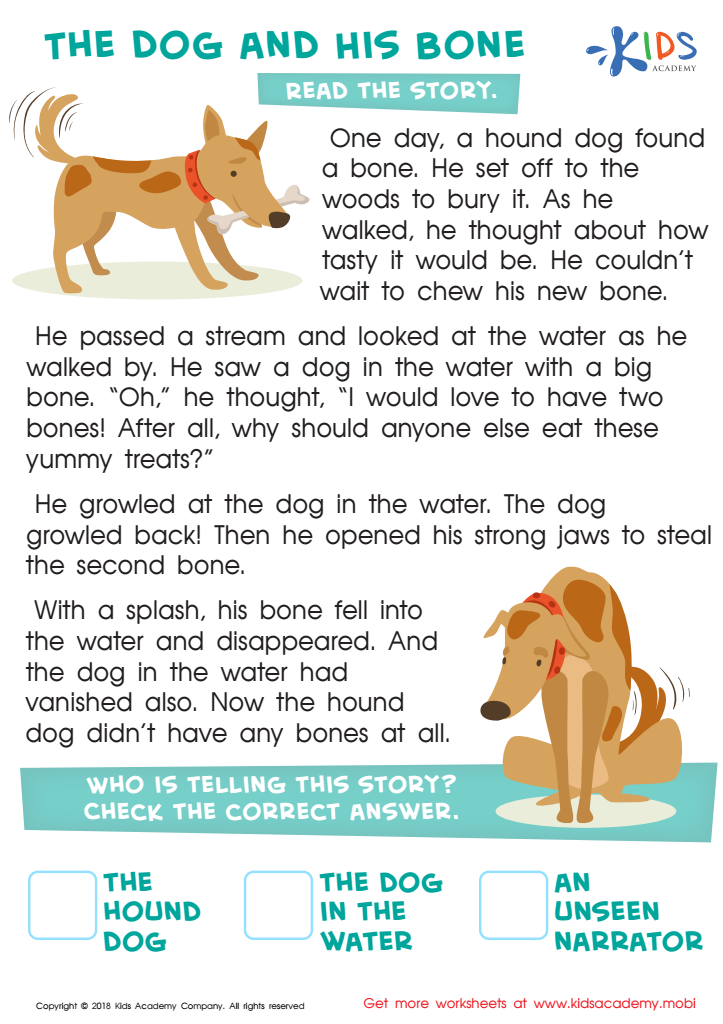
The Dog and His Bone Worksheet
Read the story of The Dog and His Bone to your kids, making sure they take in the details. Ask them the questions in this worksheet and help them check the answers. Encourage them to think carefully.
 Assign to My Students
The Dog and His Bone Worksheet
Worksheet
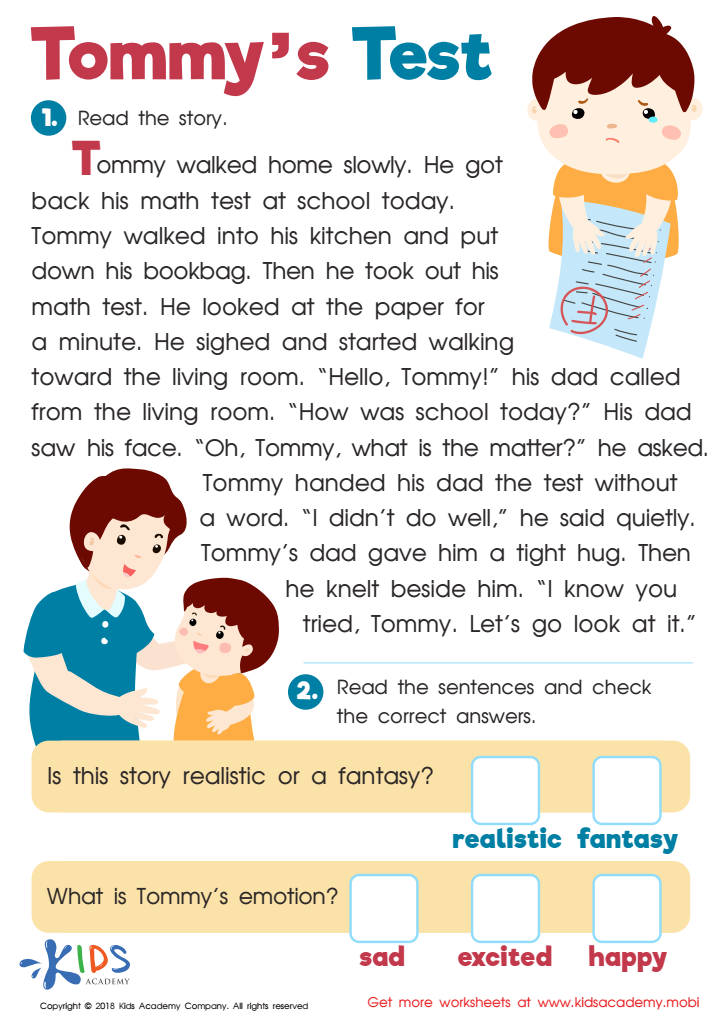
Tommys Test Worksheet
Reading short stories to your students builds a bond, teaches new words and lessons. Read the story aloud and then have them listen for details. Ask them the questions at the bottom and help them check the answers.
Tommys Test Worksheet
Worksheet
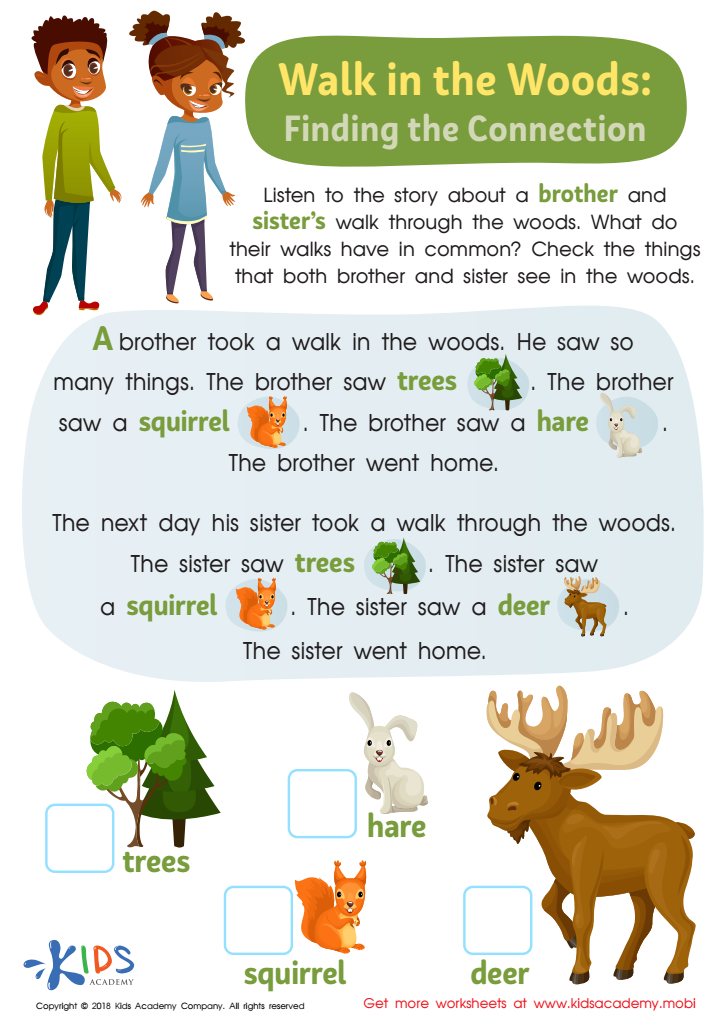
Walk In the Woods: Finding Connections Worksheet
Brother and sister took a walk in the woods to connect with nature and get some exercise. As they went, they noted different things like birds and plants, which they share in this story. Read it to your little ones, and help them check off the items the two saw. It's a great way to learn about nature and enjoy the outdoors.
Walk In the Woods: Finding Connections Worksheet
Worksheet
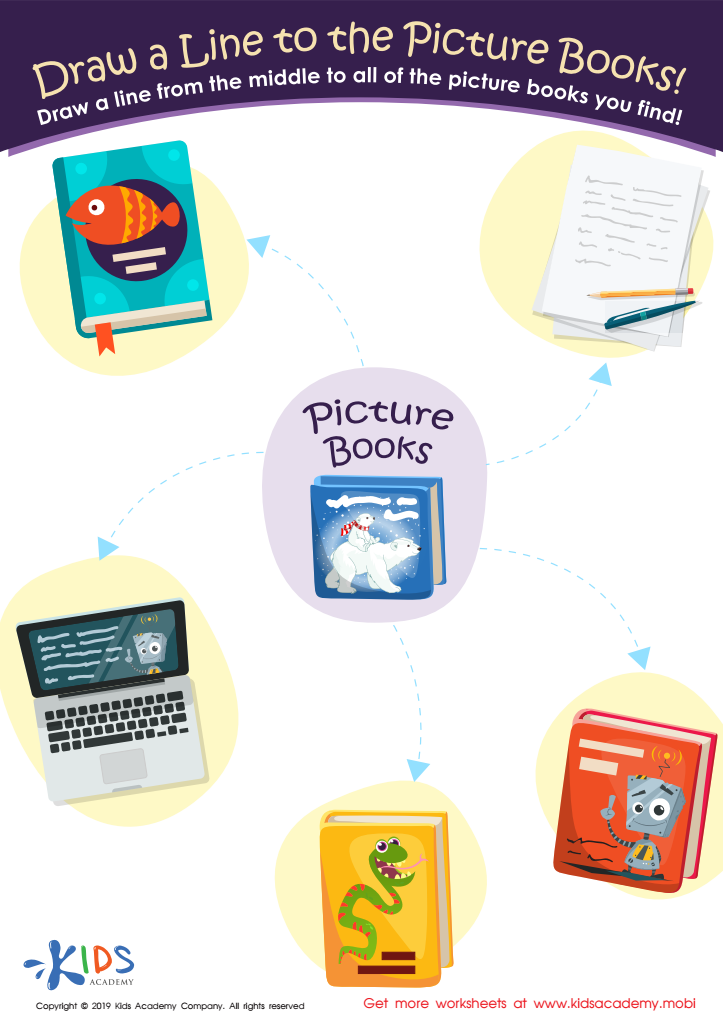
Draw a Line to the Picture Books Worksheet
Encourage your students to read and explore with this fun exercise! They'll draw a line from the word 'picture books' to the five objects. Picture books are exciting, with stories and colorful images. Make story time even more enjoyable with this worksheet!
Draw a Line to the Picture Books Worksheet
Worksheet
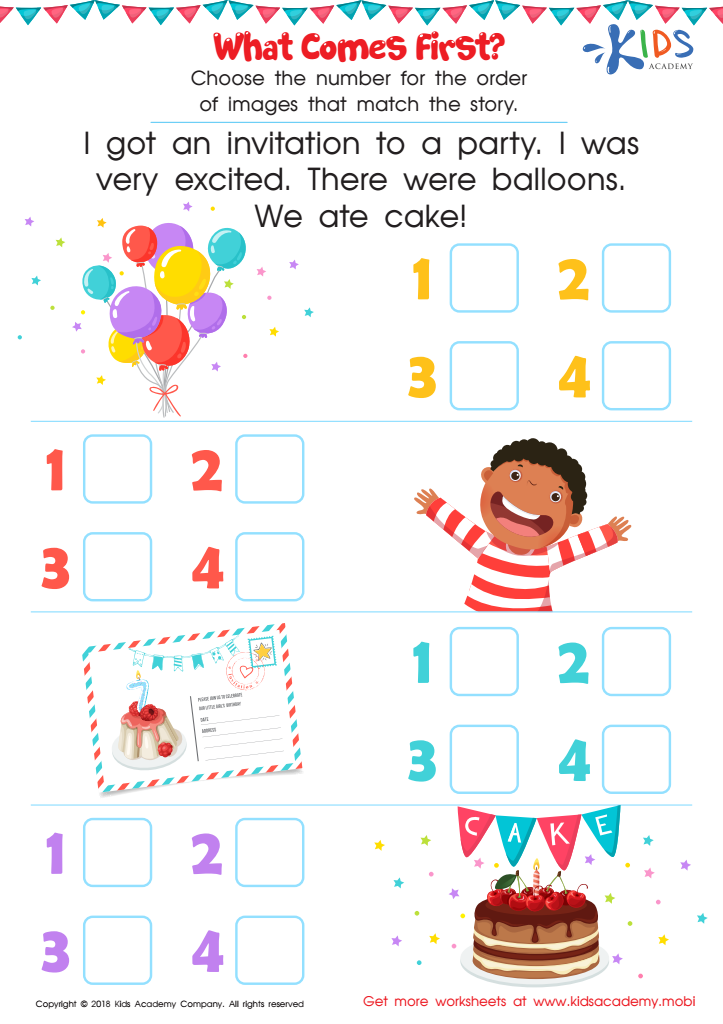
What Comes First Worksheet
Before you start, ask your child what they see in the picture. Read the story aloud together, then show them the images in order, numbered 1-5. Ask them to choose the numbers that match the story. Have fun and enjoy this party worksheet with your little one! (80 words)
What Comes First Worksheet
Worksheet
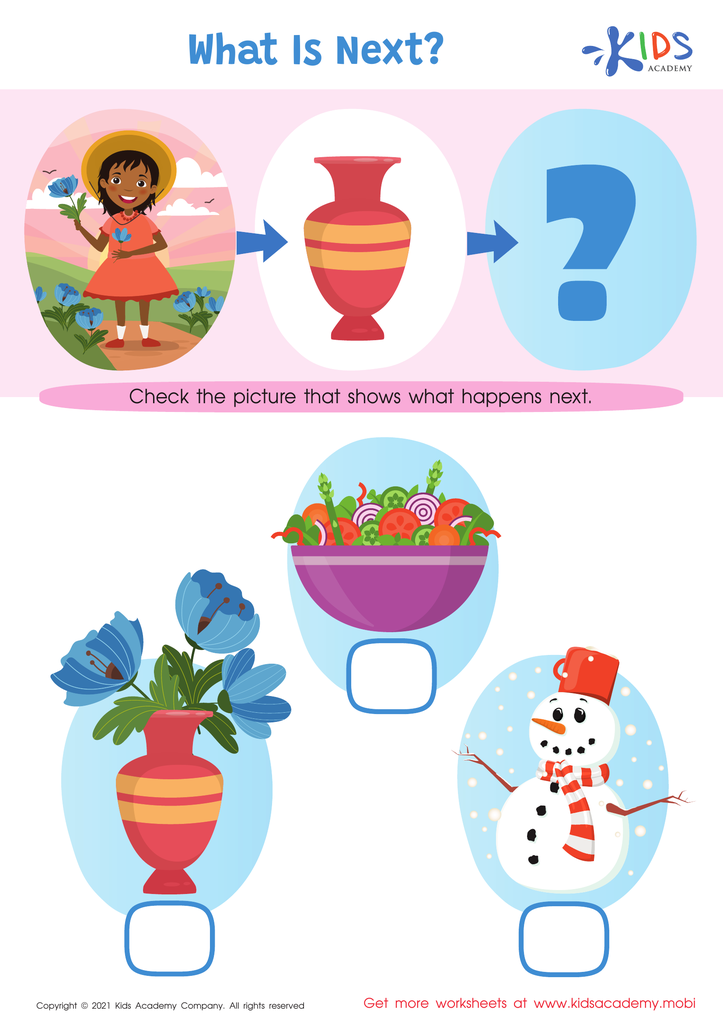
What is Next? Worksheet
The purpose of our company is to provide customers with the highest quality products and the best customer service experience in the industry.
We're committed to providing customers with excellent products and customer service. Our goal is to be the best in the industry.
What is Next? Worksheet
Worksheet
Join Kids Academy for Free
Who is primarily going to use this learning content?


.jpg)





Logical thinking and reading comprehension are crucial skills for children ages 4-9 as they form the foundation for academic success and everyday problem-solving. At this formative age, young minds are highly impressionable and capable of absorbing new information rapidly.
Fostering logical thinking helps children to analyze situations, make rational decisions, and understand cause-and-effect relationships. This kind of structured thinking enhances their ability to tackle math problems, understand scientific concepts, and approach challenges methodically, which in turn builds confidence and independence.
Similarly, reading comprehension impacts all areas of learning. When children understand what they read, they can follow instructions more accurately, grasp new topics more quickly, and communicate their own ideas effectively. Improved reading skills also expand their imagination and worldview, developing empathy and cultural awareness through stories and diverse perspectives.
Together, these skills are intertwined; adeptness in logical thinking boosts comprehension capabilities and vice versa. Early proficiency in these areas equips children with the tools they need for critical thinking, effective communication, and lifelong learning. For parents and teachers, prioritizing these skills means investing in a child’s holistic growth and helping them navigate both academic realms and life’s everyday challenges with discernment and understanding.








