Animal recognition Science Worksheets for Ages 4-9
6 filtered results
-
From - To
Discover our engaging "Animal Recognition Science Worksheets" designed for children ages 4-9! These worksheets provide an interactive way to explore the fascinating world of animals through fun activities that promote learning and recognition. Young learners will identify various animals, enhance their observational skills, and expand their vocabulary through vibrant illustrations and skill-building exercises. Ideal for both classroom and home use, our worksheets cater to different learning styles, ensuring every child has an enjoyable educational experience. Explore and download our resources to foster a love for science and nature while boosting your child's cognitive development today!
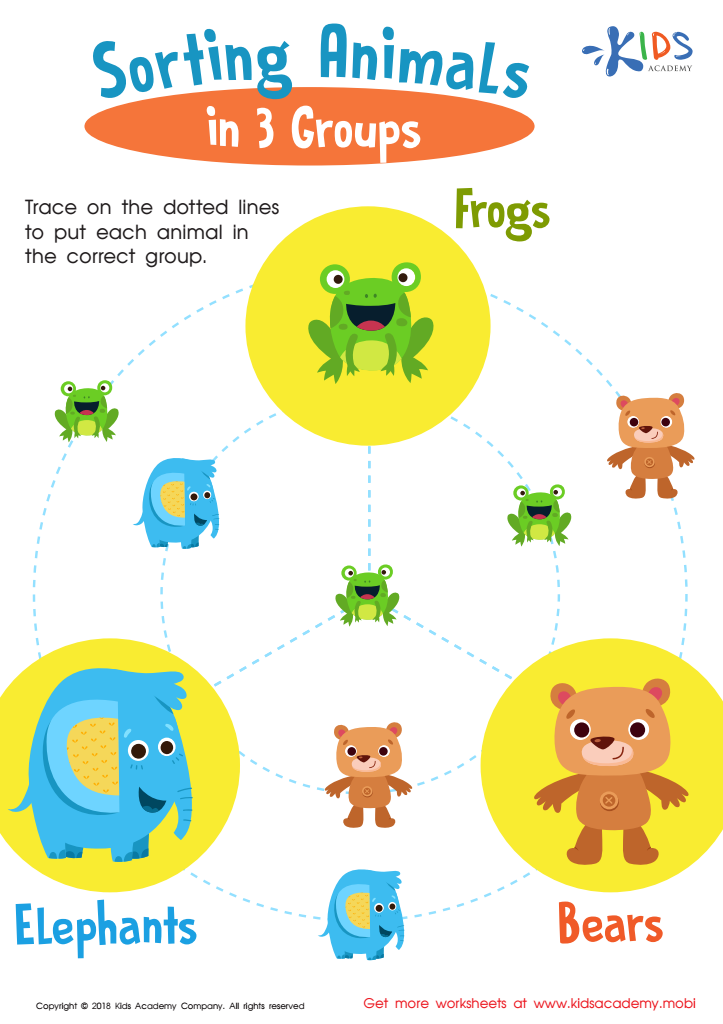
Sorting Animals in 3 Groups Worksheet
 Assign to My Students
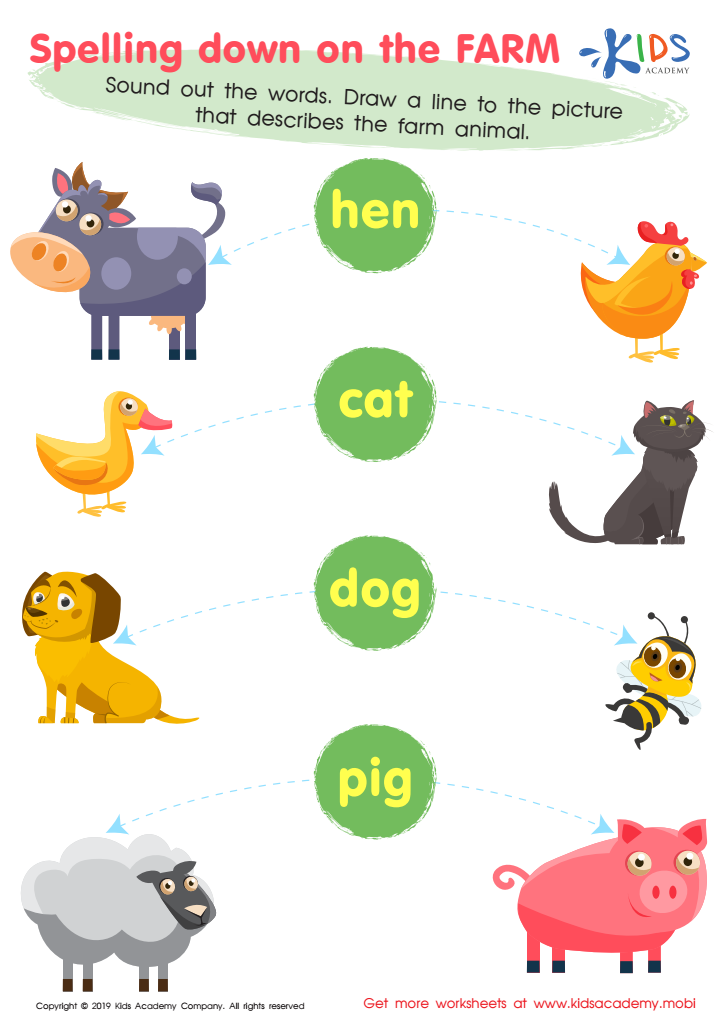
Spelling Down on the Farm Worksheet
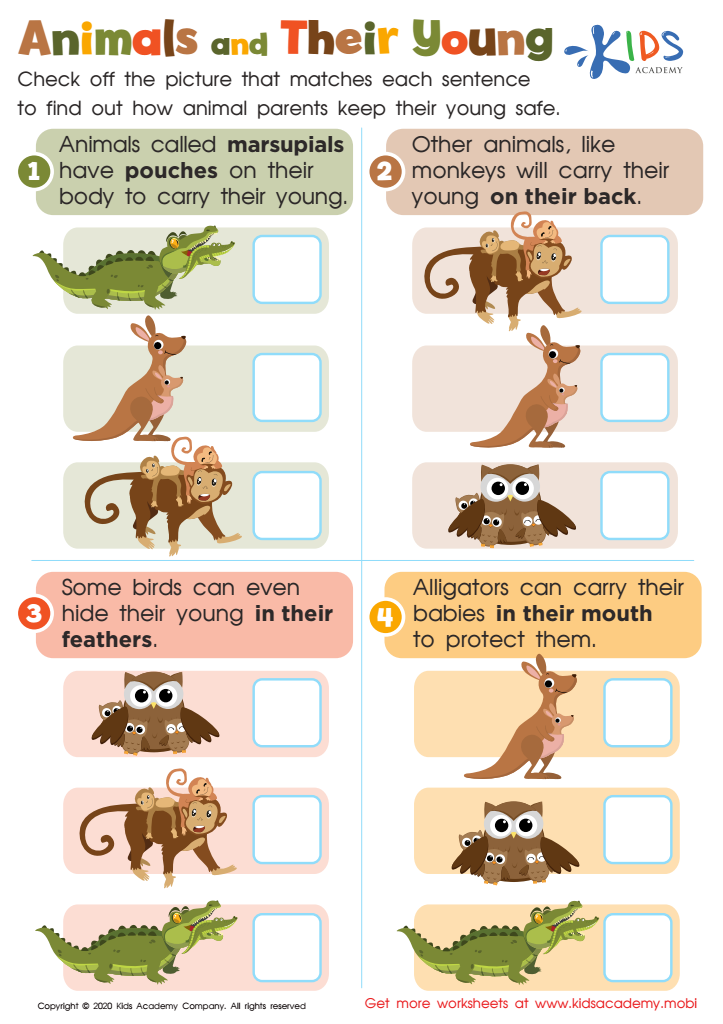
Animals and Their Young Worksheet
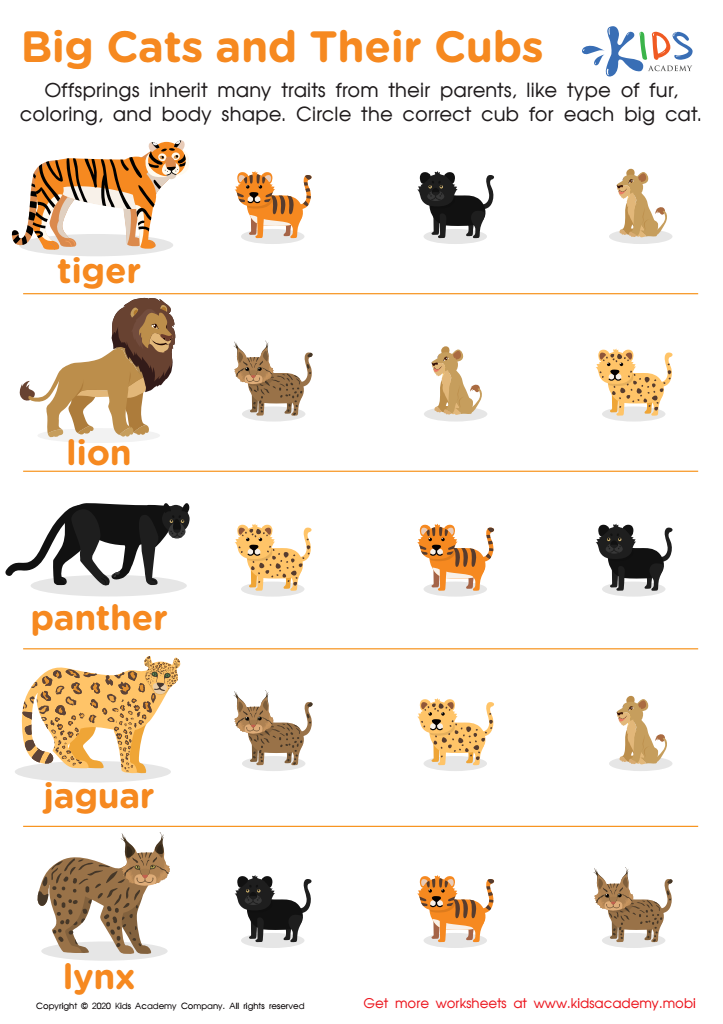
Big Cats and Their Cubs Worksheet
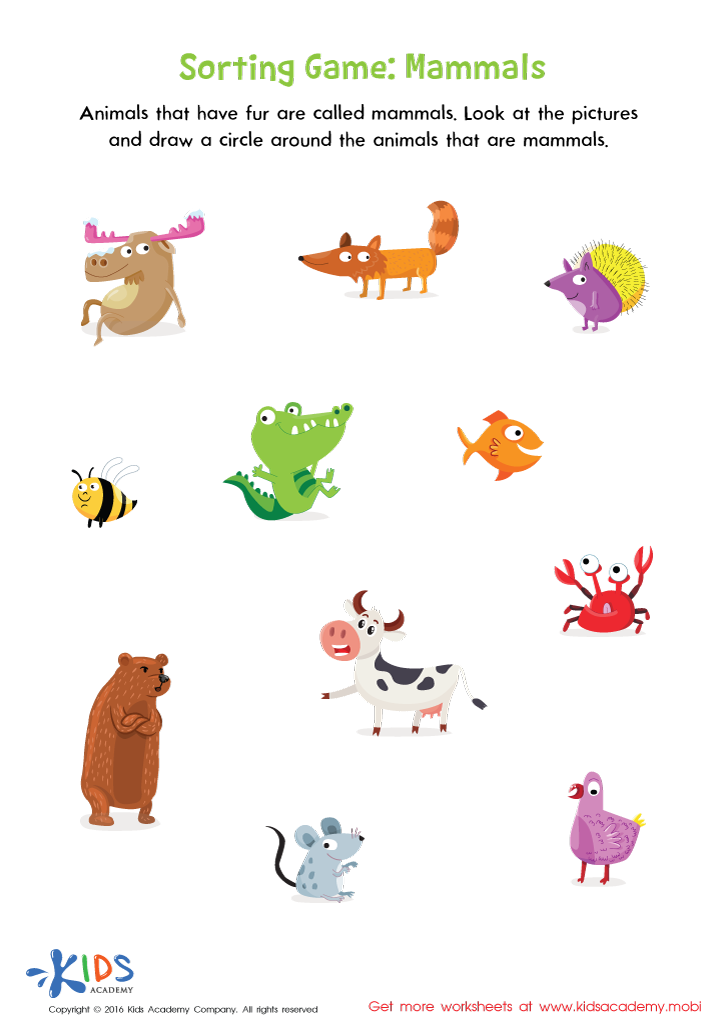
Mammals Sorting Worksheet
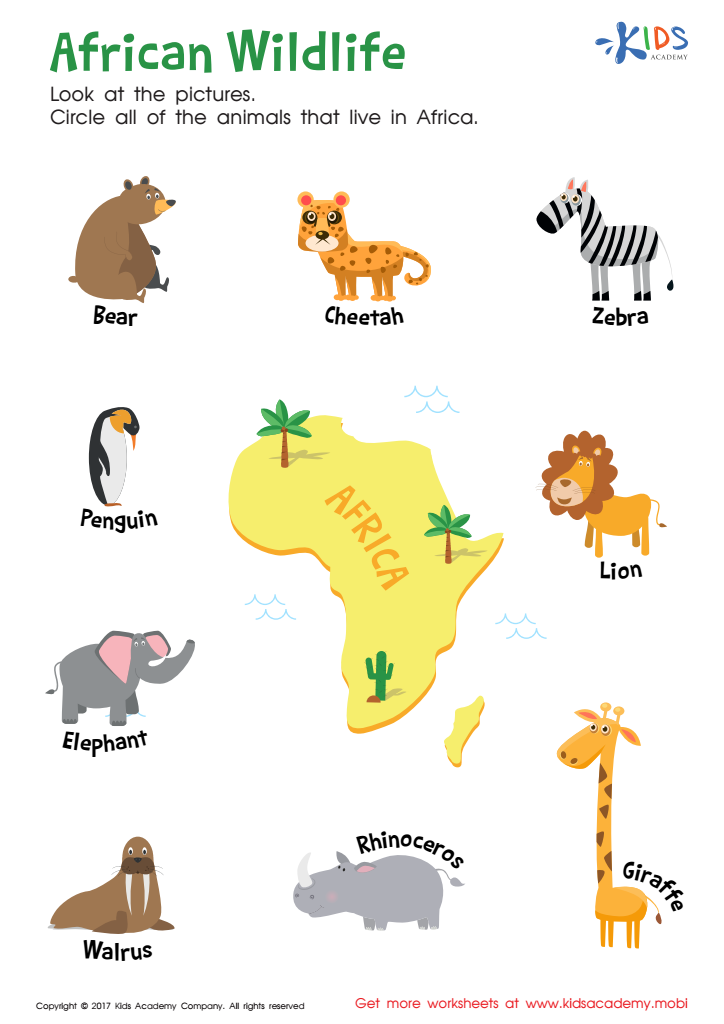








Animal recognition science is crucial for children aged 4-9 as it fosters a deep connection with the natural world. Understanding animals aids in developing observational skills, critical thinking, and curiosity about biodiversity and ecosystems. By recognizing various species, children can learn to appreciate the beauty and diversity of wildlife, promoting empathy and respect towards all living beings.
For parents and teachers, incorporating animal recognition into early education increases engagement through hands-on and interactive learning. Utilizing games, books, and activities centered around animals can enhance cognitive development while making learning enjoyable. Furthermore, knowledge of animal characteristics and behaviors promotes scientific literacy at a young age, setting a foundation for future learning in biology and environmental science.
Additionally, animal recognition can serve as an effective platform for discussing broader themes such as conservation, the food chain, and the importance of habitat protection. Teaching children to identify and name different animals cultivates a sense of stewardship for the environment. Ultimately, by engaging kids in animal recognition science, educators and parents can nurture a generation that values and protects our planet, fostering a lifelong commitment to environmental stewardship and responsible citizenship.







