Historical Knowledge Science Worksheets for Ages 4-9
5 filtered results
-
From - To
Explore our engaging "Historical Knowledge Science Worksheets" designed for young learners aged 4-9. These worksheets cultivate curiosity about past events and influential figures, fostering an early appreciation for history. With a variety of fun and educational activities, children can learn about significant moments and explore fascinating stories from our world’s history. Each worksheet promotes critical thinking and helps build foundational skills in research and observation. Perfect for home schooling or supplementing classroom learning, our resources make the study of history enjoyable and interactive. Ignite a passion for learning and understanding the past with our thoughtfully crafted worksheets today!
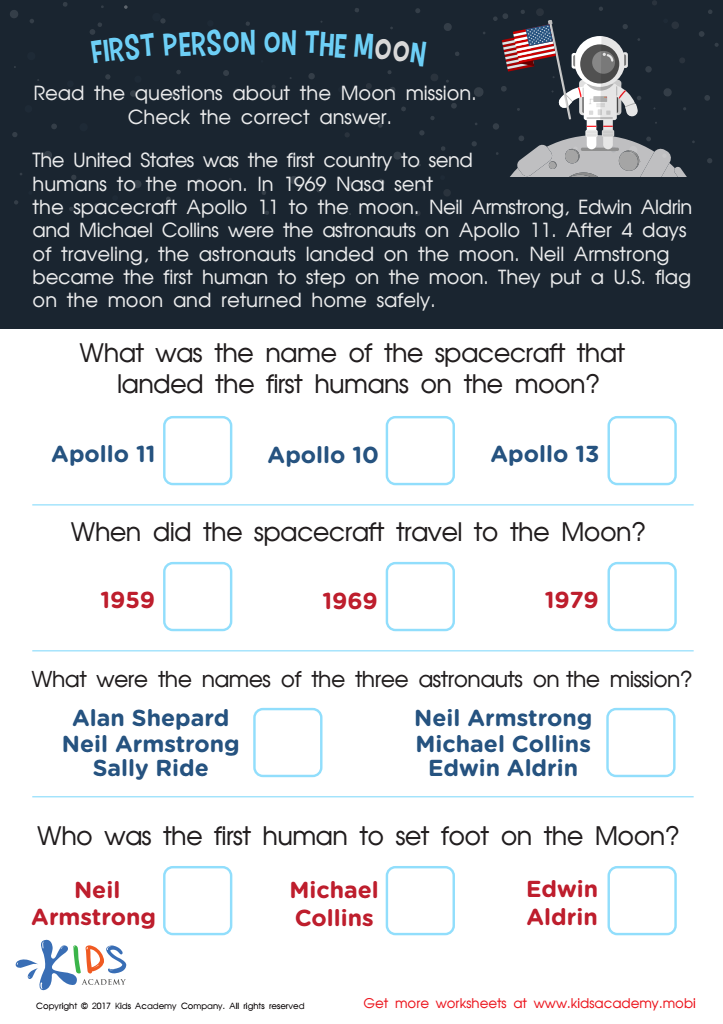
First Person on the Moon Worksheet
 Assign to My Students
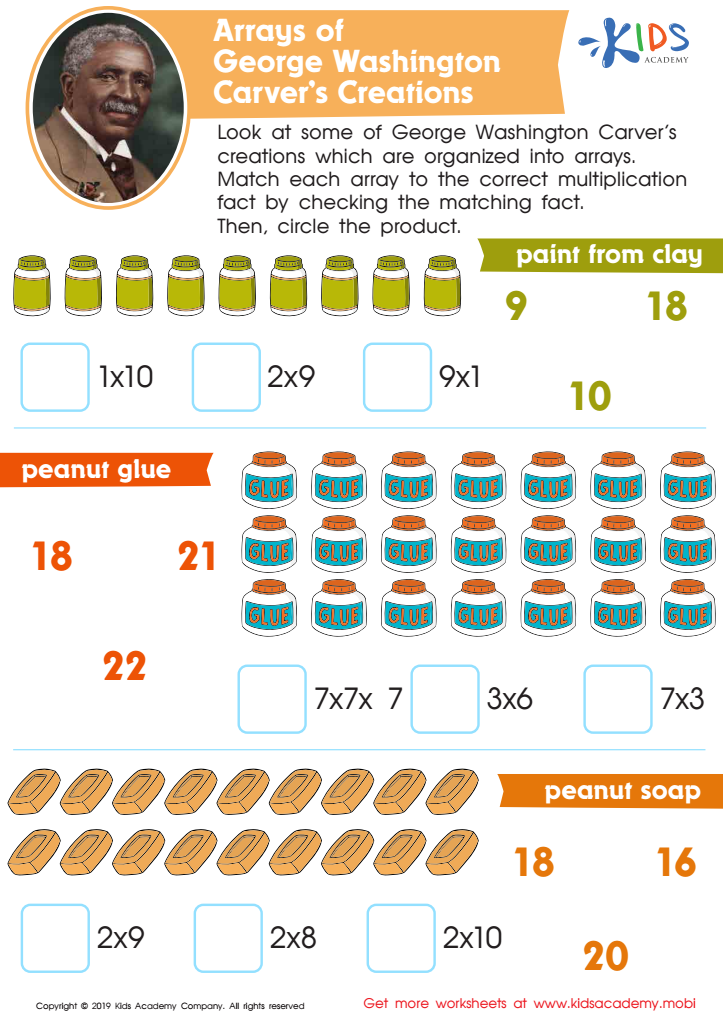
Arrays of George Washington Carver’s Creations Worksheet
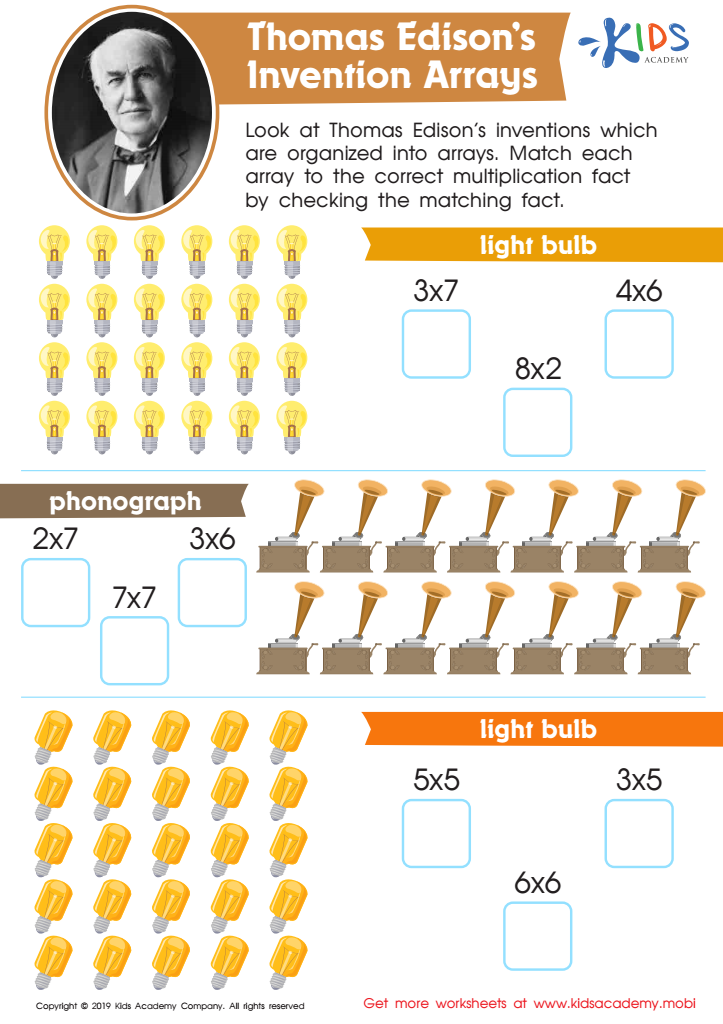
Thomas Edison’s Invention Arrays Worksheet
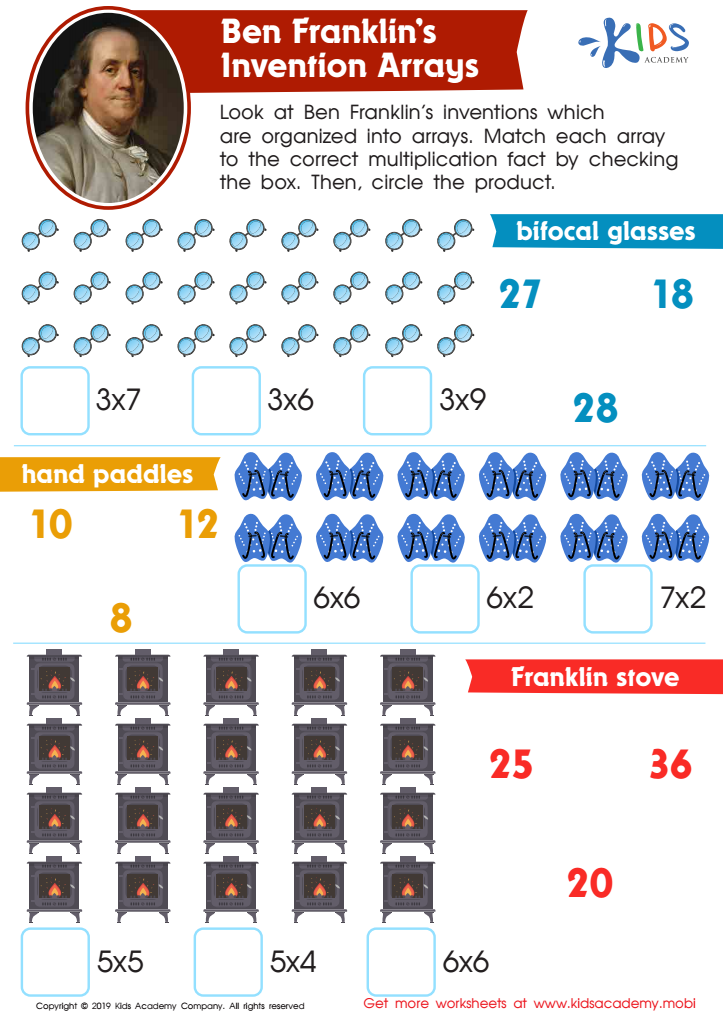
Ben Franklin’s Invention Arrays Worksheet
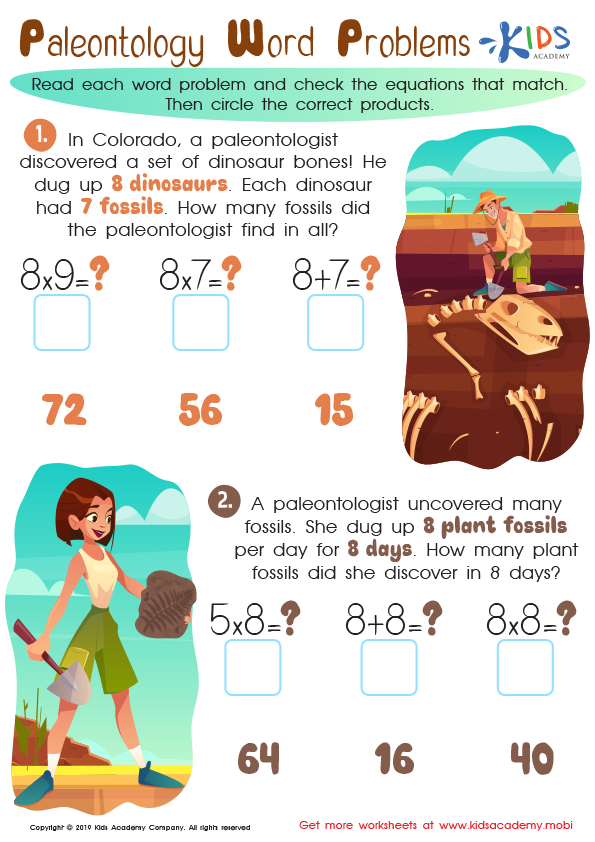
Archeology Word Problems Worksheet








Parents and teachers should prioritize historical knowledge science for children aged 4-9 because it cultivates a foundational understanding of the world around them. At this stage, children are naturally curious, and engaging them in historical knowledge nurtures that curiosity. Understanding history encourages critical thinking as they learn about different cultures, civilizations, and the impacts of past events on the present.
Introducing historical concepts boosts language development, as children learn to articulate ideas and form connections between past and current experiences. It fosters empathy and social awareness; by exploring diverse perspectives, children learn about the experiences of others and develop a sense of belonging in a multicultural society.
Furthermore, historical knowledge science enhances cognitive development. Kids engaged in historical inquiry learn to analyze events, make inferences, and recognize chronological sequences. This builds a strong foundation for lifelong learning skills.
Finally, instilling historical awareness at a young age nurtures informed citizenship. As children grow, they will be more equipped to understand contemporary issues, encouraging community engagement and responsible citizenship. In essence, historical knowledge science is crucial for fostering well-rounded, thoughtful individuals capable of navigating an increasingly complex world.







