Problem Solving Science Worksheets for Ages 4-9
3 filtered results
-
From - To
Enhance your child's analytical abilities with our Problem Solving Science Worksheets, designed for ages 4-9. Our engaging activities challenge young minds with exciting puzzles, pattern recognition, and critical thinking exercises tailored to their developmental stage. At Kids Academy, we merge fun with learning to foster a love for science and boost problem-solving skills. Each worksheet encourages curiosity and logical reasoning, building a strong foundation for academic success. Crafted by educational experts, our resources promote hands-on learning and discovery, ensuring that every child achieves their full potential. Explore our collection and watch your child thrive!
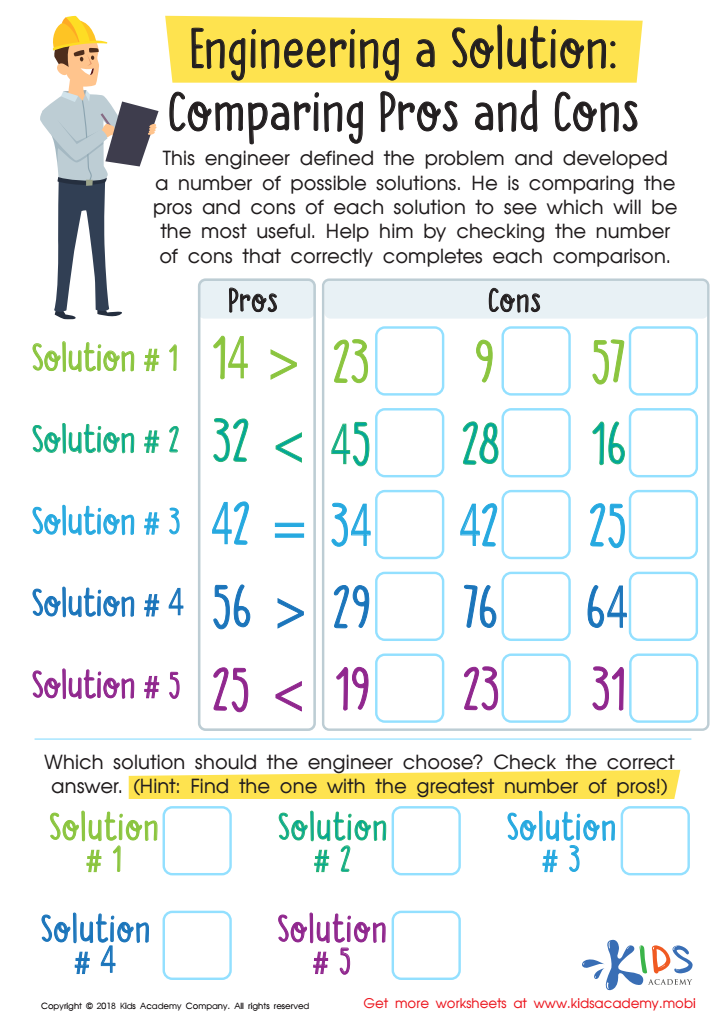
Engineering a Solution: Comparing Pros and Cons Worksheet
 Assign to My Students
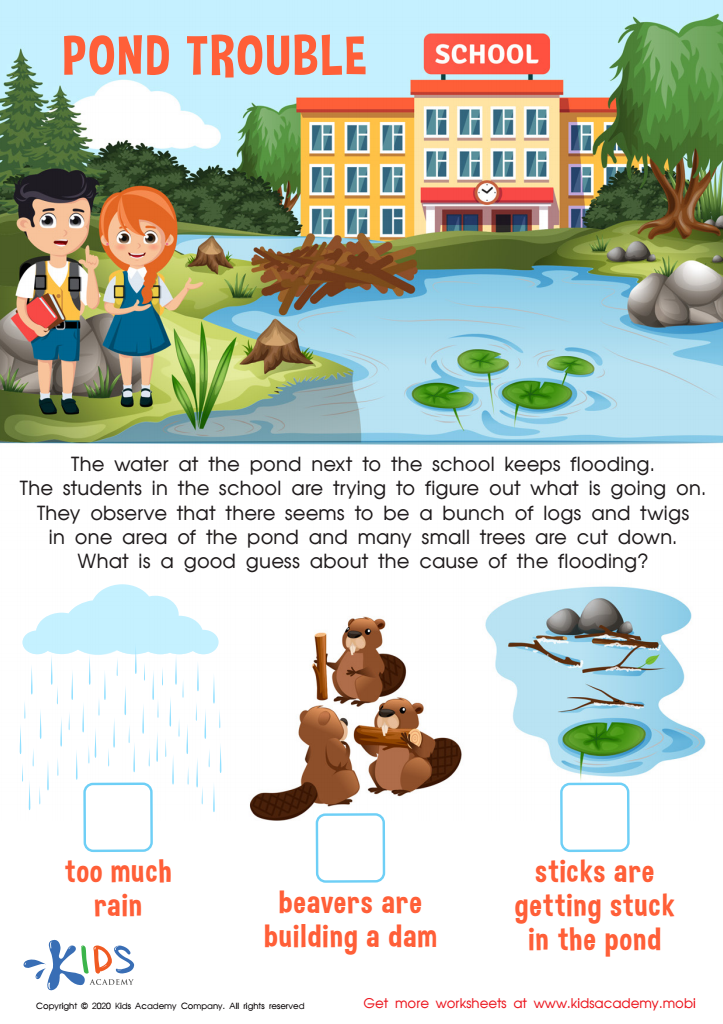
Pond Trouble Worksheet
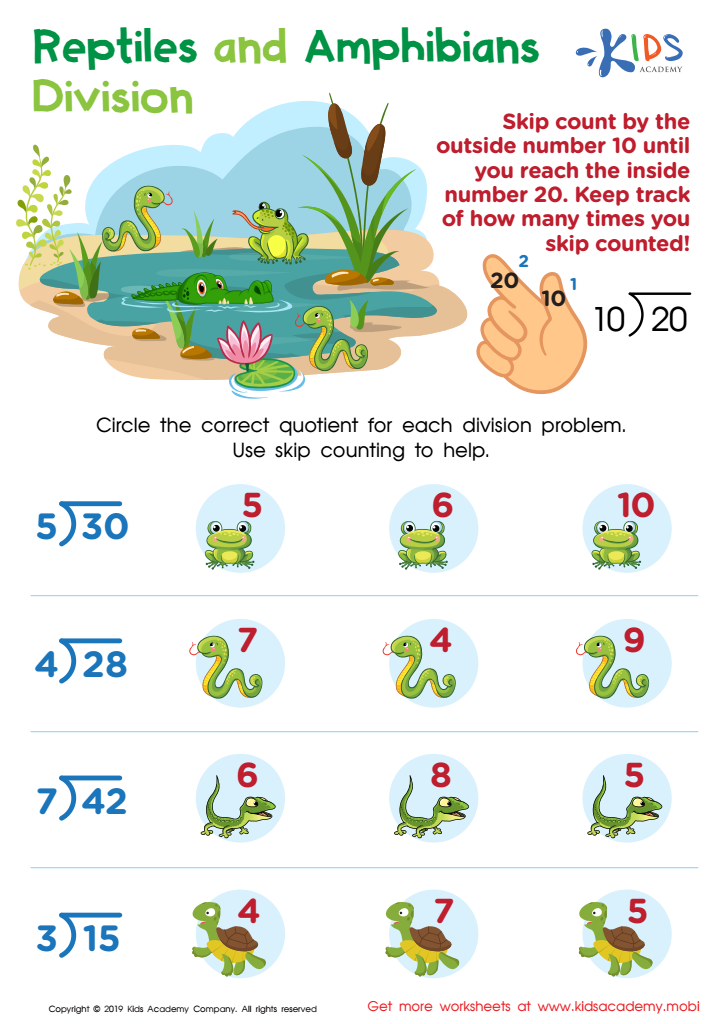
Reptile and Amphibians Division Worksheet







Parents and teachers should care deeply about incorporating Problem Solving Science for children aged 4-9 because it's a fundamental skill that shapes their cognitive and social development. At this formative stage, engaging in scientific problem-solving activities helps young children develop critical thinking, creativity, and resilience. By encouraging exploration and experimentation—whether through simple experiments, puzzles, or observational activities—children learn to ask questions, make predictions, and understand cause-and-effect relationships. This process fosters a mindset geared towards curiosity and lifelong learning.
Moreover, problem-solving in a scientific context aids in the development of essential social skills. When children work together on scientific problems, they learn to communicate their ideas, listen to others, and collaborate effectively. These social-cognitive skills are crucial for success both inside and outside the classroom.
Additionally, early exposure to science helps to demystify complex concepts and builds a solid foundation for more advanced scientific learning in later years. It encourages a positive attitude toward challenges and mistakes, viewing them as opportunities for learning rather than setbacks. By prioritizing problem-solving science for young children, parents and educators set the stage for a more adaptable, innovative, and scientifically literate generation.







