Weather identification Science Worksheets for Ages 4-9
5 filtered results
-
From - To
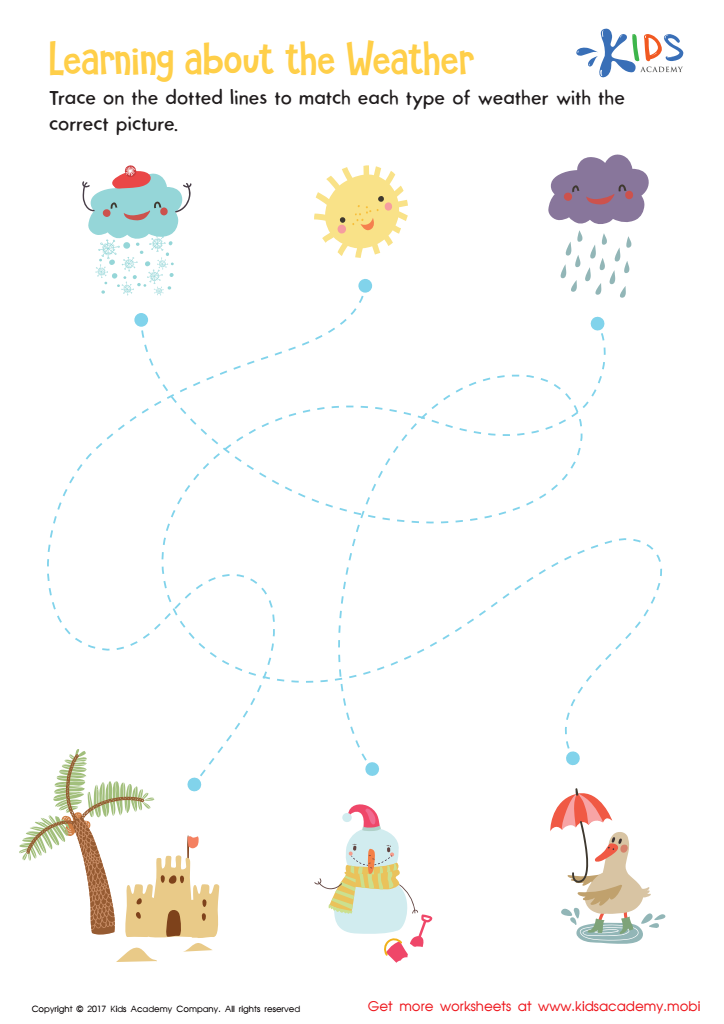
Discover our engaging "Weather Identification Science Worksheets" designed specifically for children ages 4 to 9! These worksheets offer a fun and interactive way for young learners to explore the essentials of weather patterns and phenomena. With vibrant illustrations and simple activities, kids will learn to identify different types of weather such as sunny, rainy, cloudy, and snowy. Each worksheet fosters critical thinking and observational skills, making it an ideal resource for teachers and parents alike. Perfect for enhancing classroom learning or as at-home activities, these worksheets provide an excellent introduction to the fascinating world of meteorology! Download now and make learning enjoyable!
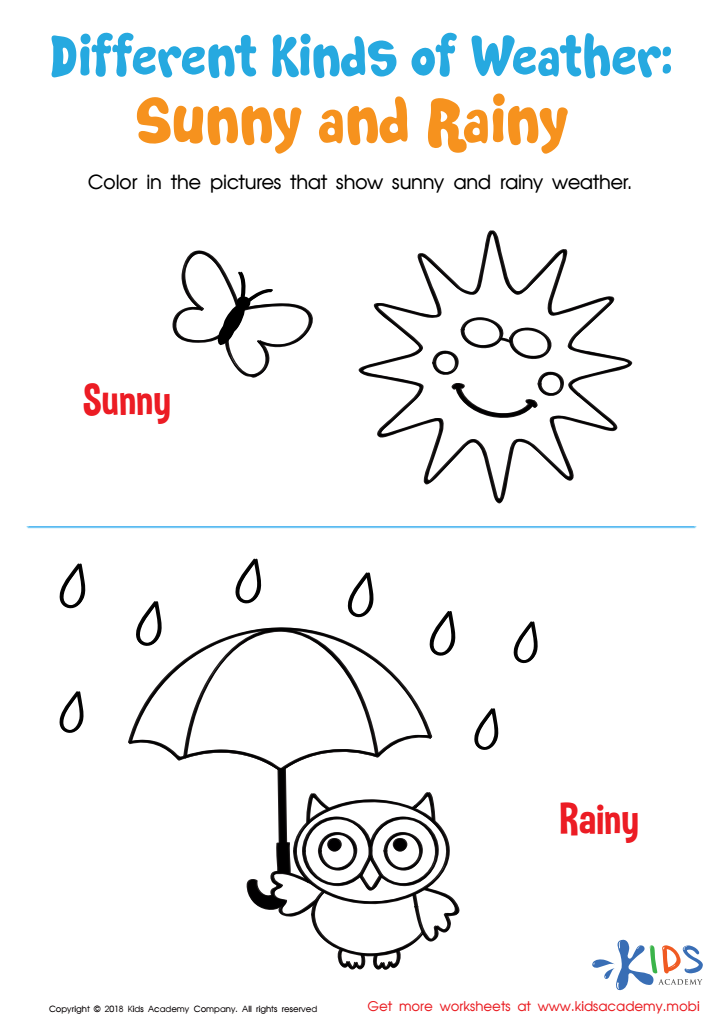
Different Kinds of Weather: Sunny and Rainy Worksheet
 Assign to My Students
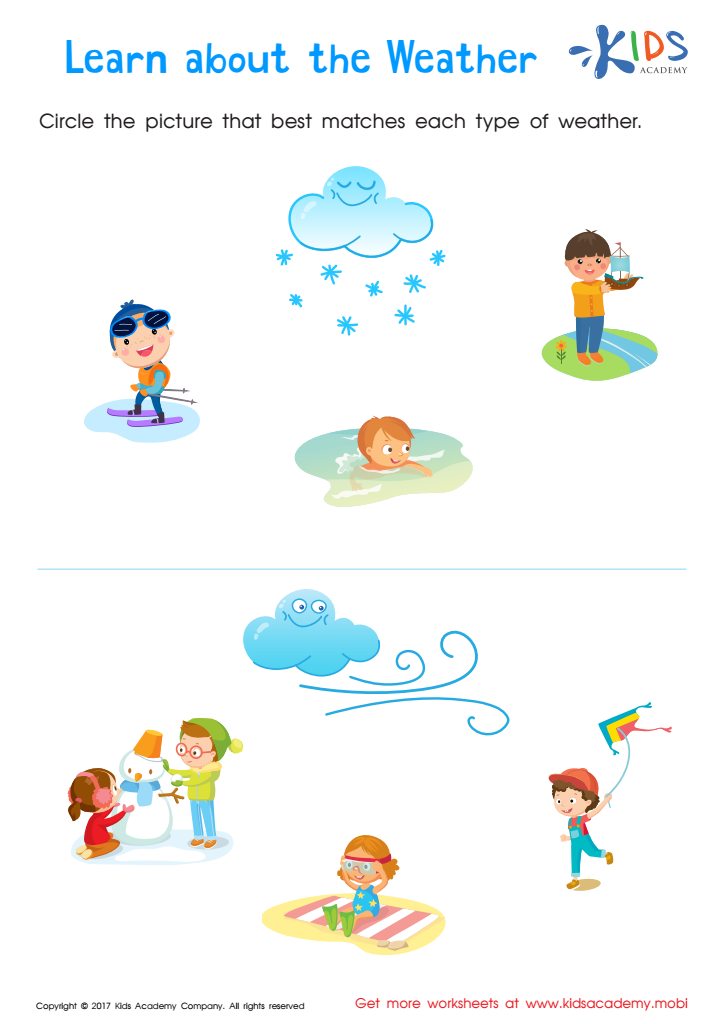
About the Weather Printable
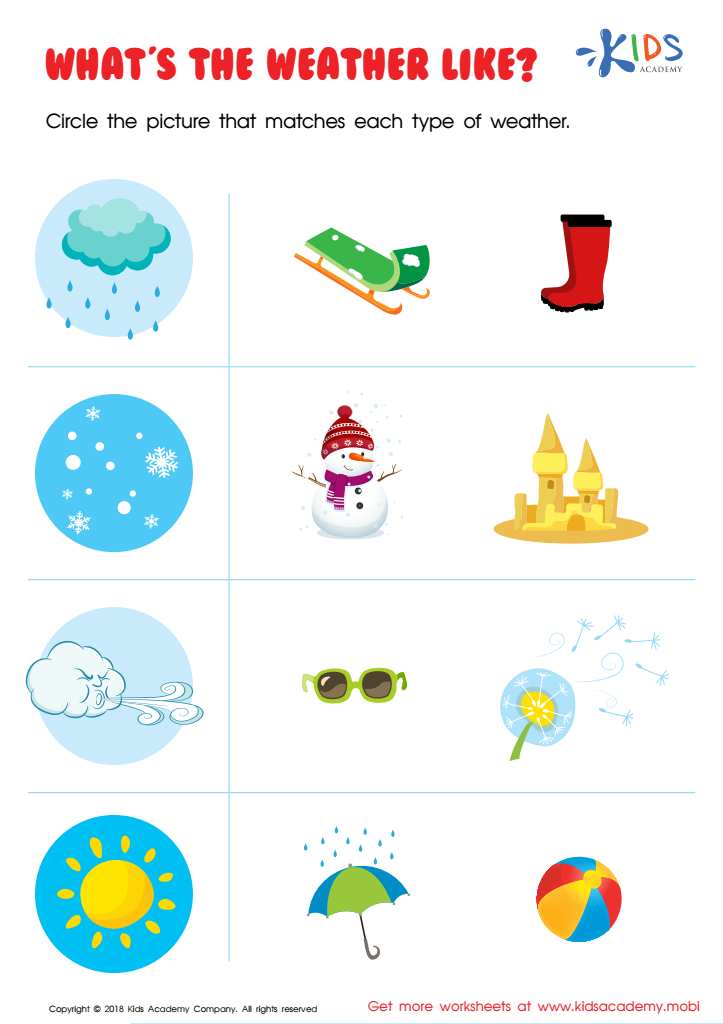
What's the Weather Like? Worksheet
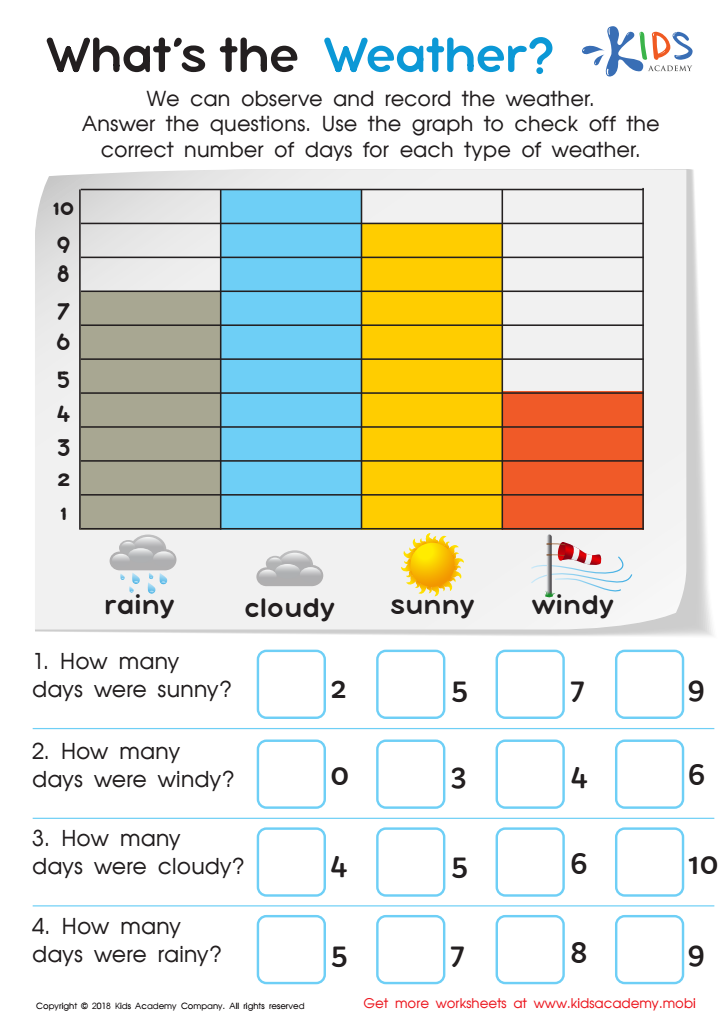
What's the Weather? Worksheet




.jpg)


Understanding Weather Identification Science is crucial for children aged 4-9 as it lays the foundation for crucial life skills and promotes curiosity about the world. First, recognizing different weather patterns helps children make informed daily choices, like dressing appropriately or planning outdoor activities. Knowledge of weather also enhances safety. Children learn when to seek shelter during storms or understand the dangers of extreme temperatures.
Moreover, weather science fosters critical thinking and observation skills. When kids are encouraged to observe changes in the environment—like cloud types, wind direction, or temperature—they begin to ask questions and seek answers, thus enhancing their scientific inquiry abilities. This engagement with the world around them promotes cognitive development and inspires a lifelong interest in science.
Additionally, learning about weather can lead to interdisciplinary connections in literacy, math, and geography. For instance, reading weather-related books enriches vocabulary and comprehension, while simple weather graphs combine math with real-world application.
Ultimately, teaching young children about the weather instills a sense of responsibility and environmental awareness, encouraging them to appreciate the planet and understand their place within it. Consequently, parents and teachers play a pivotal role in nurturing this essential knowledge for well-rounded, informed citizens.







