Categorizing objects Physical Science Worksheets for Ages 4-9
3 filtered results
-
From - To
Explore our engaging Categorizing Objects Physical Science Worksheets designed for children ages 4-9. These educational resources promote critical thinking by encouraging young learners to sort and classify various items based on their attributes. Perfect for enhancing observational skills, these worksheets inspire creativity while introducing basic scientific concepts. Each worksheet features colorful graphics and simple instructions, making them suitable for classroom or at-home learning. Ideal for teachers and parents alike, our worksheets help children develop important skills in organization, analysis, and teamwork through fun, interactive activities. Discover the exciting world of physical science as your child learns to categorize objects effectively!
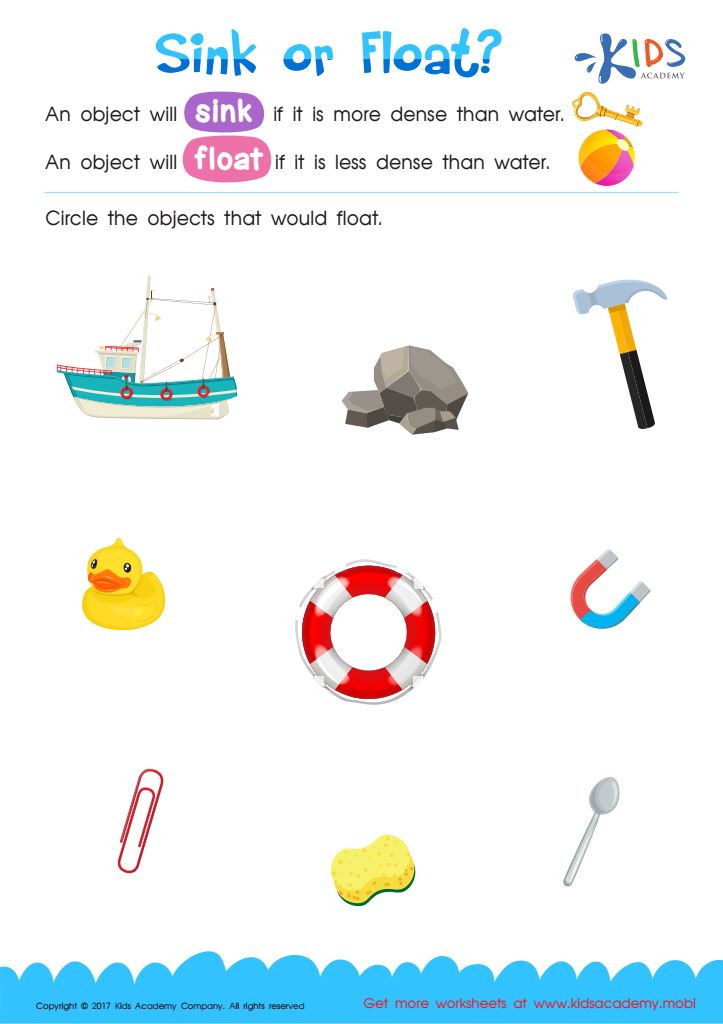
Sink or Float Printable
 Assign to My Students
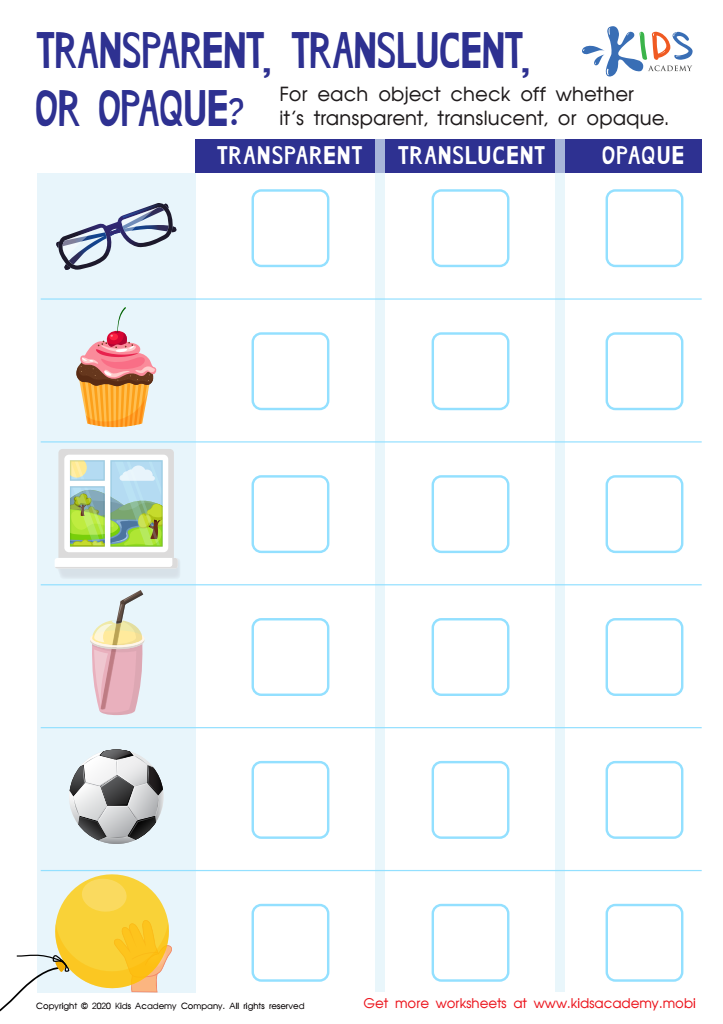
Transparent, Translucent, or Opaque Worksheet
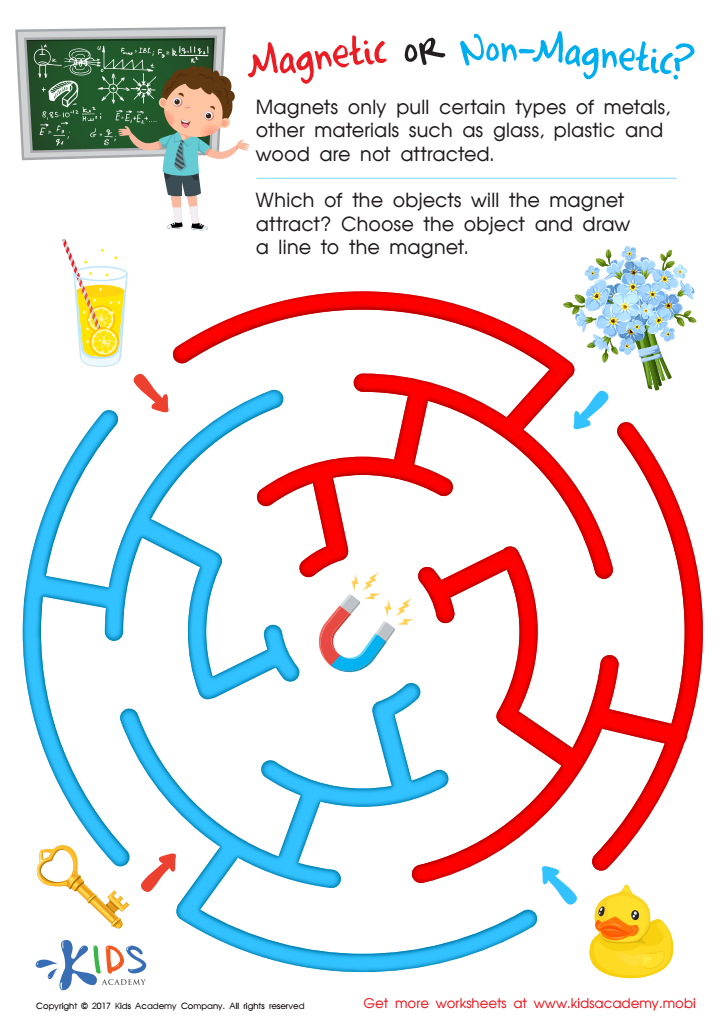
Magnetic or Non–Magnetic Worksheet







Categorizing objects is a fundamental skill in physical science, especially for children aged 4-9. Parents and teachers should care about this because it lays the groundwork for critical thinking and problem-solving abilities. By encouraging children to categorize objects based on their properties—such as size, shape, color, or material—adults help them develop essential observation skills and enhance their understanding of the world around them.
When children sort items, they engage in hands-on learning that boosts cognitive development. This process not only strengthens their reasoning skills but also fosters a sense of order and organization. Categorization aids children in recognizing patterns and relationships, key concepts in scientific inquiry. Furthermore, discussions about categories promote language skills, as children learn to describe their choices and explain their reasoning.
Additionally, understanding how to categorize objects encourages curiosity and inspires experiments. Children may begin to ask "why" and "how," leading to deeper exploration and inquiry—hallmarks of scientific thinking. By nurturing these skills, parents and teachers help build a solid foundation for future learning in science and beyond, ensuring that children are well-prepared to navigate and understand more complex concepts as they grow.







