Shape Recognition Physical Science Worksheets for Ages 4-9
3 filtered results
-
From - To
Discover our engaging Shape Recognition Physical Science Worksheets, designed specifically for children aged 4-9! These interactive worksheets encourage young learners to explore and identify various shapes while developing critical thinking skills in a fun, hands-on way. Perfect for home or classroom use, our resources include colorful illustrations and relatable contexts that make learning enjoyable. Enhance your child's understanding of shapes through exciting exercises that promote visual discrimination and cognitive development. Parents and educators alike will appreciate the ease of integration into daily lessons. Embrace the joy of science and help your child build a strong foundation in shape recognition today!
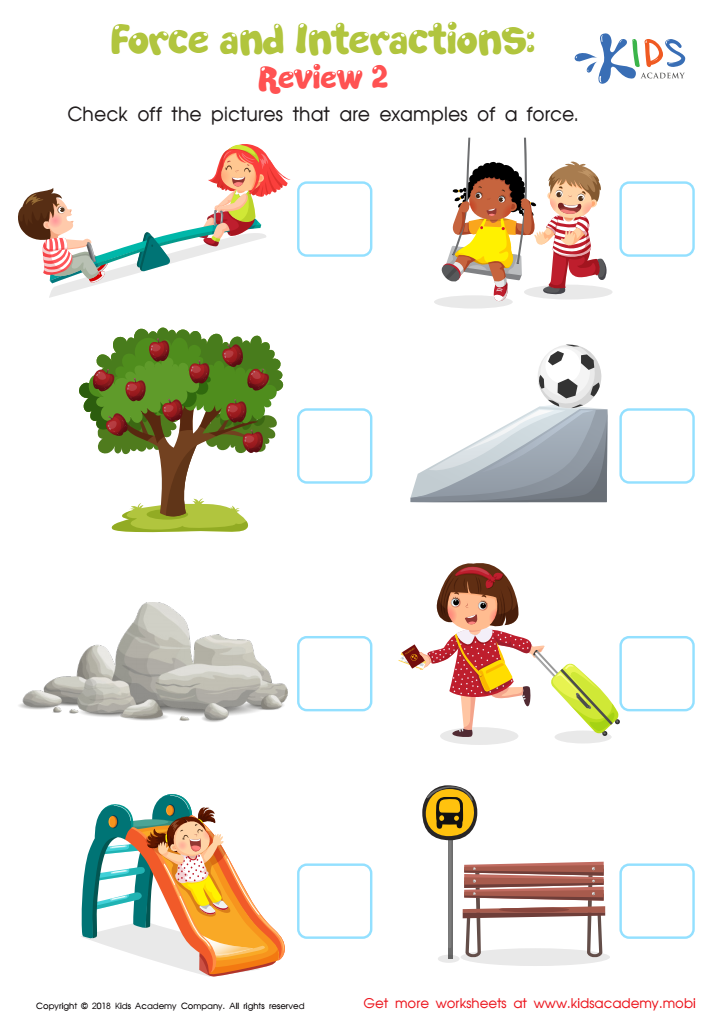
Force and Interactions: Review 2 Worksheet
 Assign to My Students
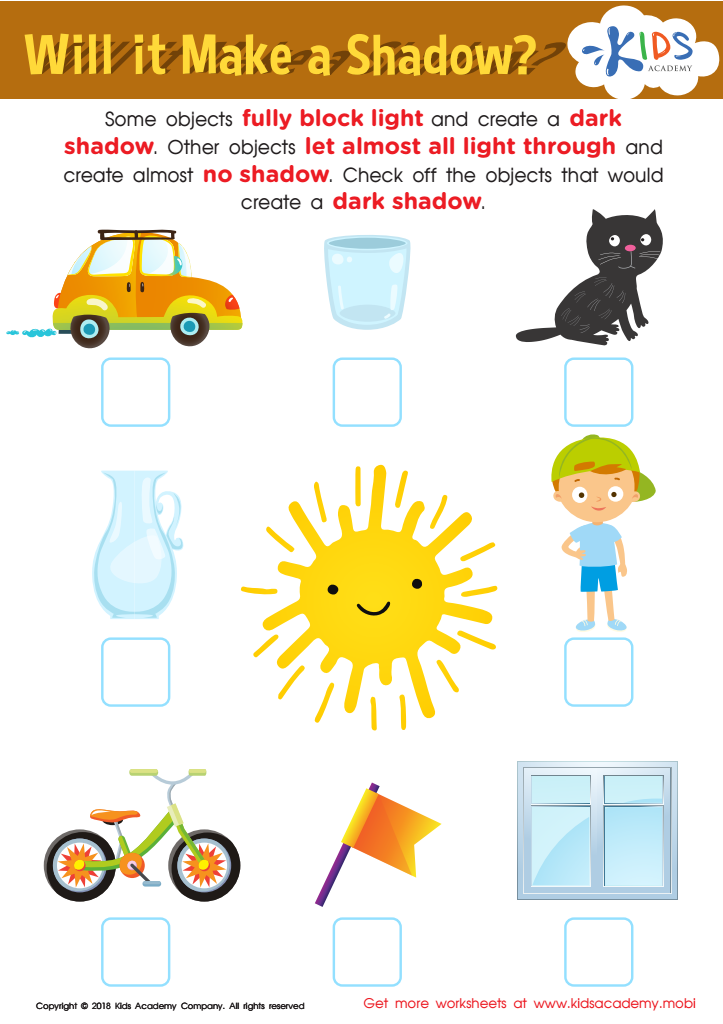
Will It Make a Shadow? Worksheet
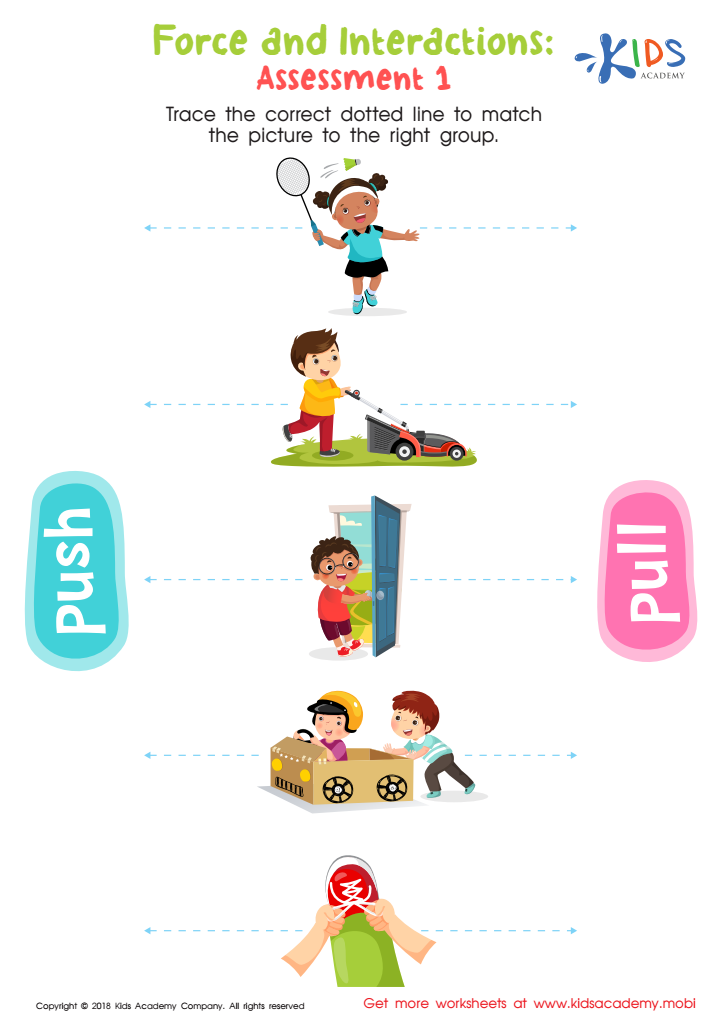
Force and Interactions: Assessment 2 Worksheet






Shape recognition is a fundamental aspect of physical science for early learners aged 4 to 9, playing a crucial role in cognitive development and everyday problem solving. Understanding shapes helps children make sense of the world around them. By recognizing and categorizing shapes, they develop critical thinking skills and spatial awareness, which are essential for subjects like mathematics and geometry.
Moreover, shape recognition activities stimulate curiosity and creativity. When children identify and interact with various shapes, they enhance their fine motor skills through manipulation, such as stacking blocks or drawing shapes. This hands-on experience fosters active learning, making complex concepts more accessible.
Teachers and parents should encourage this learning as it lays the groundwork for more advanced scientific understanding. It introduces foundational concepts like symmetry, patterns, and spatial relationships that become integral in later education. Furthermore, by integrating shape recognition with everyday life—like cooking or exploring nature—adults can make learning meaningful and fun. Ultimately, shape recognition empowers children to engage with their environment and enhances their ability to think critically and creatively, setting the stage for a successful educational journey. Exploring shapes nurtures a love for learning, encouraging lifelong curiosity.







