Vocabulary development Plants and Animals Worksheets for Ages 4-9
4 filtered results
-
From - To
Give your child a head start in science with our engaging "Vocabulary Development: Plants and Animals Worksheets" designed for ages 4-9. Help young learners expand their vocabulary and understanding of the natural world as they discover fascinating facts about different plant species, animal habitats, and essential life processes. These worksheets offer a blend of fun activities and educational content tailored to build language skills, enhance reading comprehension, and foster a love for nature. Perfect for both classroom settings and homeschooling, our resources support critical thinking and curiosity in early learners. Explore and nurture your budding scientist today!
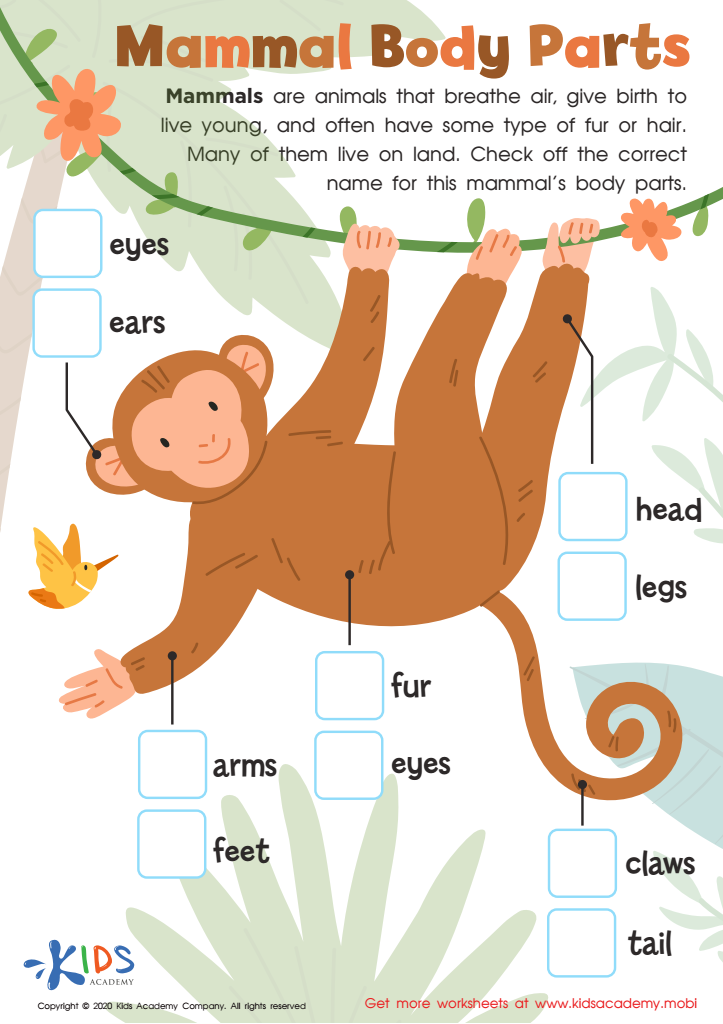
Mammal Body Parts Worksheet
 Assign to My Students











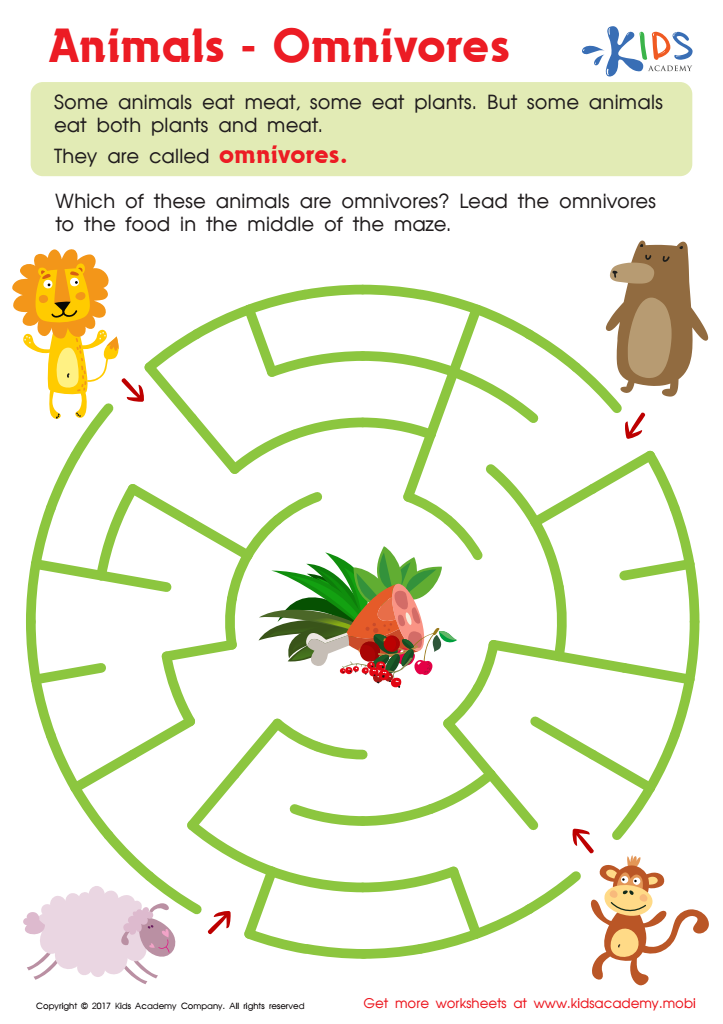
Omnivores Animals Worksheet
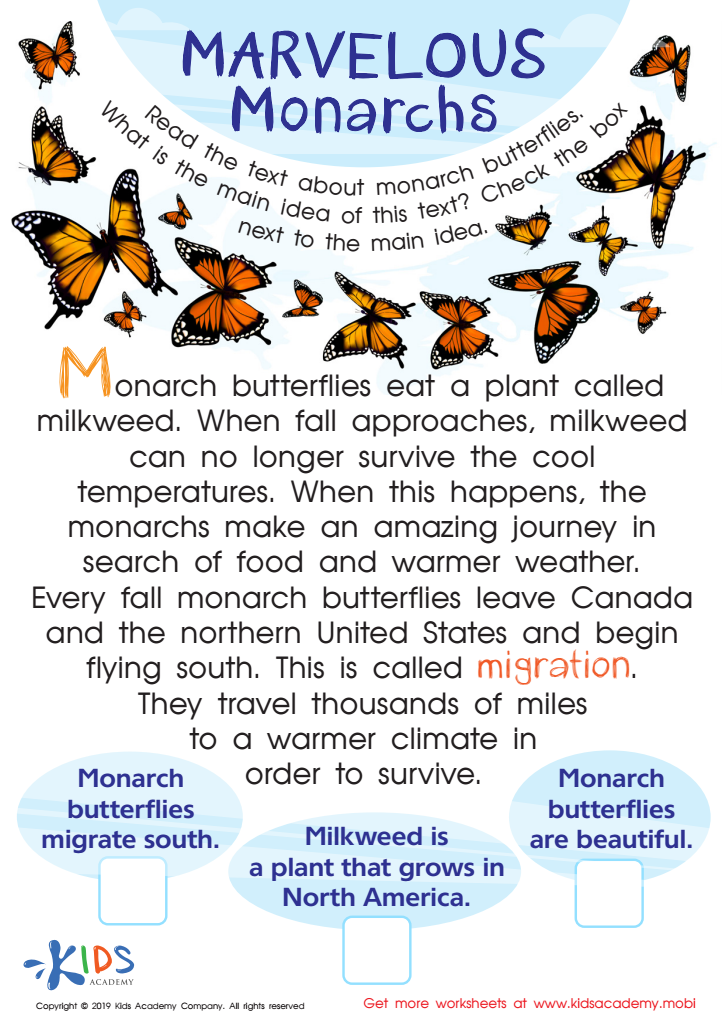
Marvelous Monarchs Worksheet
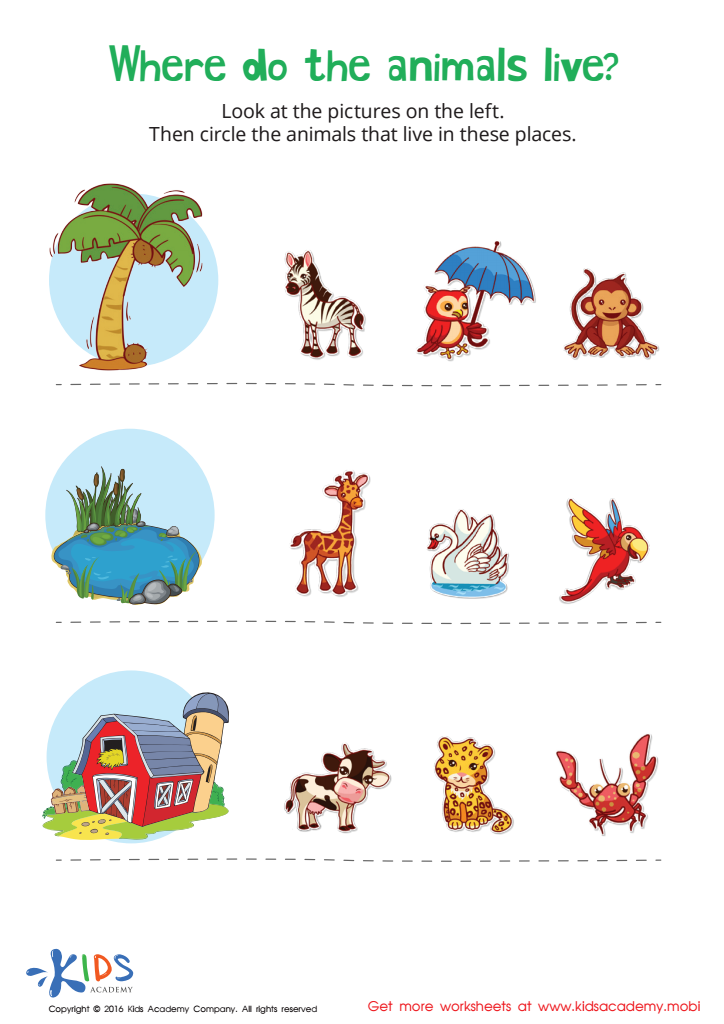
Where Animals Live Worksheet








Vocabulary development focused on plants and animals is exceedingly important for children aged 4-9, as this period is critical for cognitive and language development. At this age, children are naturally curious about the world around them and are eager to learn new words. Exposure to terminology related to plants and animals enhances their general vocabulary, which is foundational for effective communication skills in later life.
Early familiarity with ecological terms helps foster an appreciation for nature and instills a sense of environmental stewardship. This knowledge can enhance science literacy, promoting better understanding of natural sciences, which are essential curricular subjects. Recognizing terms like "photosynthesis," "habitat," "predator," and "prey" not only broadens their lexicon but also aids in comprehending more complex scientific concepts as their education progresses.
Moreover, discussing plants and animals can support conceptual learning areas such as categorization, comparison, and critical thinking. It can stimulate curiosity, encouraging children to ask questions and seek knowledge beyond the classroom. For teachers and parents, fostering this area of vocabulary growth is not just about expanding word banks; it also aims to develop a lifelong interest in learning, critical thinking, and environmental awareness, all of which contribute to holistic educational and personal development.








