Understanding moon phases Space Worksheets for Ages 4-9
3 filtered results
-
From - To
Explore the wonders of the universe with our "Understanding Moon Phases" worksheets, specially designed for ages 4-9! These engaging resources introduce young learners to the fascinating world of the moon and its phases through fun activities and illustrations. Children will enjoy identifying and describing the different lunar phases, making connections between the moon's appearance and its position in the sky. With colorful visuals and simple, clear instructions, these worksheets spark curiosity and motivate learning about space science. Perfect for classrooms or at-home learning, our moon phase worksheets make understanding astronomy fun and accessible for young explorers!
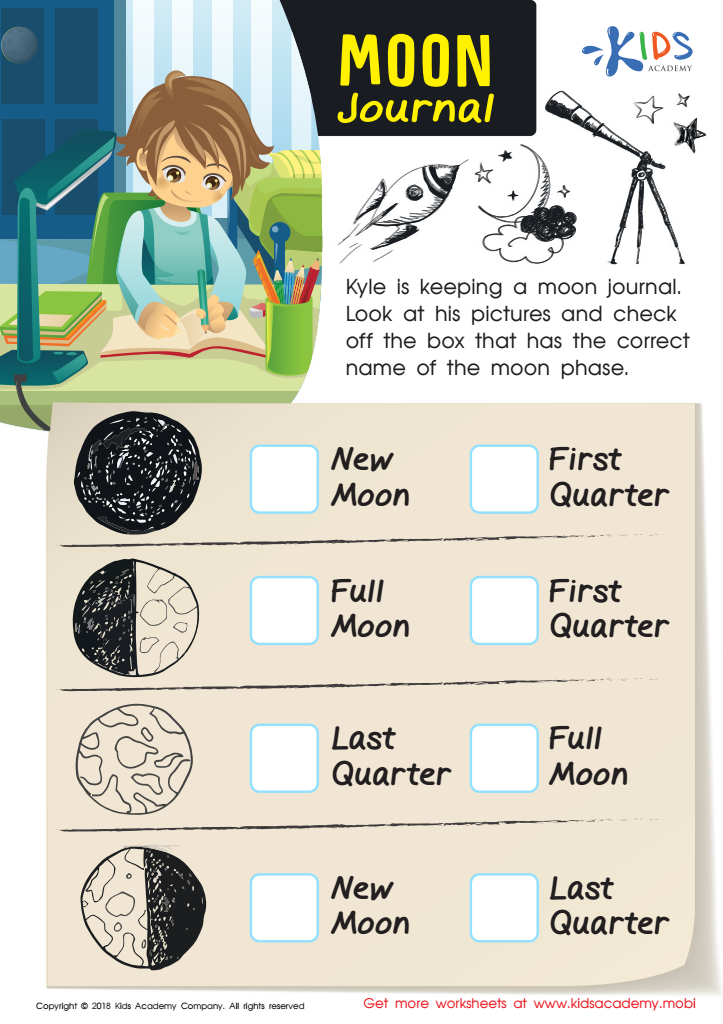
Moon Journal Worksheet
 Assign to My Students
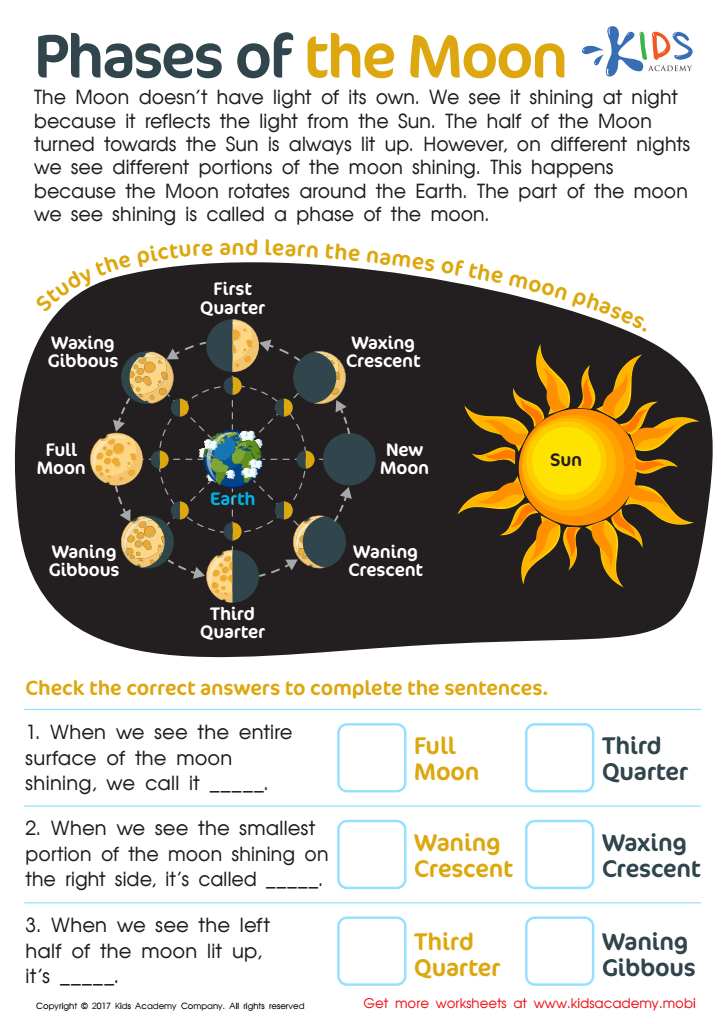
Phases of The Moon Worksheet
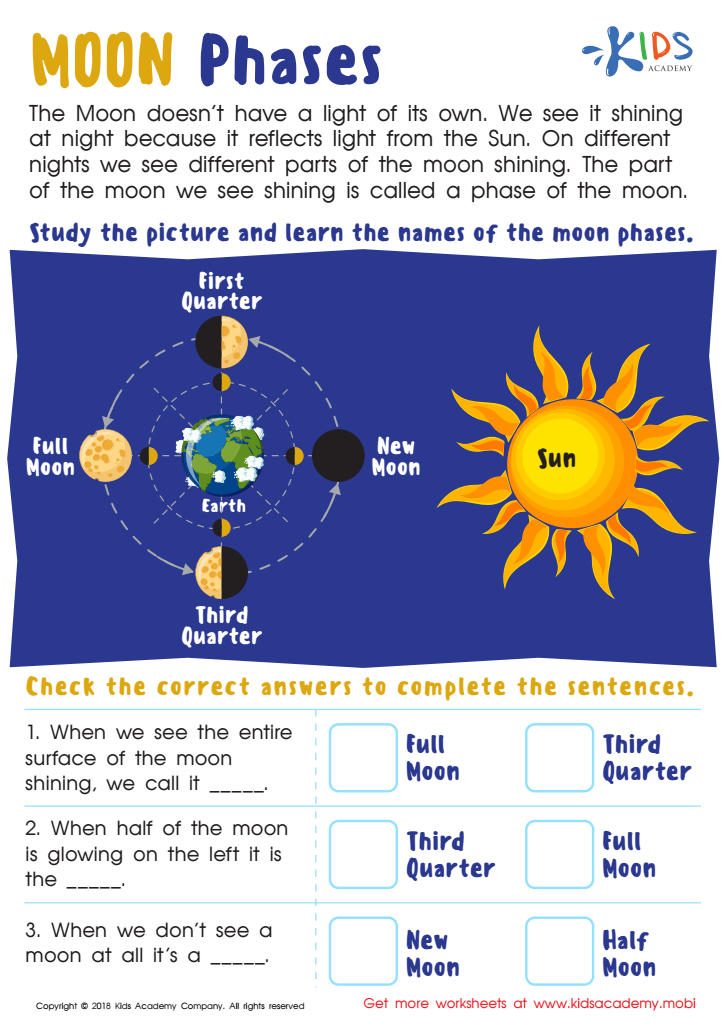
Moon Phases Worksheet




.jpg)


Understanding moon phases is essential for children aged 4-9 as it fosters curiosity about the world beyond our planet. At this age, children are naturally inquisitive and eager to learn about nature, and the moon is a fascinating subject that can captivate their imagination.
First, learning about moon phases introduces basic scientific concepts such as cycles, patterns, and the idea of change over time. By understanding how the moon waxes and wanes, children develop critical thinking skills as they observe and predict these changes.
Additionally, this knowledge enhances their connection to nature. Helping children identify the moon in the night sky encourages outdoor exploration, promoting physical activity and a sense of wonder about the universe.
Furthermore, moon phases can serve as a delightful entry point to broader topics such as astronomy, geography, and even storytelling. Engaging stories about the moon can assist in literacy development and inspire creativity through arts and crafts.
By providing children with an understanding of moon phases, parents and teachers nurture a lifelong appreciation for science, inspire curiosity, and cultivate an awareness of the natural world, setting the foundation for future learning and exploration. Such knowledge encourages a love for learning that can last a lifetime.







