Color Identification Community Worksheets for Ages 4-9
3 filtered results
-
From - To
Welcome to our Color Identification Community Worksheets designed for children aged 4-9! These engaging, colorful resources nurture essential skills necessary for early learners. Each worksheet promotes the identification of colors in various community settings, fostering both creativity and cognitive development. Our materials make learning fun and interactive, featuring relatable images of community helpers and familiar local environments. Parents and teachers can utilize these worksheets in classrooms and at home to enhance children’s understanding of colors while introducing them to their neighborhoods. Join our vibrant learning community and help young learners discover the world of colors in playful and educational ways!
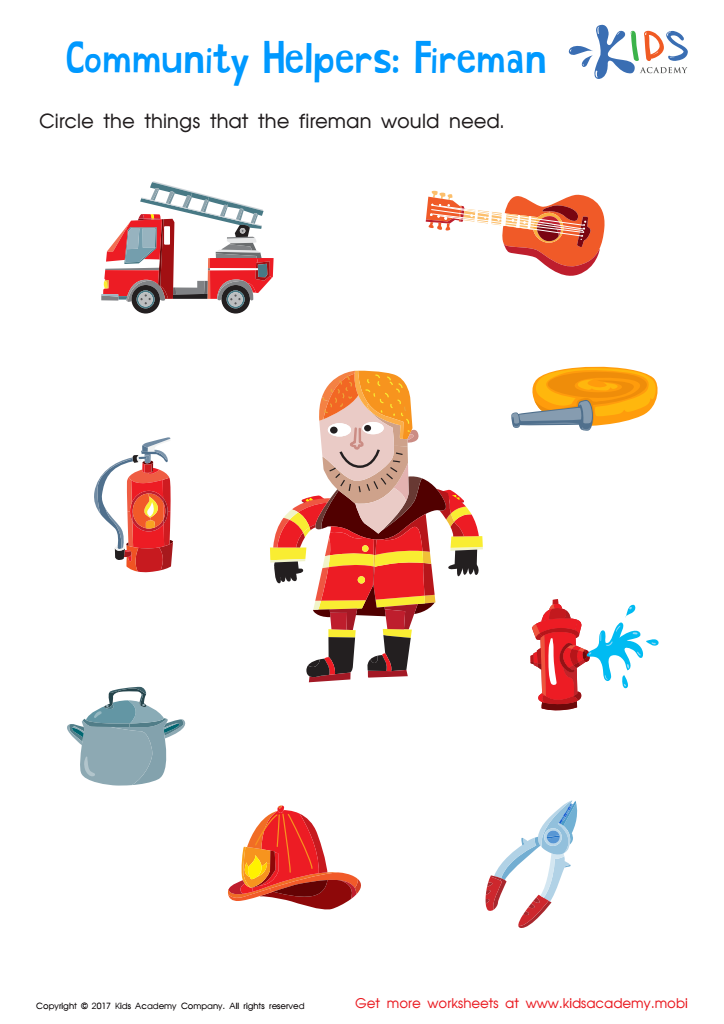
Fireman Worksheet
 Assign to My Students
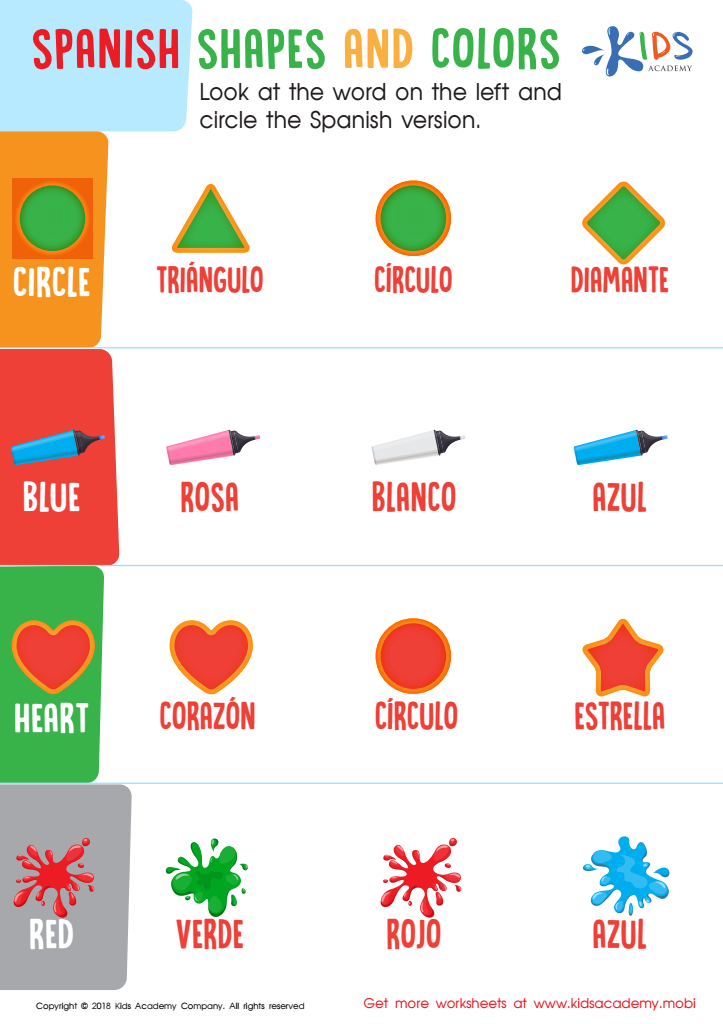
Spanish Shapes and Colors Worksheet
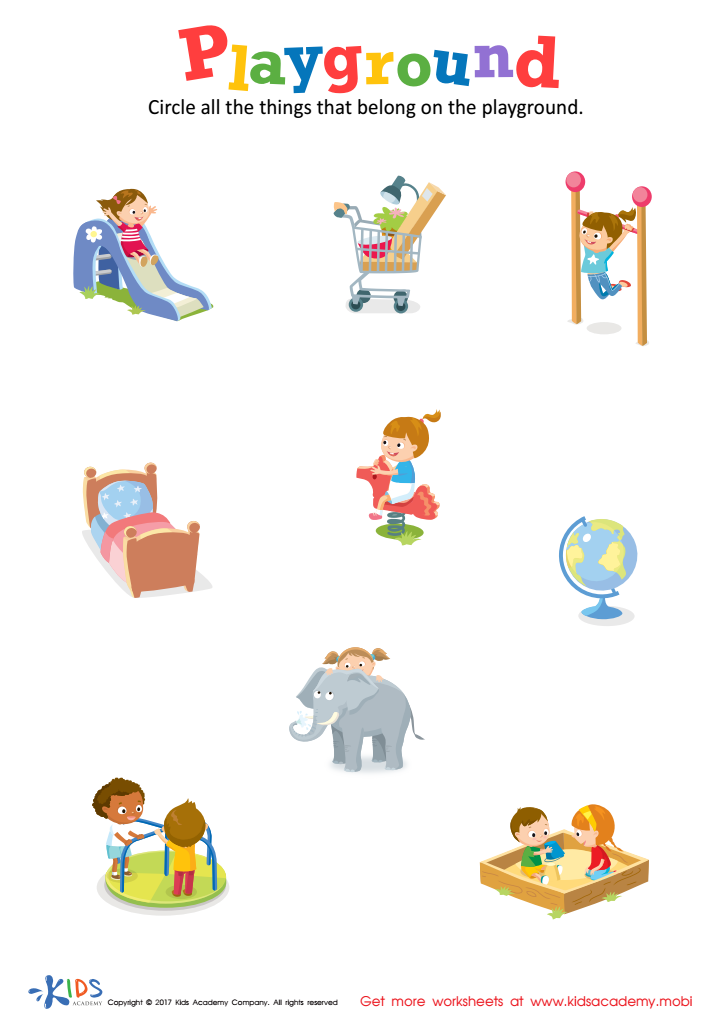
Playground Worksheet








Parents and teachers should prioritize Color Identification Community for Ages 4-9 because mastering color recognition is a fundamental aspect of early childhood development. Beyond merely identifying colors, children engage their sense of observation, improve their vocabulary, and refine their cognitive skills. Understanding colors lays the groundwork for more complex learning in numerous subjects, including art, science, and math, where colors can convey critical information.
Additionally, a Color Identification Community fosters social interactions in young learners. Through group activities and discussions, children develop essential social skills, such as teamwork, communication, and empathy, as they explore colors cooperatively. Engaging in color-related games and projects can also make learning enjoyable, increasing engagement and retention.
Furthermore, color identification tasks can promote emotional development. Children often associate colors with feelings (e.g., blue with sadness or yellow with happiness), which can help them articulate their emotions and develop emotional intelligence.
By advocating for initiatives like the Color Identification Community, parents and teachers support not only color literacy but also a holistic approach to a child's intellectual, social, and emotional growth, which is crucial during this formative age. Investing in such collaborative learning experiences ensures a well-rounded foundation for lifelong learning.








