Critical Thinking Community Worksheets for Ages 4-9
6 filtered results
-
From - To
Explore our engaging "Critical Thinking Community Worksheets" designed specifically for children ages 4-9! These interactive resources foster essential cognitive skills while introducing young learners to the concepts of community and social awareness. Each worksheet challenges kids to think creatively and analytically, promoting problem-solving and decision-making abilities. Topics include recognizing community helpers, understanding relationships, and comprehending the importance of teamwork. Ideal for home or classroom use, our worksheets encourage children to express their ideas through drawing, discussion, and written responses. Inspire your child's critical thinking journey and help them become thoughtful, inquisitive members of their community today!
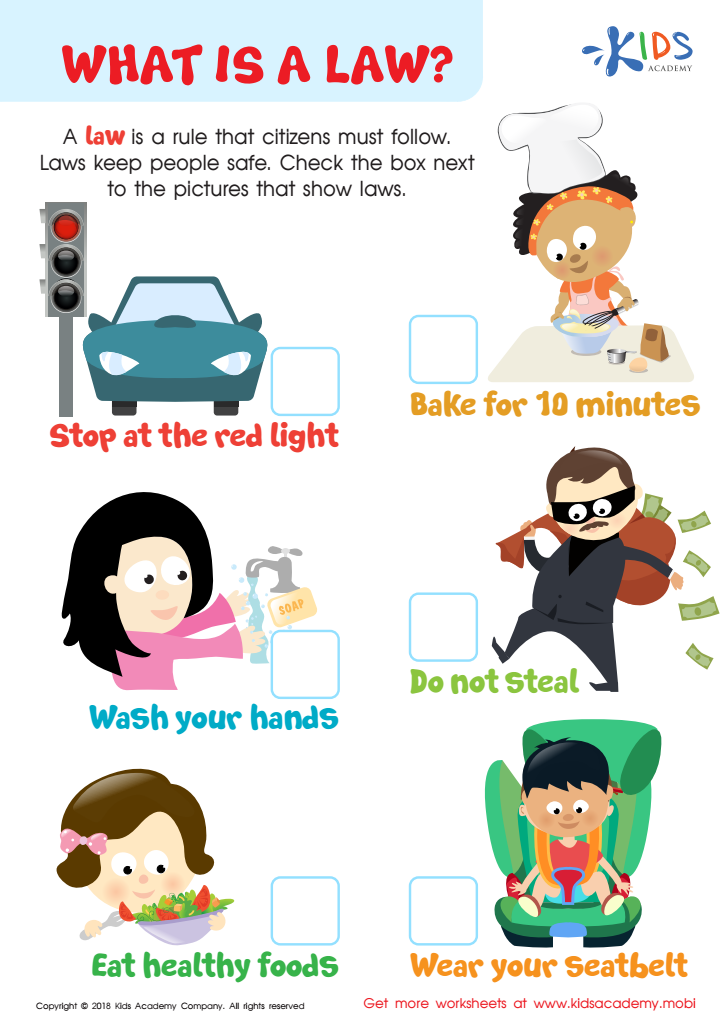
What is a Law? Worksheet
 Assign to My Students
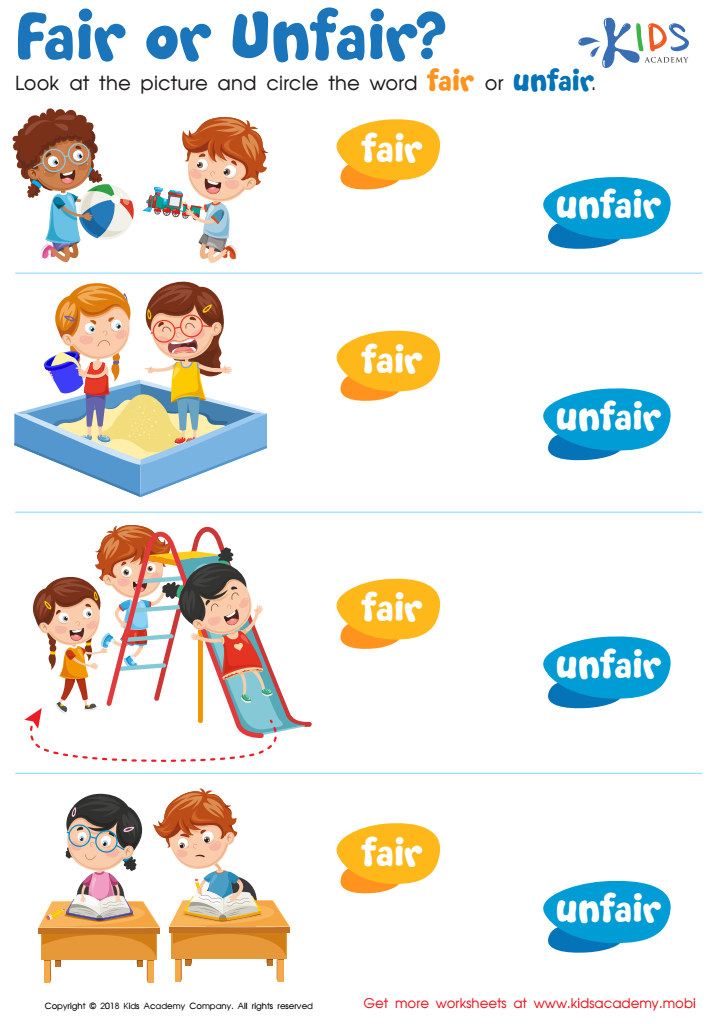
Fair or Unfair Worksheet
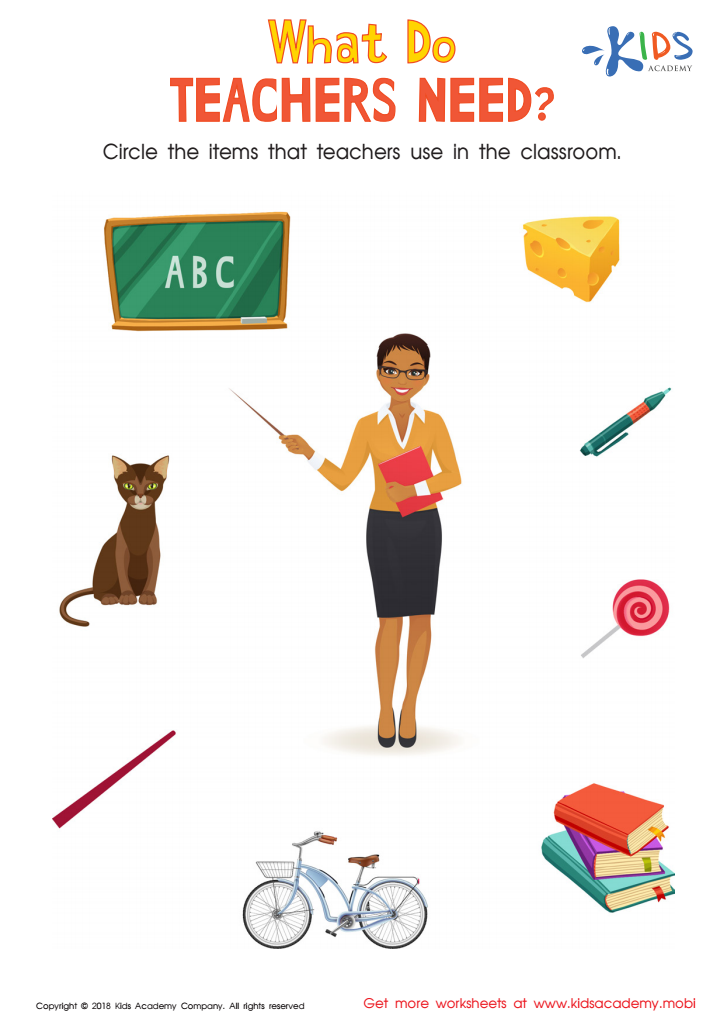
What Do Teachers Need Worksheet

Traditional Music Worksheet
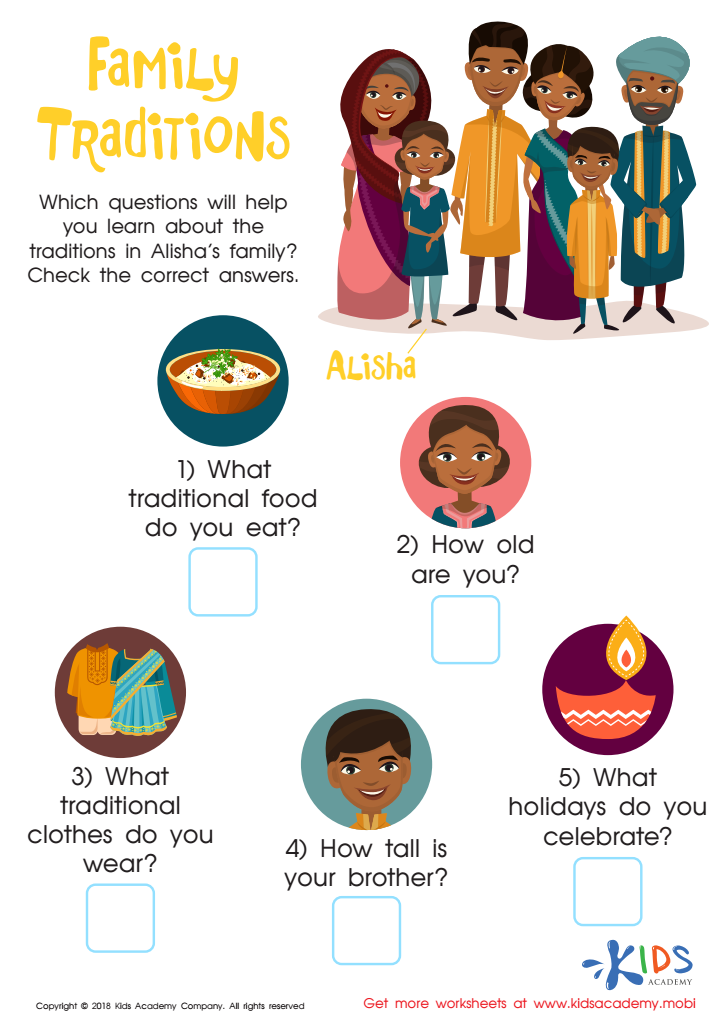
Family Traditions Worksheet
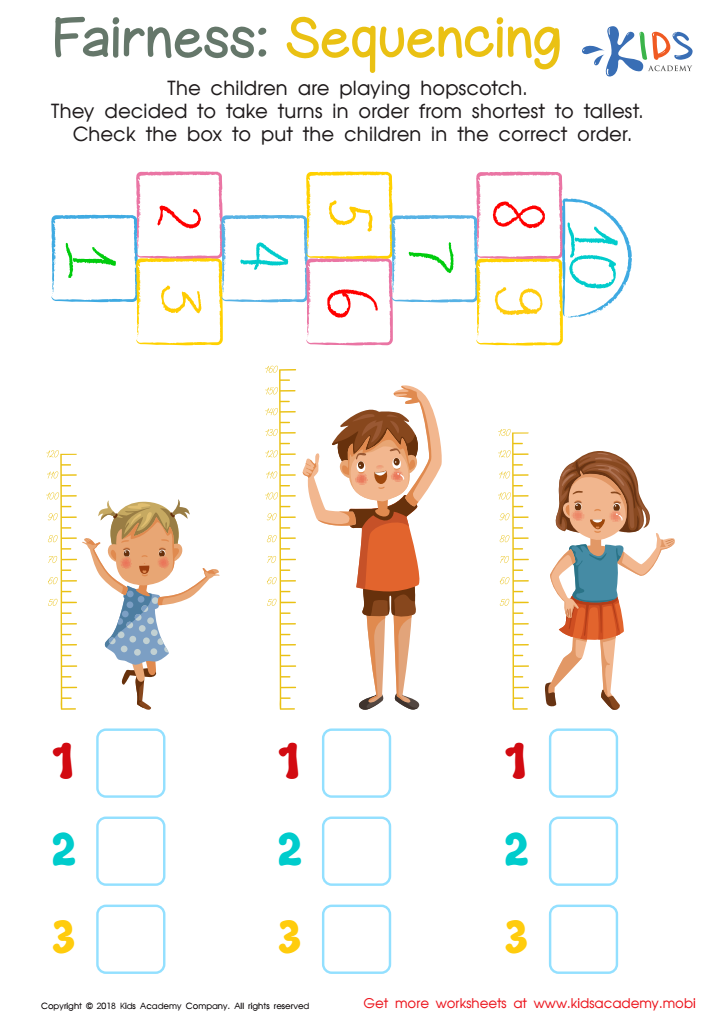
Fairness: Sequencing Worksheet








Parents and teachers should care about the Critical Thinking Community for Ages 4-9 because fostering critical thinking skills in young children lays the foundation for lifelong learning. Critical thinking enhances cognitive abilities, teaching children how to analyze, evaluate, and make connections between ideas. This process encourages curiosity, creativity, and problem-solving.
By engaging with a structured approach to critical thinking, children learn to ask questions rather than accept information passively. This empowers them to think independently, a crucial skill in today's rapidly changing world where adaptability and innovation are vital. The Critical Thinking Community offers resources and strategies tailored specifically for young learners, aiding educators and parents in effectively nurturing these skills.
Moreover, early development of critical thinking aids in better academic performance across various subjects, as children become more capable of understanding complex concepts and tackling challenges. Importantly, these skills also enhance social interactions, teaching children to respect diverse perspectives and engage in constructive dialogue. For parents and educators, investing in the Critical Thinking Community means equipping the next generation with essential skills that will benefit them academically, socially, and emotionally, preparing them to navigate their future successfully.








